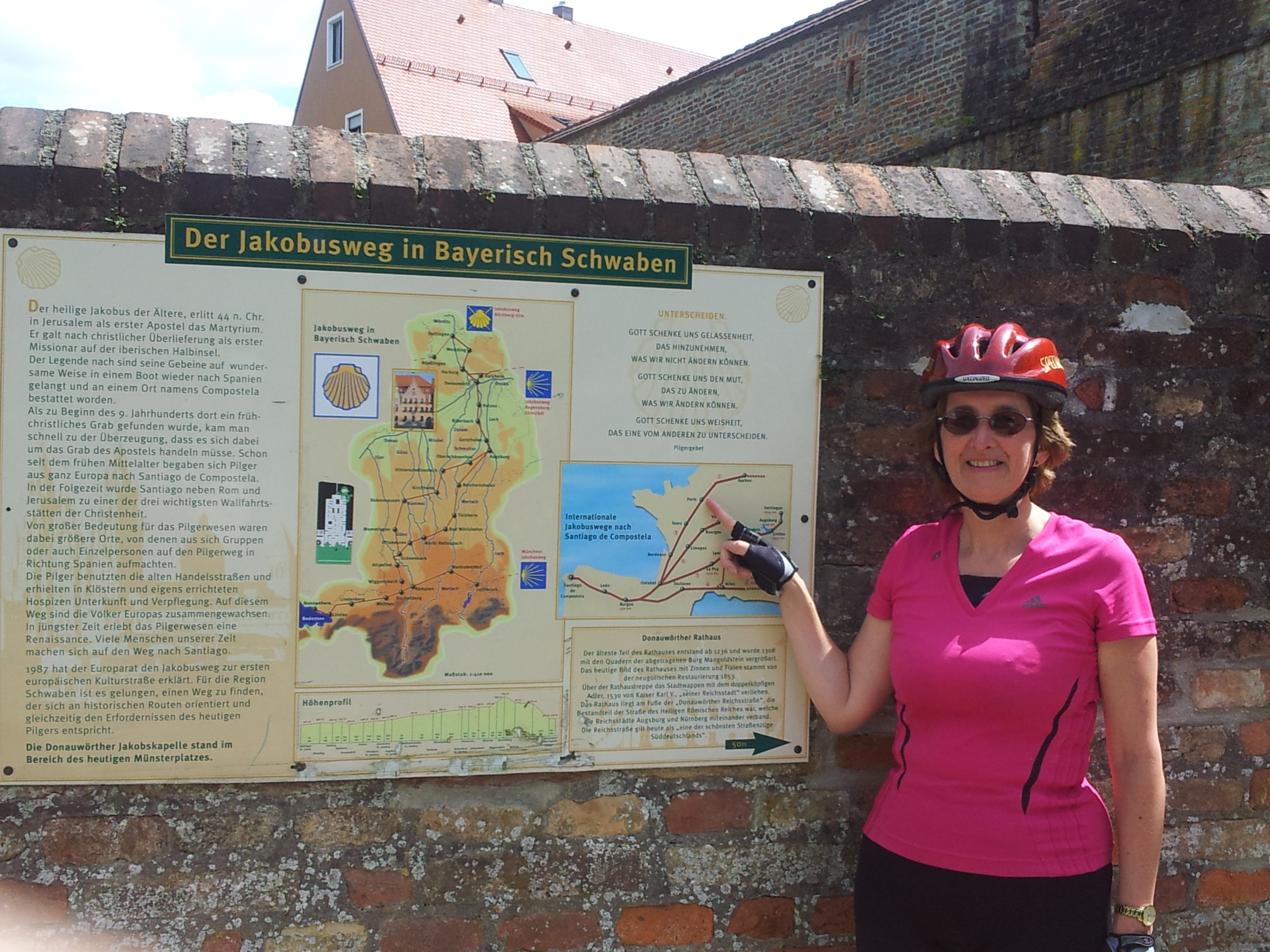
Beryl is pointing to the start of French way from Paris to Santiago de Compostela. We saw this poster in Donaueschingen in the Black Forest in Germany. It was heartening to see how pilgrims would make their way to Santiago from all over Europe. Although on that trip we followed the Donau or Danube east, we were inspired to take the Camino.
Now we have arrived at the beginnings of our own camino journey. We have walked along the North Downs Way from Farnham, past Woking where we live, almost to Canterbury. It will take us another few days to walk on to Folkestone / Dover. Beryl had the vision of us making our own way all the way from our home to Santiago. In periods of a fortnight at a time we will walk or cycle to Santiago.
In 2019 we plan to cycle from Calais to Paris and then on to Tours on the River Loire. This will be about 600 km and will take us half way down France. Our subsequent plan is to cycle in 2020 from Tours to St-Jean-Pied-de-Port at the foot of the Pyrenees. From 2021 onwards we will walk and / or cycle to Santiago and then to Finisterre.
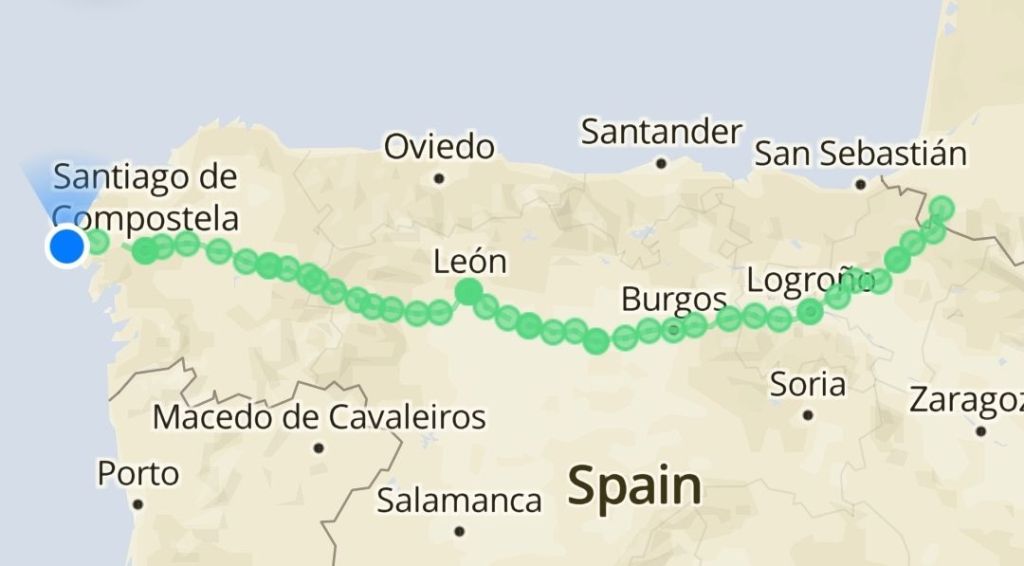
We have finished our Camino Francés. It has been an extended journey over three years. There is a definite sense of achievement. In each year we’ve walked 300 km / 200 miles. The landscape of northern Spain is embedded in our memories.
Our feet are weary but in reasonable condition given the distances involved. It has been a time of mental refreshment and time to reflect on our lives, both immediately and in the wider context of friends and groups. Neither of us have had any particular spiritual enlightenment or unburdening.
The churches along the Way have been thought provoking although there were few to visit in this last section. The cathedral at Burgos was stunningly beautiful but we found the shrine of St James at Santiago de Compostela leaving us cold.
I found the silence and physicality of Cape Finisterre to be moving. In 1972 my family sailed past Cape Finisterre in MV Aureol on our way back from Nigeria for the last time. That was a time of major change in my life. For some reason Finisterre lodged in my mind and I wanted to visit this place. After more than half a century that has been achieved.
For the future, my thoughts can be summarised around the books I’ve been reading whilst away.
On this Holy Island – A Modern Pilgrimage across Britain by Oliver Smith
We have enjoyed our pilgrimage as a long term goal. It has been hard work at times but definitely worthwhile. This year has been harder than the previous two which may be down to the ascent required but also to the fact that we are two years older.
As we think about future expeditions, we’re not sure that we want to tackle another long distance path over weeks at a time. We had thought about the Via Francigena through Tuscany to Rome but don’t feel drawn to that at present.
Walking through the countryside in shorter bursts is something we both relish. We will probably tackle more shorter walks in the UK. The Ridgeway to Avebury is definitely on the cards.
As for Spain, we’ve enjoyed the country and want to visit more. Travelling through the Paradores of Spain by car seems the way ahead.
There was a Country : A Personal History of Biafra by Chinua Achebe
I first read Achebe’s Things Fall Apart whilst at secondary school in Nigeria. We were in Nigeria during the Biafran war although only tangentially affected. This reading has encouraged me to think more about my childhood experiences and what it was to be brought up in a very different world.
Coincidentally, over the last two weeks, I received an offer from the University of Birmingham to undertake postgraduate research into the colonial development of education from the 1940s onwards in northern Nigeria with the involvement of missionary societies. Achebe talks in positive terms about the importance of education and evangelism.
It feels right to be embarking on this phase of study. I look forward to exploring analytically some of my own background experiences.
Small World by David Lodge
David Lodge was a professor of English Literature at Birmingham University. He wrote a trilogy of novels based around a fictional university called Rummidge but with strong similarities to Birmingham Small World is the second in the series.
This novel is based on the academic conference experience. I’m hoping to get involved with such events and other academic journals or seminars.
Being on pilgrimage is a good time to reflect on life choices. As we return to England this feels both a continuation of our lives and the start of a new phase.
We are very grateful to be able to continue to walk to explore our world together. Beryl still enjoys following paths. It is also a privilege to meet people from different backgrounds and experiences. Life has much to offer.
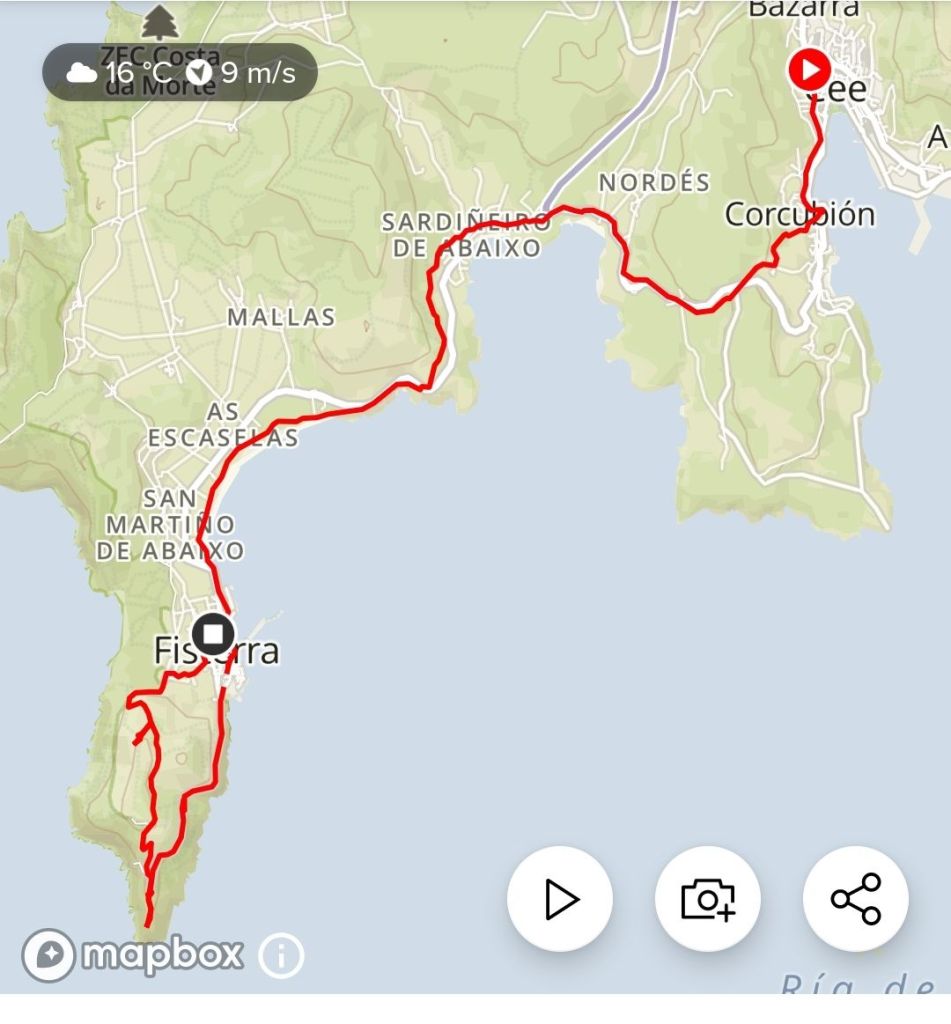
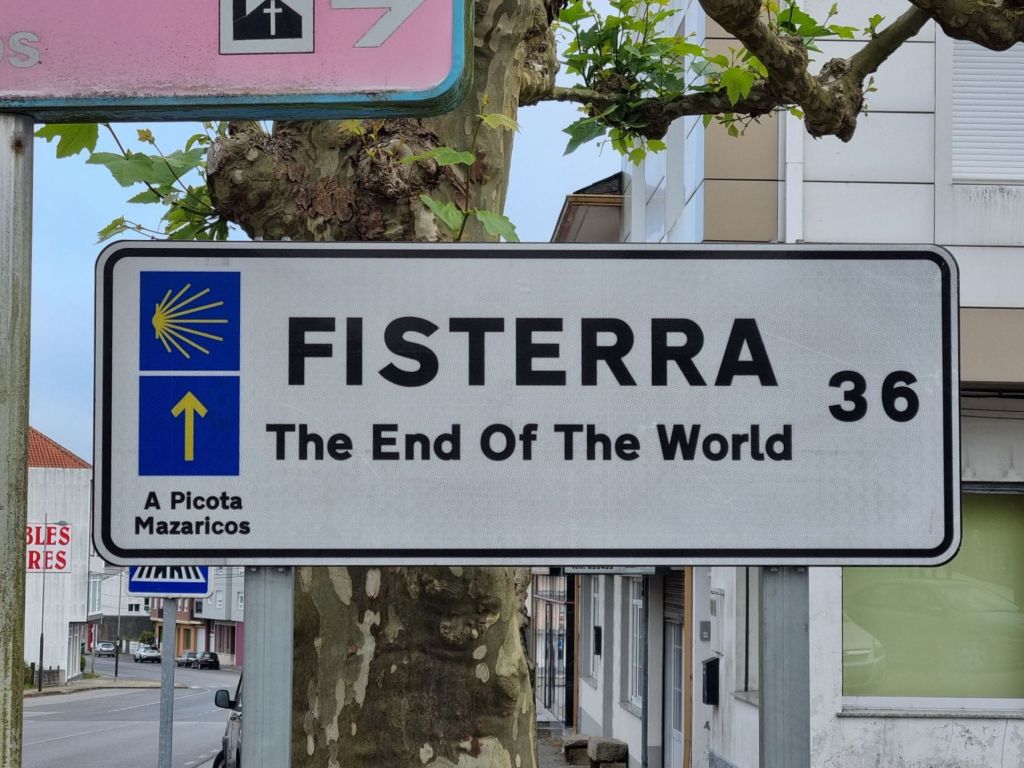
I was keen to walk the final leg from Cee to Cape Finisterre. Beryl’s feet have had just about enough of walking so we decided to split the route with Julian walking by himself for the walk to Fisterra and then Beryl joining in for the walk along the cape.
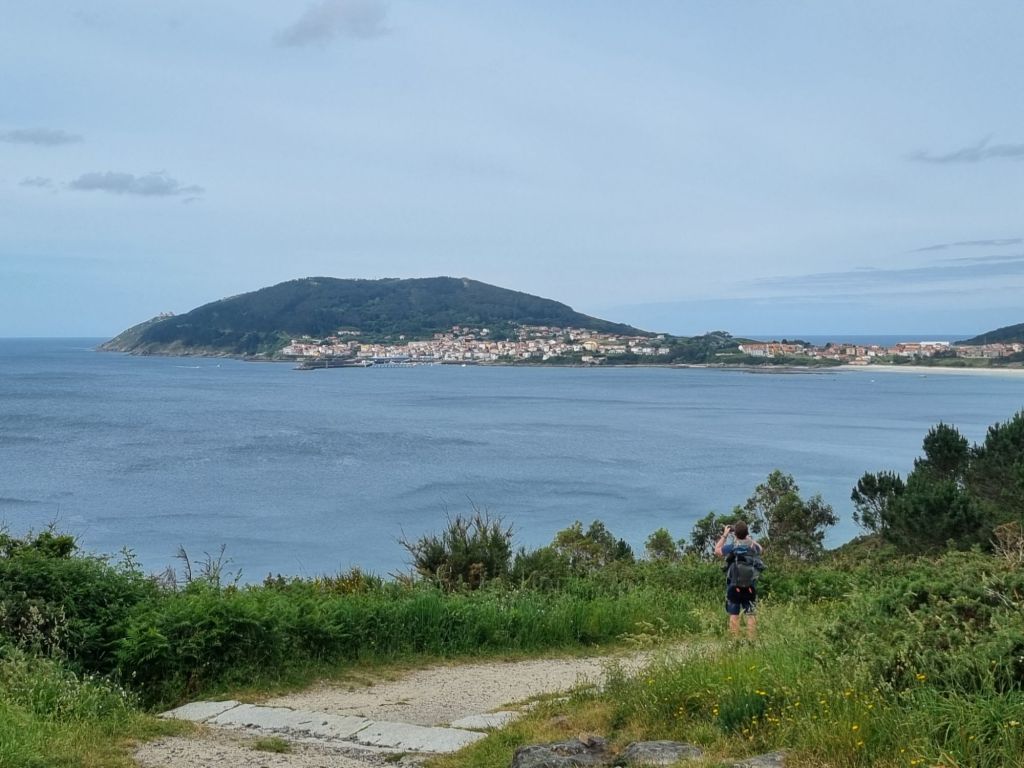
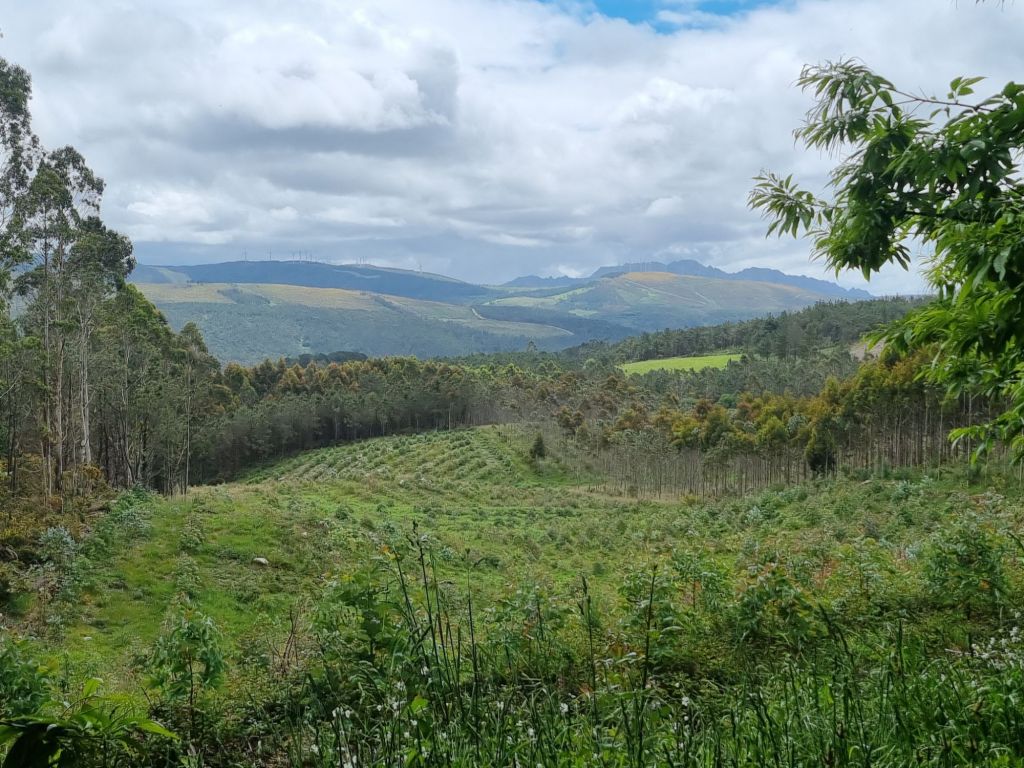
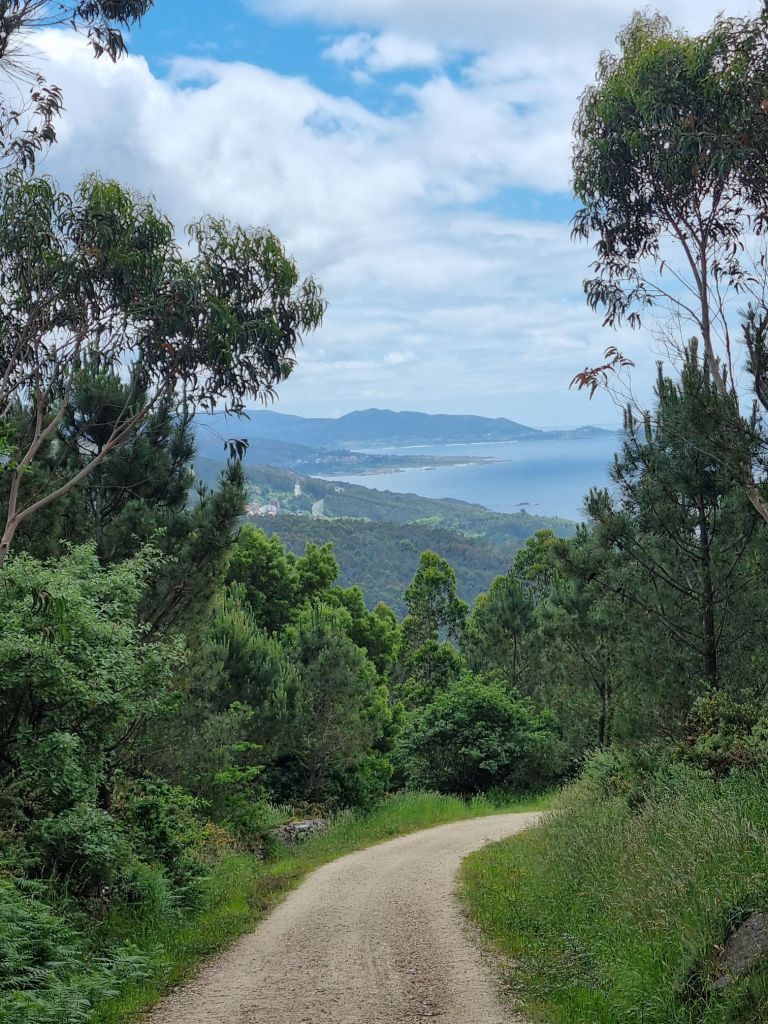
The first section was rather lumpy for a relatively short walk. The inlets or rias are separated by 100 metre ridges. It was a very pleasant walk through woodland with increasing views of Finisterre.
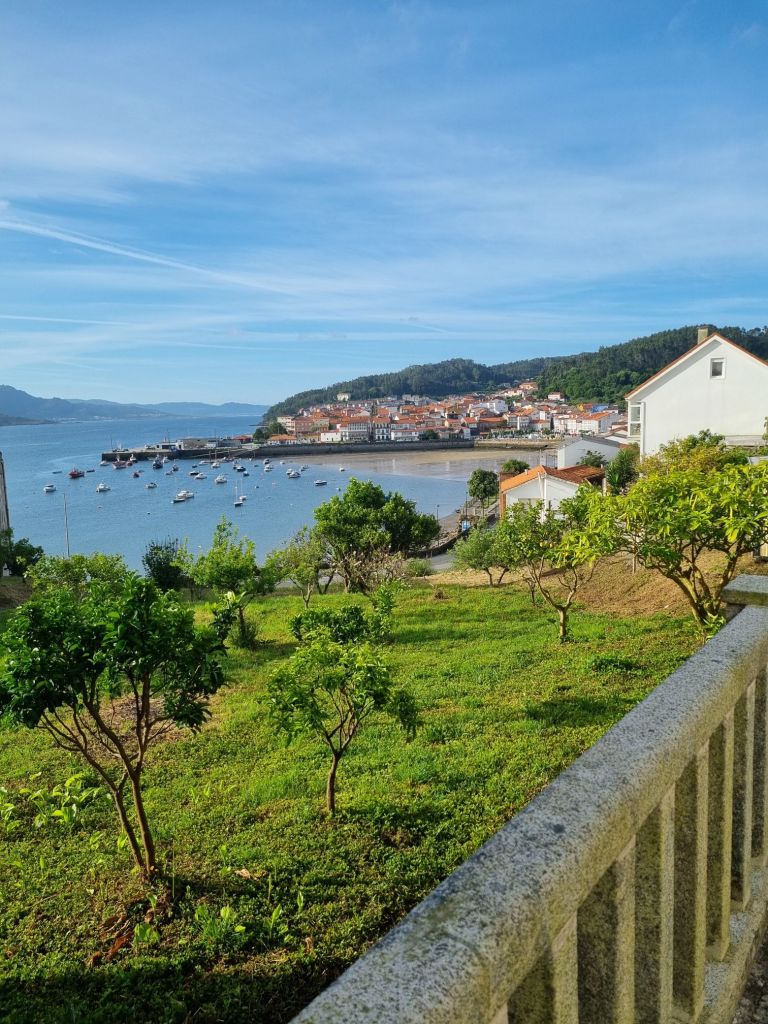
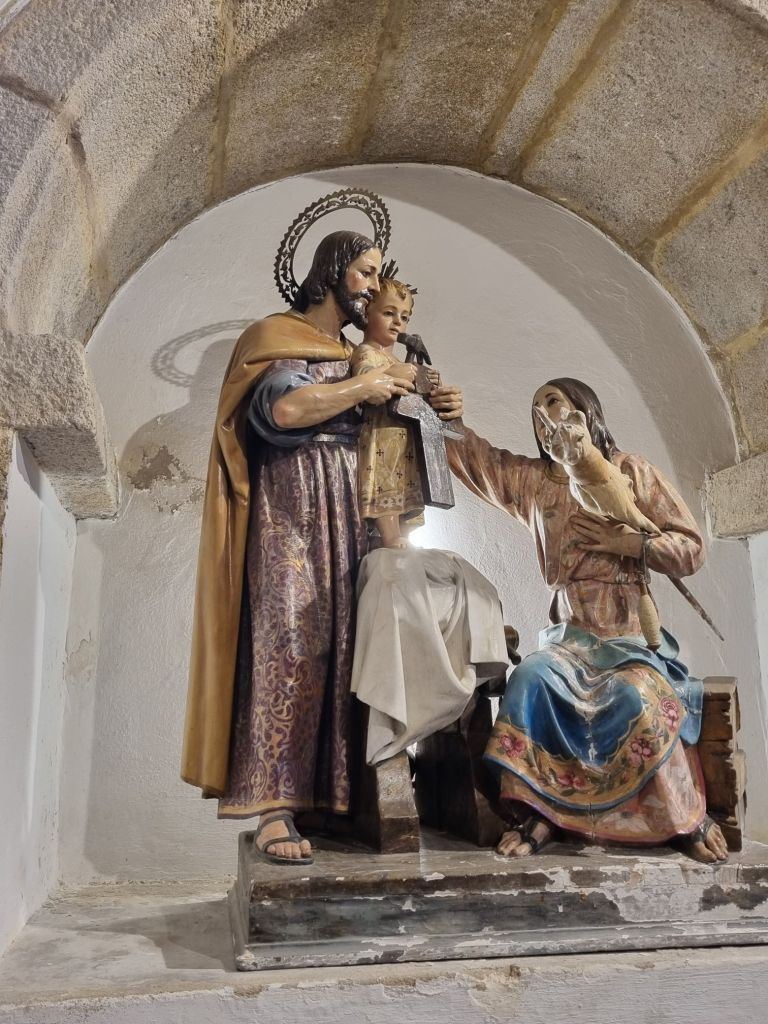
CorcubiónAn unusual tableau of the holy family Cabo Finisterre in the distance
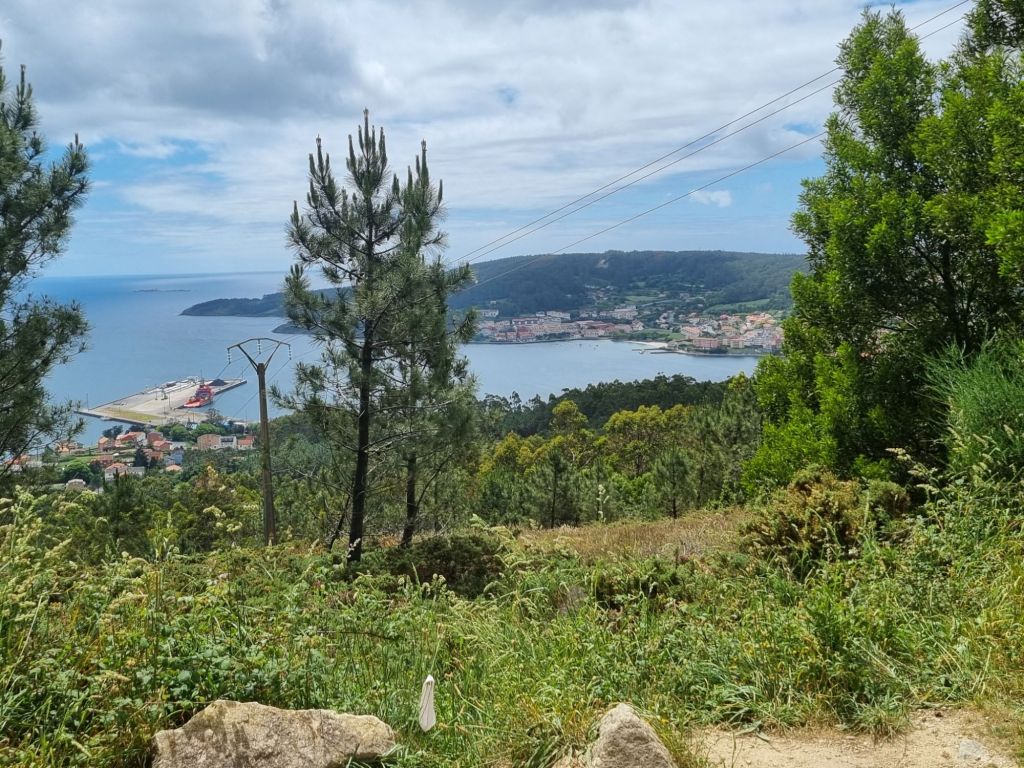
The town of Fisterra came into view. The whole cape is connected by a narrow isthmus so the open Atlantic can be seen beyond.
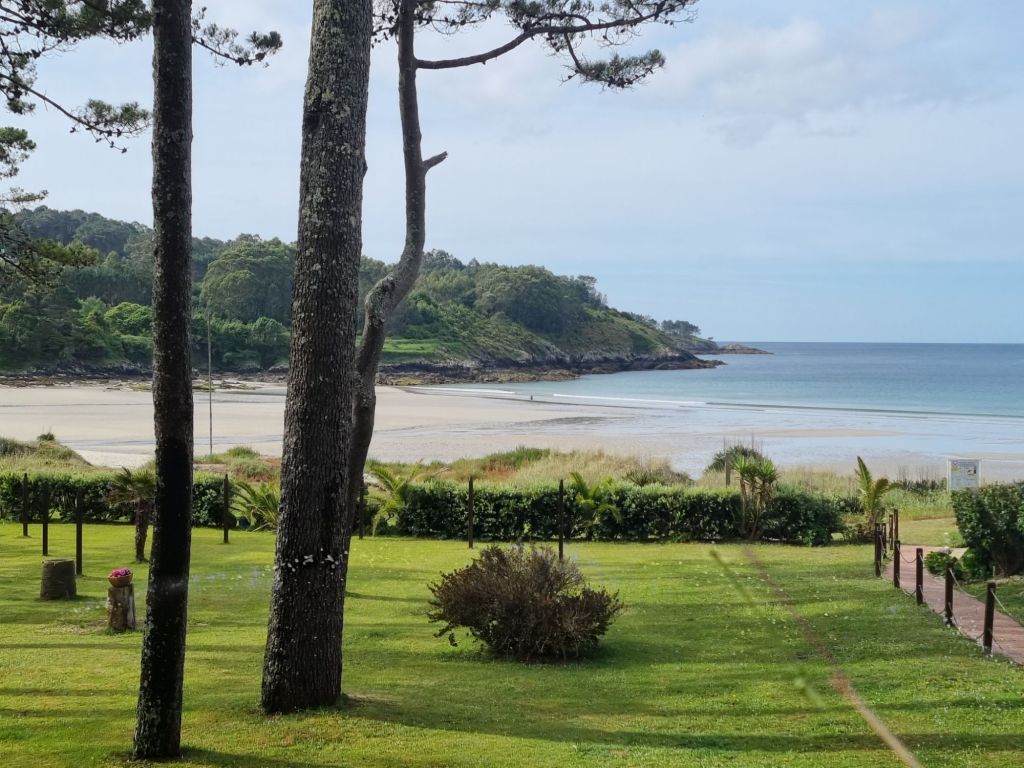
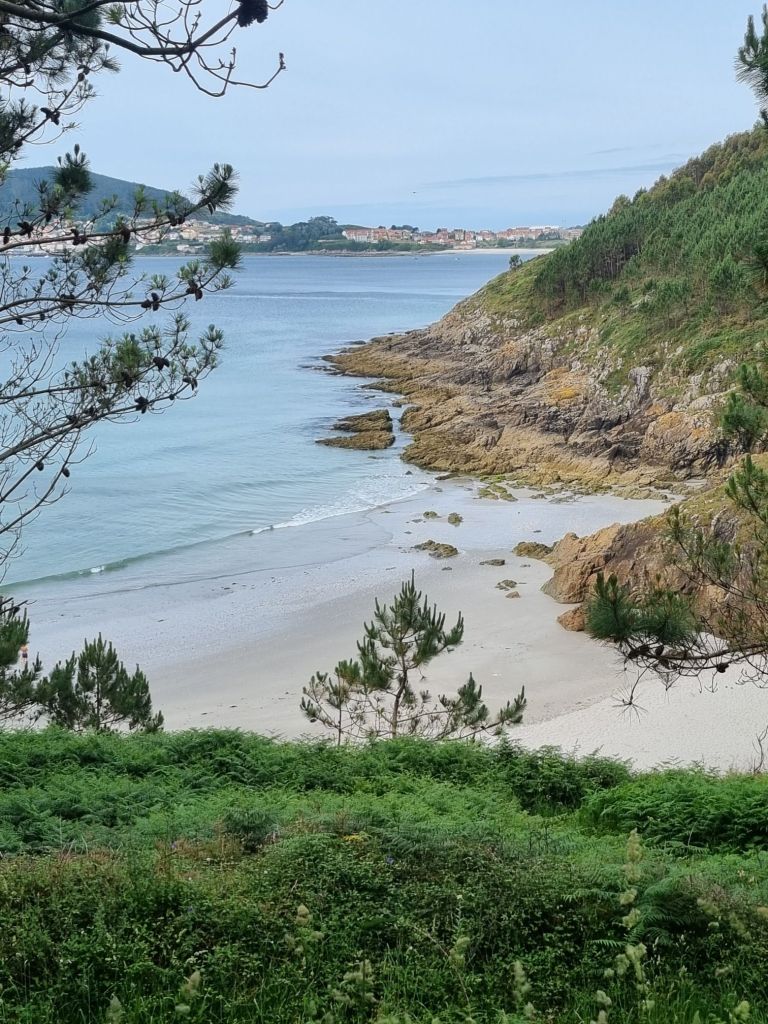
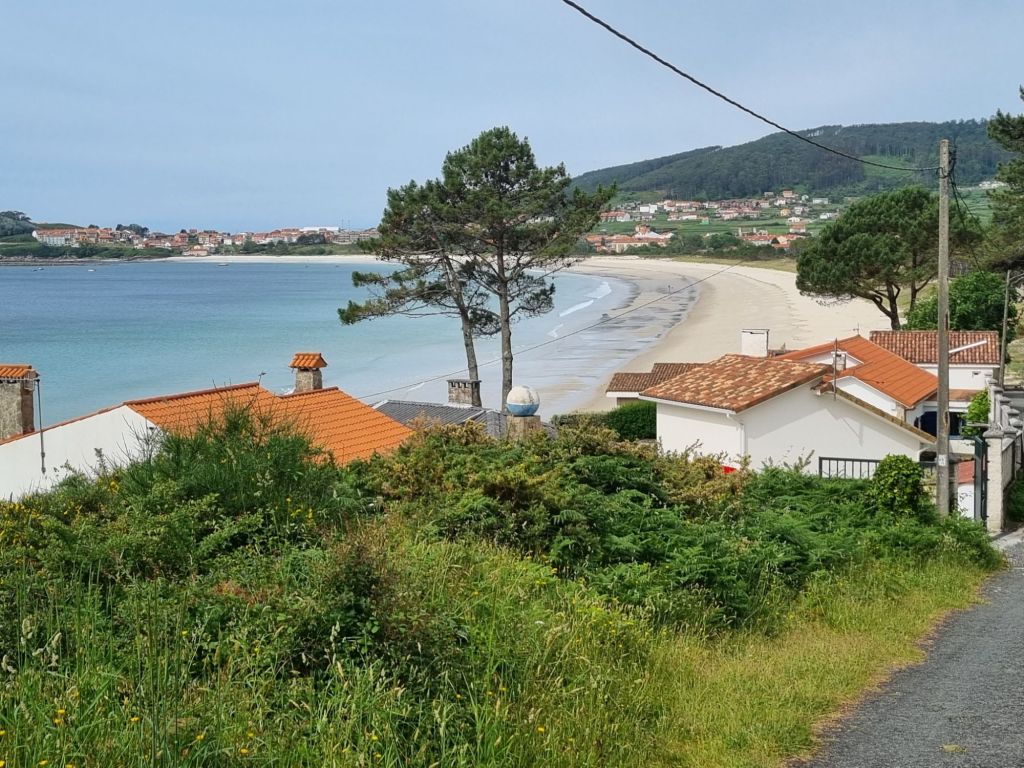
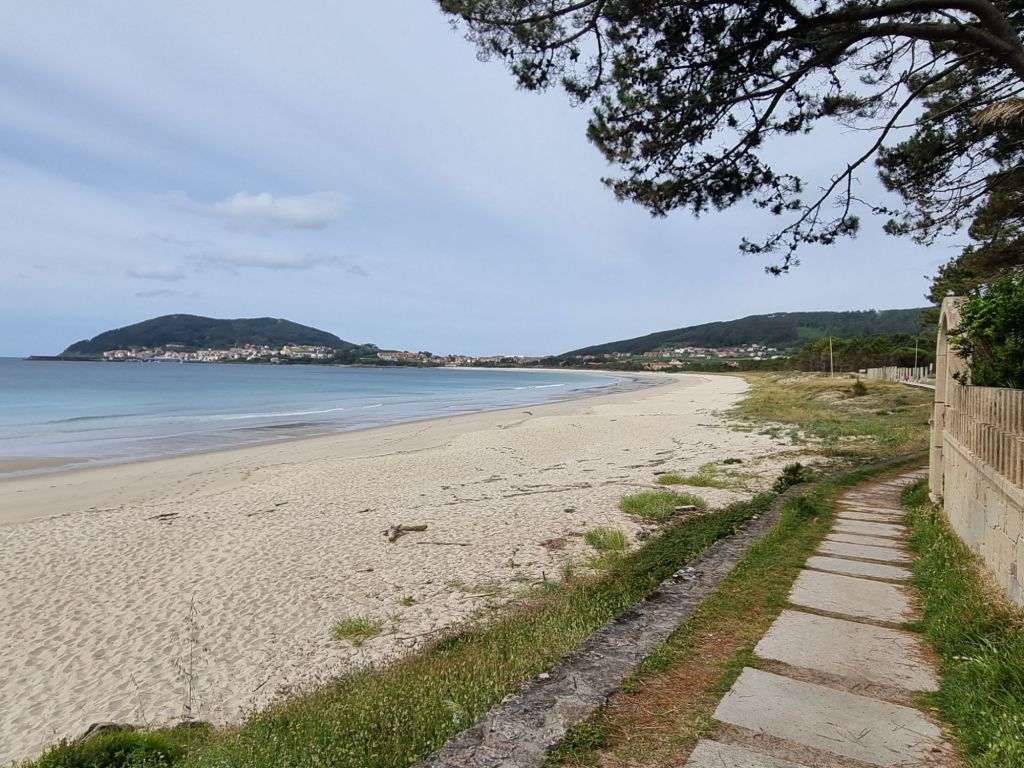
A small beach tucked away The main beach stretches for about 2 km
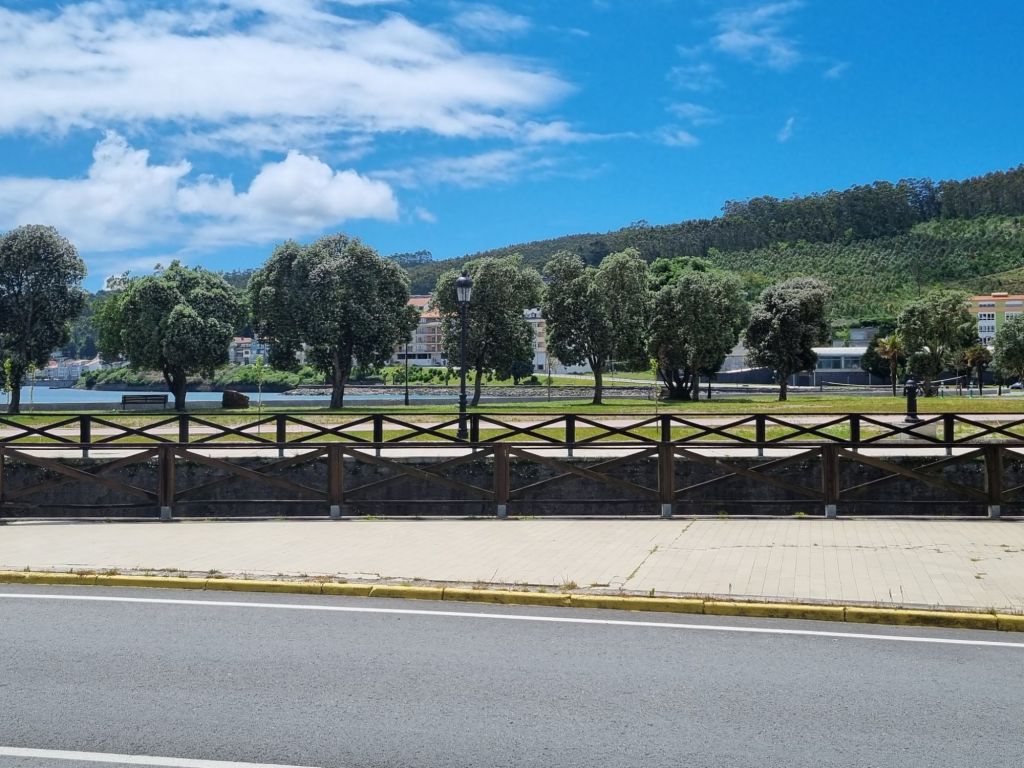
Beryl and I met up on the promenade where there are several promising fish restaurants for this evening.
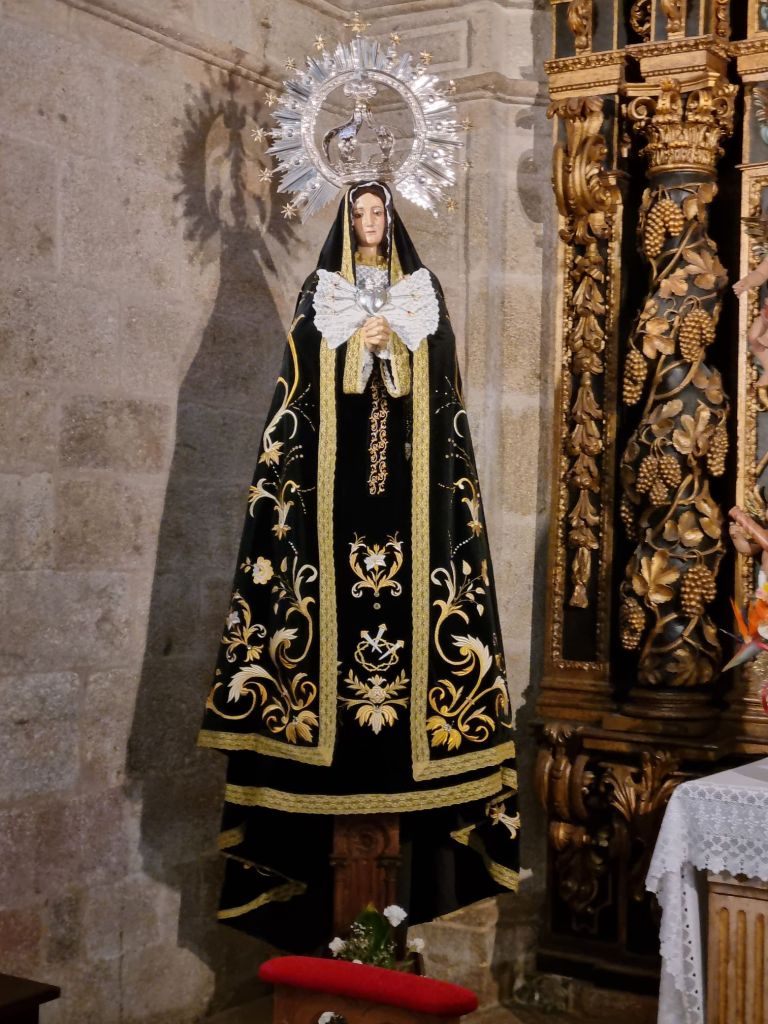
The church of Santa Maria das Areas had some beautiful embroideries which we haven’t seen much of this year. I do find these Madonnas quite moving.
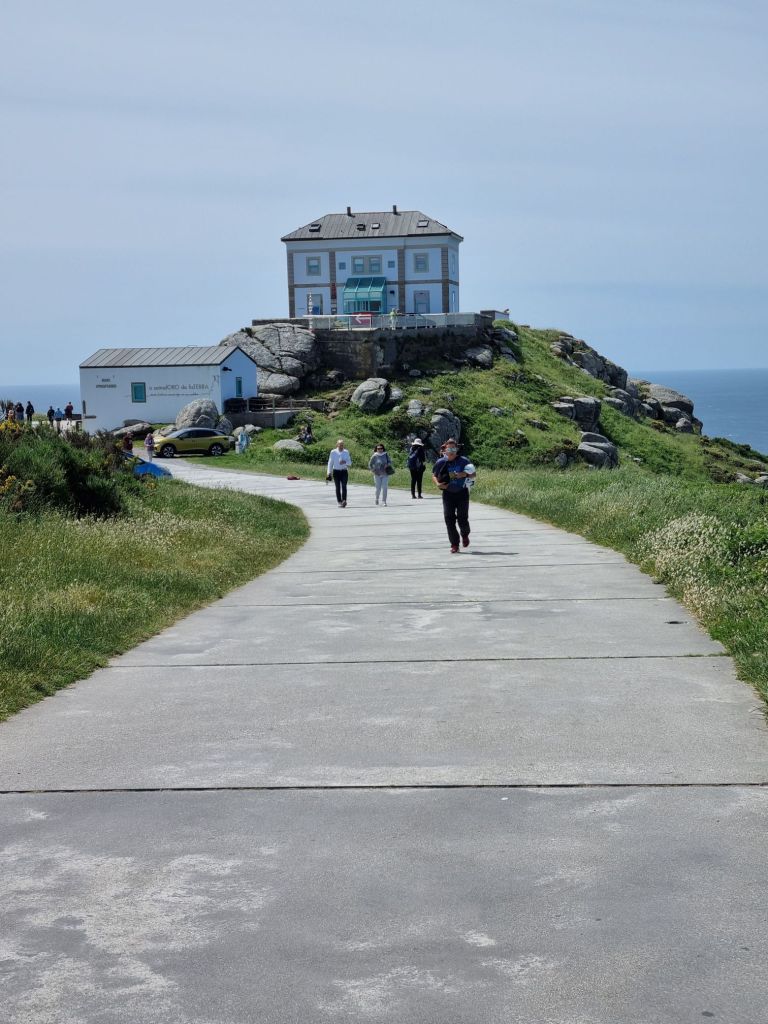
It was a trudge up the road to the end of the cape. There was a large car park with several coaches and the ubiquitous trinket shops. It was all reminiscent of Land’s End in Cornwall.
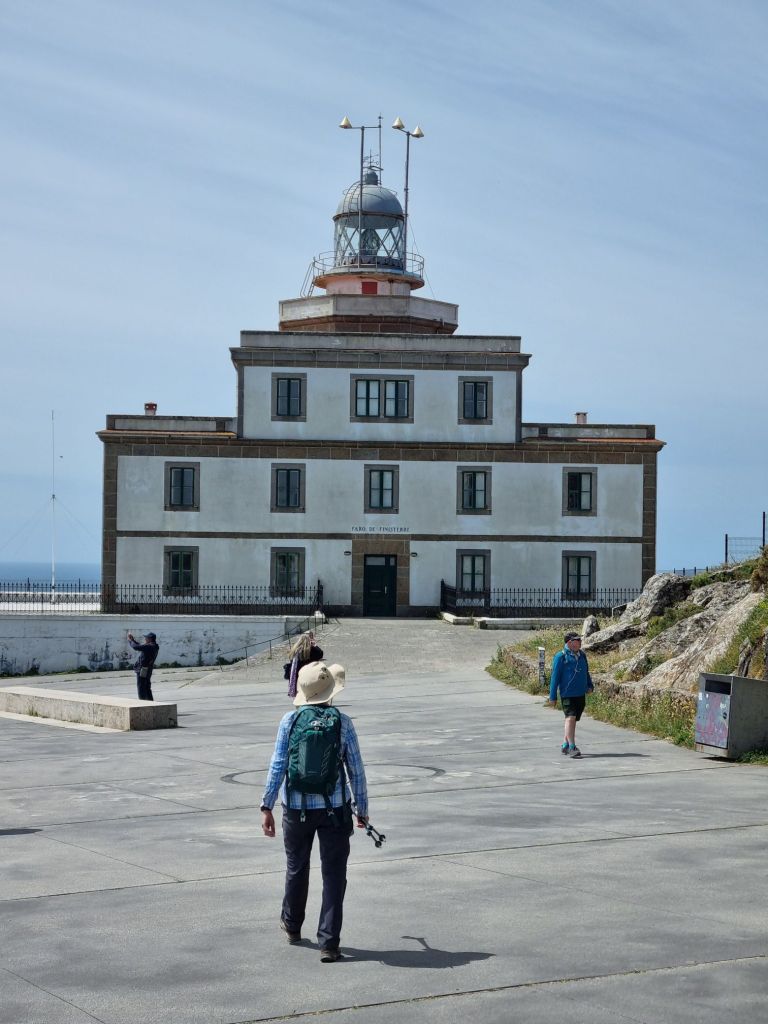
First, the hotel Then, the lighthouse And finally the end
There were plenty of people milling around and a busker with a loud rendition of Another Brick in the Wall. We sat for a while but it wasn’t a conducive atmosphere for reflection.
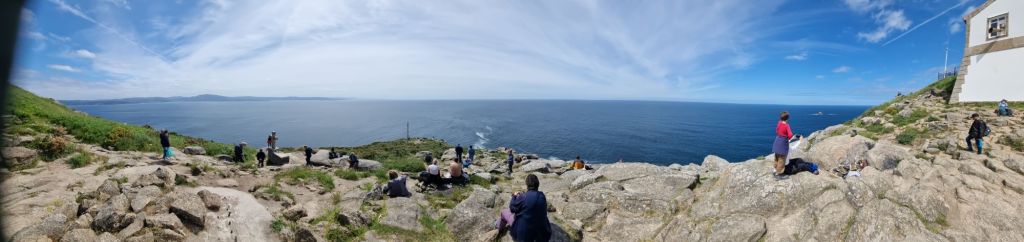
A wide panorama
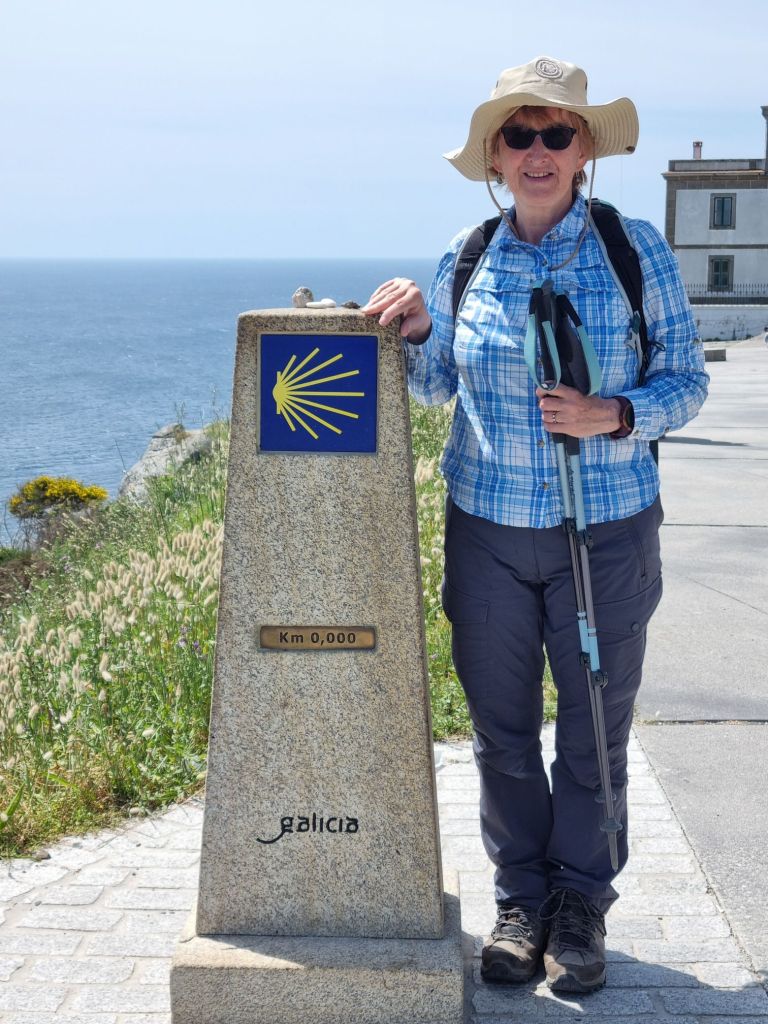
It was pleasing to have arrived. We’ve walked a long way to get here.
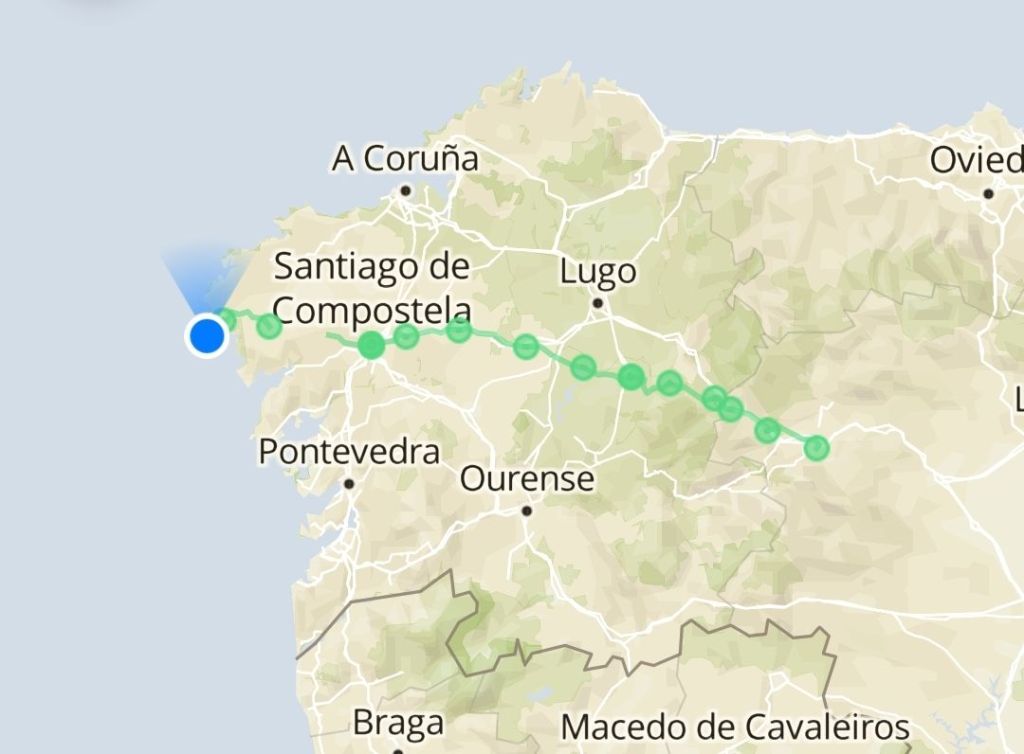
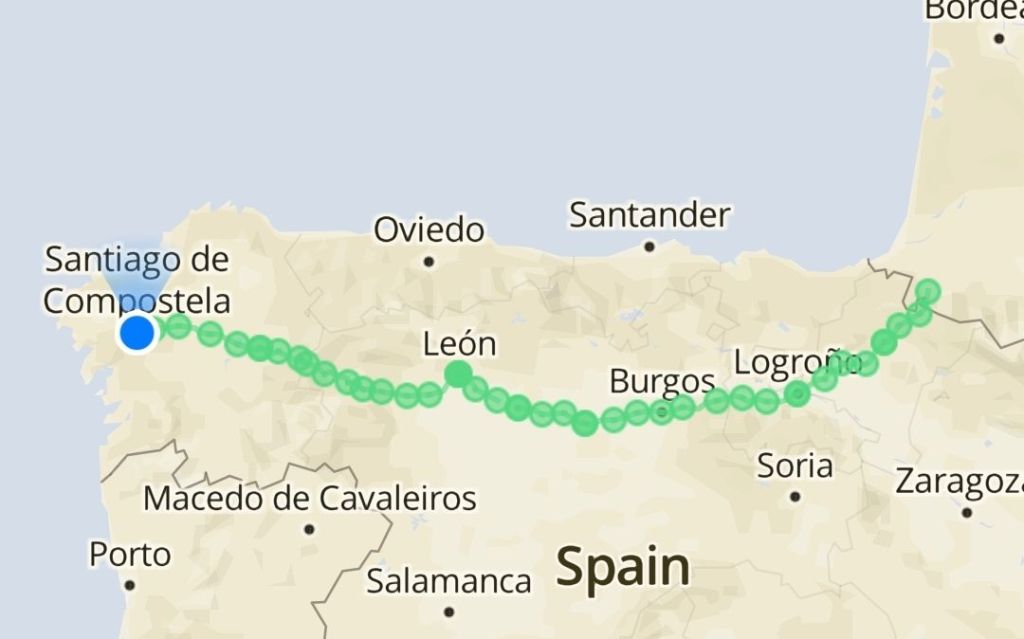
900 kms across northern Spain
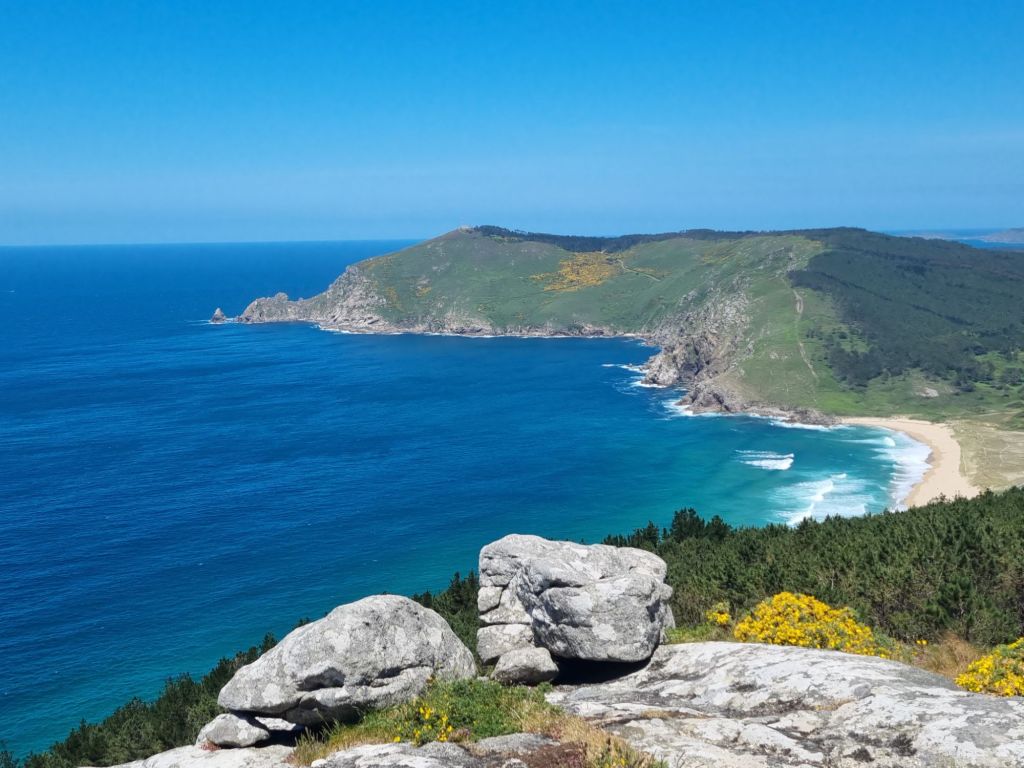
Rather than returning by the road we walked over the headland. It was very quiet with dragonflies flitting around. I had hoped to see the open sea but we’d chosen the wrong path. There was a way back up to the top which Beryl wasn’t keen to do so I went up by myself.
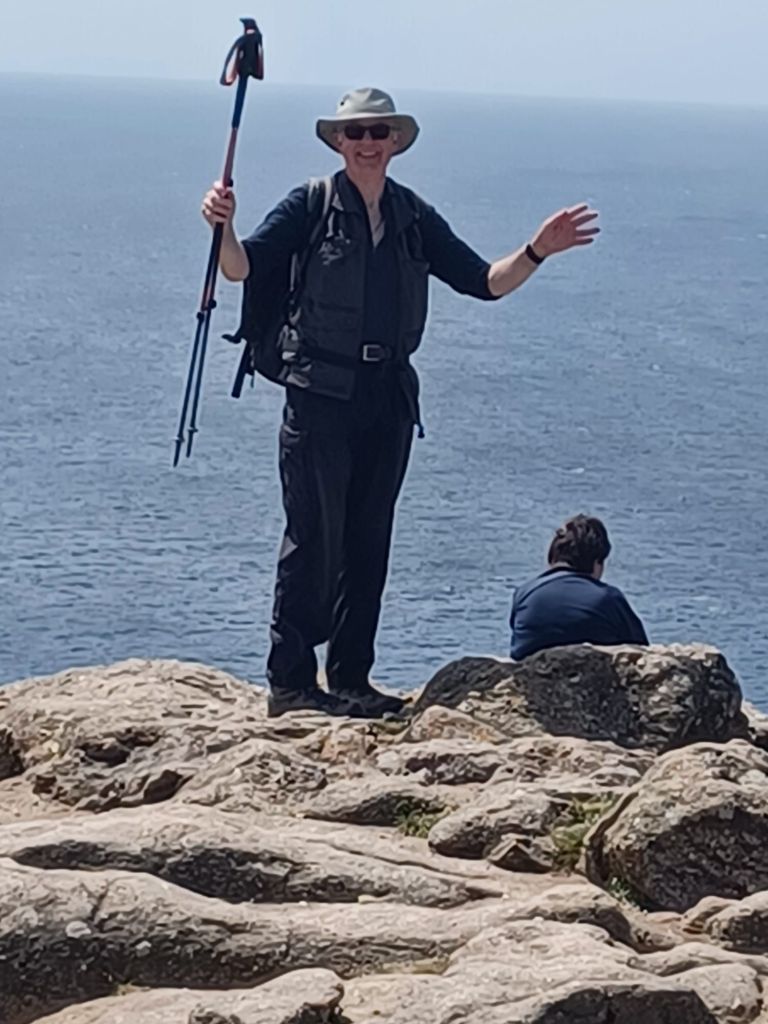
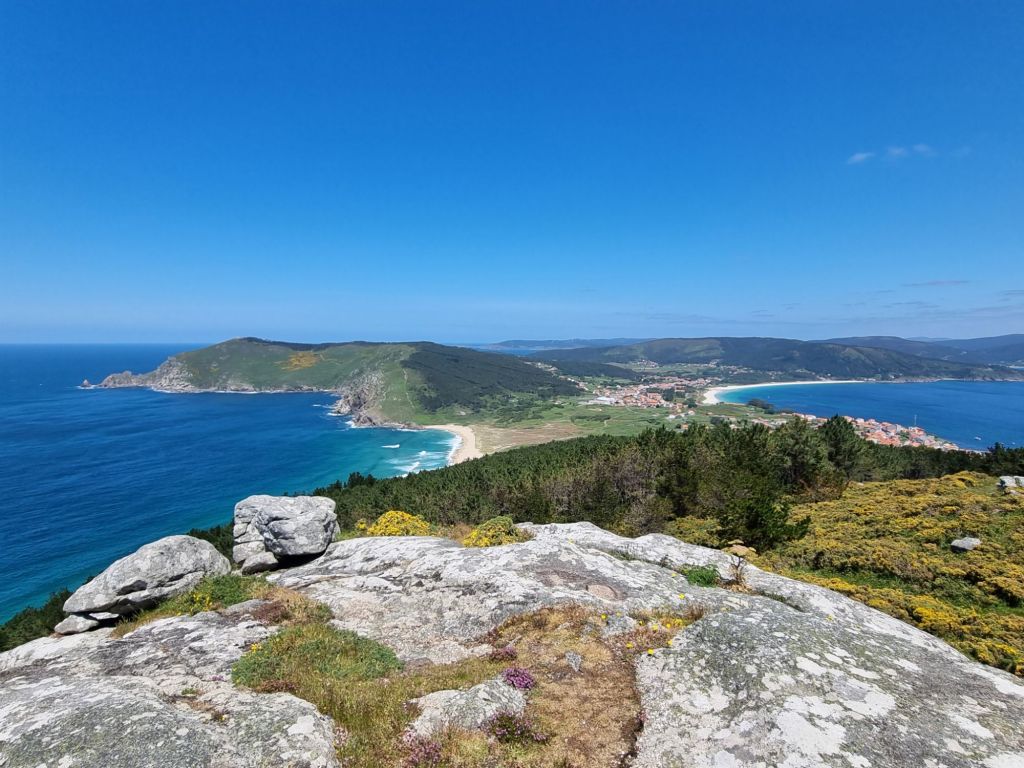
It was a beautiful, rocky place at the top. It required a little scrambling over granite rocks to reach the summit but well worthwhile.
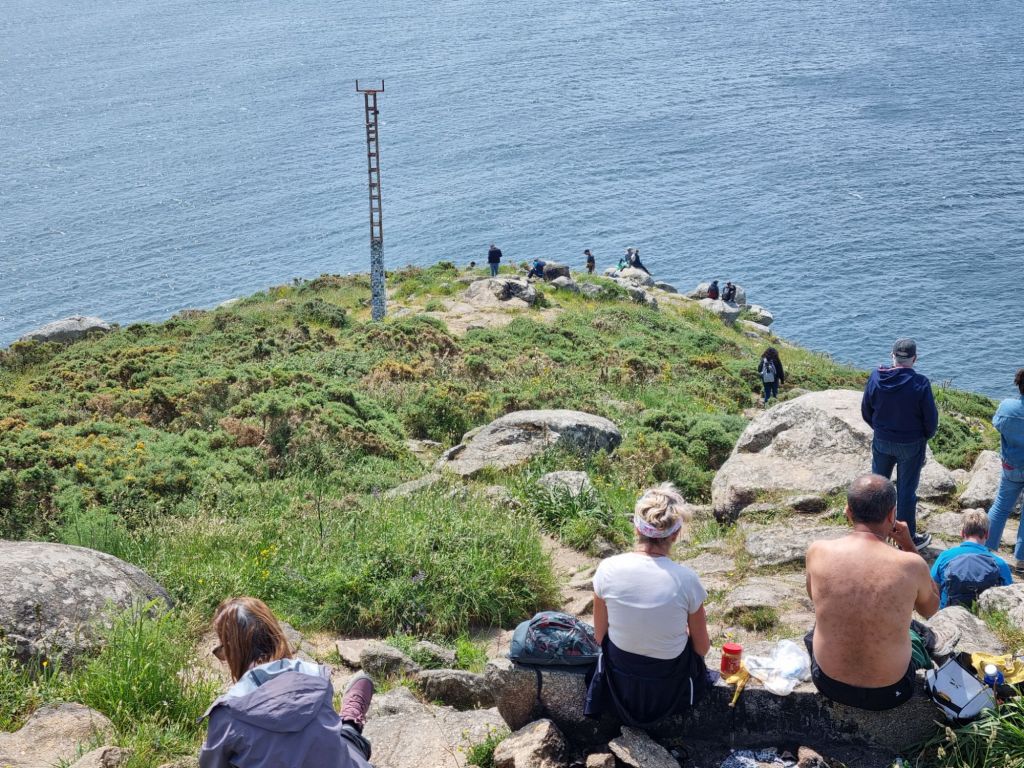
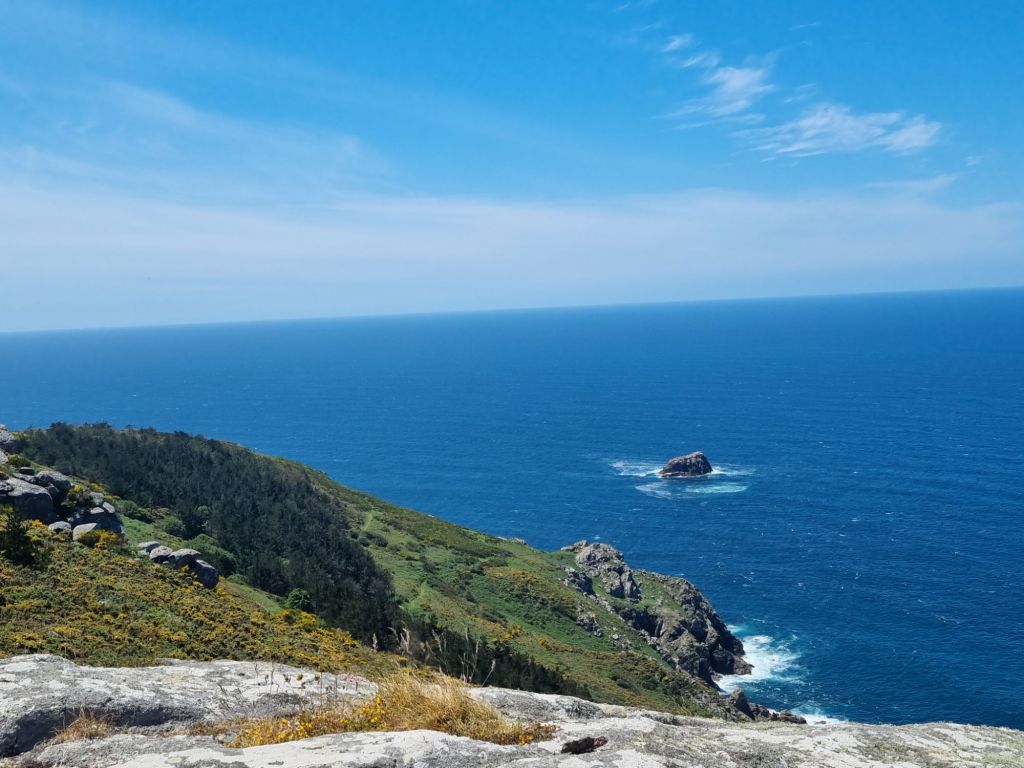
The Atlantic views were stunning. There was no one else around. The only sound was the wind. It was a special place. I sat and pondered for a while. This was what I had hoped for at the end of our journey.
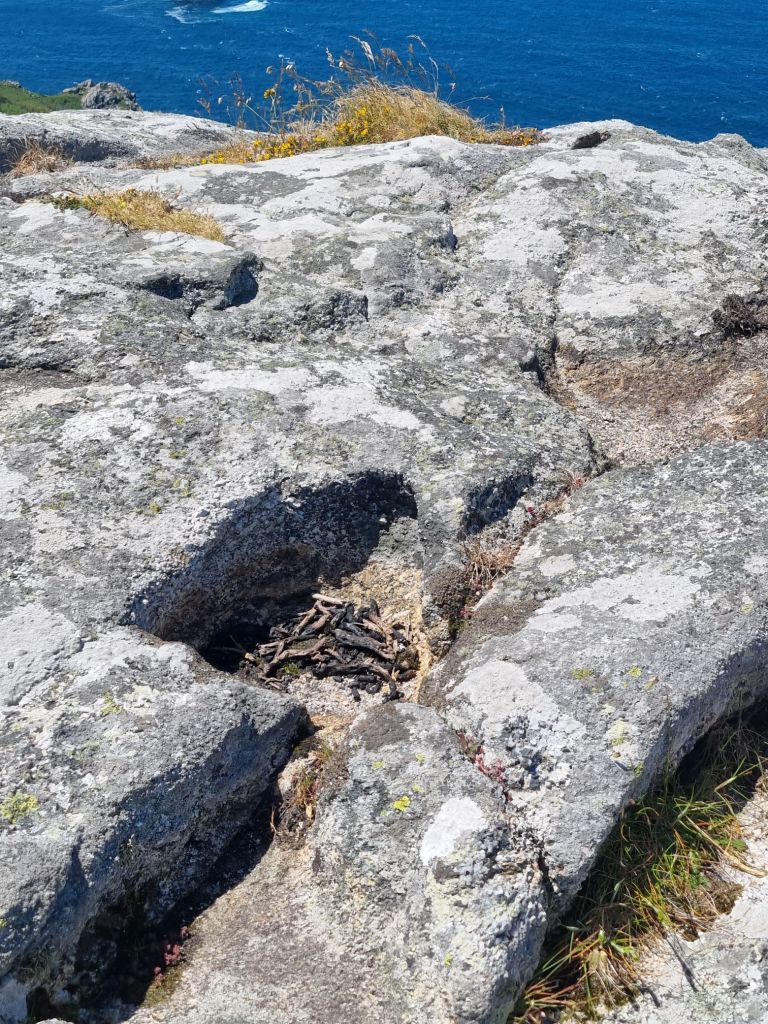
Others have found it special too. On the summit boulders there was a fire pit with a few embers.
Watching the sun go down at this spot would be amazing. Unfortunately I don’t have a head torch to get down again afterwards.
The remaining walk back to town was clearly an ancient route through steep walls and cobbled with large stones.
And so ends our memorable pilgrimage in 2025.
There has been plenty to reflect upon. I shall return to this tomorrow as we travel home.
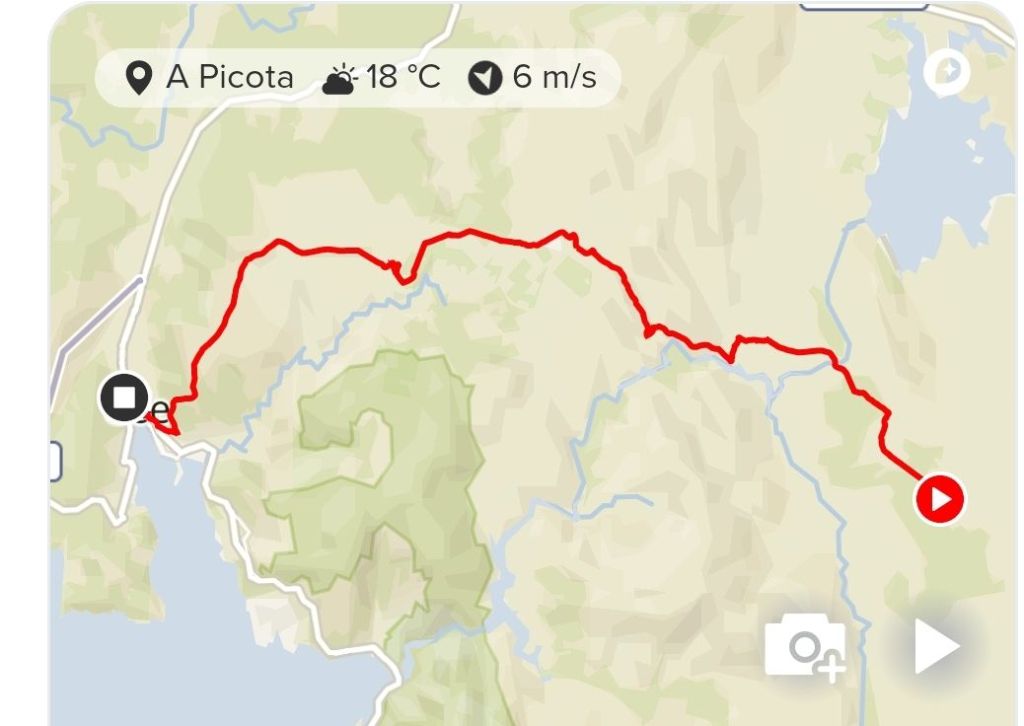
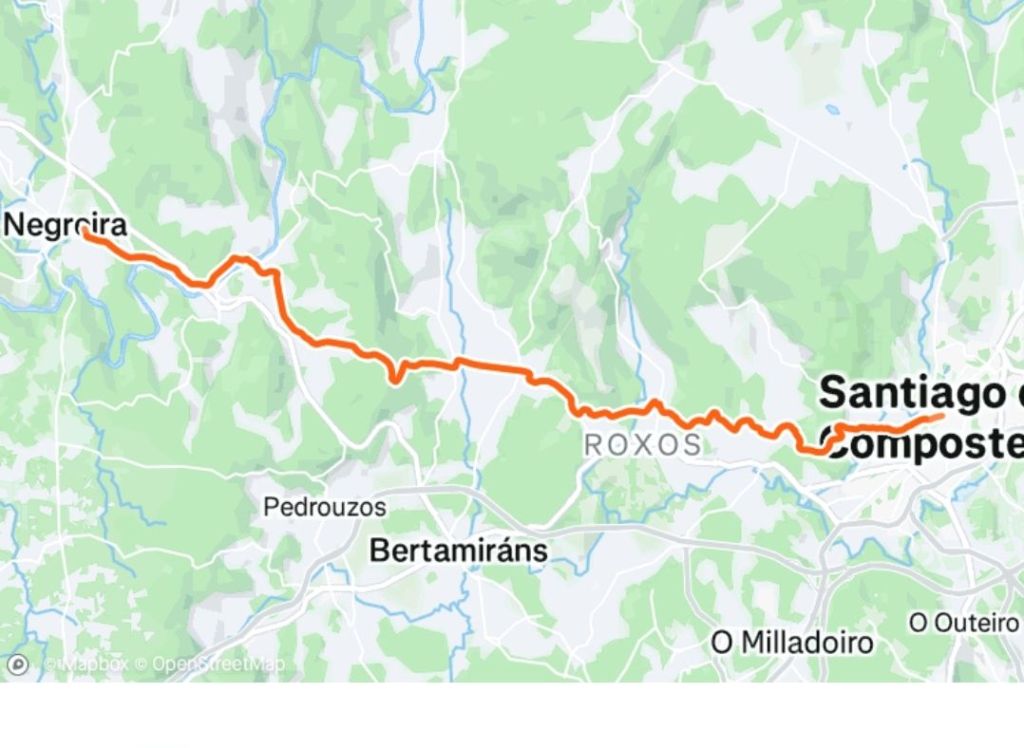
We had purposed to take the bus for the next stage from Negreira as it was uninspiring to walk a long distance mainly on roads. The bus was very convenient but we almost missed the only bus of the day with a mix up of the bus numbers. Fortunately we asked the bus driver in the nick of time. An hour later we were at our destination.
There was little to do in the small town of A Picota other than sit in a coffee shop and while away the time with our books. This was all very pleasant. We enjoyed chatting with a couple from New Zealand and an American woman over dinner.
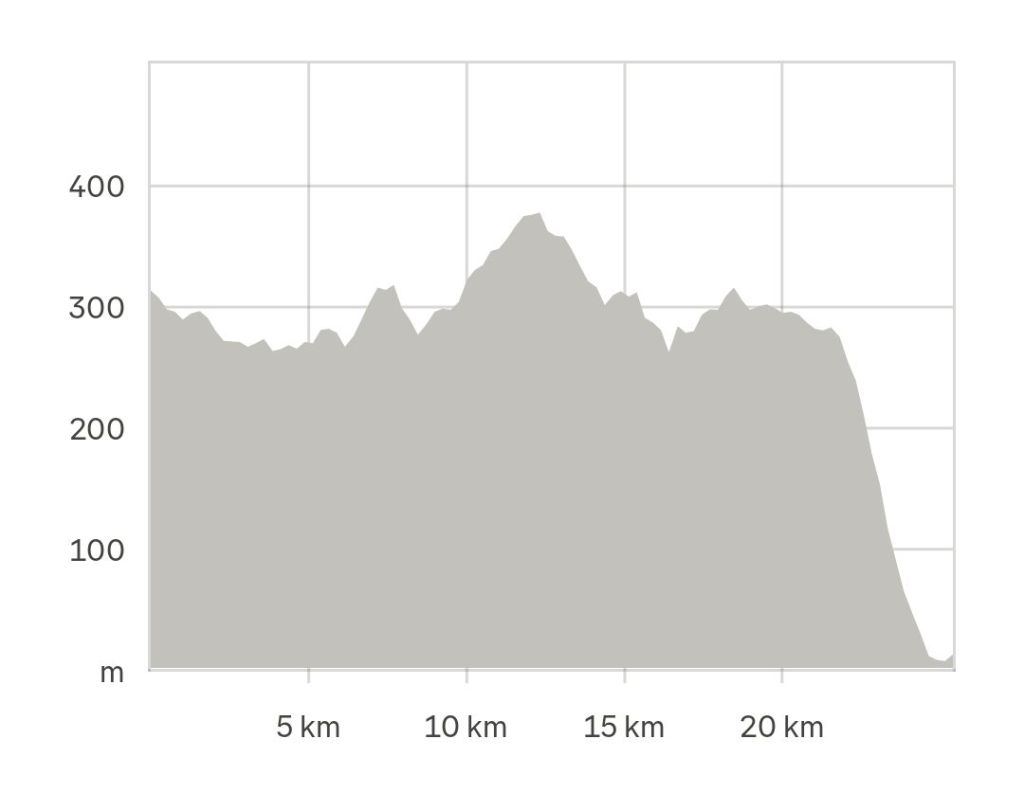
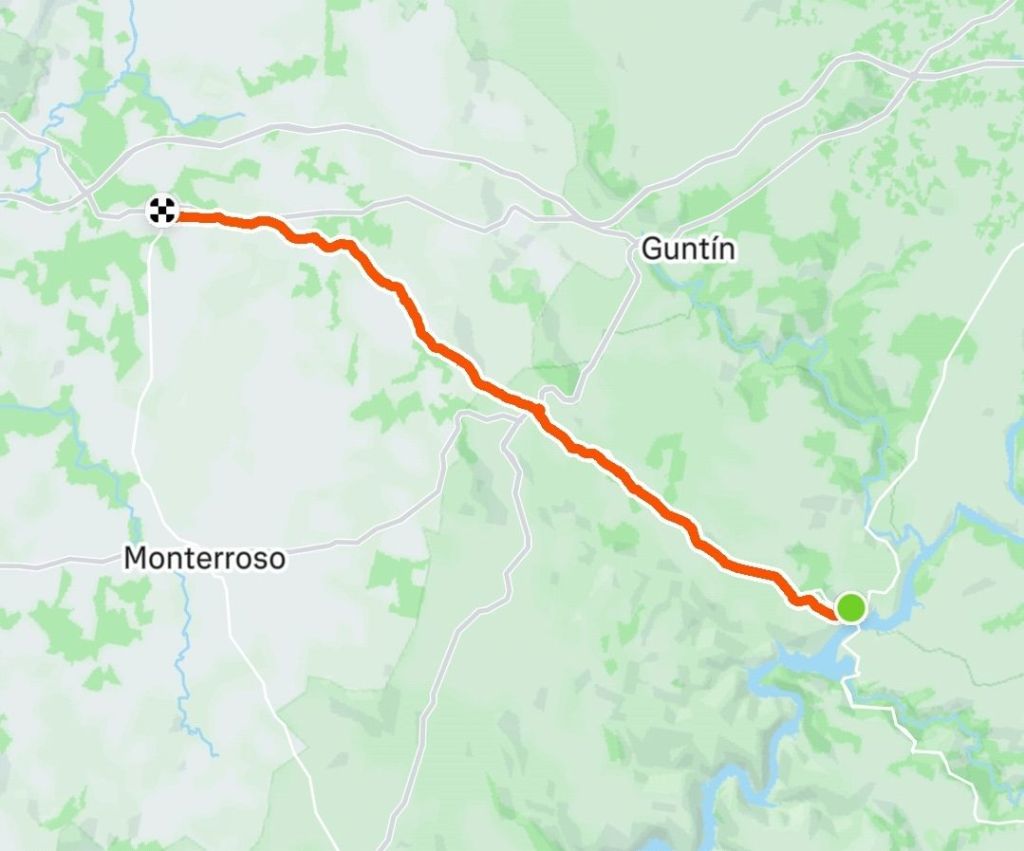
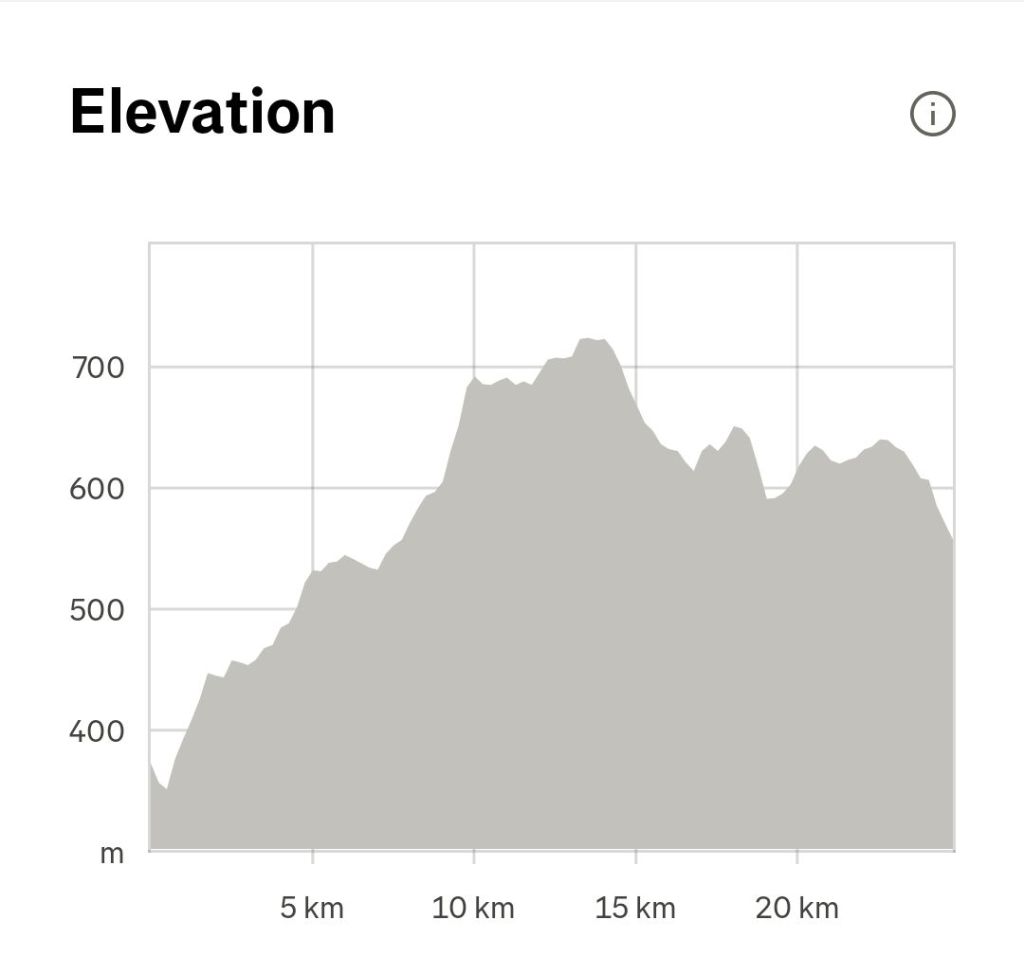
The next stage had a better write up so we decided to give it a go. It was 25 km with just over 220 metres of ascent, the height gain proving to be an underestimate. The bimble along the top was rather more hilly than we had expected.
It was though a very pleasant walk through woodland and higher ground. The initial section was rather too much road walking but as it was Sunday morning the roads were very quiet.
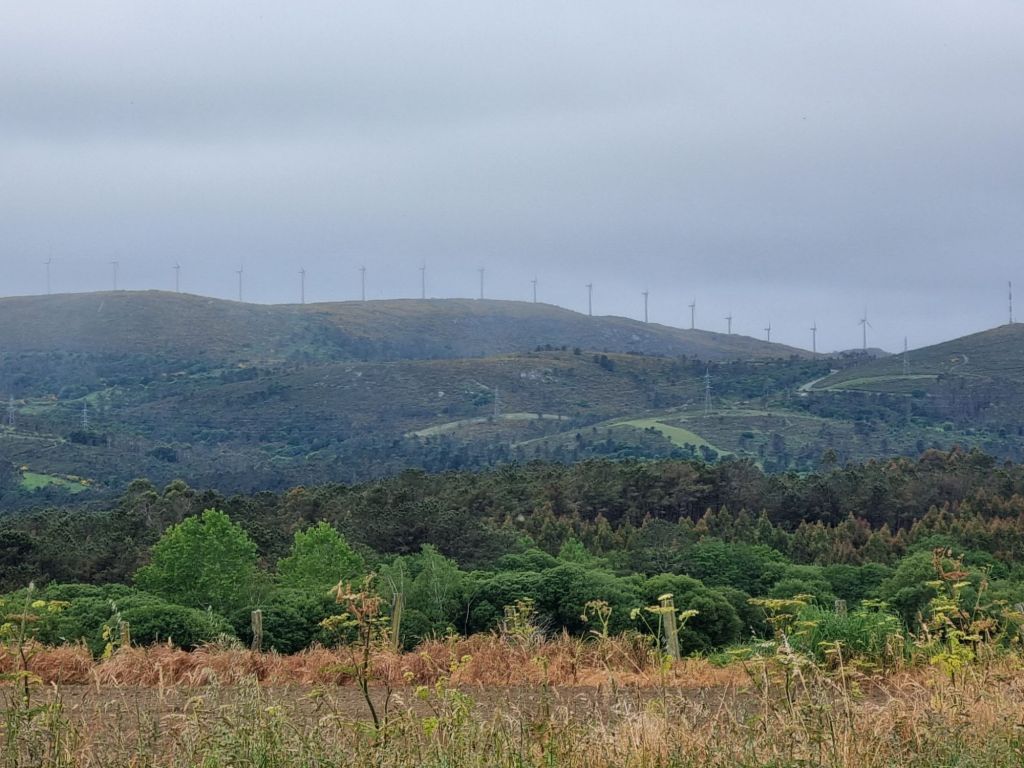
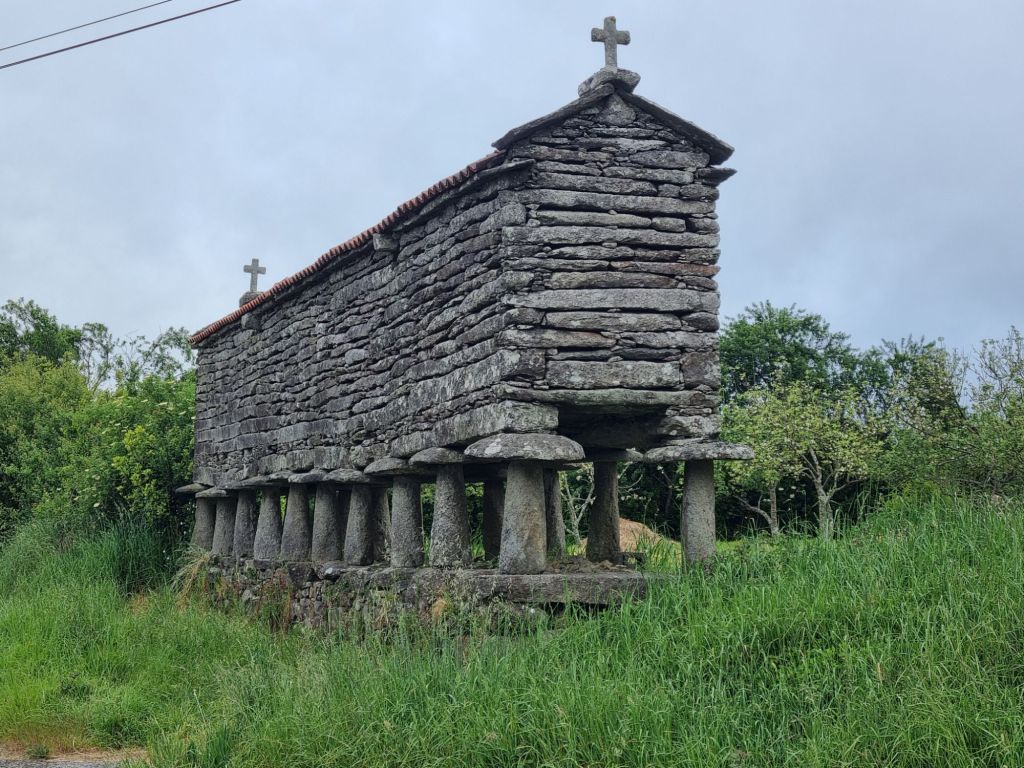
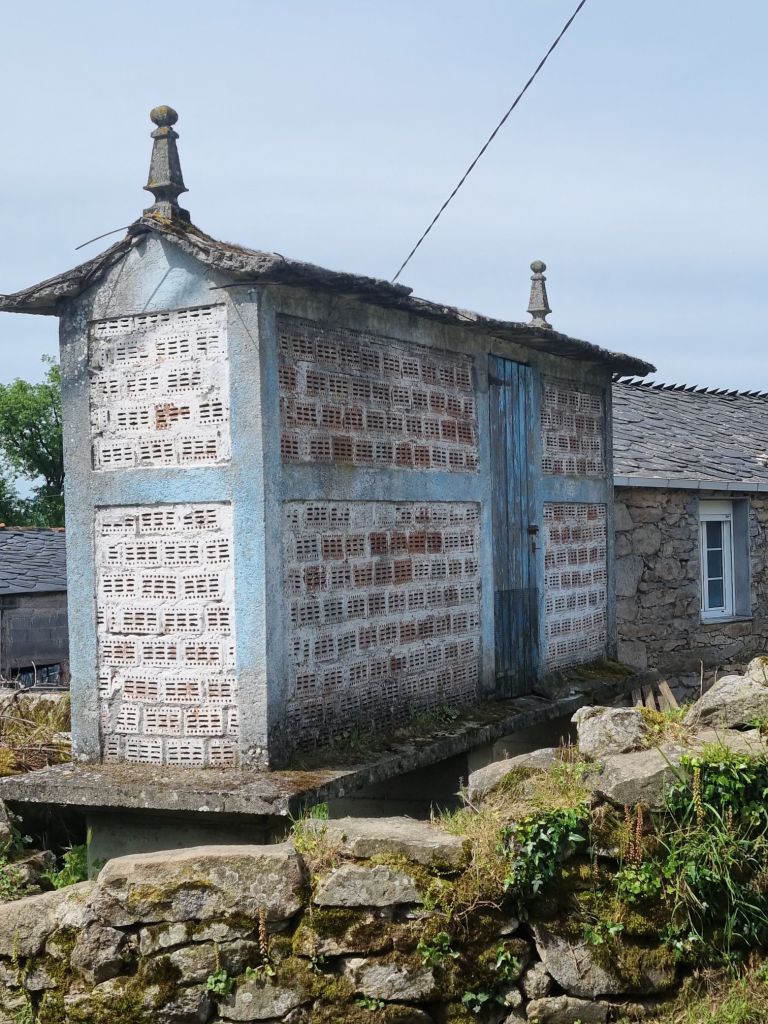
Our last two daysWind turbines along the ridgeA large granary built of stone
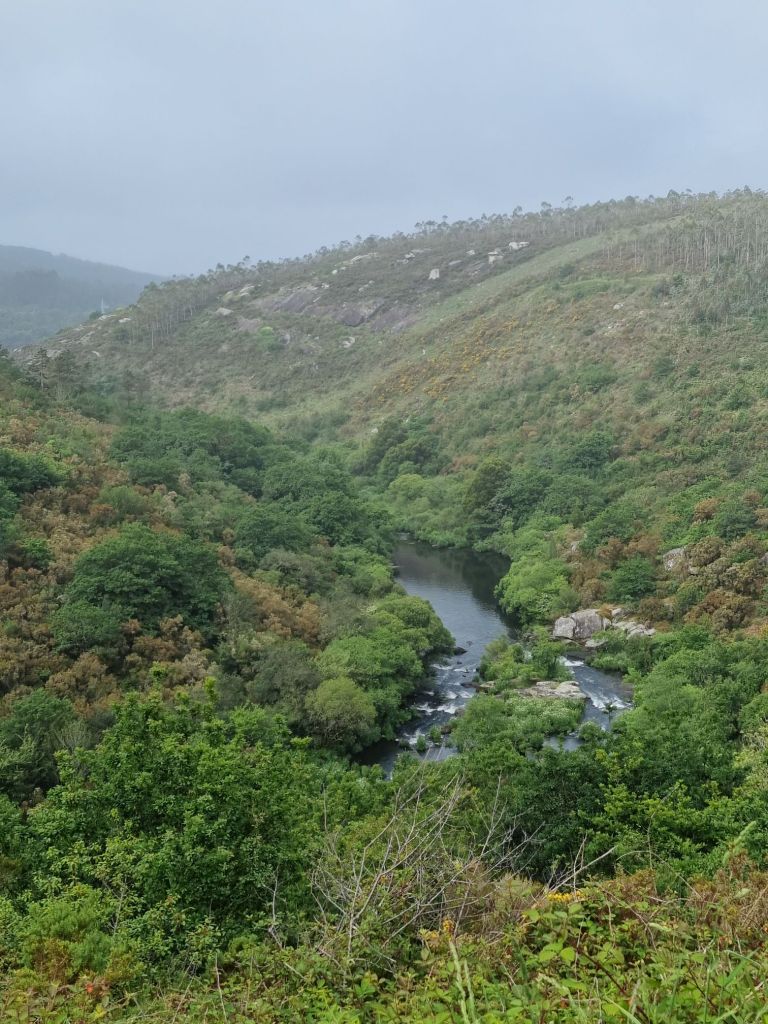
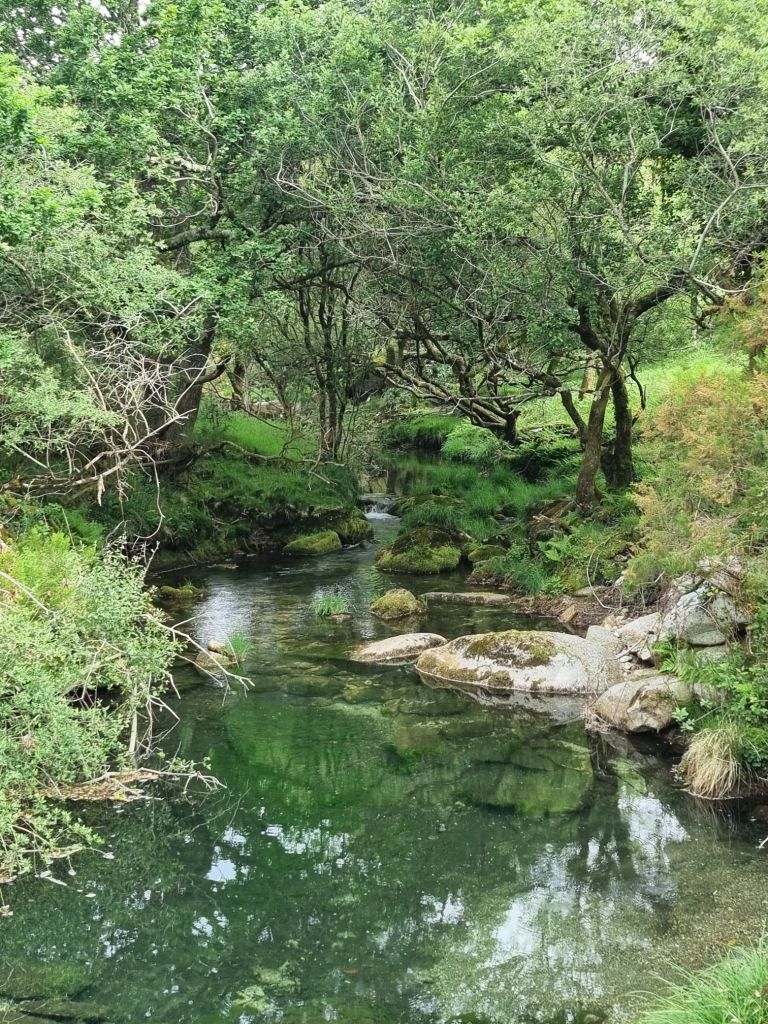
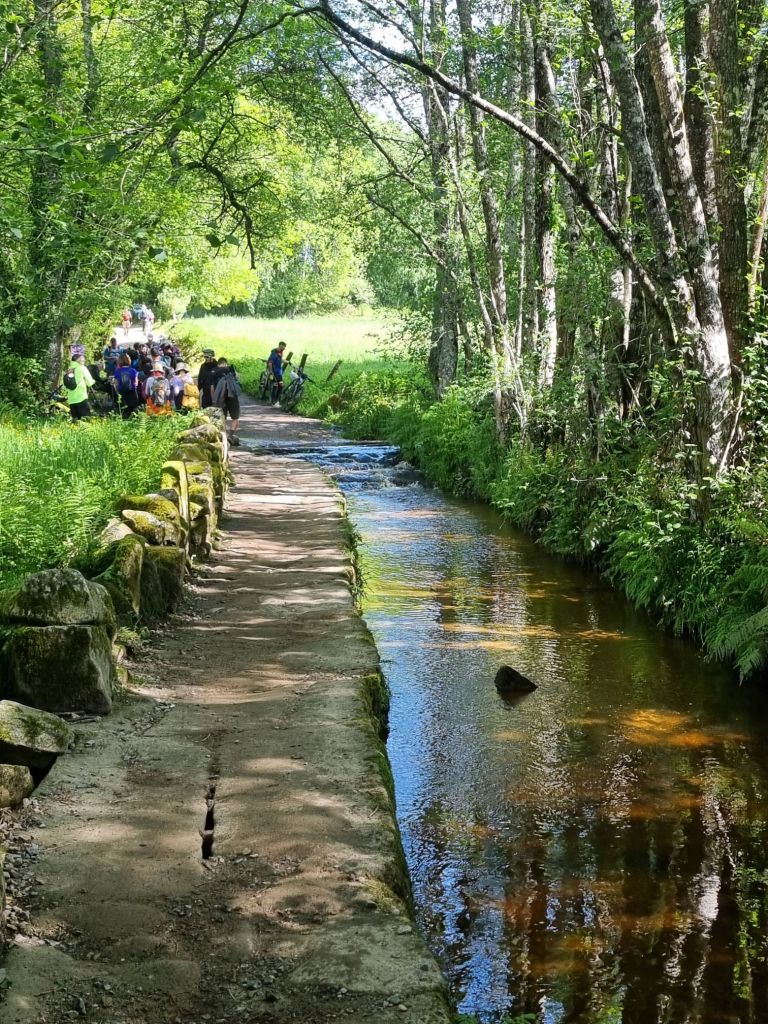
After a coffee stop, actually zumo de naranja fresh orange juice, we headed over the first hills. The walking was delightful with a river and stream. The large granite boulders in the water courses reminded me of Nigeria.
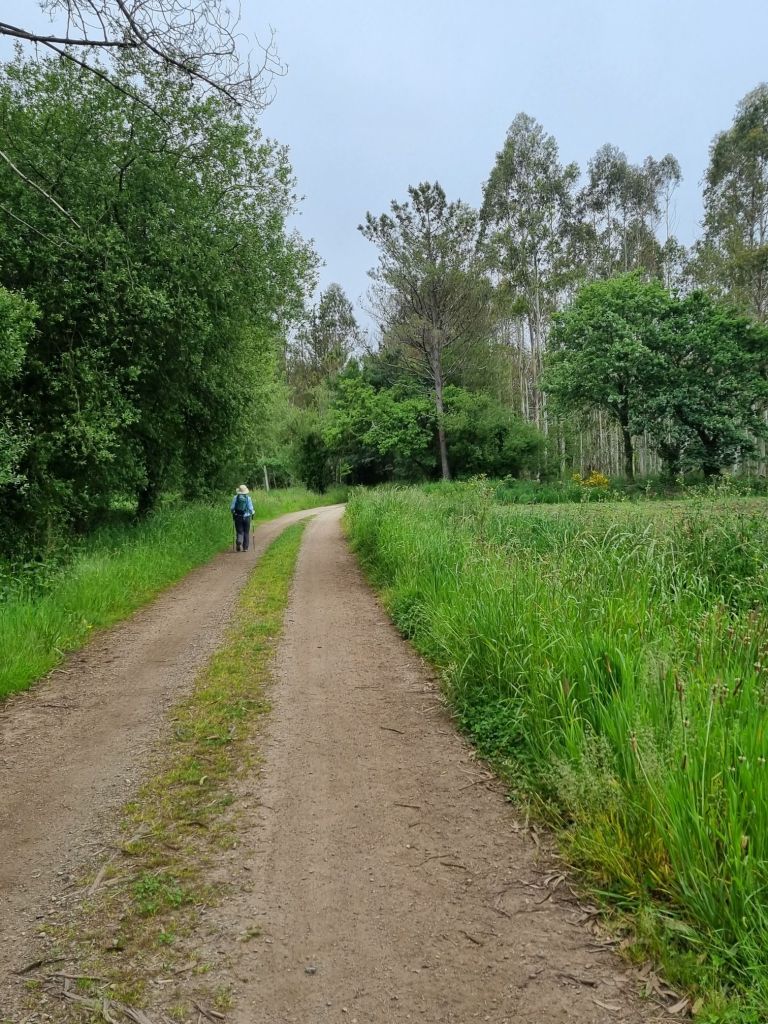
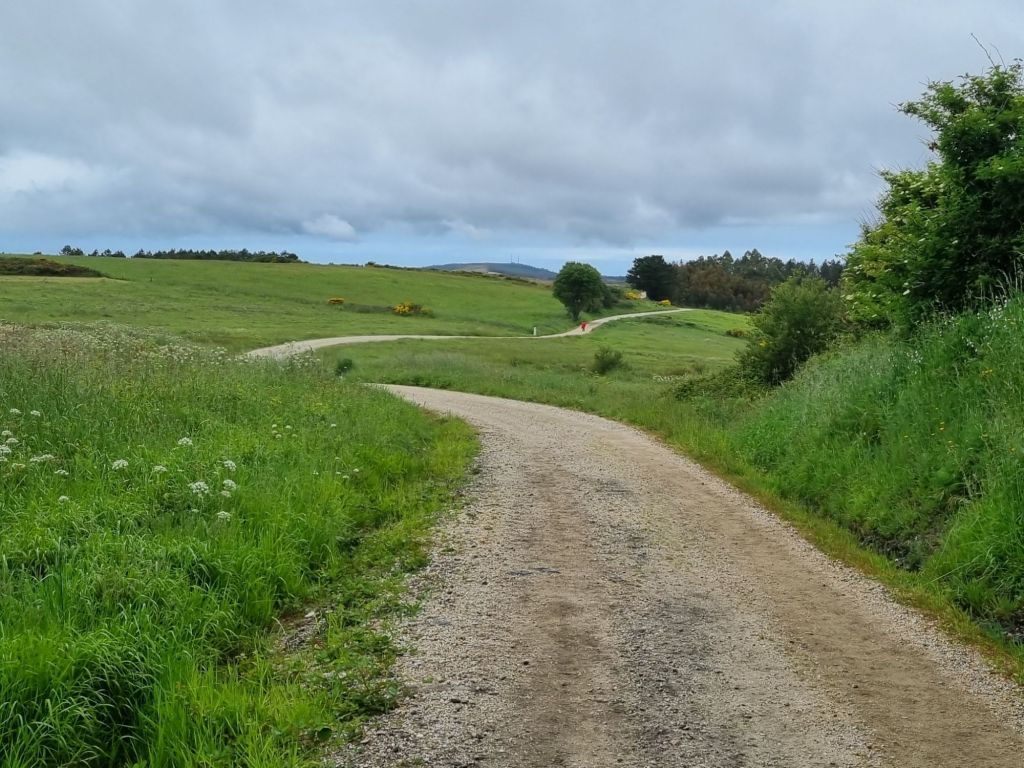
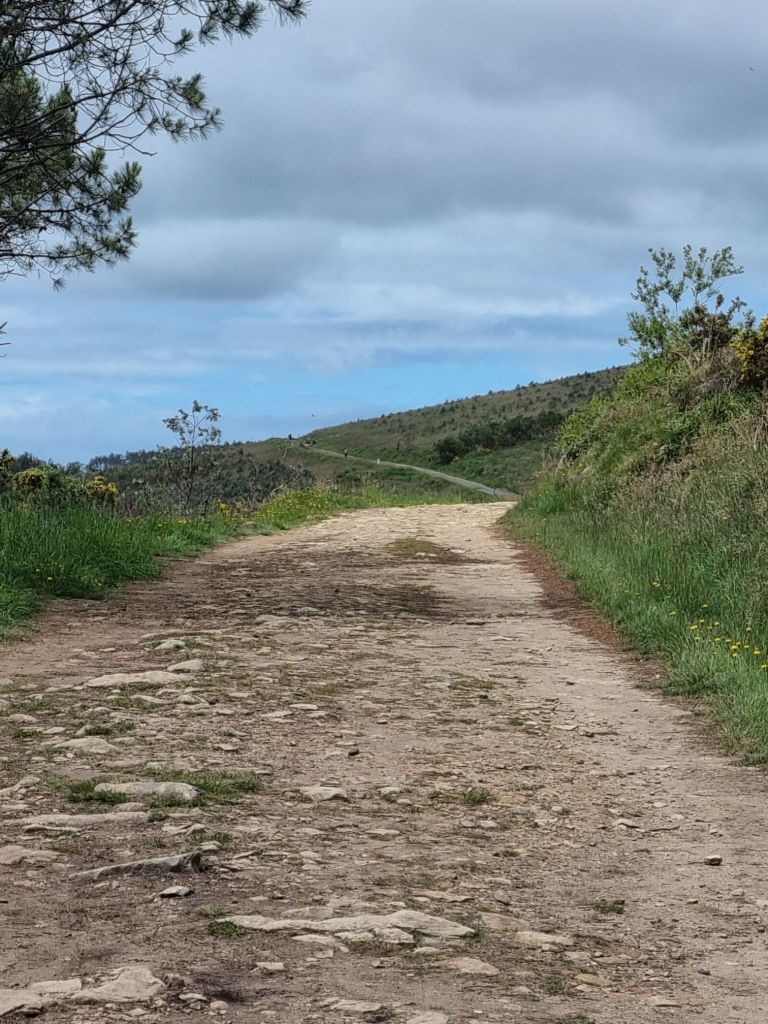
It came on to drizzle and eventually rain but fortunately our second stop was to hand. After a bit more road walking we turned off onto a long stretch of what the guide book described as an ancient drove road. The rain soon stopped and it was ideal weather.
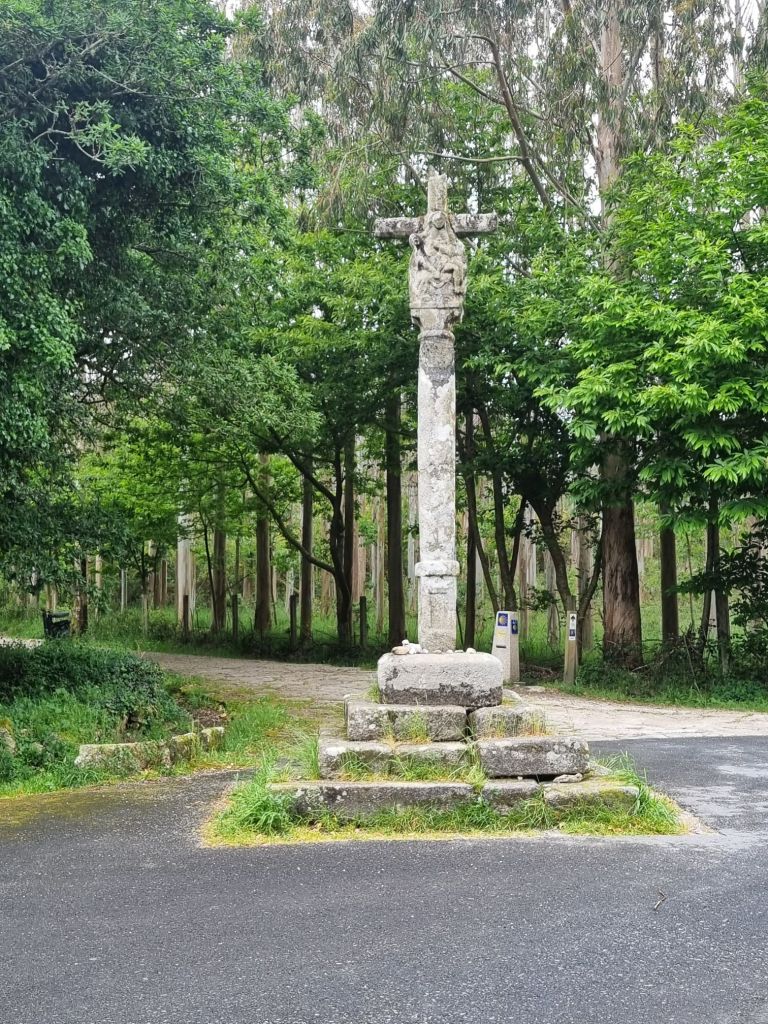
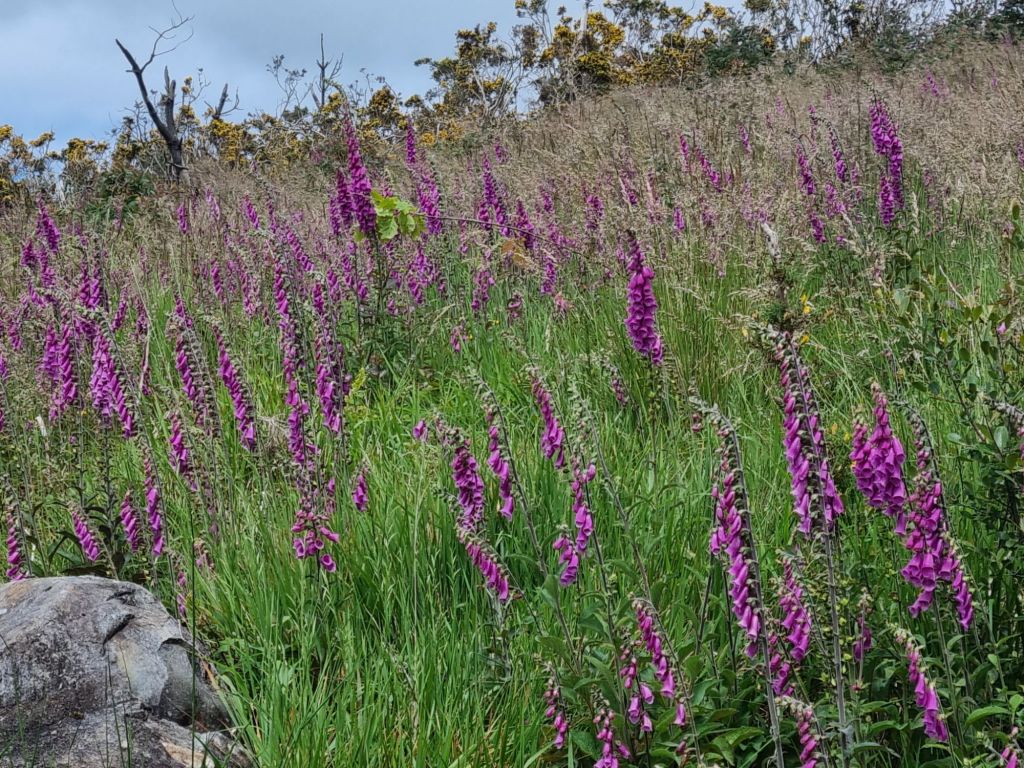
A cruciero to guide pilgrims Onwards and upwards Beautiful stretches of digitalis purpurea aka foxgloves
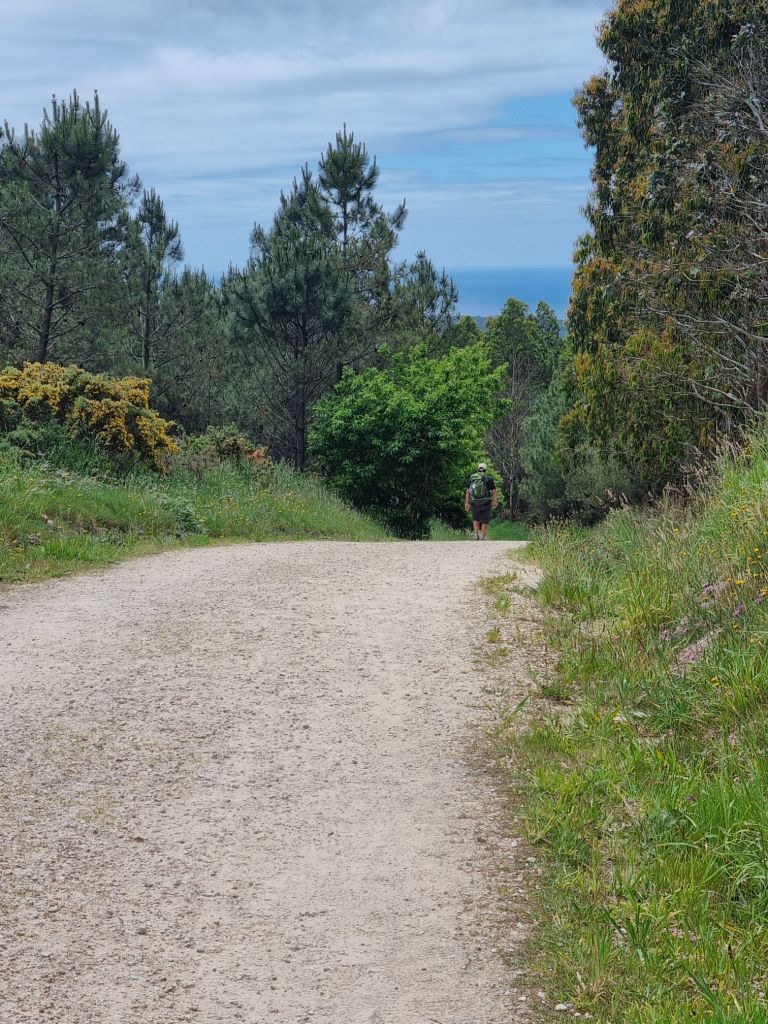
We didn’t feel close to the sea with all the large hills in the distance but after a long flat section the track started to go down steeply and we started to get glimpses of the sea.
Cee is a small industrial / fishing town. It is pleasantly laid out round the beach.
And so we anticipate getting to the end of the world tomorrow. There are a couple of lumpy ridges to take the 13 km to Fisterra and then 3 or 4 km to the end of the cape.
This will be a good culmination of our Camino. For me this end section, with its deeper historical resonances from the Celts and the Romans, will be more meaningful than Santiago. We will see what the day brings.
We very much enjoyed our rest day in Santiago. It was a pleasure to take the day slowly. We visited the Pilgrims Museum which had interesting displays on the Camino to Santiago de Compostela and the motivations of pilgrims across many faith groups and destinations.
The legend of St James arriving in north west Spain was told in several different accounts in the early centuries of Christianity. In the 9th century, a Roman mausoleum was found at the sight of the present cathedral. Two and two were put together to make a great story and a pilgrimage centre ensued.
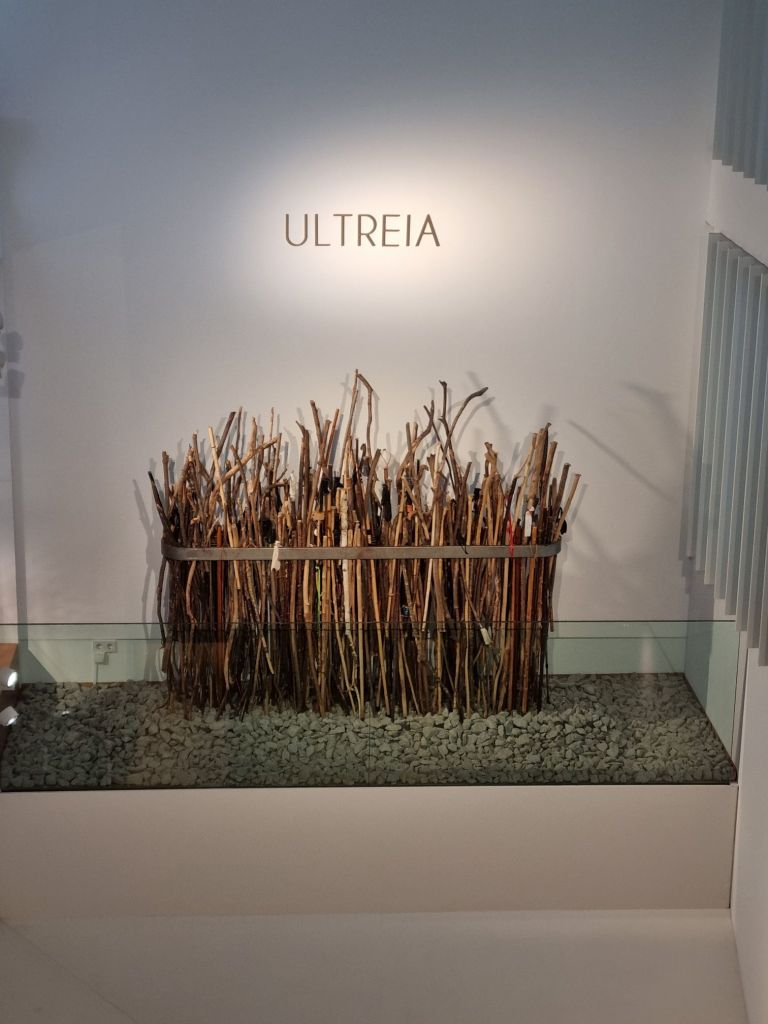
Pilgrims’ walking poles / sticks
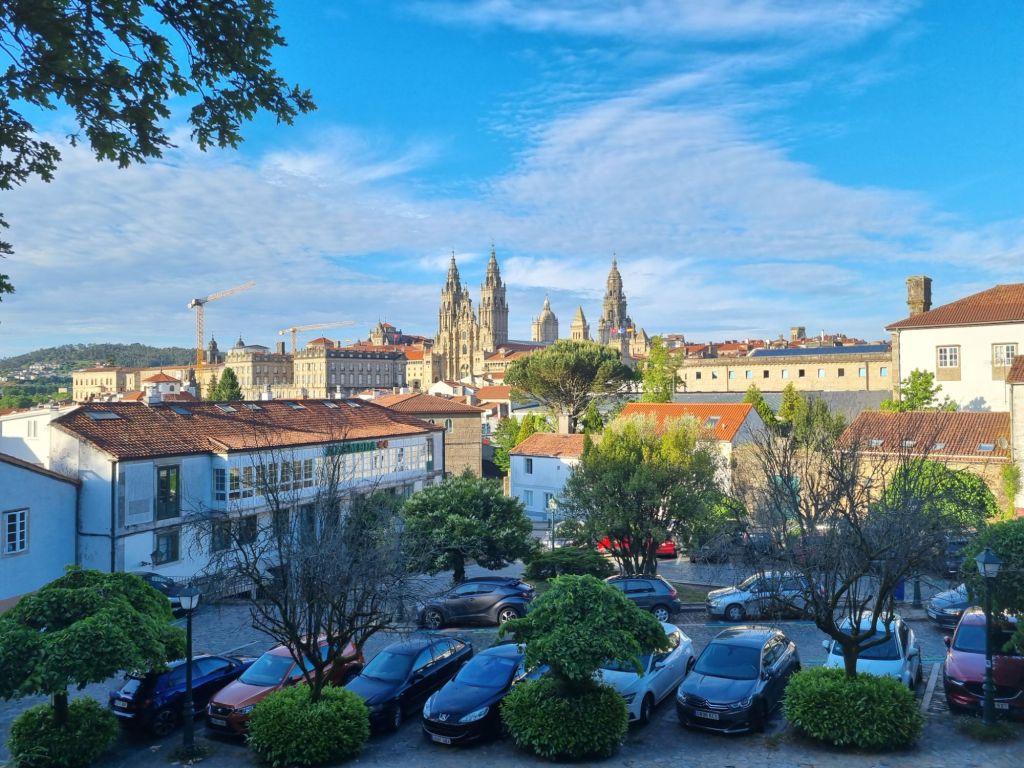
In the evening we headed to O Tamboril for the best paella. En route there was a great view of the cathedral in the western light.
We visited O Tamboril one year ago on our journey back to the UK. We were asked to eat our meal in one hour as they had later reservations. The food was so good we vowed to return and to take our time during an evening. It was an excellent decision.
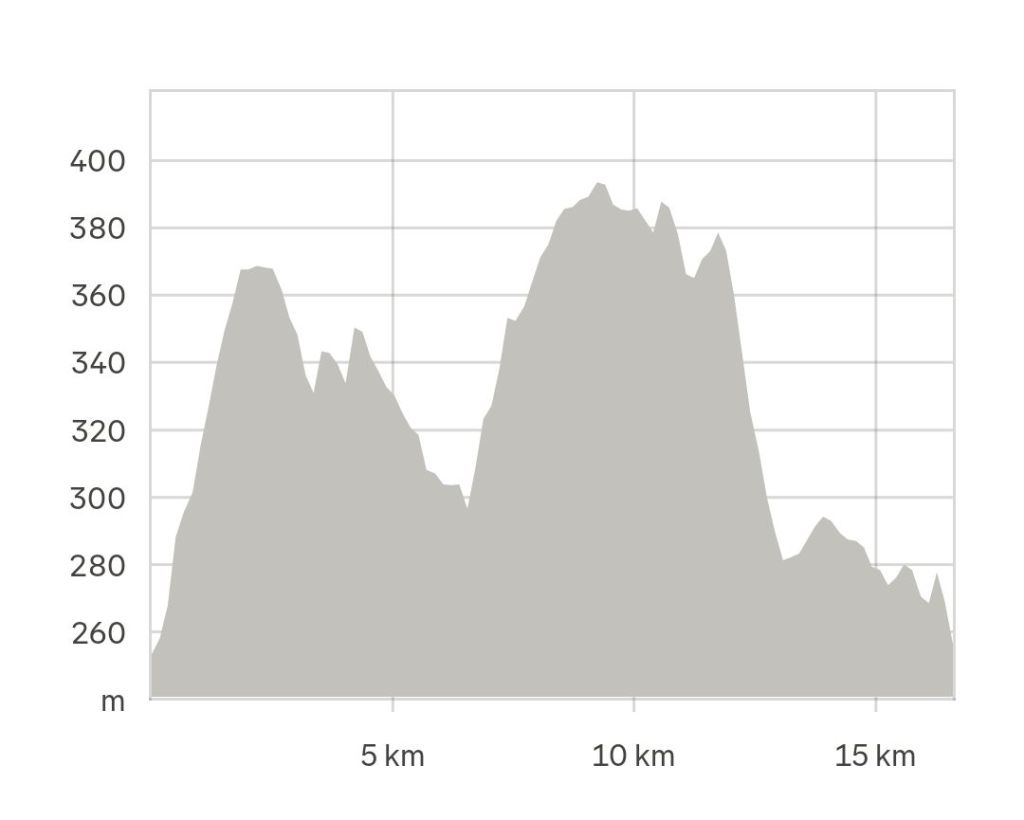
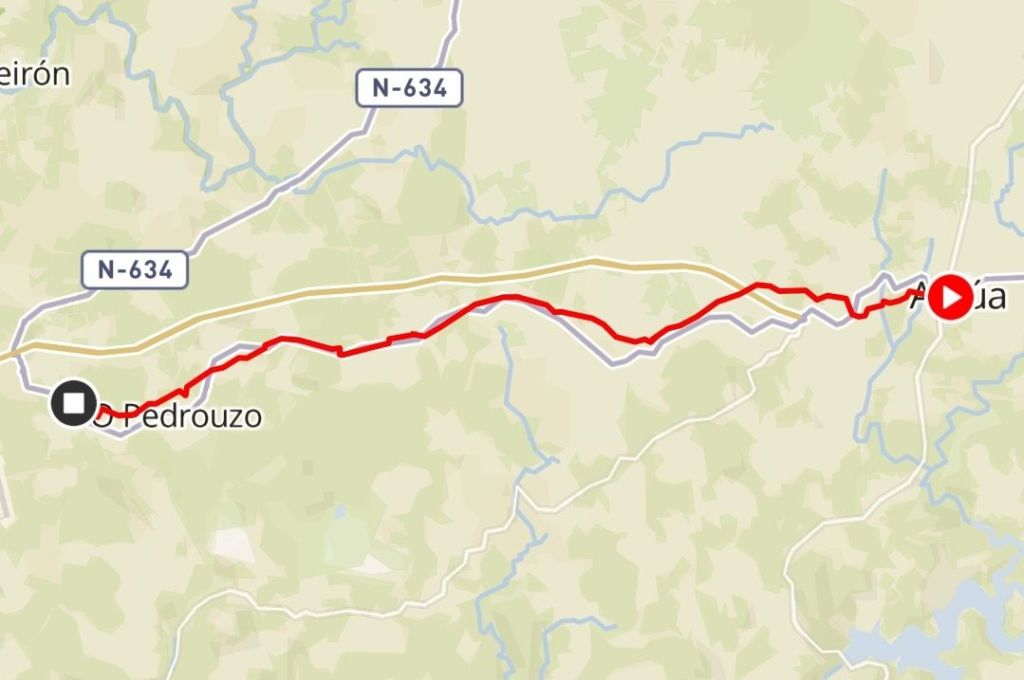
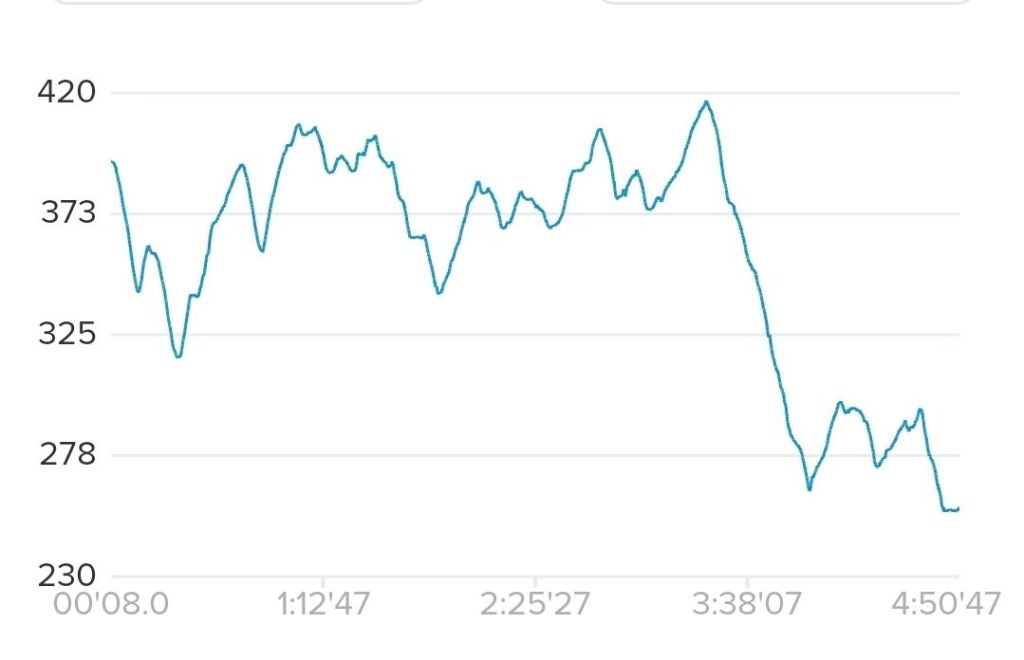
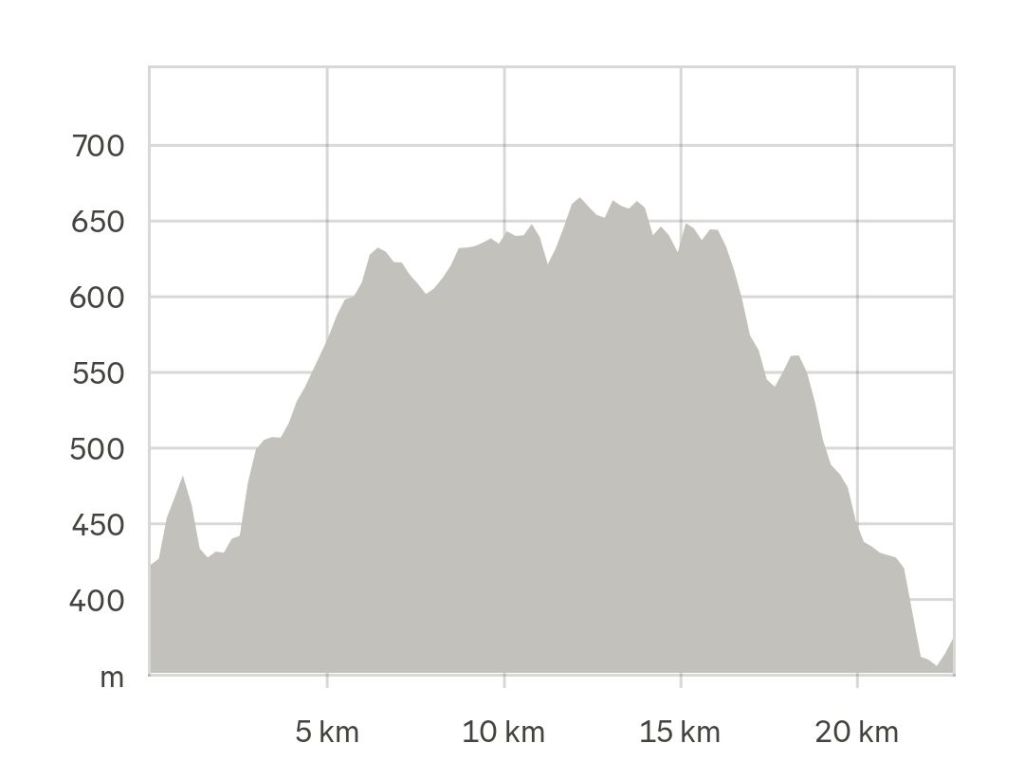
Our walking over the last two weeks has been of similar distance to last year but we’ve realised that there has been much more height gain this year. We are feeling that much more weary. We toyed with catching the bus today but in the end decided to walk as it was relatively short at just over 20 km. There was though a further 483 metres of ascent.
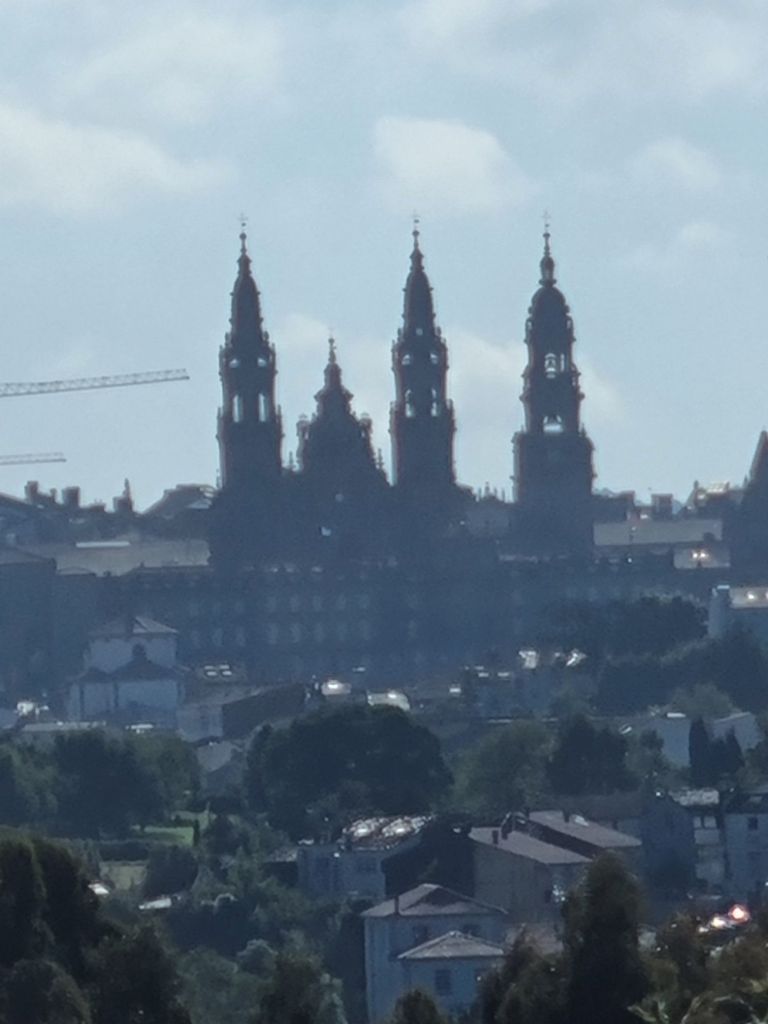
Our last view of the cathedral
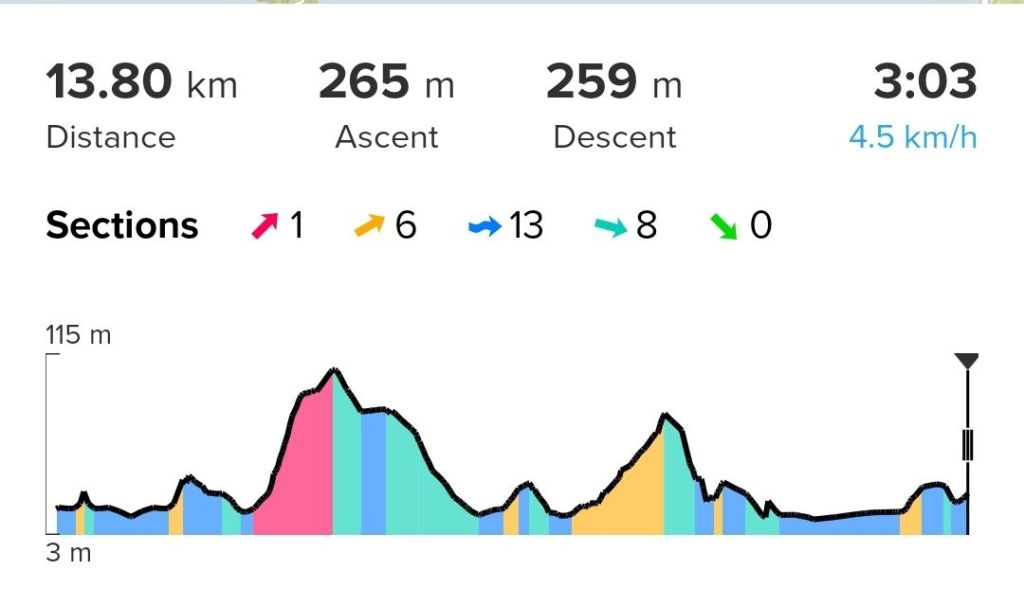
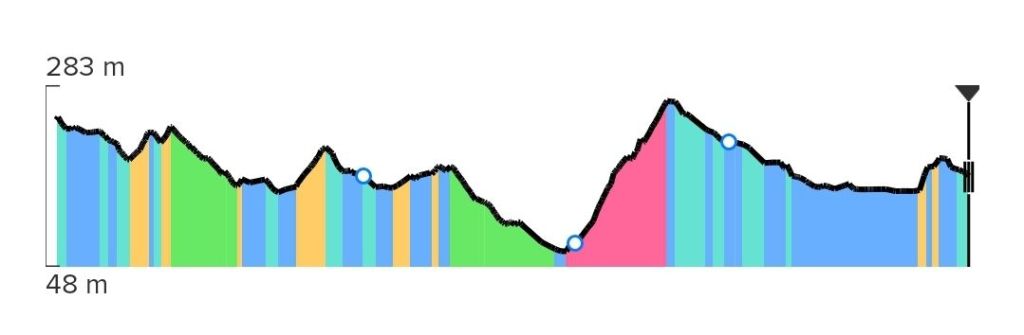
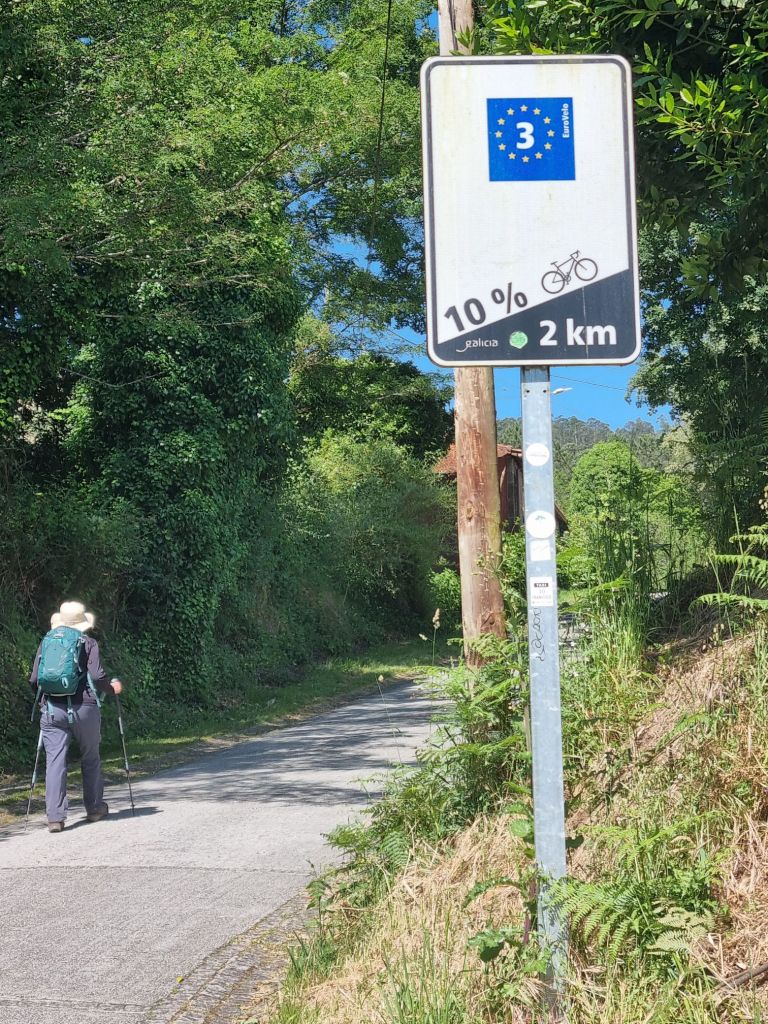
The Suunto app which we use for route planning and syncing our watches colour codes the gradients. We are becoming very attuned to the meaning of pink.
The pink section
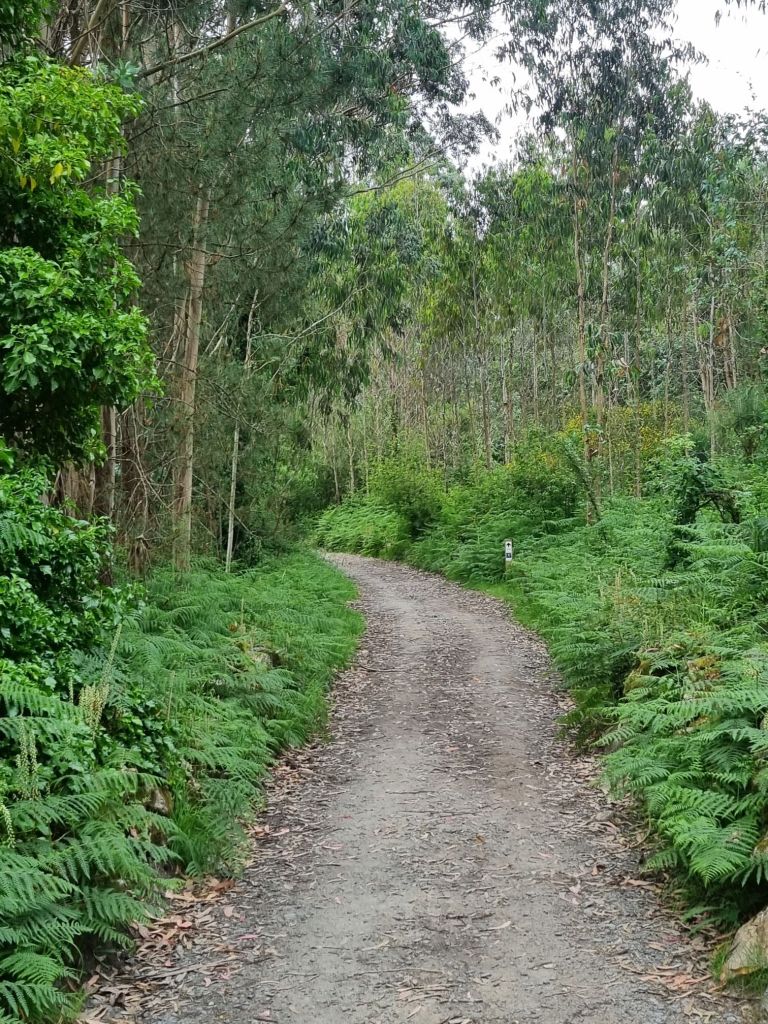
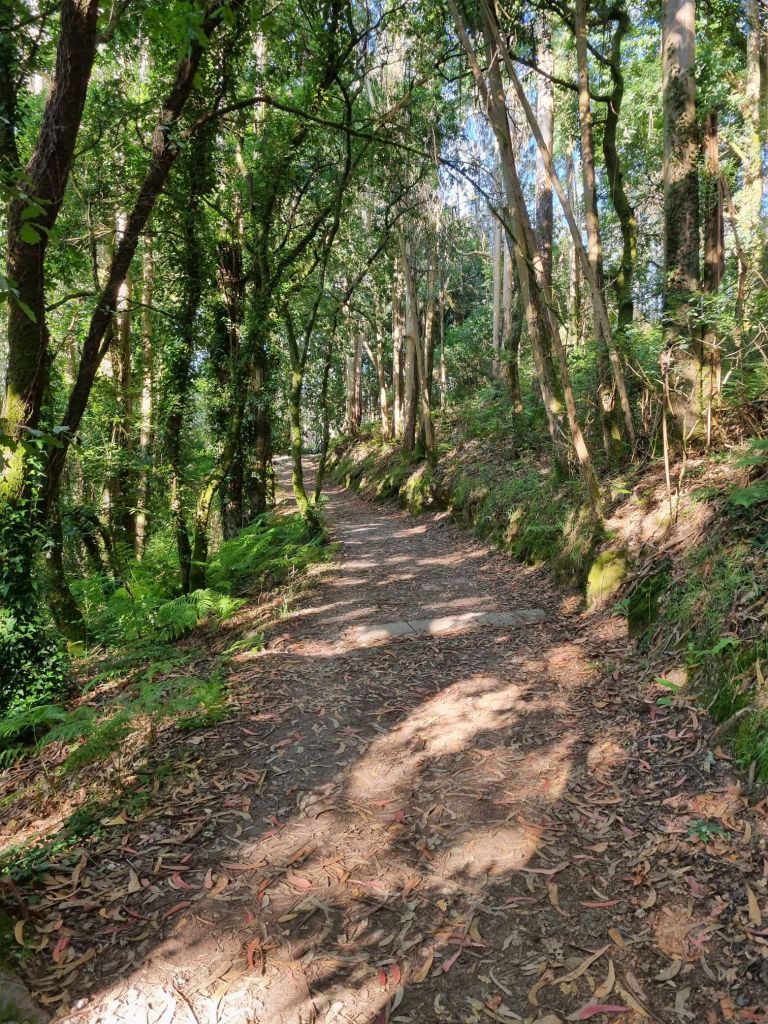
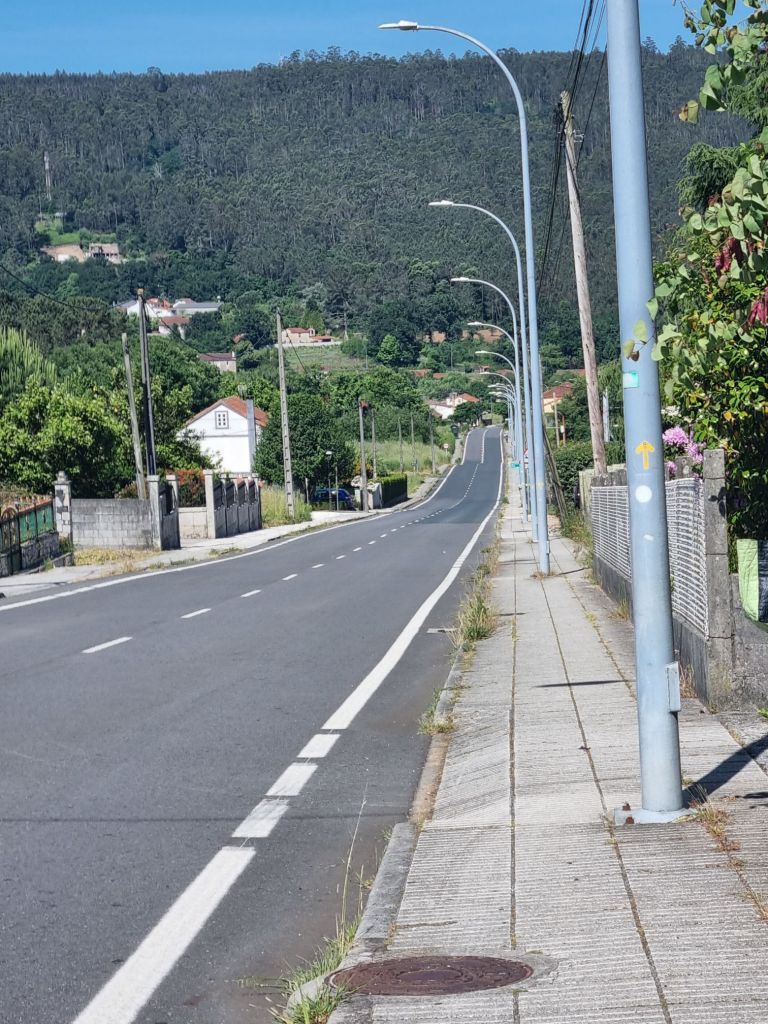
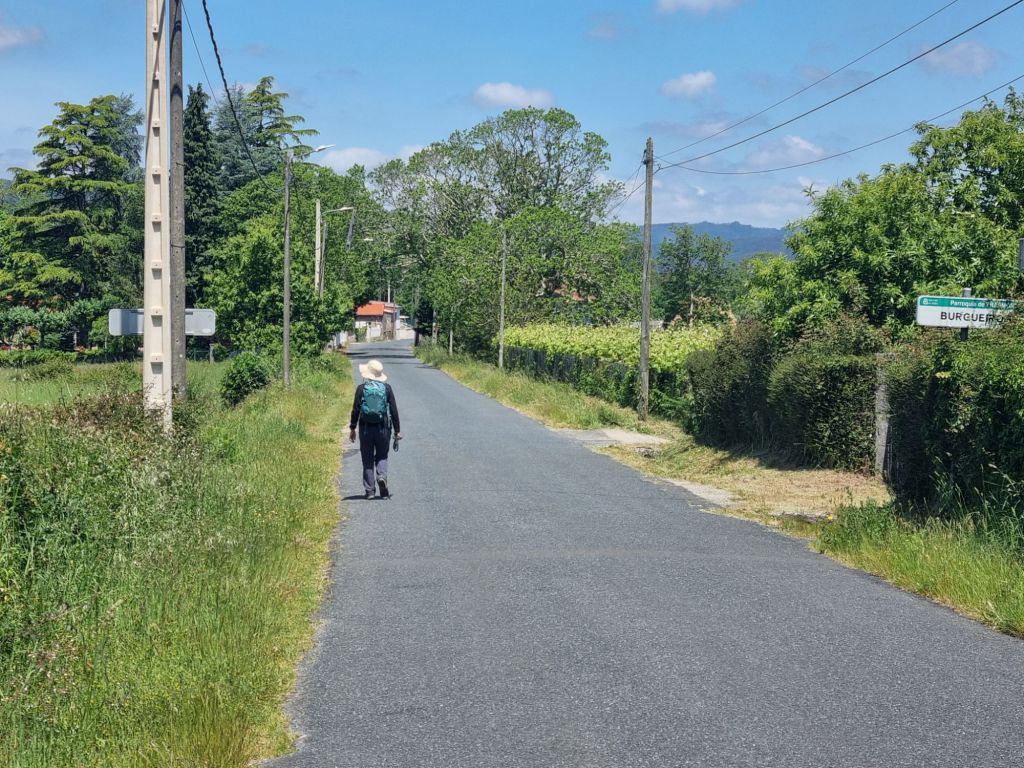
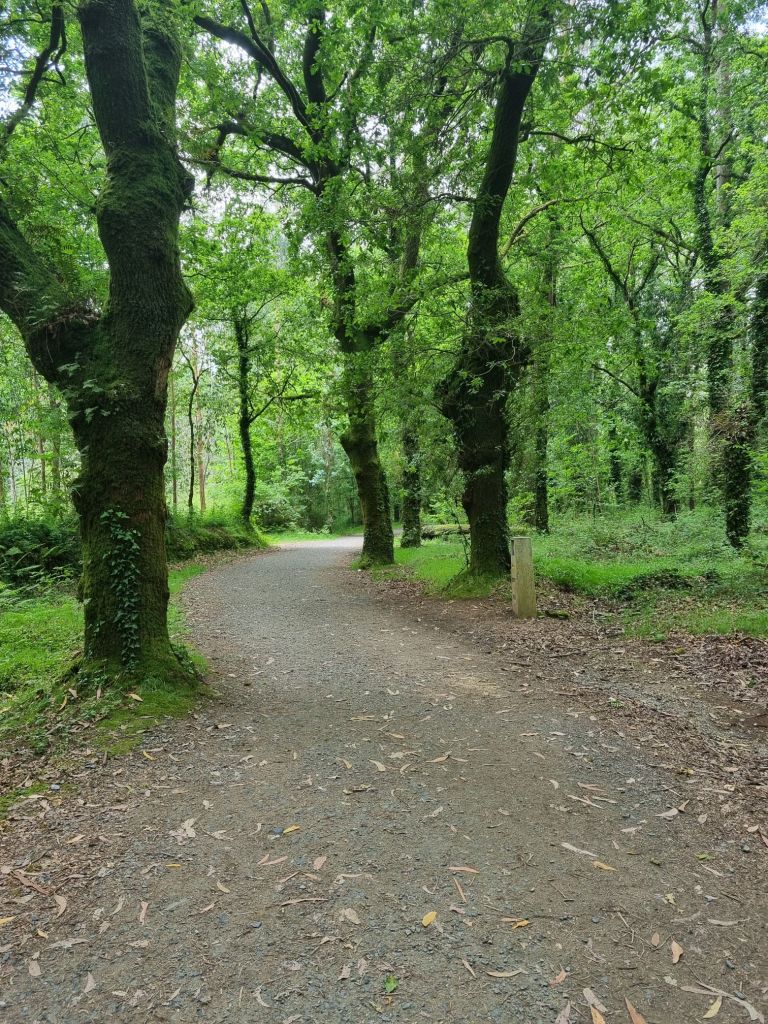
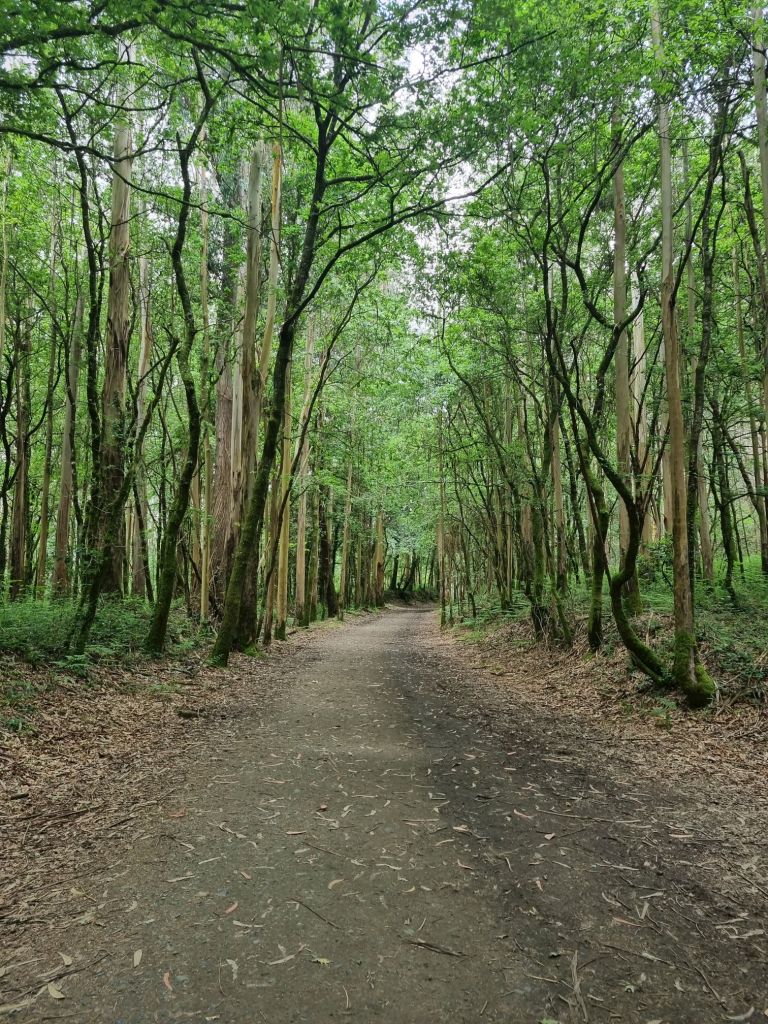
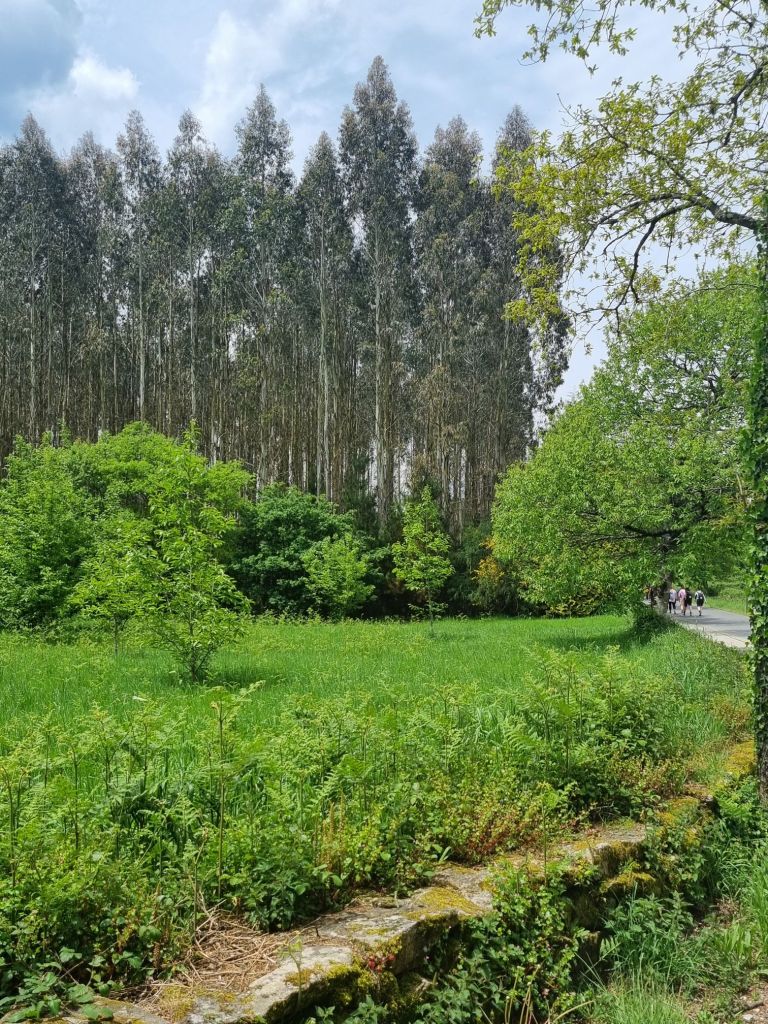
In the morning the walking was on tracks through lovely woods with plenty of eucalyptus trees but degenerated to long sections of road walking in straight lines which we don’t enjoy nearly so much.
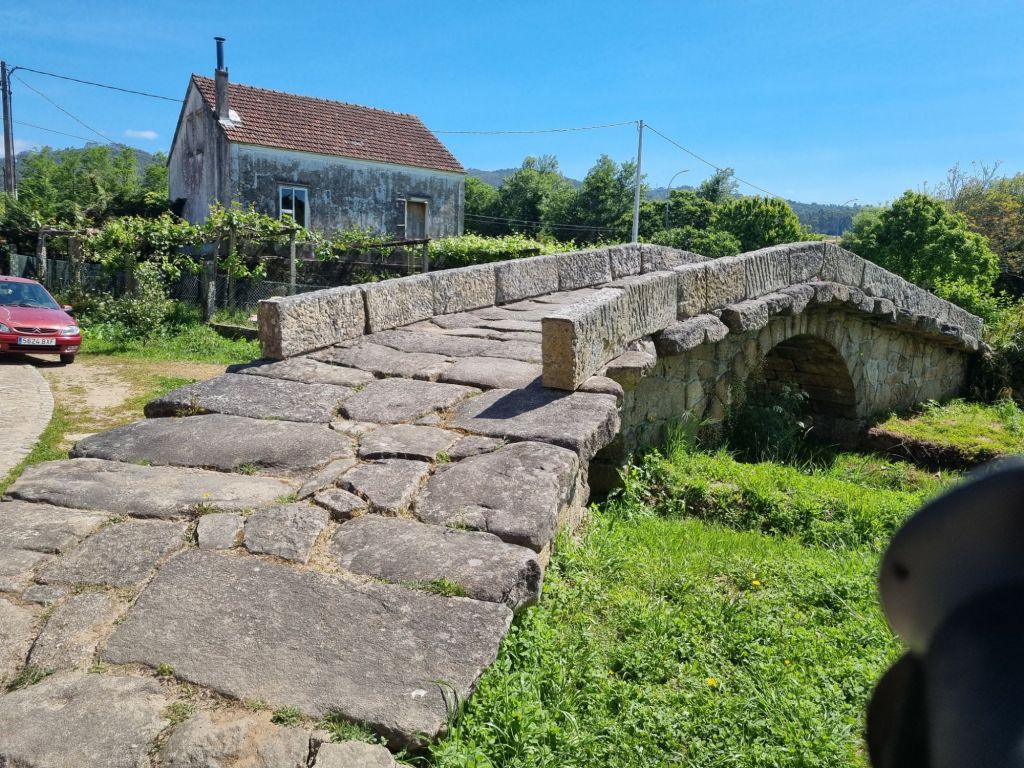
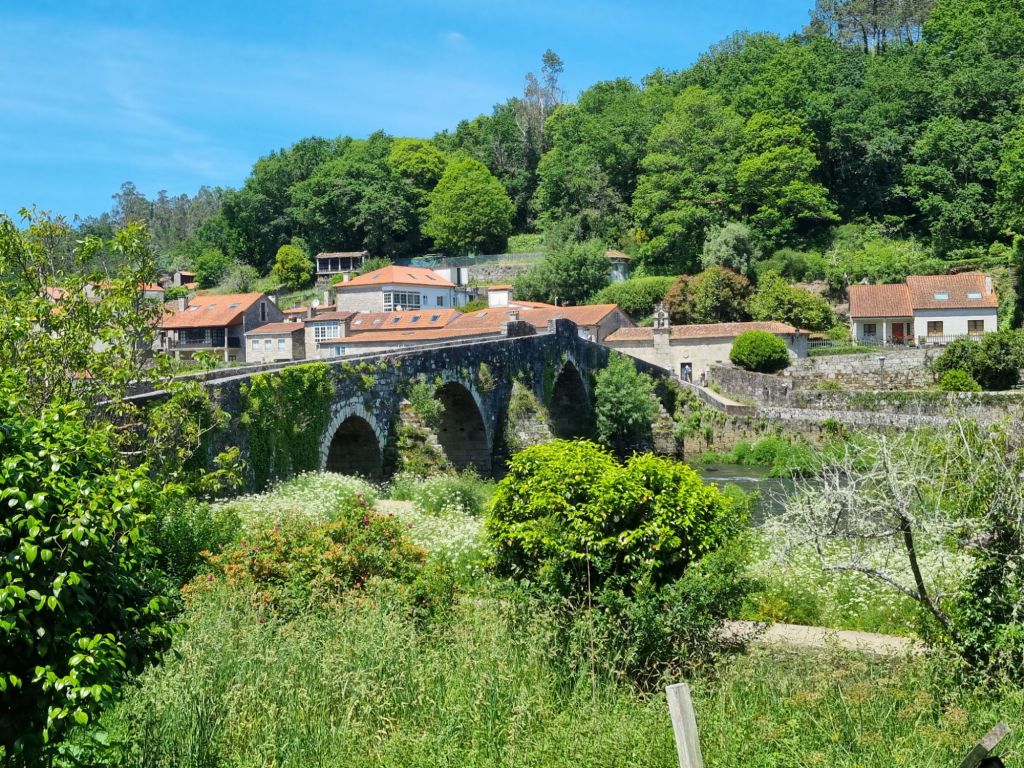
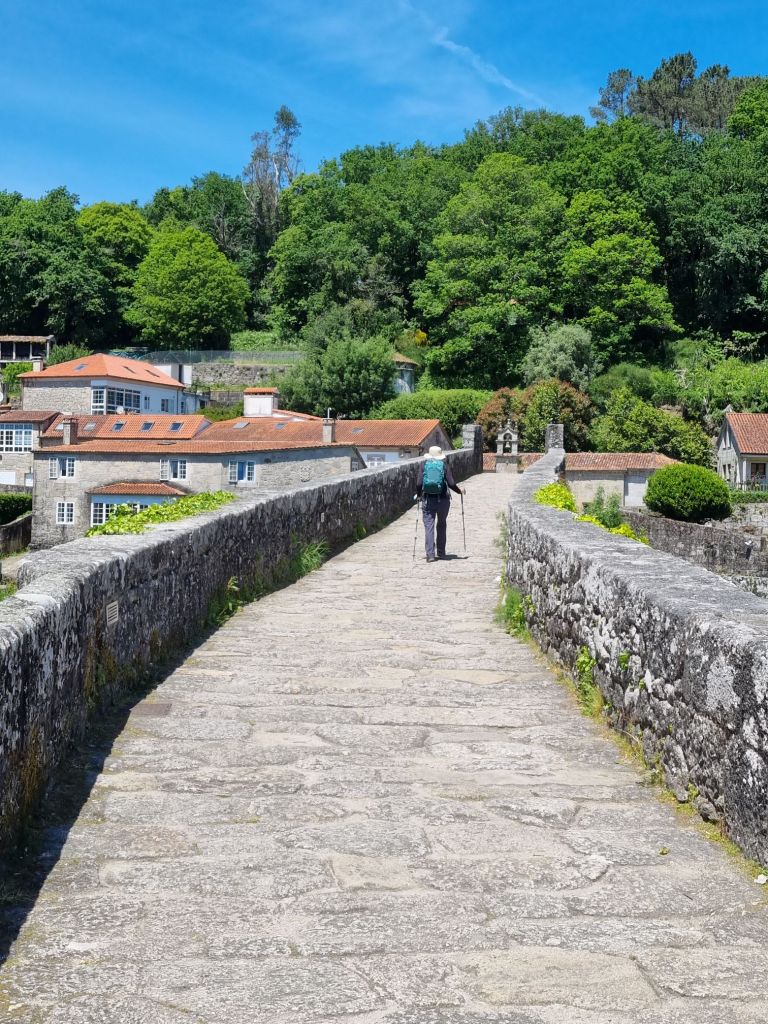
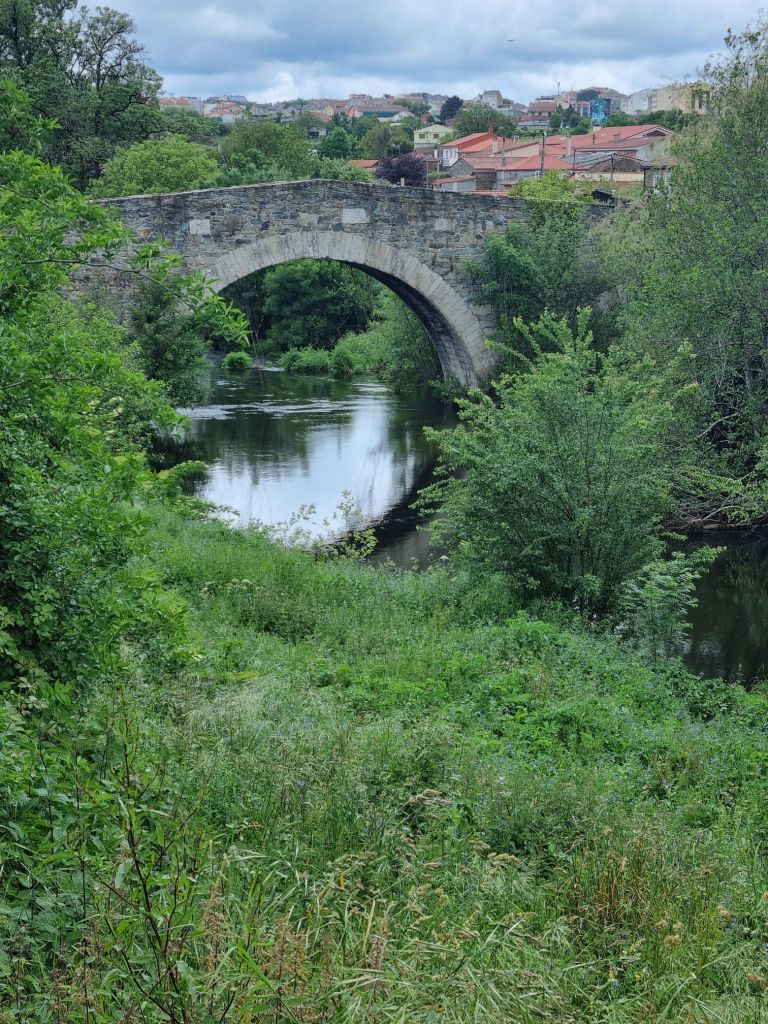
There were some lovely bridges on the way.
We arrived at our destination just before 3 in the afternoon. Sunrise here is at 0700 and sunset at 2200. That puts the true midday at 1430. It’s always best for us to have arrived before the heat of the afternoon.
Having said that we have had comfortable walking temperatures with nothing more than 21°. Tomorrow though is forecast to be 25°. Our route would be long at 29 km, mostly on roads, and with 600 metres of ascent. That is all too much so the bus at €2.50 each seems a great alternative.
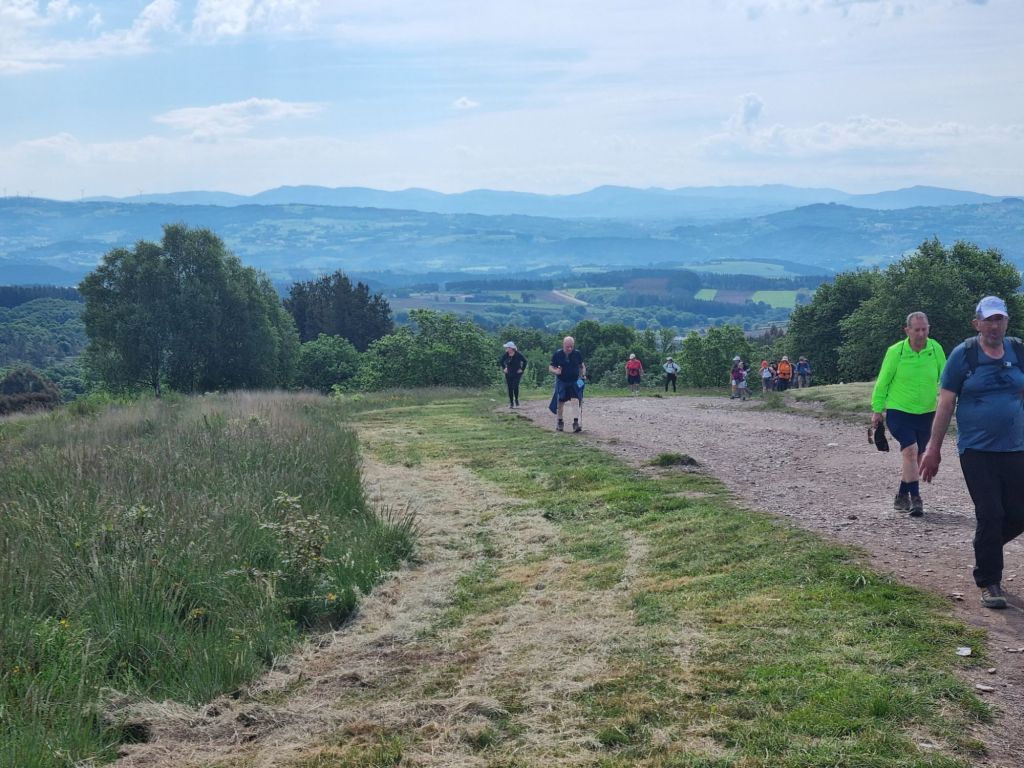
We were taken back by car to our start point for a relaxed start at about 9:15. That meant we joined a big throng of pilgrims but fortunately that soon thinned out. Unfortunately the reason for the stretching out of the walkers was an immediate steep climb of 115 metres.
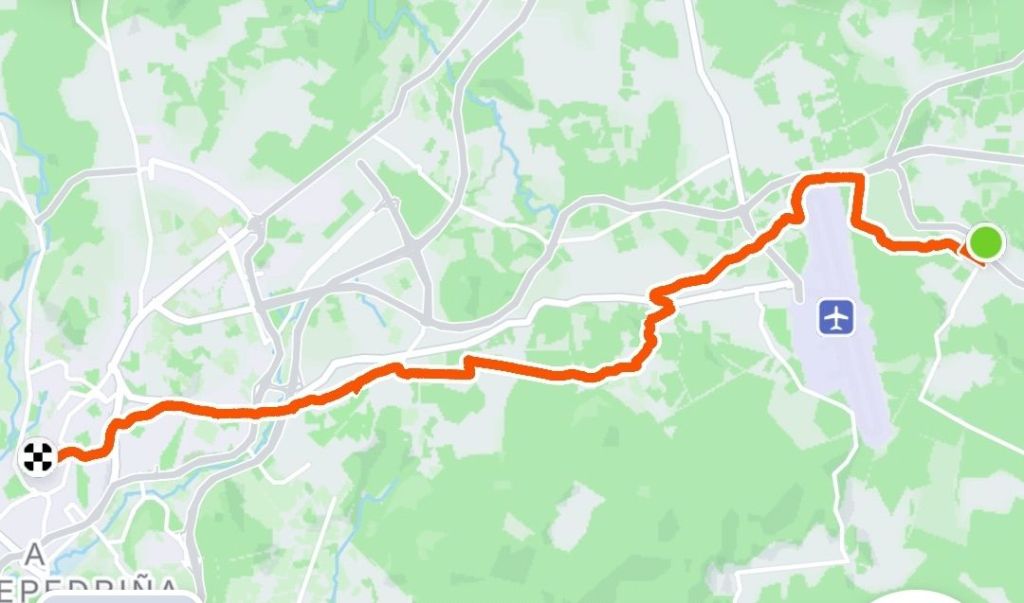
This has been a hilly ten days of walking. Even with only 16 km this final day of distance we had 300 metres of ascent. As we walked up the first incline we were met with the sweet sound of a Galician bagpipe. As we arrived at the top the sound changed to the less pleasing sound to the ear of jet engines taking off from Santiago airport where we had to walk round the runway.
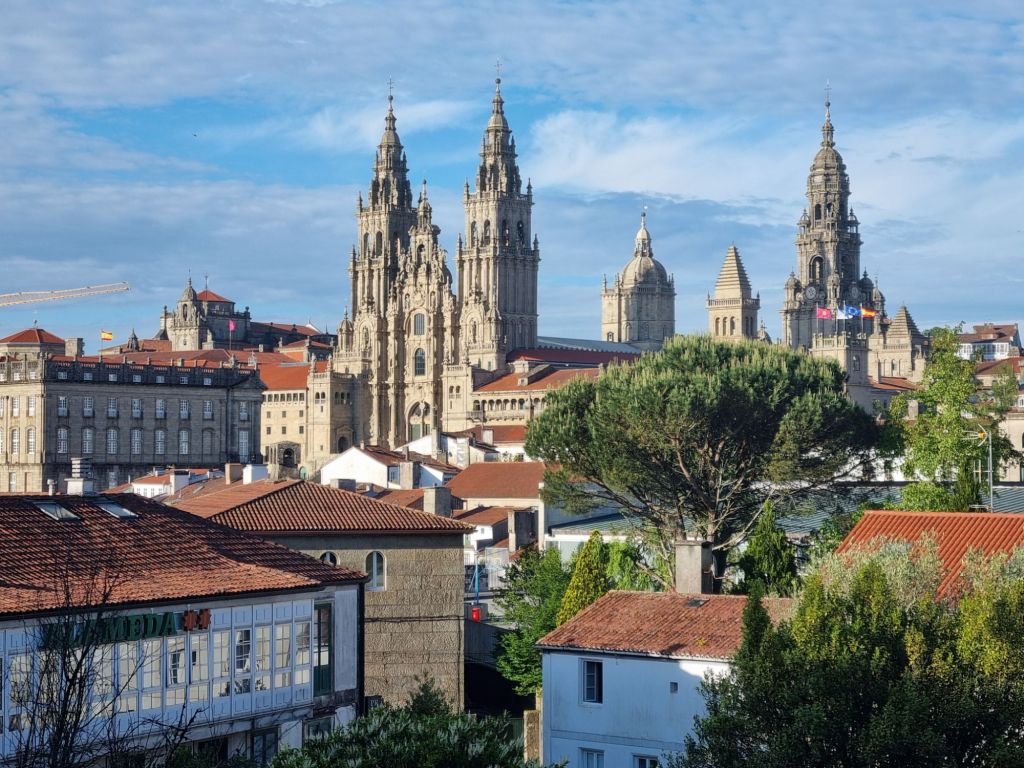
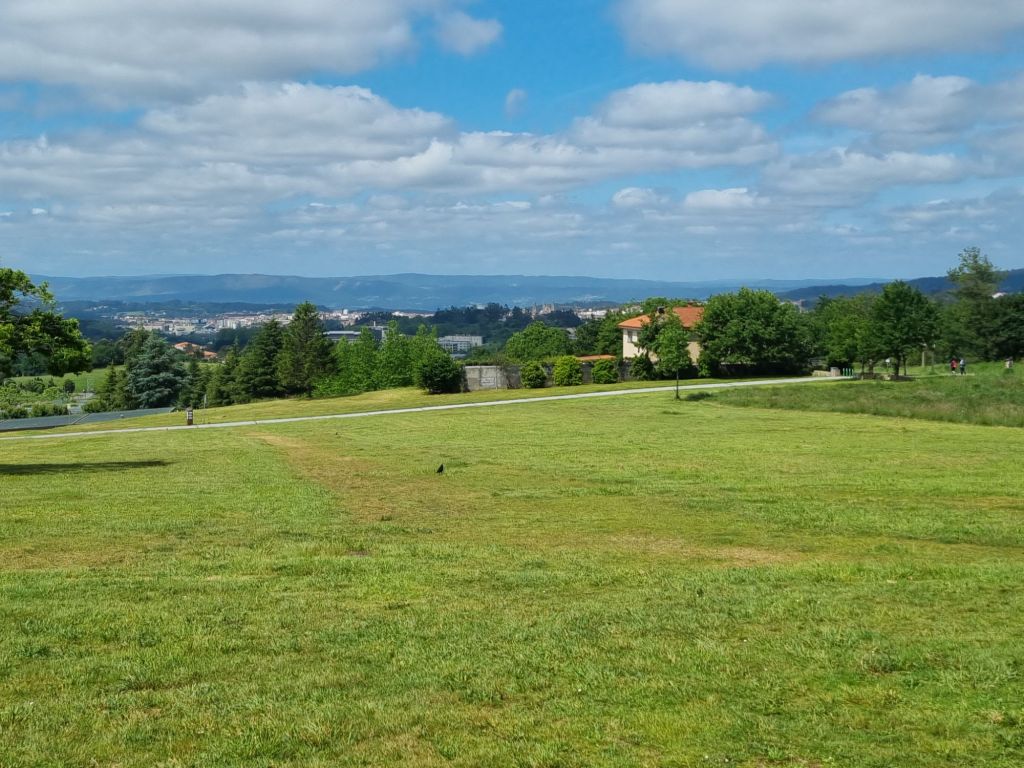
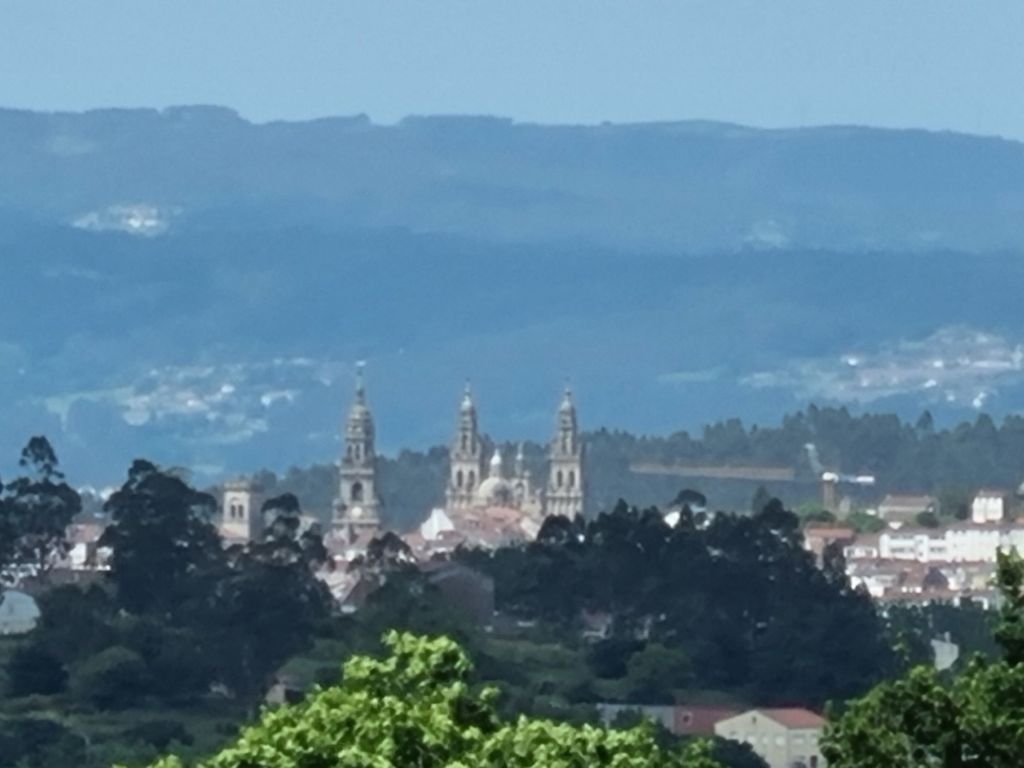
The final kms were mainly through woodland until we were 5 km from the city centre at Monte de Gozo. This is the first time that the pilgrims over the centuries have been able to see the cathedral of St James. In the past it was an important milestone for the pilgrims who prepared themselves spiritually and physically for the destination ahead.
From Monte de Gozo The shimmering spires
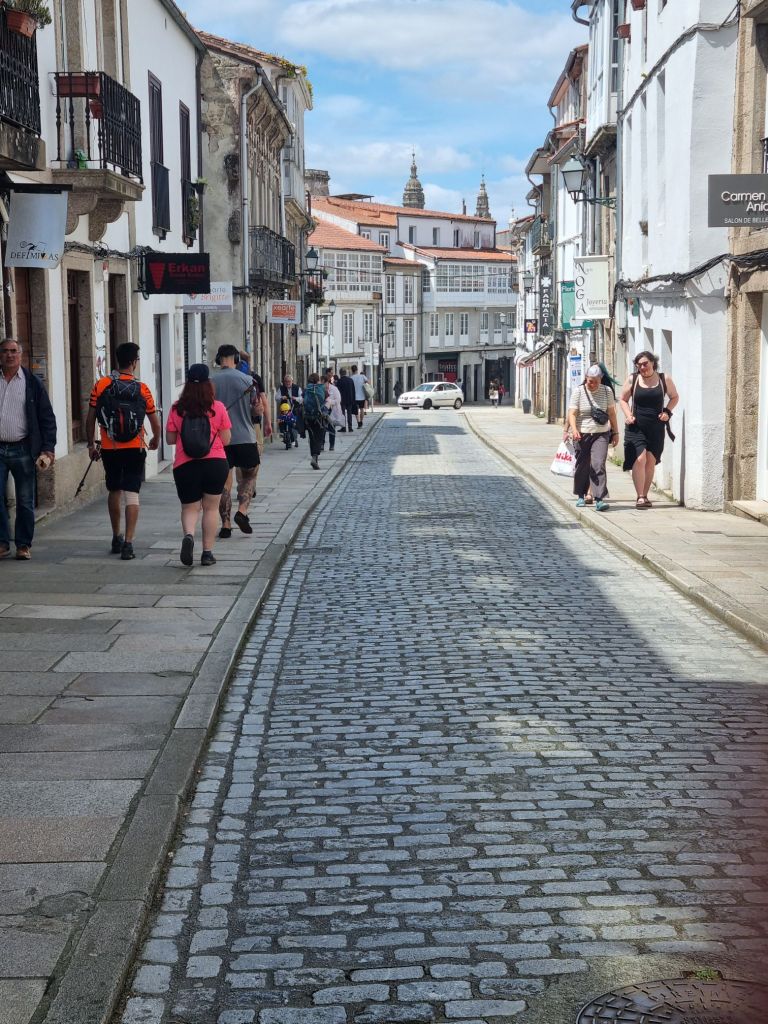
Soon we were walking through city streets with an increasing number of pilgrims.
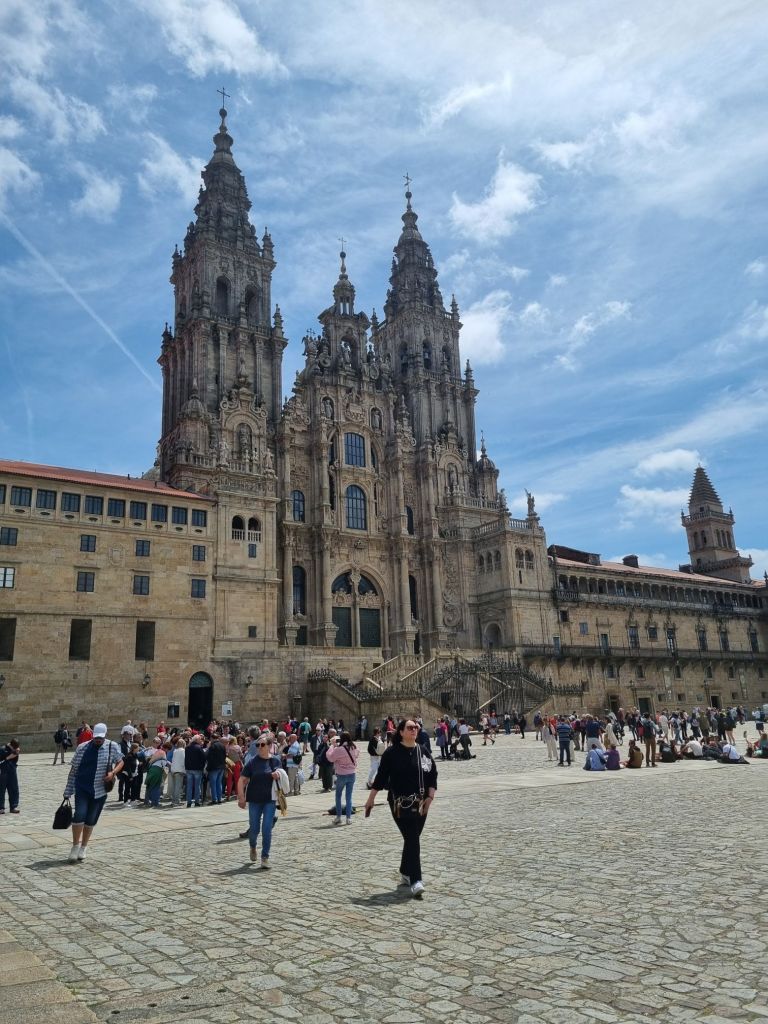
With only glimpses of the cathedral it seemed to take a long time until we eventually went through a set of steps under a building to arrive at the famous square in front of the cathedral.
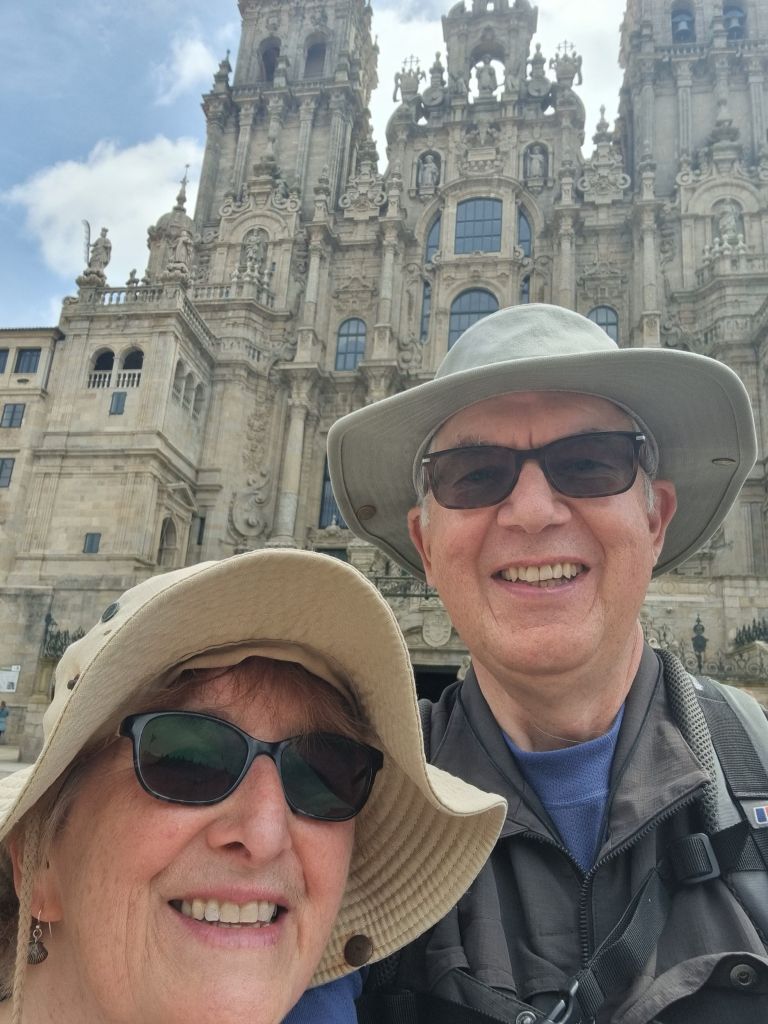
We have arrived!
Our accommodation is one of the renowned Paradores which are culturally significant buildings converted by the Spanish government to fine hotels. We are right on the square which is most convenient.
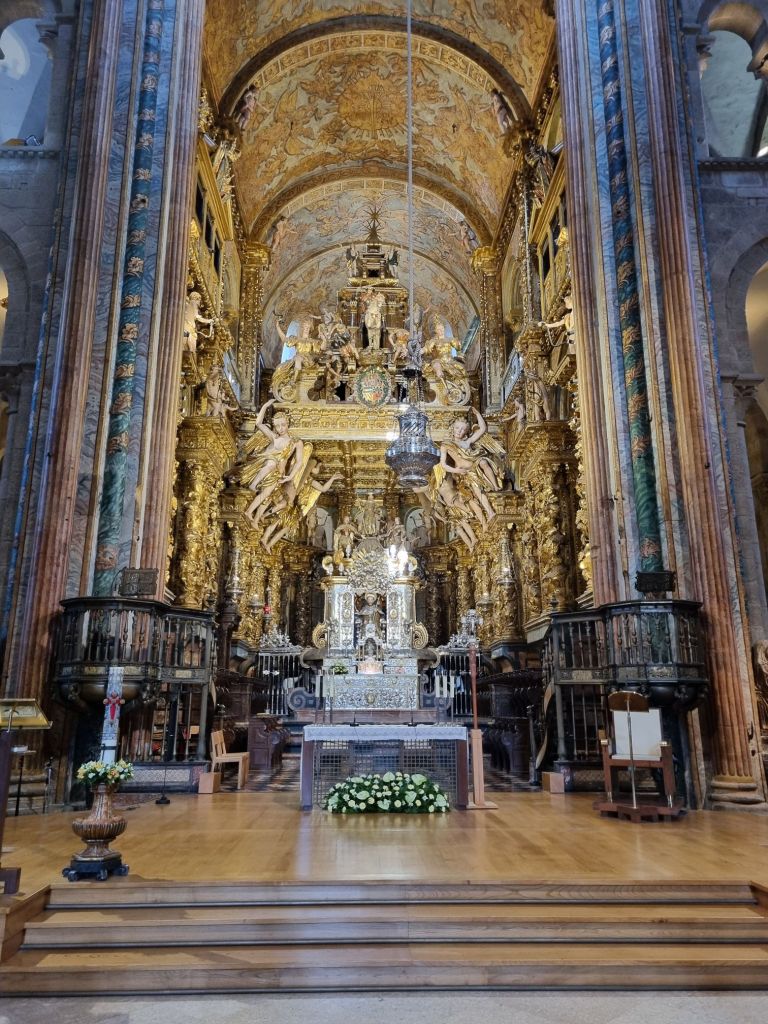
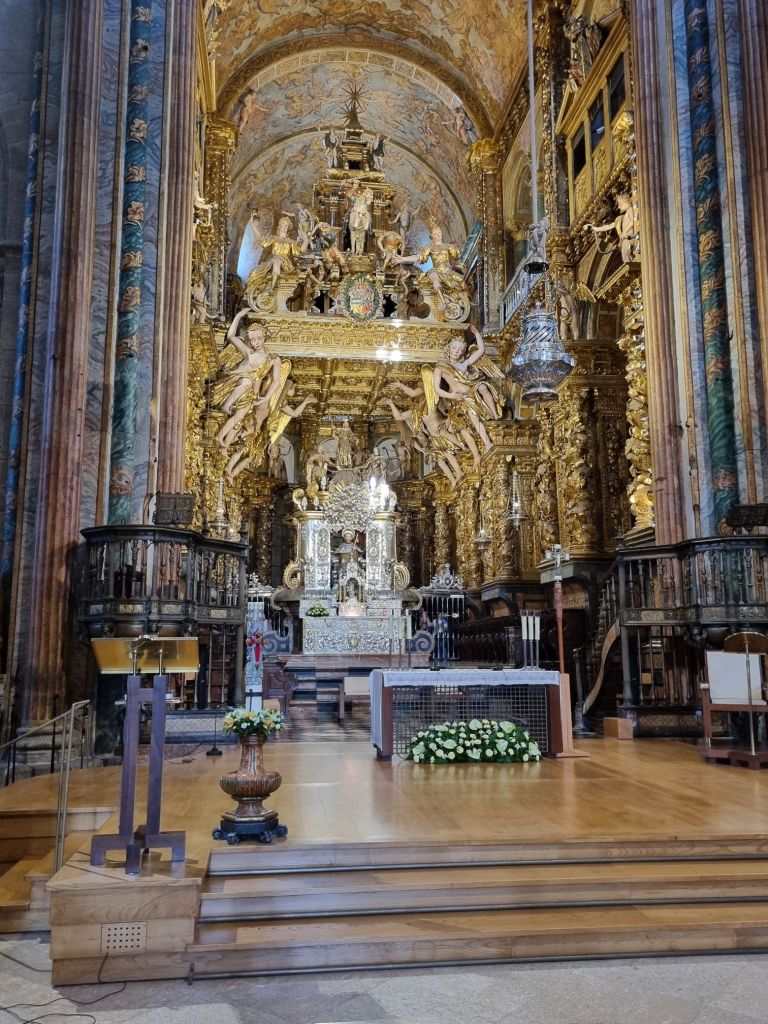
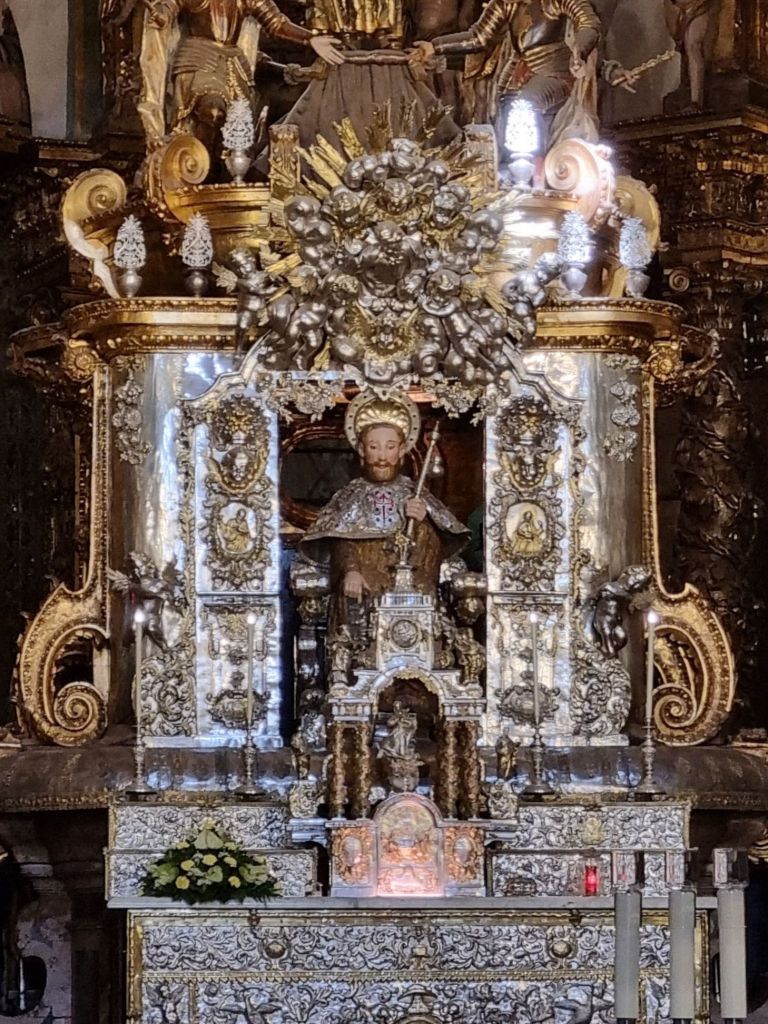
After refreshing ourselves we visited the cathedral. The shrine of St James is overwhelming. It would have formed an impressive experience for weary pilgrims with great expectation of healing.
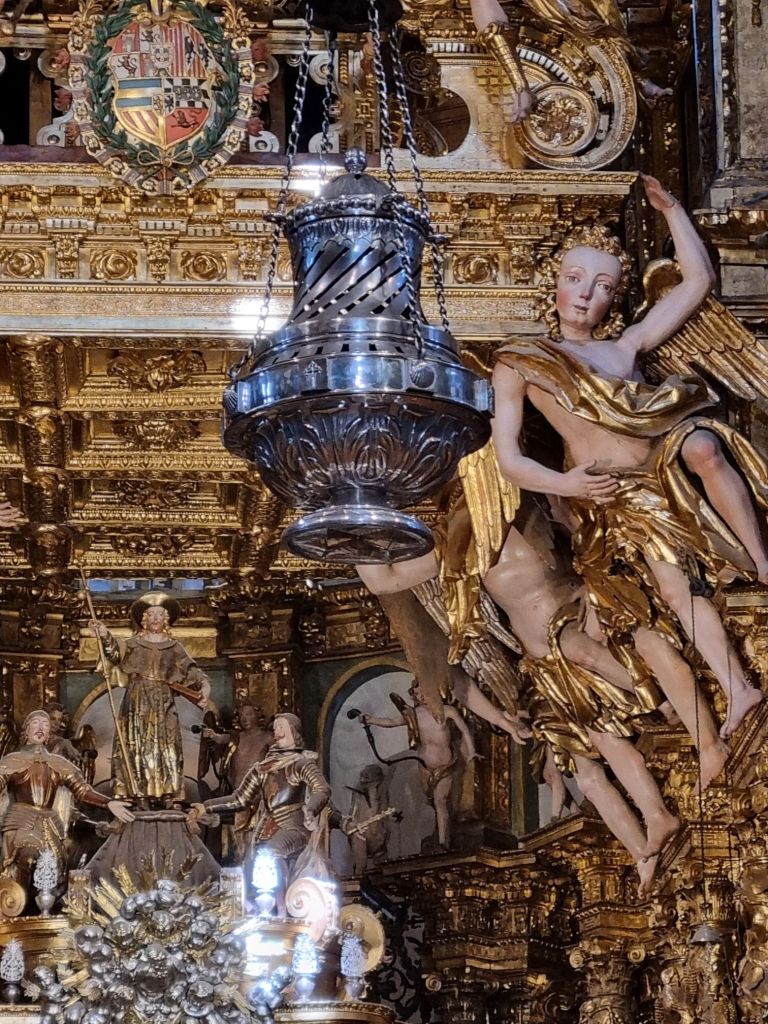
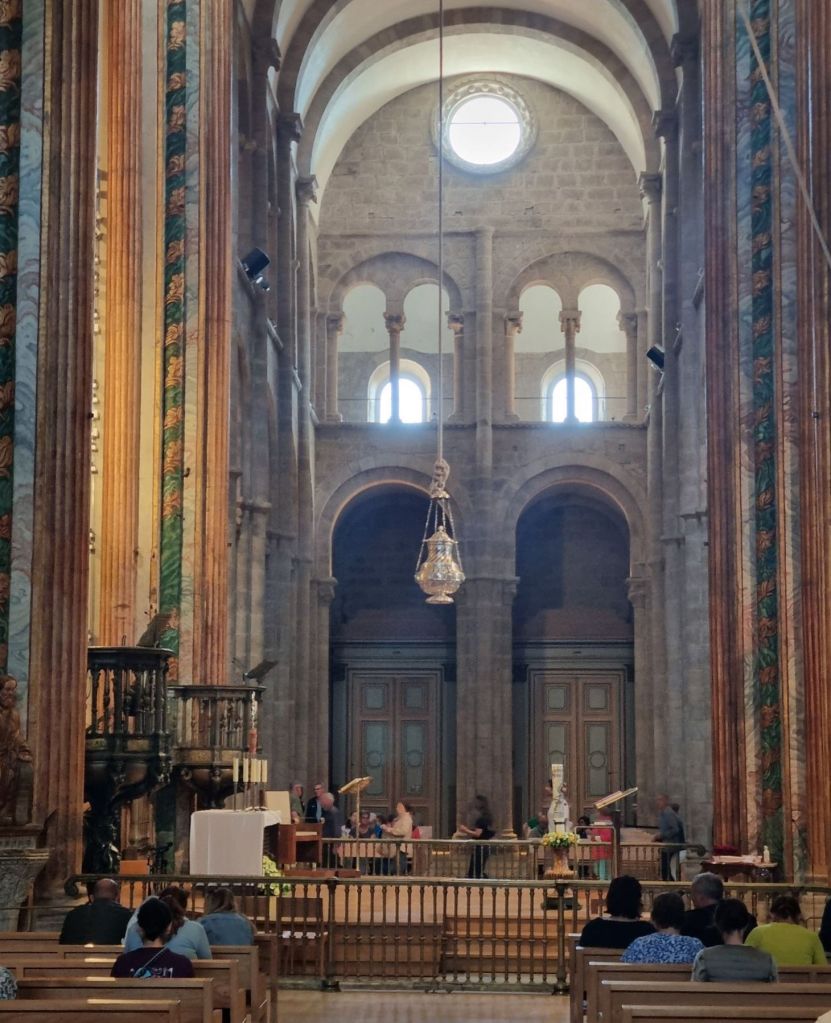
We didn’t see the well known incense burner in operation but it is still amazing. It takes a team of eight to swing the Botifumiero. There are good videos on YouTube.
Afterwards we proceeded to the Pilgrim Office for the accreditation of our Credencial and to receive the Compostela.
We have walked 790 km or 500 miles across northern Spain over the last three years. It has been a memorable journey.
It’s difficult to say at this stage what has been the lasting significance but we’re sure it has had an impact on our lives through having had extended time to reflect on our life priorities.
Now we will travel on to Cape Finisterre through a mixture of walking and buses. We are rather tired after the last ten days of walking so will treat this last section as more of a restful holiday.
We had a gentler walk today after yesterday’s effort – 22.4 km. We came down a further 140 m but there was still 360 metres of ascent due to the lumpy nature of the route. We’re now more than 1,000 metres below our highest point.
We have fallen into the walking pattern of stops at one third and two thirds of the distance with perhaps a penultimate spot to carry us for the last few kms. Fortunately, on this well travelled section Camino there are frequent cafés to choose between.
It was quieter again today with everyone walking at their own steady pace. This meant the route became nicely spaced out.
At the end of the day the formal route went though the woods around the village on the main road. At the road junction with the Camino path there were very few of the normal signs directing the pilgrims. Most walked alongside the road to the village which was presumably the plan by the café owners. Meanwhile we very much enjoyed the quiet walk by ourselves through super woods.
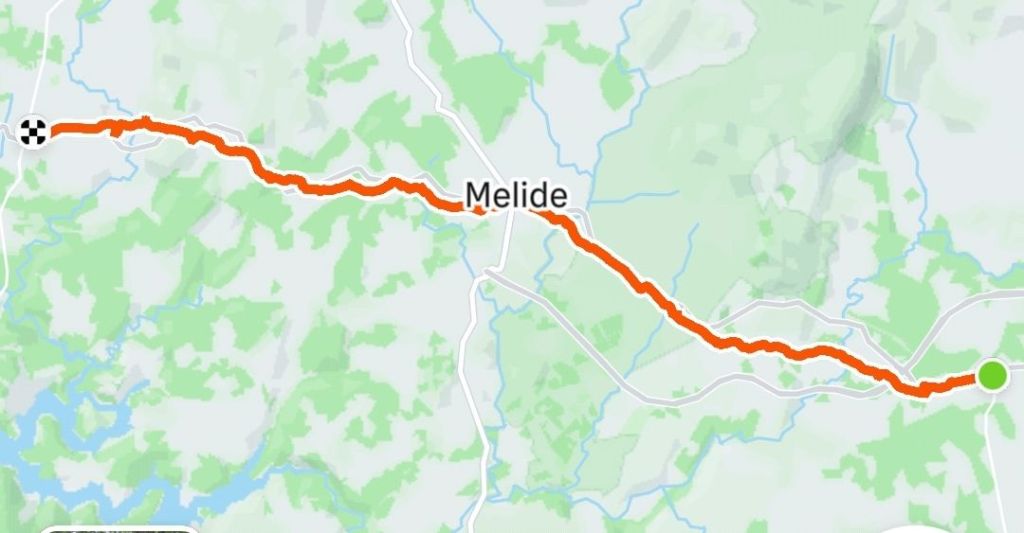
We were instructed to ring our accommodation about 45 minutes before our arrival at our pickup point. I was pleased to be able to have a conversation about our position all in Spanish. The effort to learn Spanish has proven to be worthwhile.
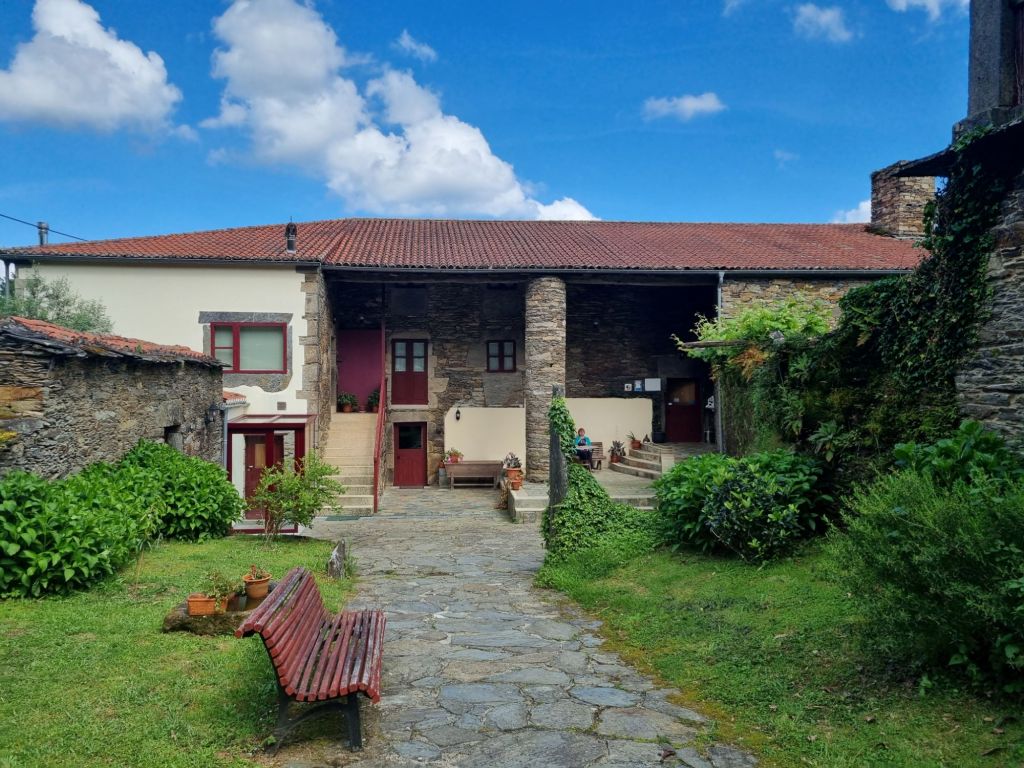
We are staying at a delightful old house in the countryside. It is very quiet apart from all the birdsong.
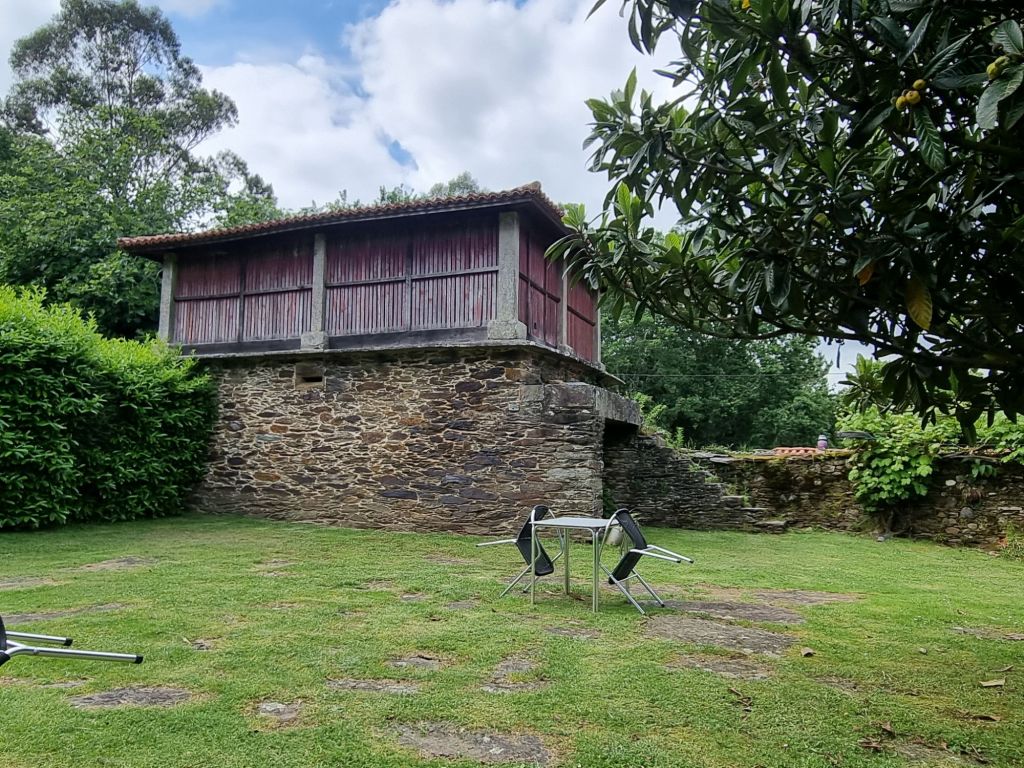
A very large granary
Tomorrow morning we get taken back to the pick up point. Although we have to walk around Santiago airport we will have only 16 km to walk to arrive at the cathedral.
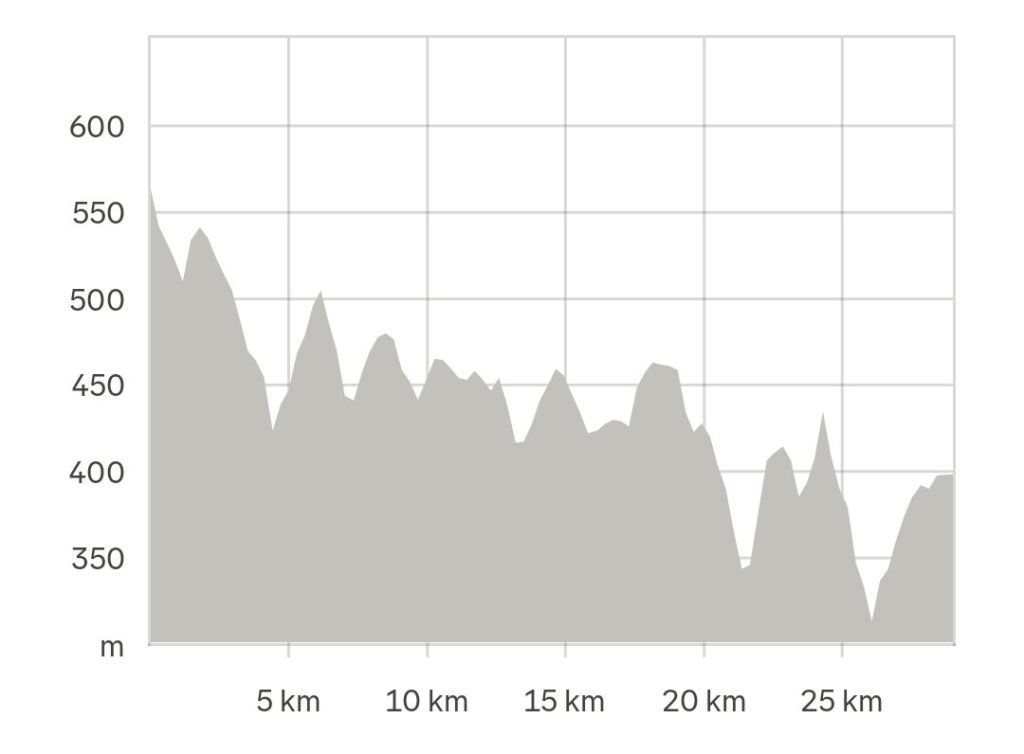
Today was a much more enjoyable day than yesterday which had felt more like a penance. Our route was long with plenty of ascent and descent but it was less crowded and through pleasant countryside. The student groups were less ebullient than the weekend days. There’s certainly no running backwards and forwards with excitement any more. Like the rest of us, they have found the comfortable, steady pace to keep going all day. There seems to be lots of people who come for the weekend.
Our distance was 29.1 km which is getting towards our limit of what is an enjoyable day’s walking. Overall we’ve come down about 160 m but that involved some noticeable ascents with a total of 550 m.
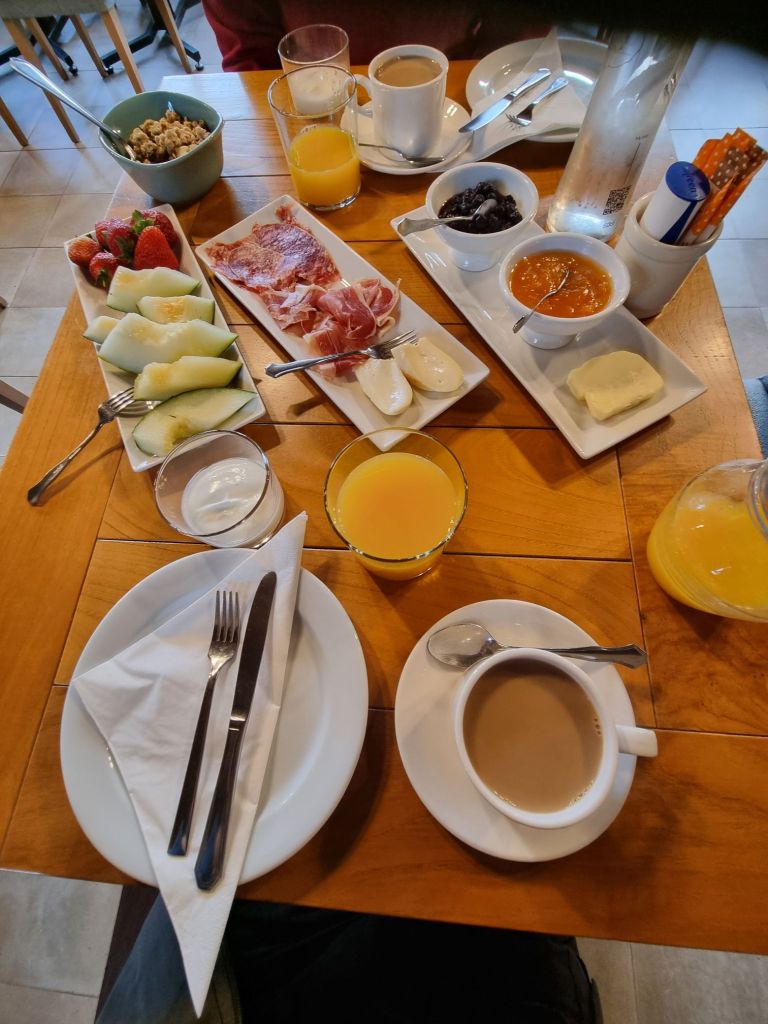
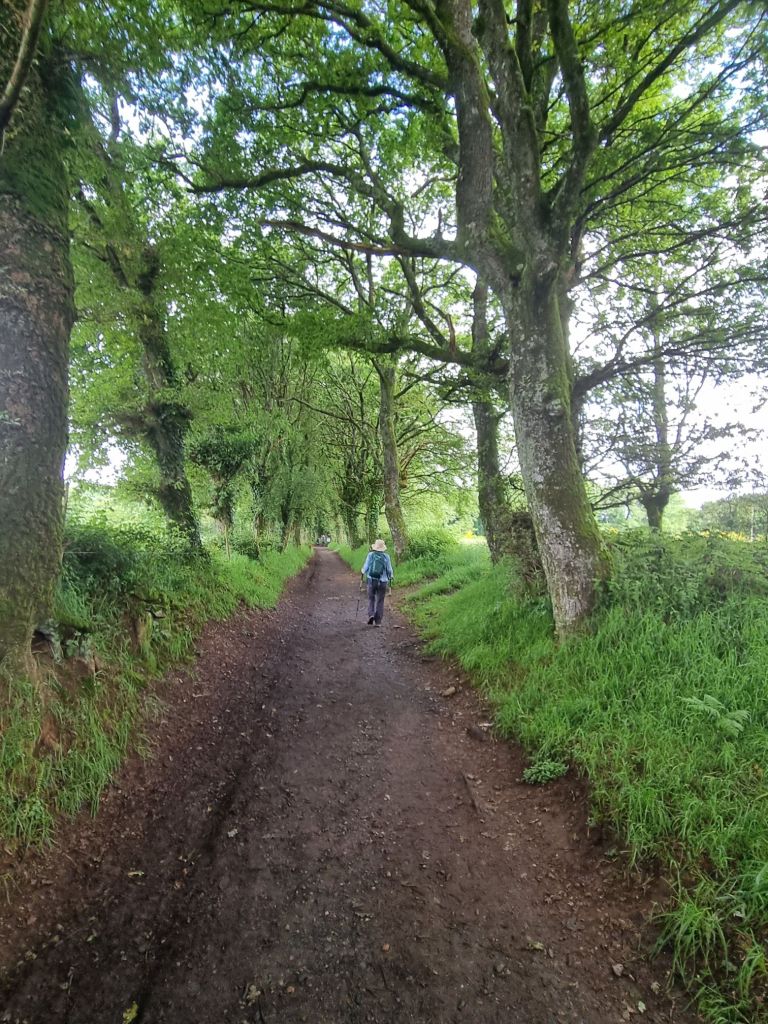
We started the day with a splendid breakfast, one of the best we’ve had this year, and then the pleasure of walking quietly along a wide track between mature trees.
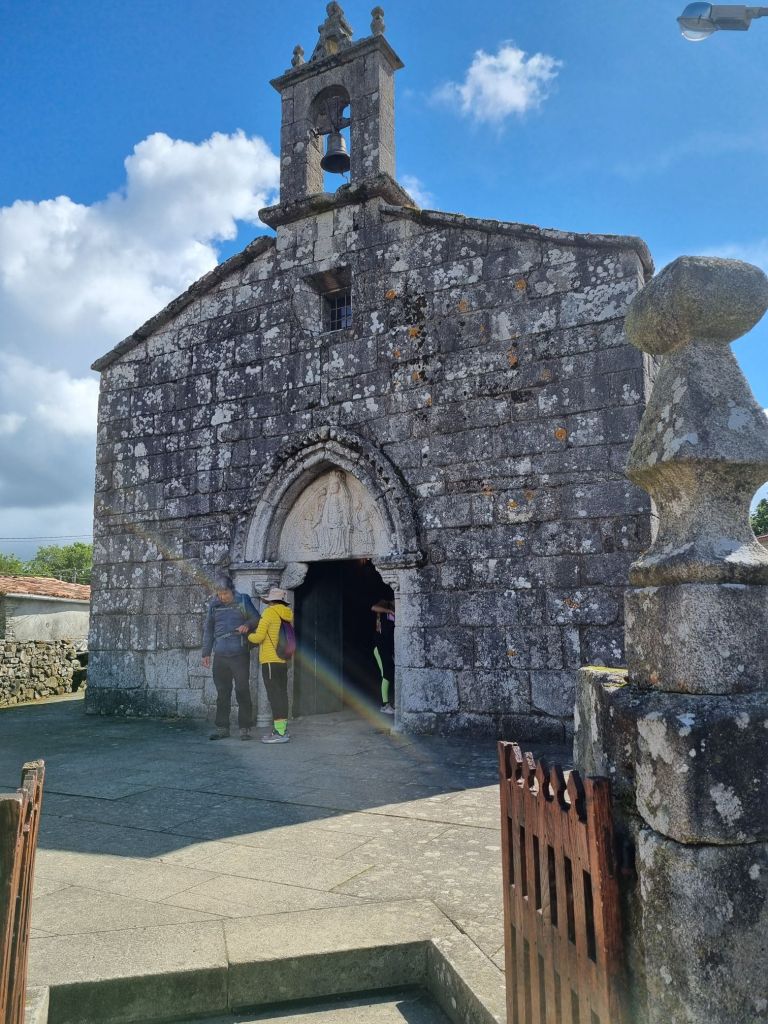
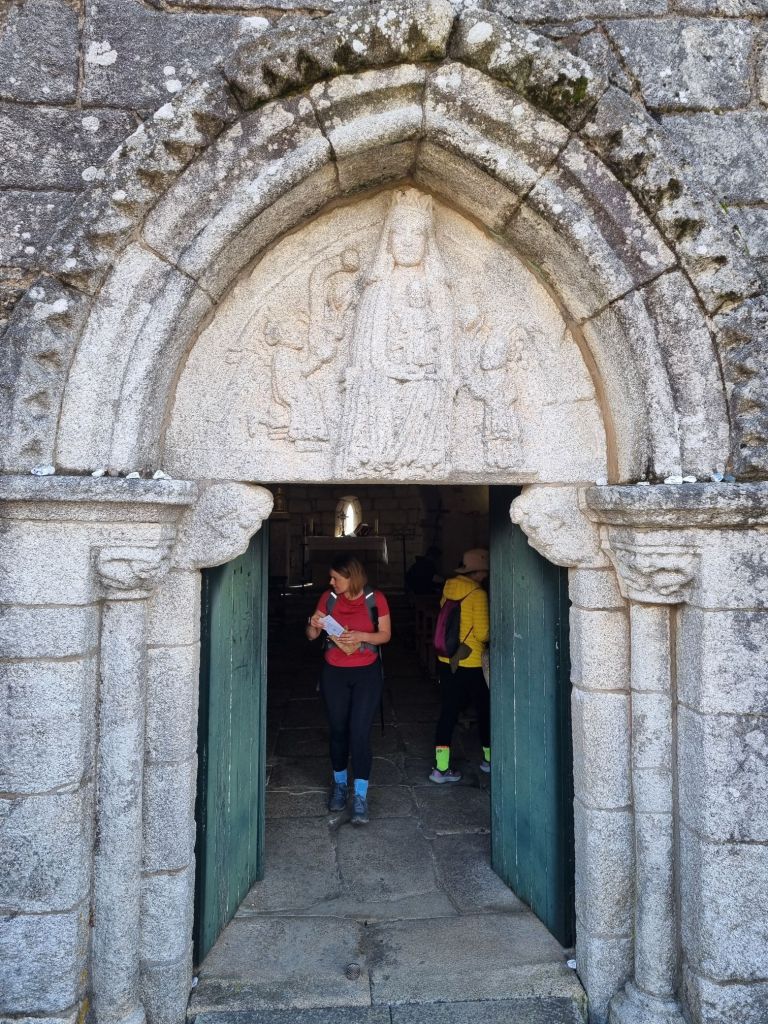
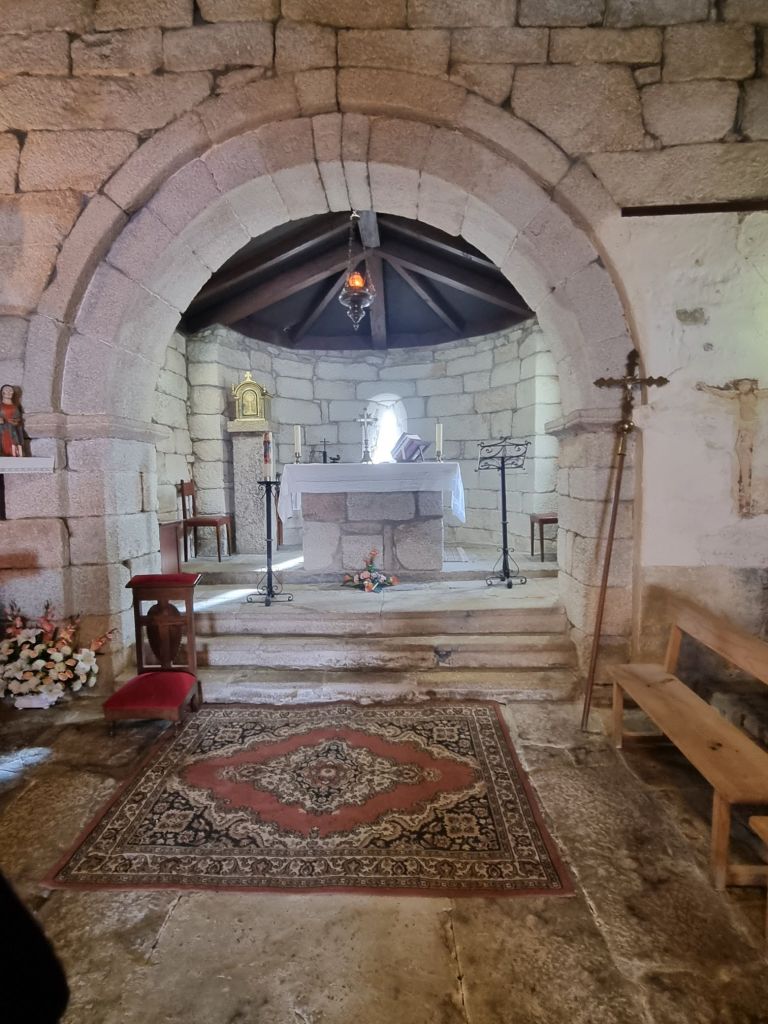
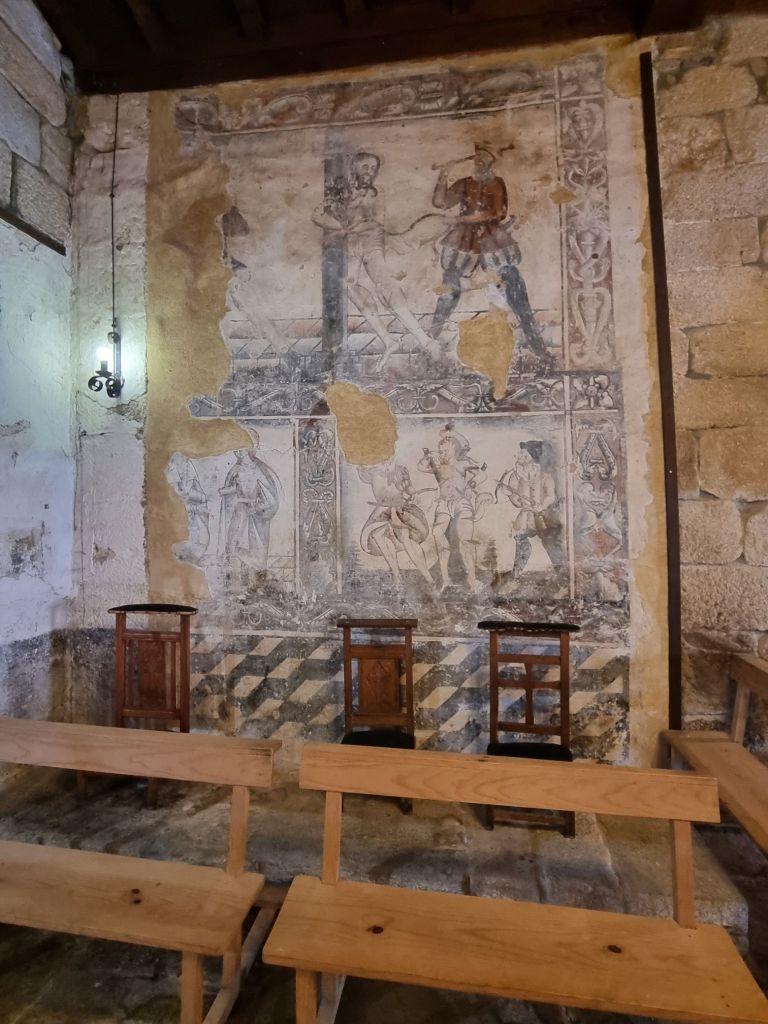
We have missed being able to visit churches along our route but this one was open. The door carving is in granite which would have been so hard to produce. The inside of the church was plain but beautiful. The old wall paintings were quite something.
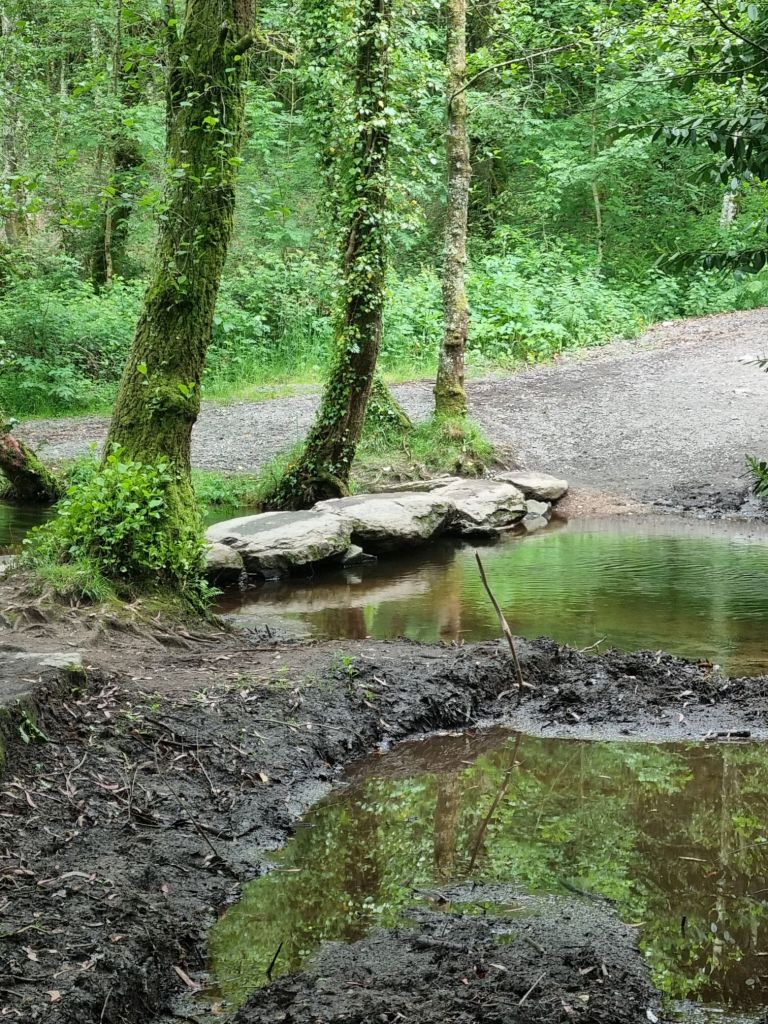
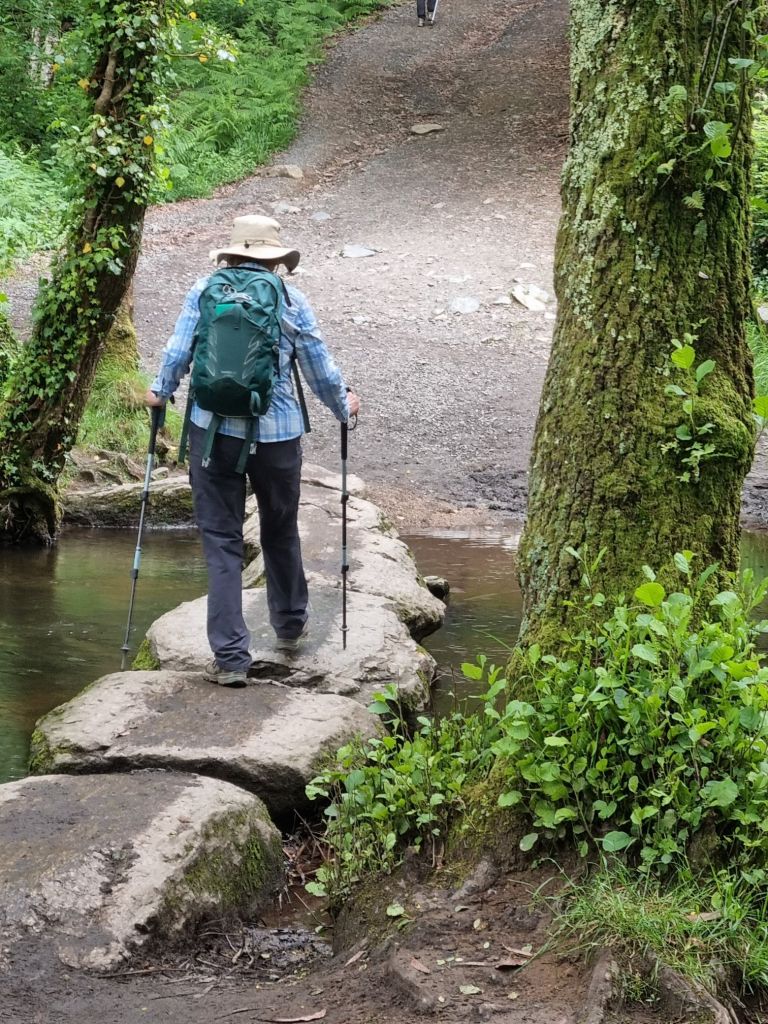
A pilgrim bridgeStepping stonesBeryl tackling the stones with aplomb
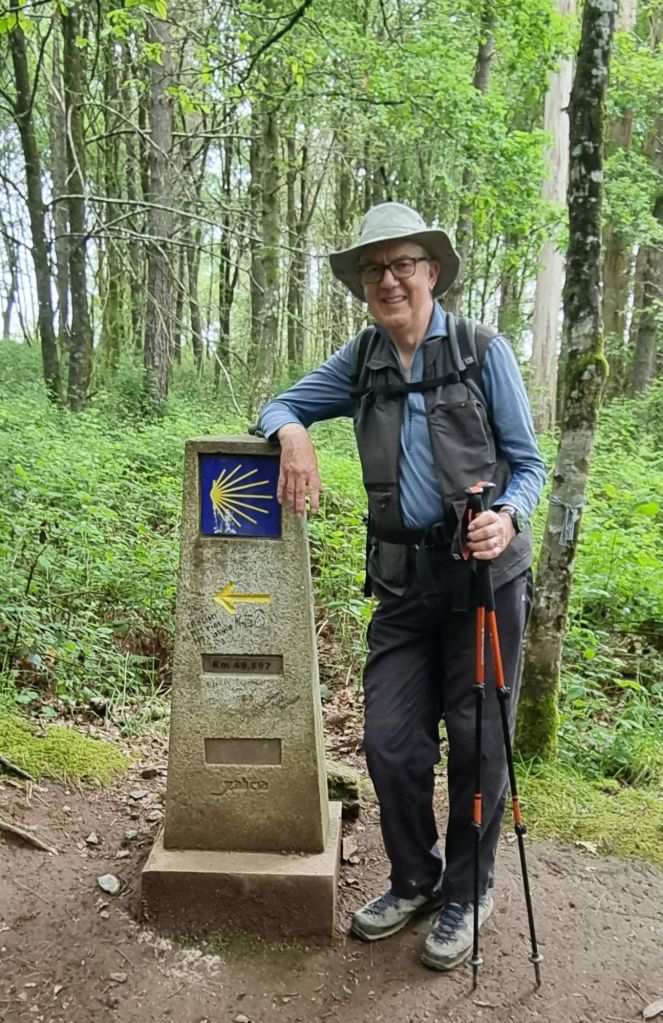
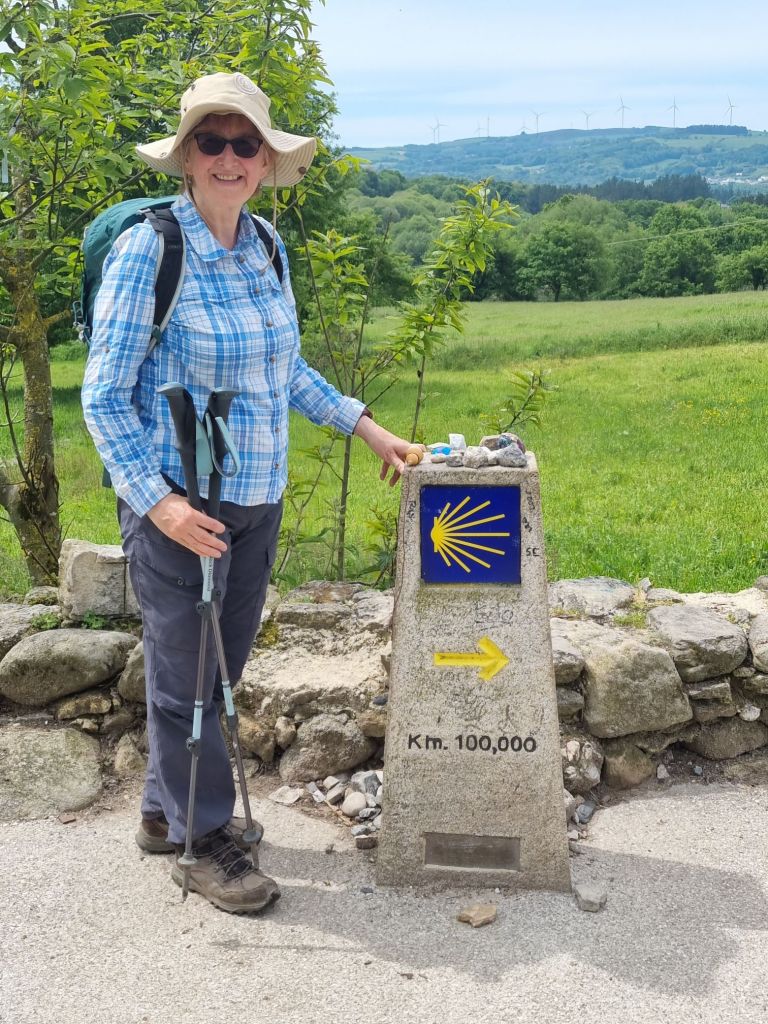
It was very good to get to the 50 km marker. We’re getting there.
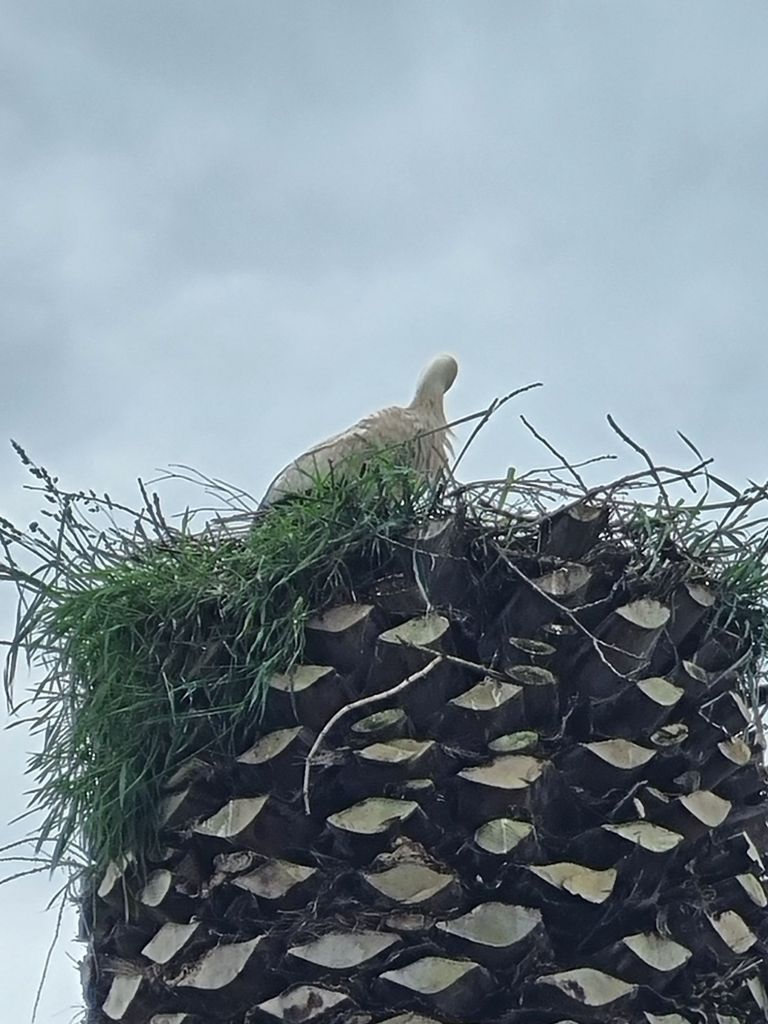
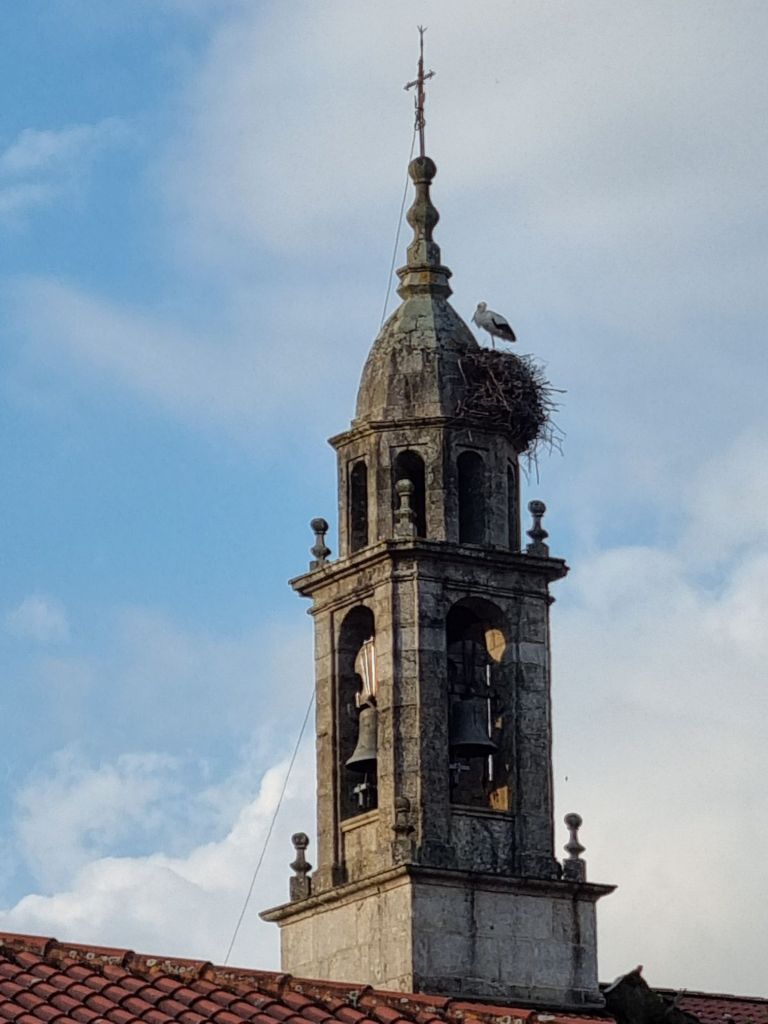
We very much enjoyed the storks and their nests as we walked across the Meseta. One of the books said we wouldn’t see them in Galicia. So it was a real pleasure to see them again in two different places.
It was enjoyable countryside as we approached Arzúa but the successive ridges were draining our spirits. For the last climb, we met an American mother and daughter as we began going up. Our conversation kept us thinking about other things and we were soon at the top with no difficulty.
Our walk today was a goodly length at 25 km with 570 m of ascent.
People can get their Credencial at Santiago by walking the last 100 km. This means that there are many more people on the Way than we’re used to.
It’s good to see so many Spanish folk of all ages enjoying their cultural heritage. Walking slowly behind a group or having a crowd of eager young people pushing behind is not so much fun.
From near our highest point we could look back over the hills which we’ve traversed. The very furthest range is probably the highest point of the Camino Francés and thus beyond Ponferrada where we re-started this year.
I was impressed with these eucalyptus trees. In my Nigerian childhood we had such a tall eucalyptus in our garden. At the age of about 12 my mother taught me how to measure the height of such a tree with the sine of the angle to the top from the ground. and the distance from the base.
This got me thinking about Heather who was a remarkable woman and mother though of course I didn’t appreciate this in my childhood. From a working class background she went to university at Reading to read maths and physics. This was quite something in the 1950s when there were regrettably few women studying such subjects.
It was good to spend time thinking about Heather and the life she led.
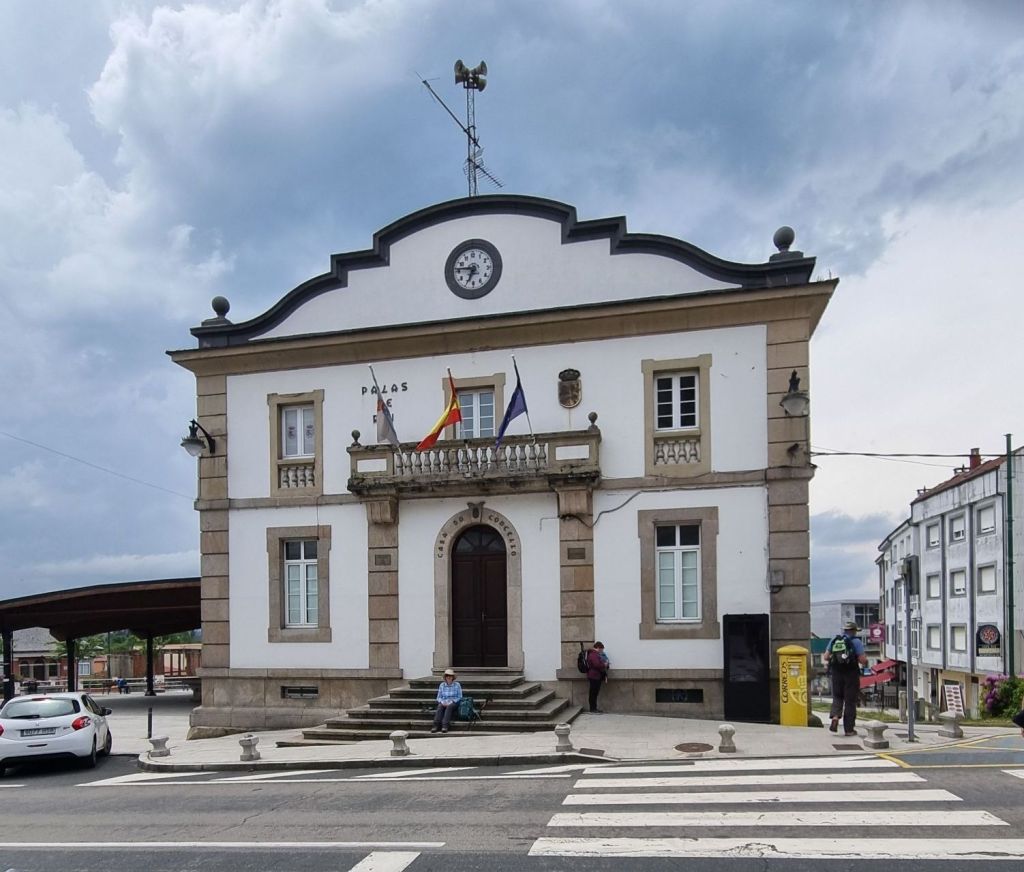
The final walk into Palas de Rei was splendid leaving us at the town hall. There may well have been a king’s palace here at one time but no more.
We were taken by taxi to our evening accommodation which is a delightful rural hotel. Our evening meal has been most enjoyable washed down with a bottle of albariño from Galicia.
Having both had colds we purposed to walk slowly and steadily. That has worked well for us.
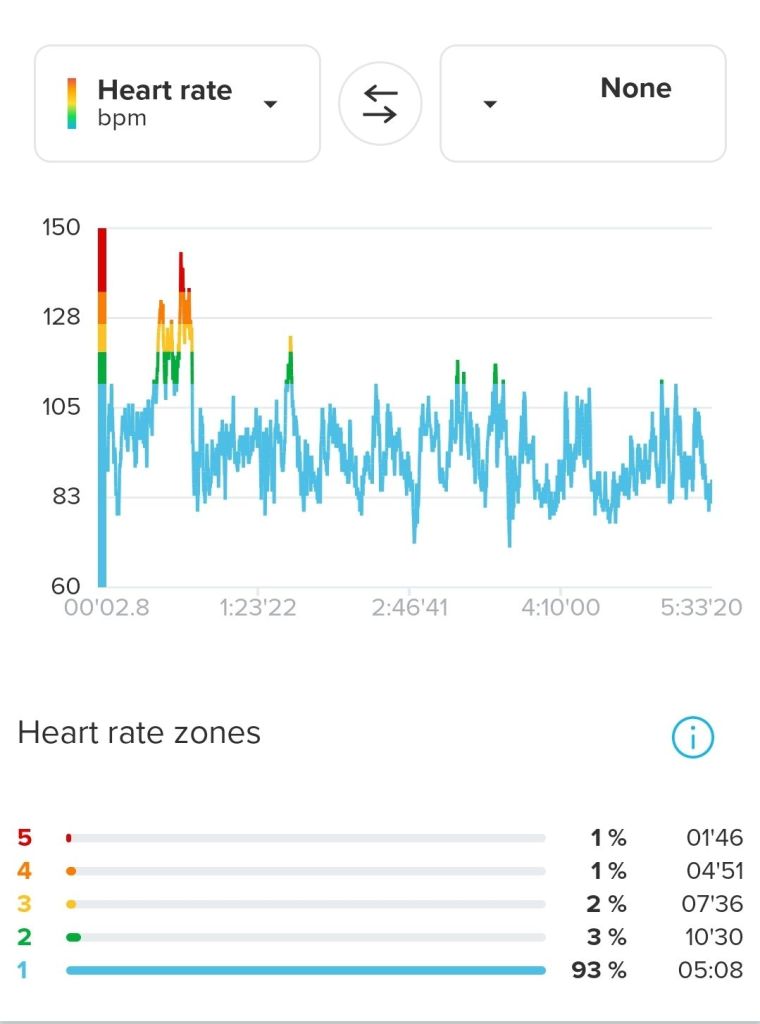
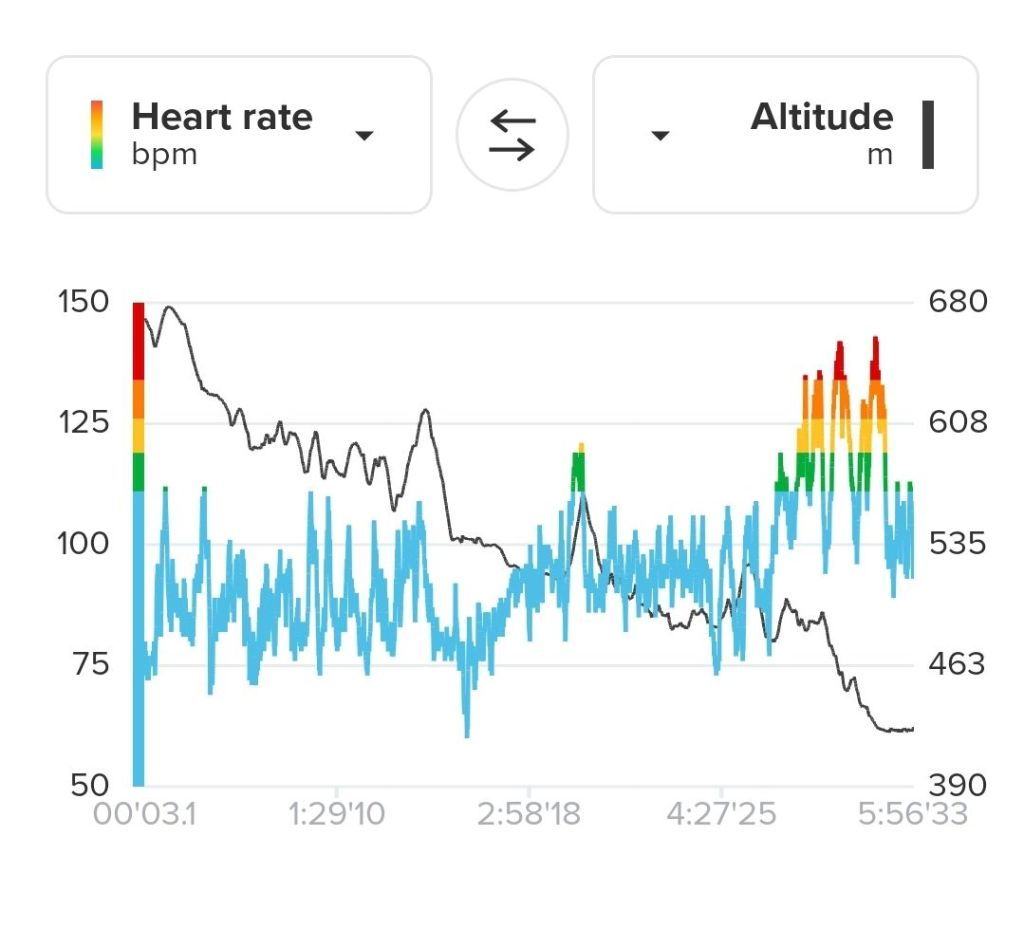
Last year I had a day in bed on our first rest day with perhaps a dose of covid. This year I was very pleased that my heart rate did not go into arrythmia at the slightest effort. Walking steadily has also made for a pleasant day.
After the first steep hill my heart rate was sensibly low
We continued walking west. There were hills between the two river valleys.
Our stats for the day were 22.8 km with 487 m of ascent. The weather was cool and misty as we set off but gradually the sun came out.
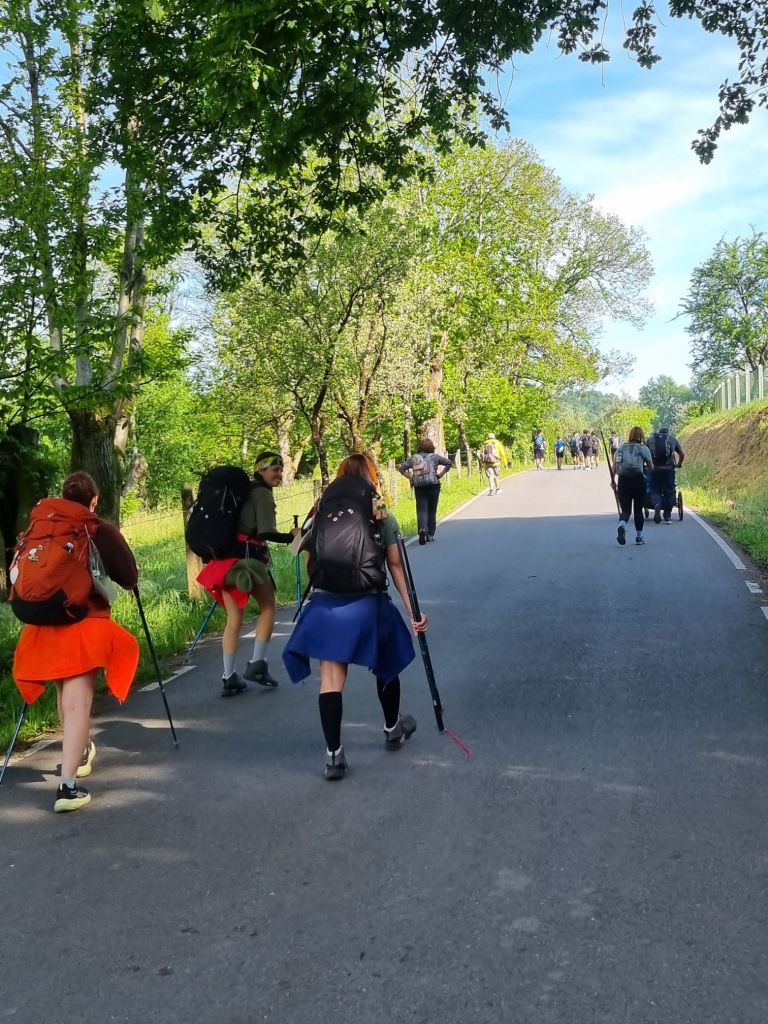
Many people come to complete the last 100 km of the Camino Francés. The distance from Sarria is 115 km so that is an important starting point. We noticed more groups, families and young people today. It’s nice to have the range of people but there is a lot less saying buen camino. It’s a different vibe but on the plus side there are many more wayside cafés.
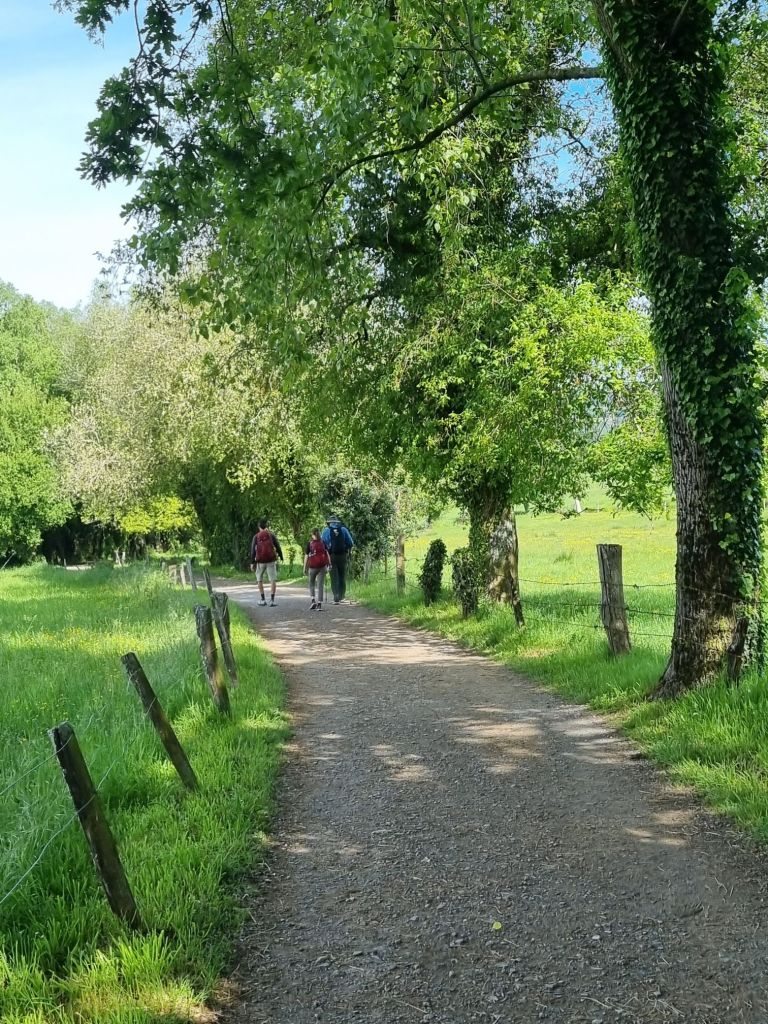
Galicia is very different in land management from the large flat lands of Meseta which we walked through last year. The fields are small and mostly pasture or woods. This makes for a familiar countryside which we enjoy walking through. It’s nice to see mature trees.
Queuing for a sello or stamp on Credencial
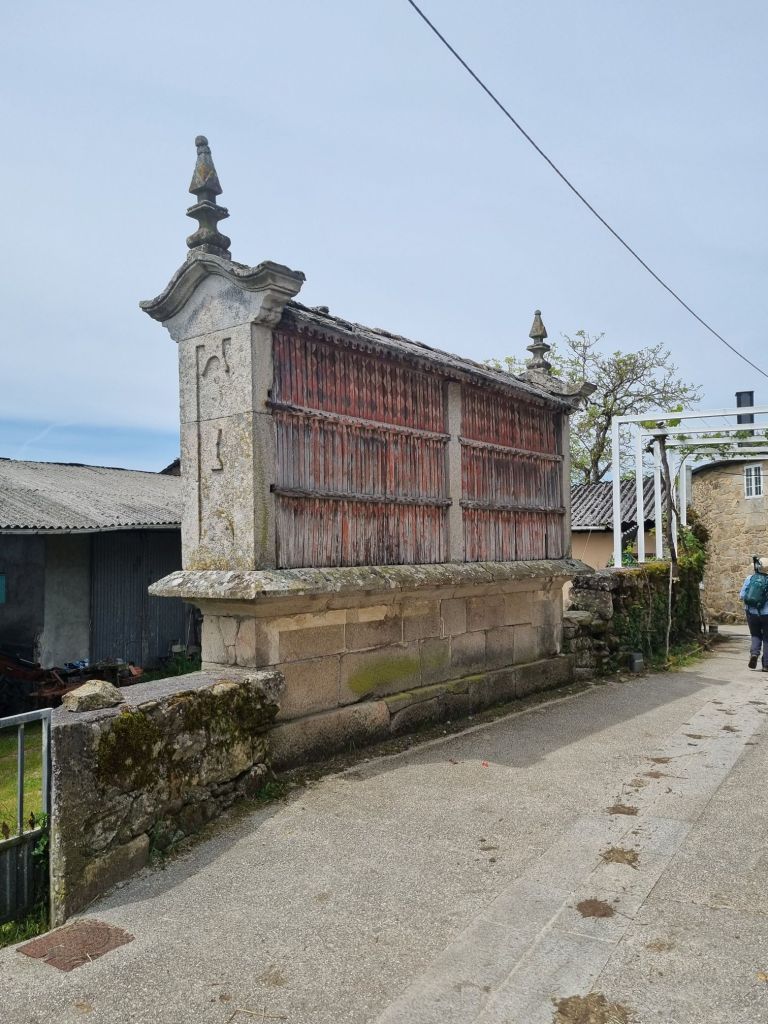
The grain stores have a unique linear structure. Some are old but others are being rebuilt with air bricks.
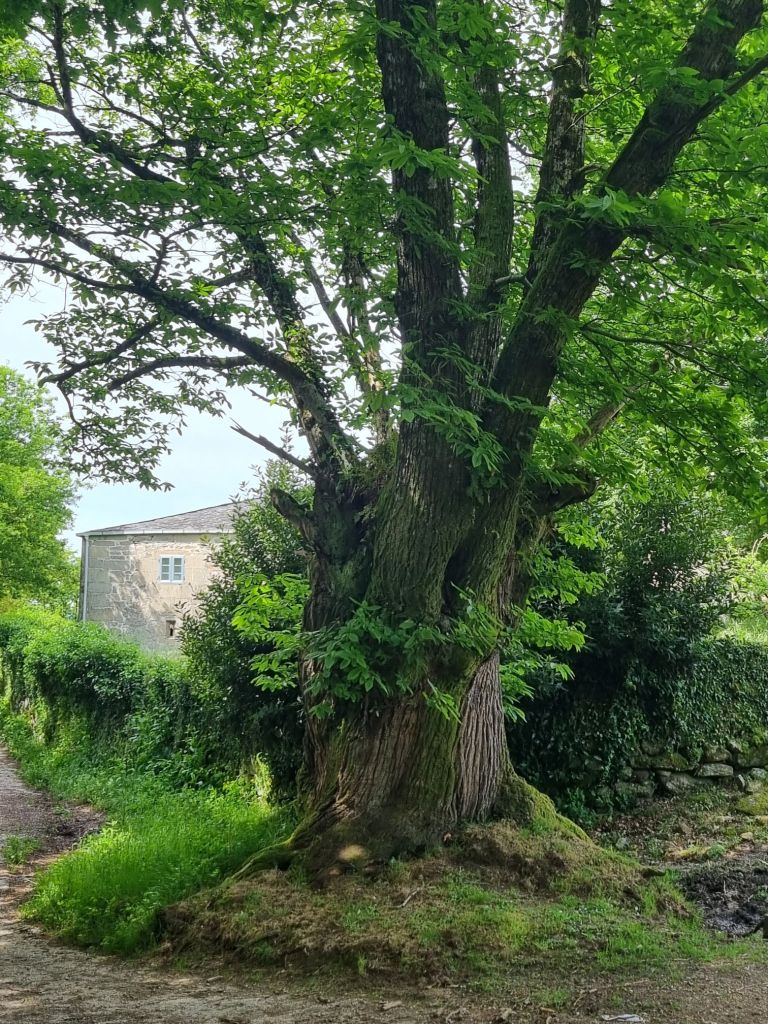
Mature sweet chestnut
There are milestones at regular intervals with apparently five significant figure accuracy ie down to the nearest metre which seems unlikely to be correct. It was though pleasing to reach the 100 km marker.
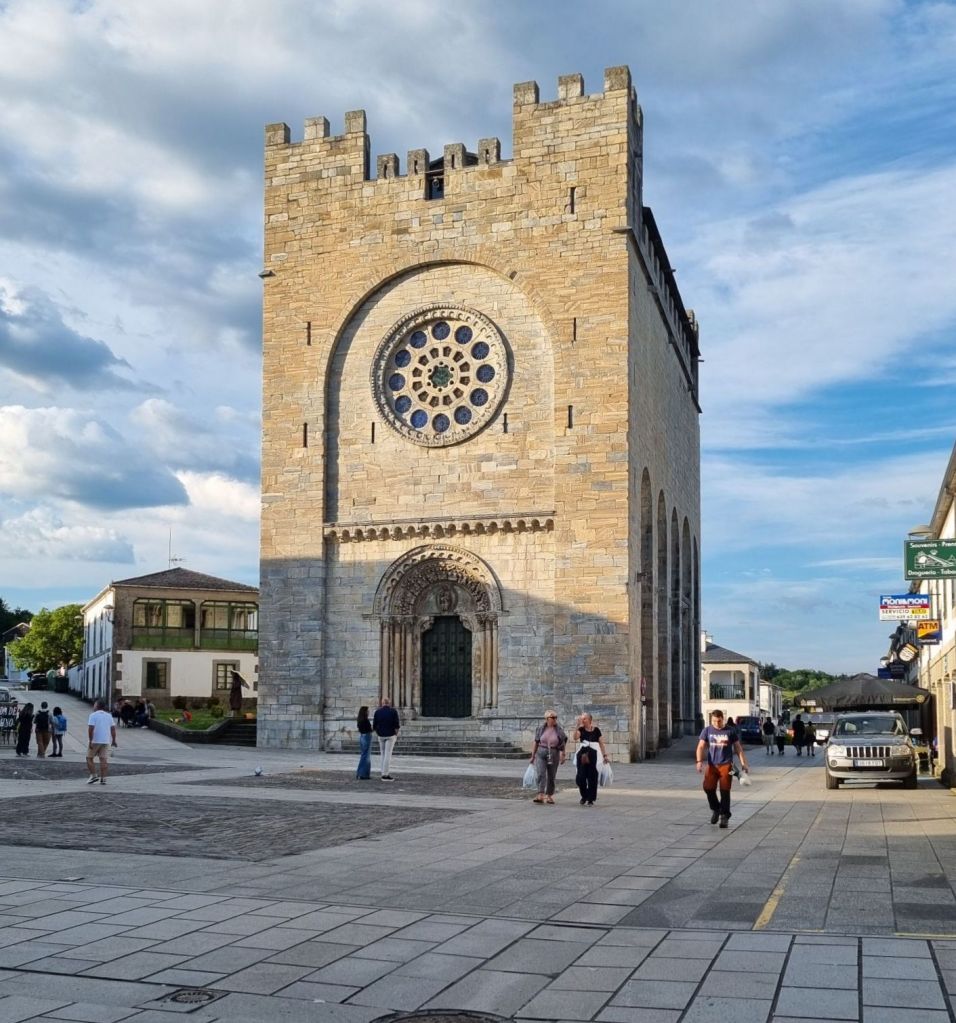
We arrived at Portomarín in the mid-afternoon. The river was dammed in the 1960s to form this large reservoir. Several of the old important buildings were reassembled stone by stone higher up the hill. The new town has been sympathetically built in traditional stone style.
Tomorrow we look forward to a similar profile and distance walk.
After five days of walking we were definitely ready for a day off. The good news is that Beryl’s cold which developed on our second day has all but gone. The not so good news is that Julian caught the cold from Beryl and felt rather rough. It was just as well the rest day came when it did.
It’s curious to see the cold infection come on our fourth day. My heart rate rarely strays above 120 bpm whilst walking yet all of a sudden when we were walking downhill my heart rate shot up to peaks above 140 bpm. Perhaps this is all too much data but interesting nonetheless.
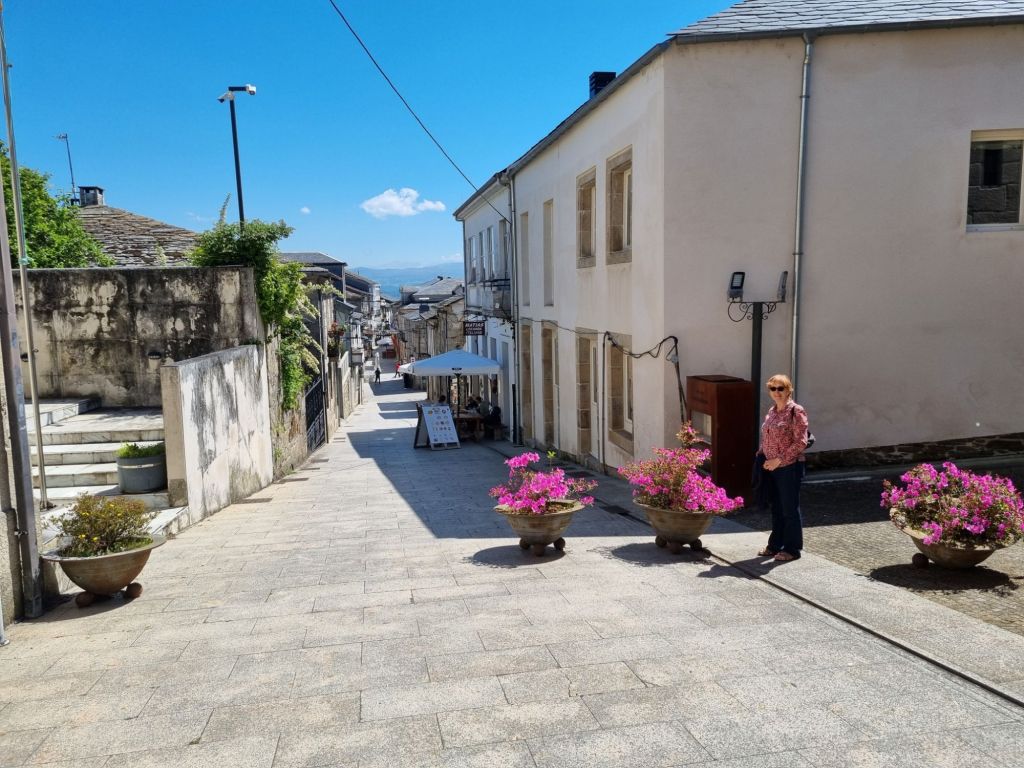
We wandered around Sarria for a bit but there wasn’t much to see. Most of the old Camino buildings have been destroyed many years ago.
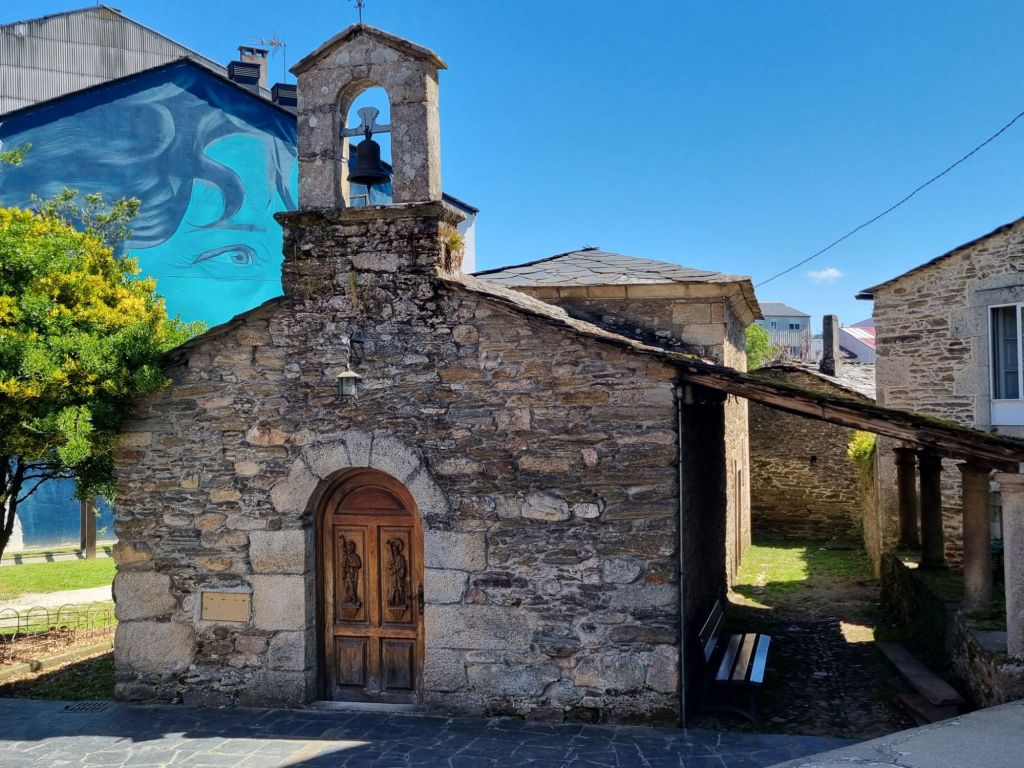
There was one old leprosy chapel.
Old Sarria’s main street
Many people with leprosy went on pilgrimage hoping that their disease would be cured but I fear that didn’t happen often if at all. I remember seeing people in Nigeria with leprosy during the 1960s. It was a dreadful condition. Thank goodness for modern medicine.
We ate in the hotel the previous evening. There were three large groups in the hotel restaurant, presumably all about to start their 100+ km Camino. One group of about 30 were Italian. The other two of similar size were Americans, one consisting of people of a certain age and the other a large group of young adults from what looked like a Catholic university.
It’s good to see people of all ages participating in the Camino. We expect to see many more people on the Way.
We spent quite a bit of time on our rest day reflecting together on our life journeys and thinking about our families at large. This type of conversation could happen at any time but in the routine of ordinary life at home tends not to. The pilgrimage, even if only on a purely secular basis, is a valuable experience.
We’ve been rather disappointed that so very few churches have been open to visit. There were many more we could go inside earlier on the Camino Francés. I’d been hoping to see more Madonnas which I find curiously moving but it has not happened so far.

 Julian and Beryl's camino