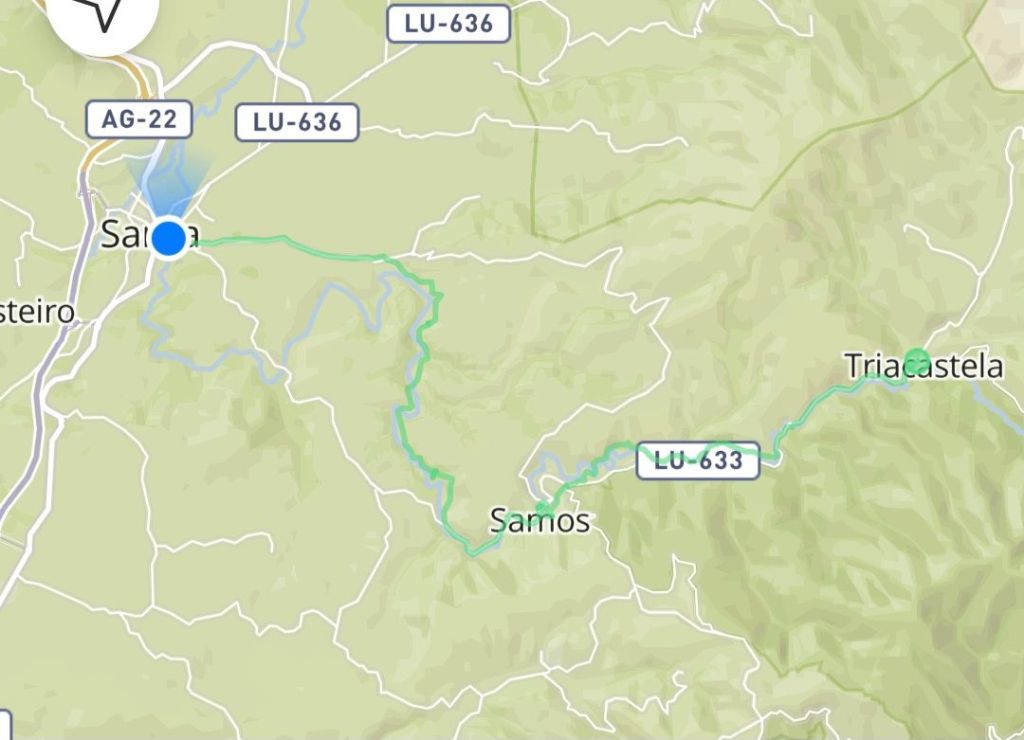
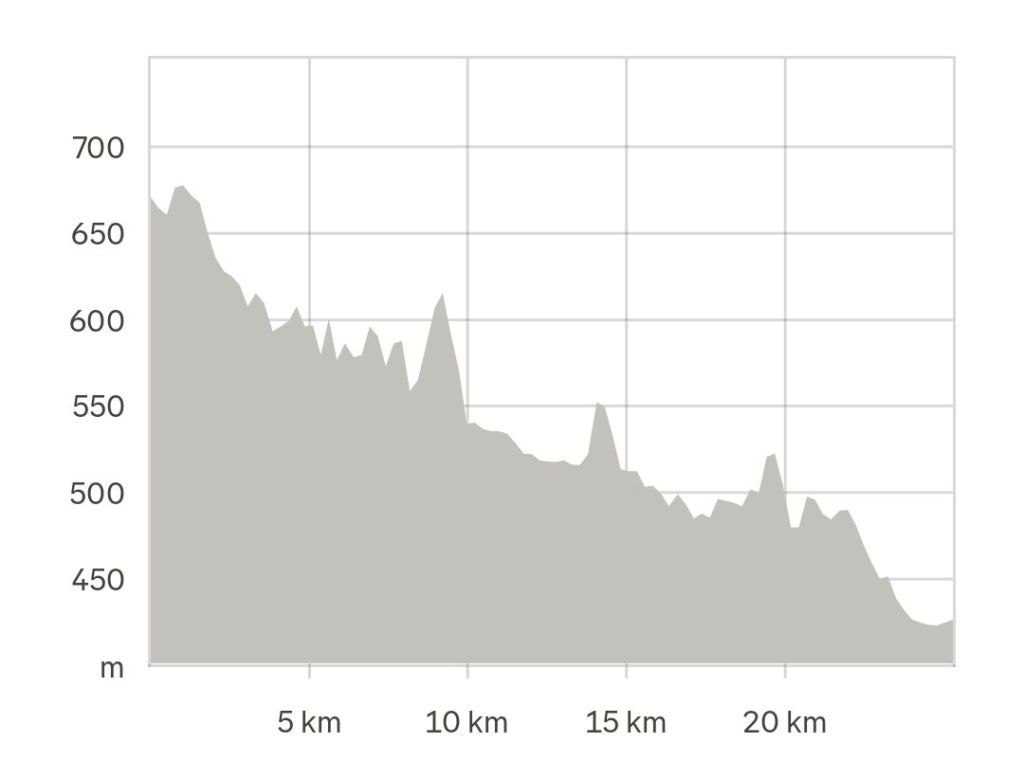
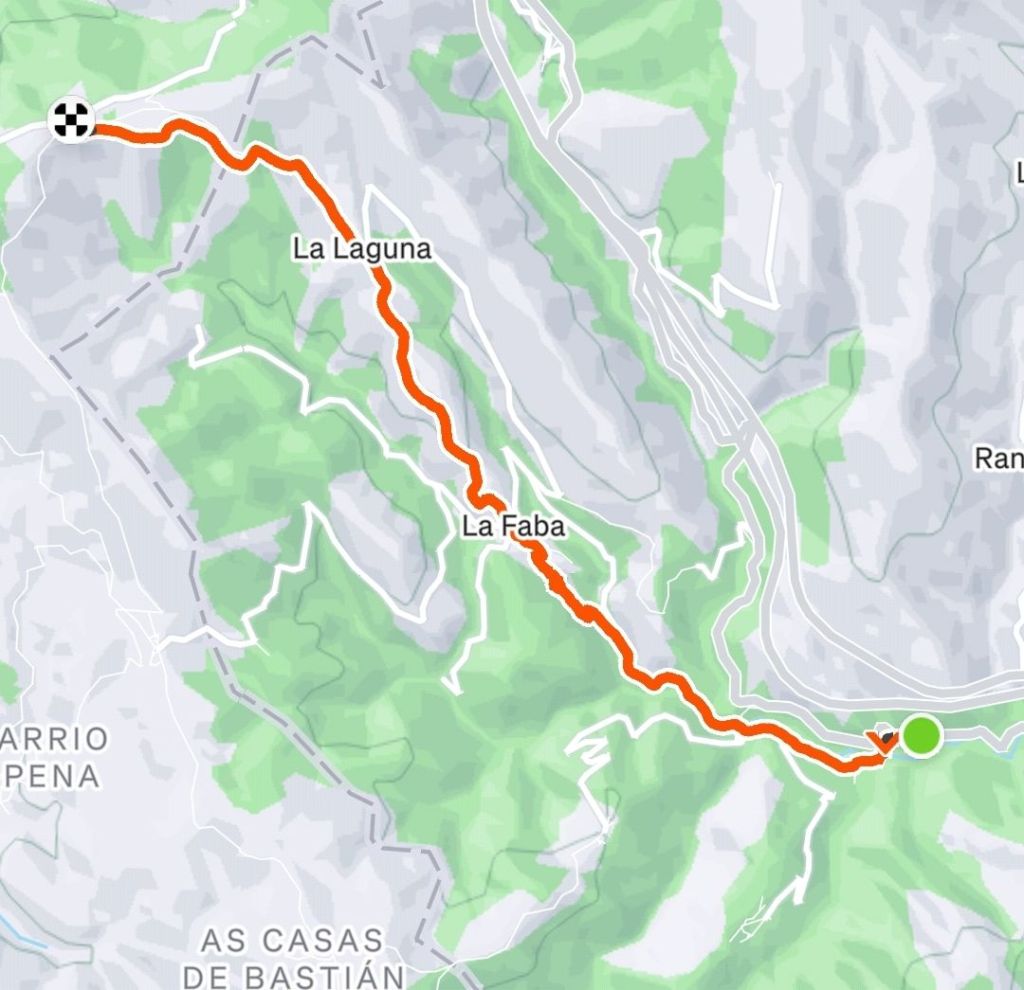
We had some of the best walking today as we finished our first five days before our rest day.
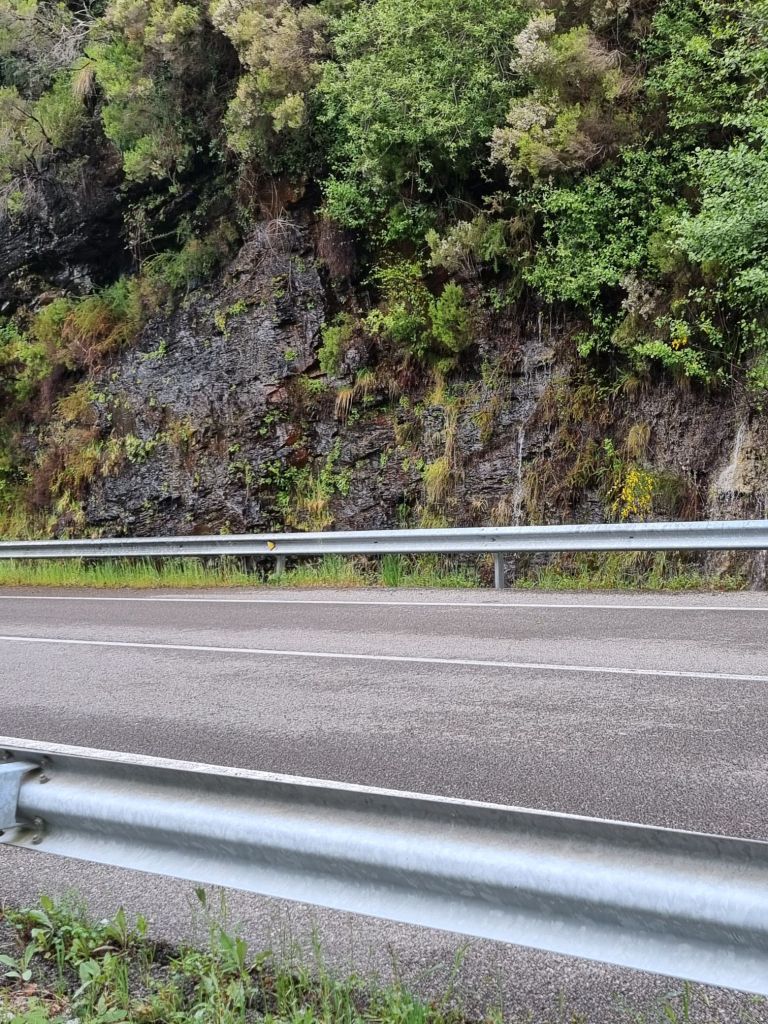
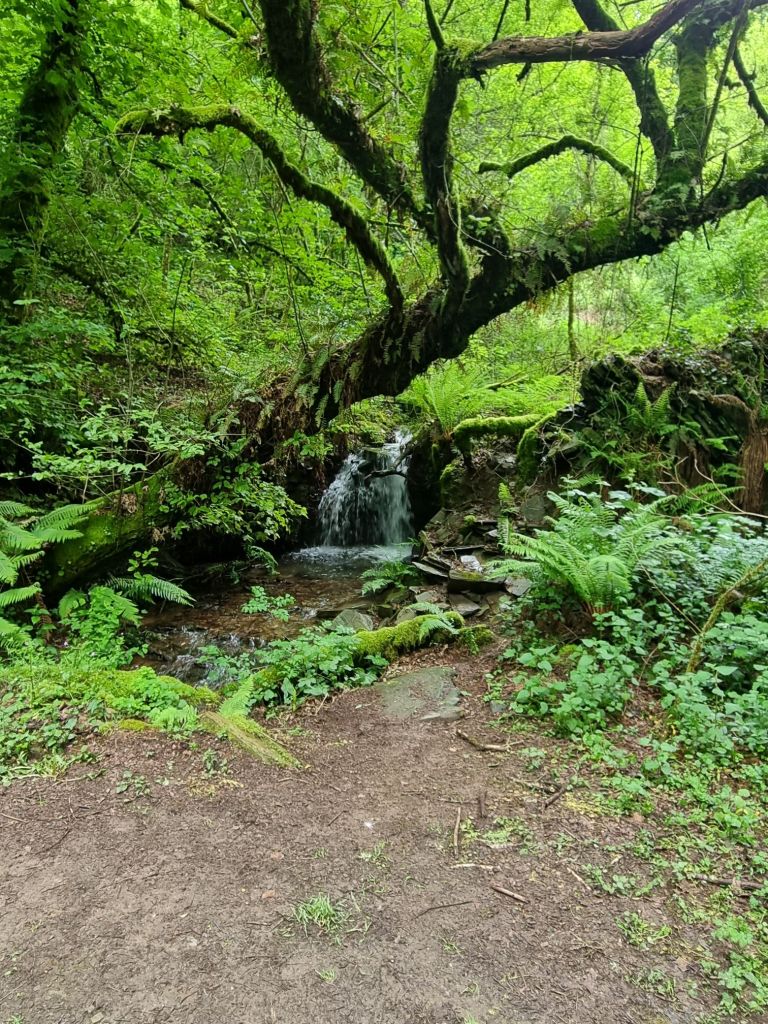
Our journey took us along the Río Oribio which became the Río Sarria. There were many side streams joining the river which gradually increased in flow. At the beginning of the walk, the rocks were weeping copiously with water.
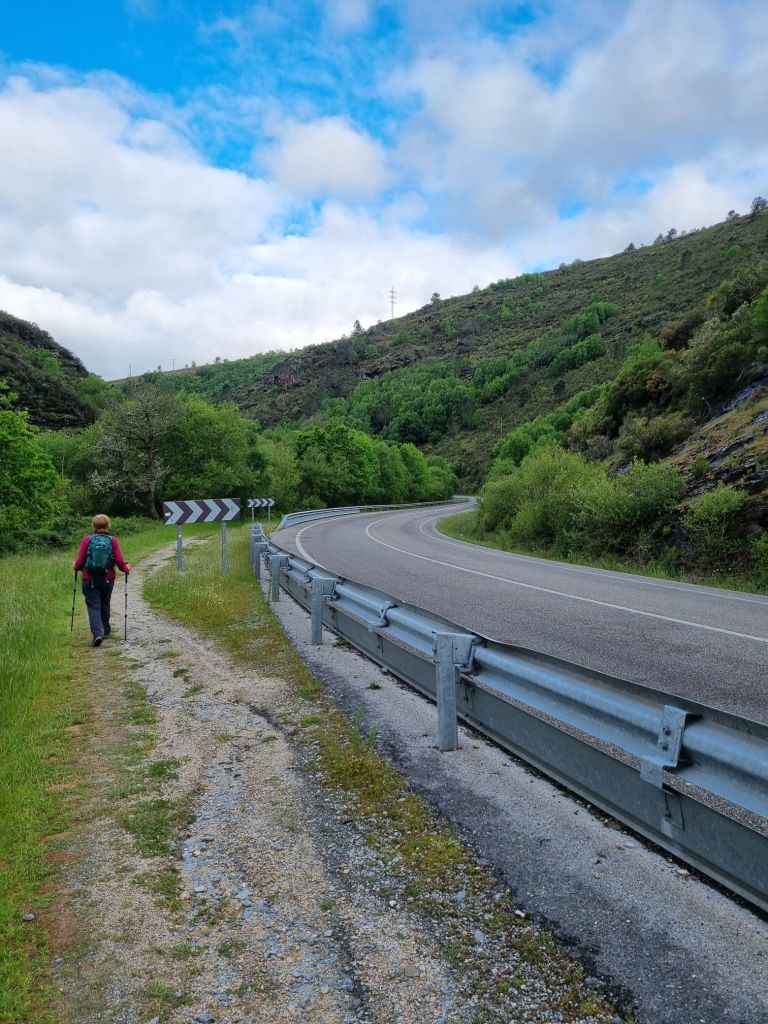
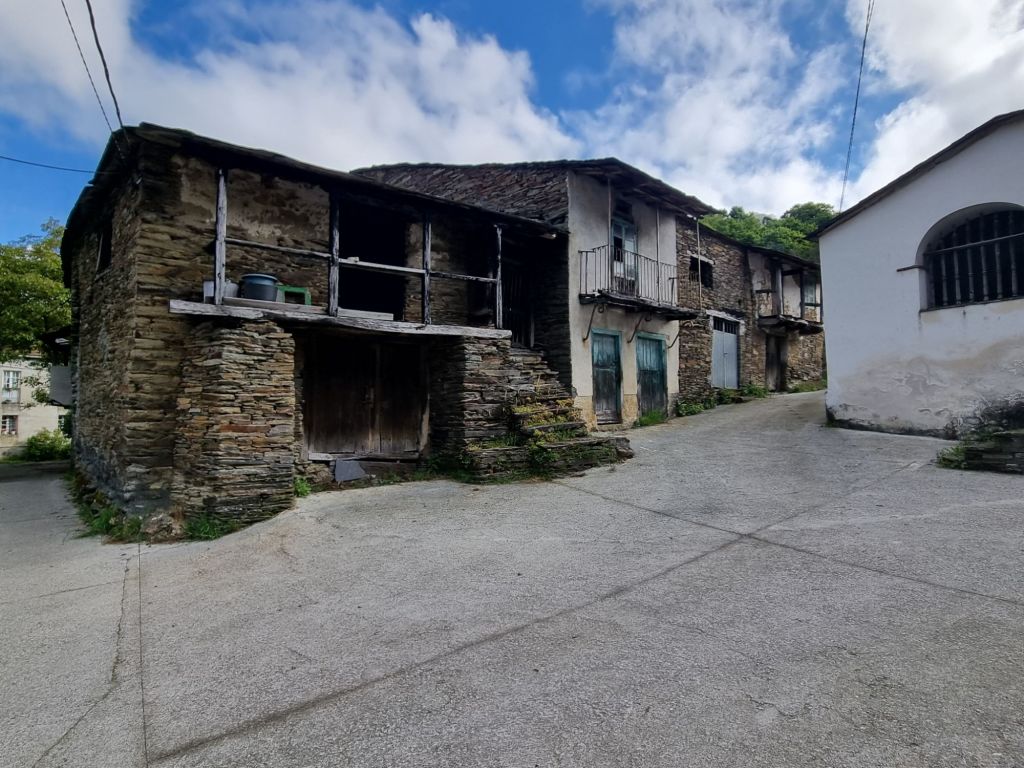
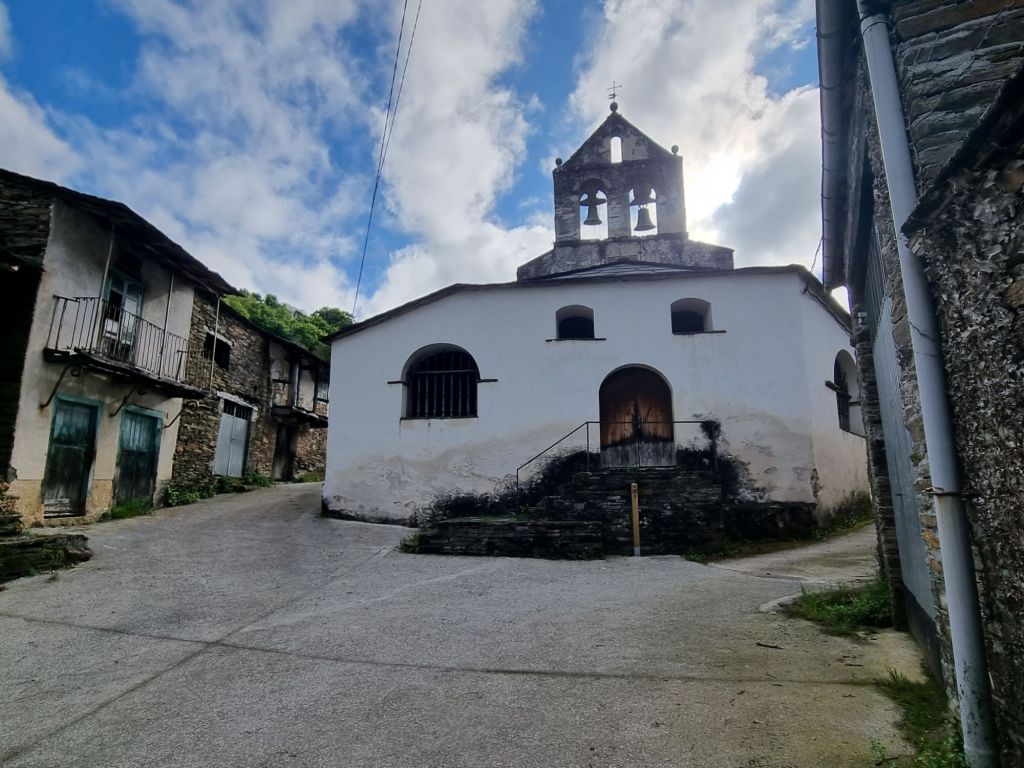
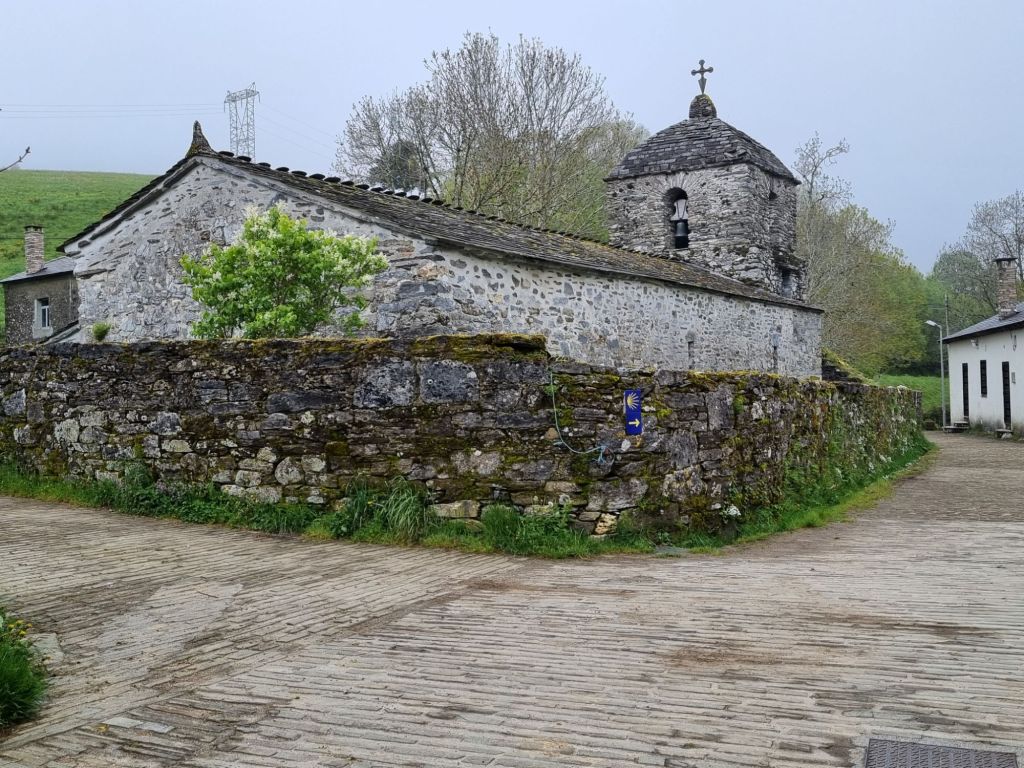
Initially we had to walk alongside the road which is never ideal. At San Cristovo de Real we started walking along a lovely old track. The village itself had a fascinating old character surrounding the church. Many of the old buildings look in need of attention. The river was controlled with weirs and leats implying water mills in the past.
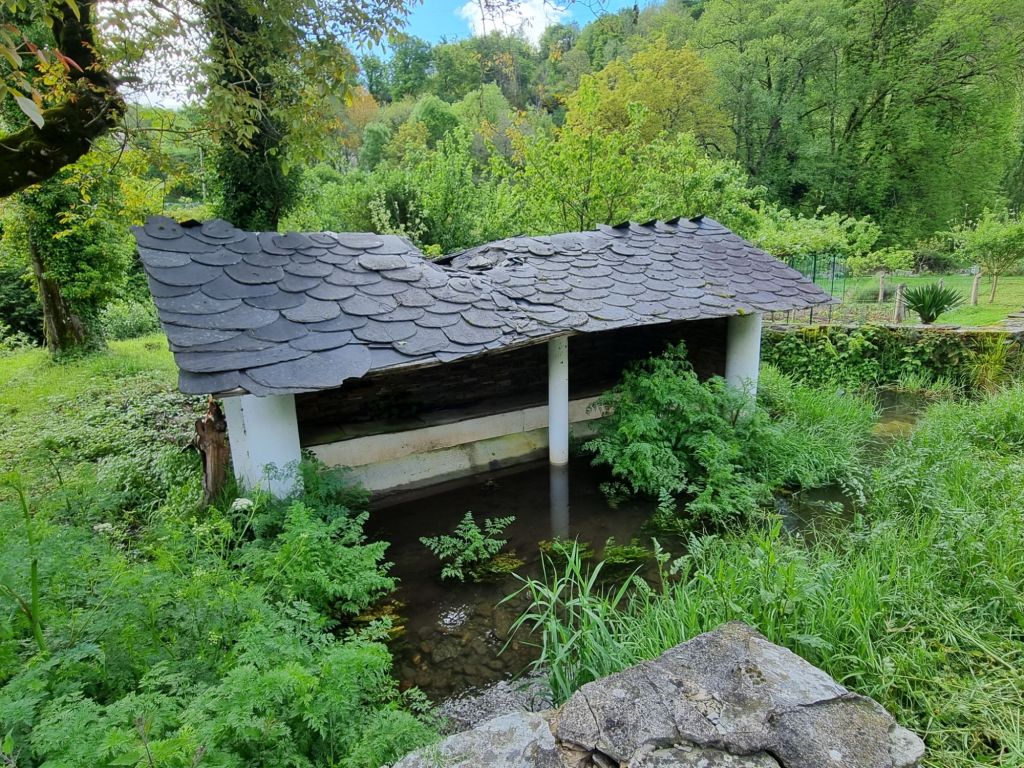
An old laundry block with running water
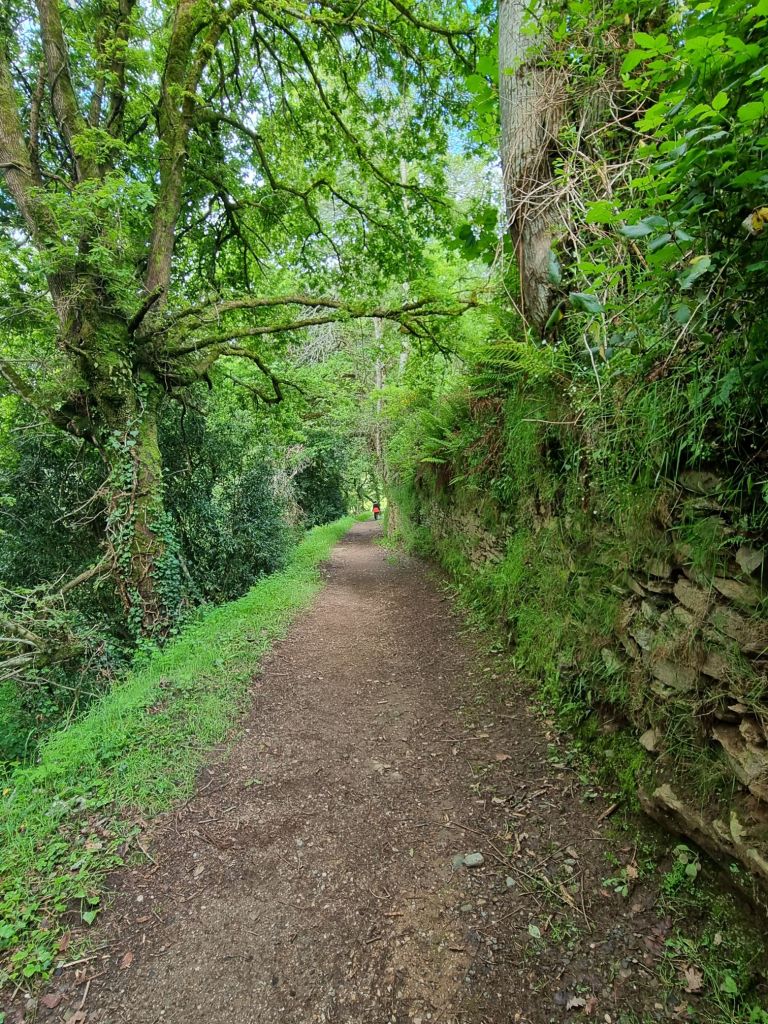
Our path took us along a delightful long used track. It was lined with a stone wall which must have been a major undertaking.
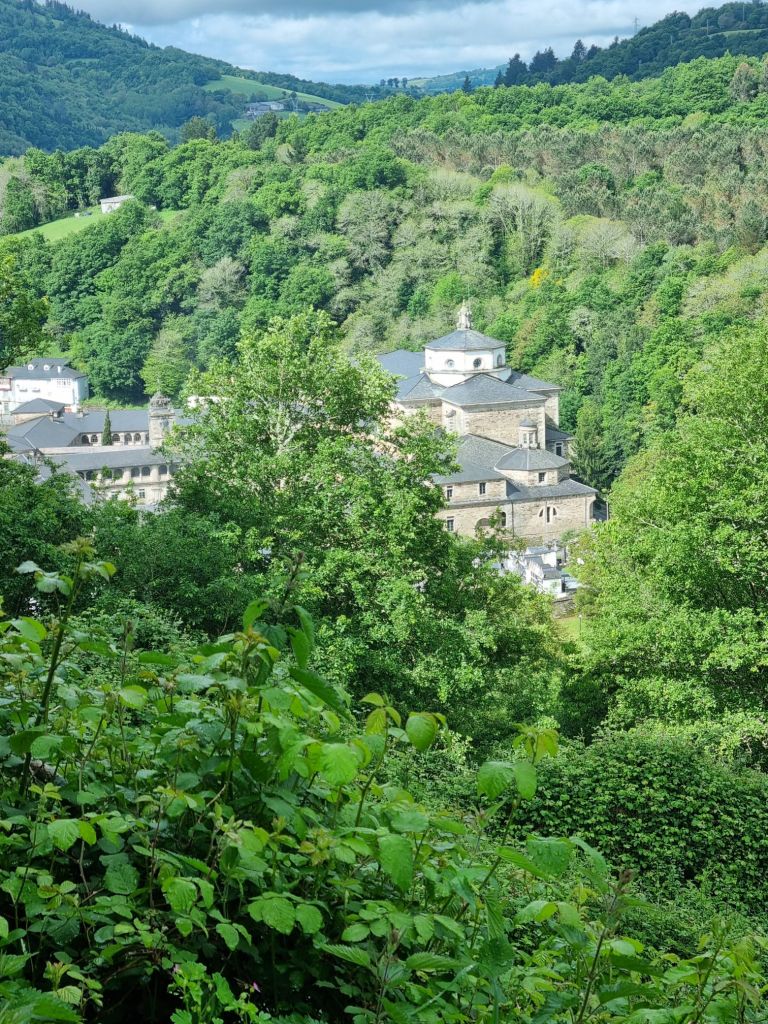
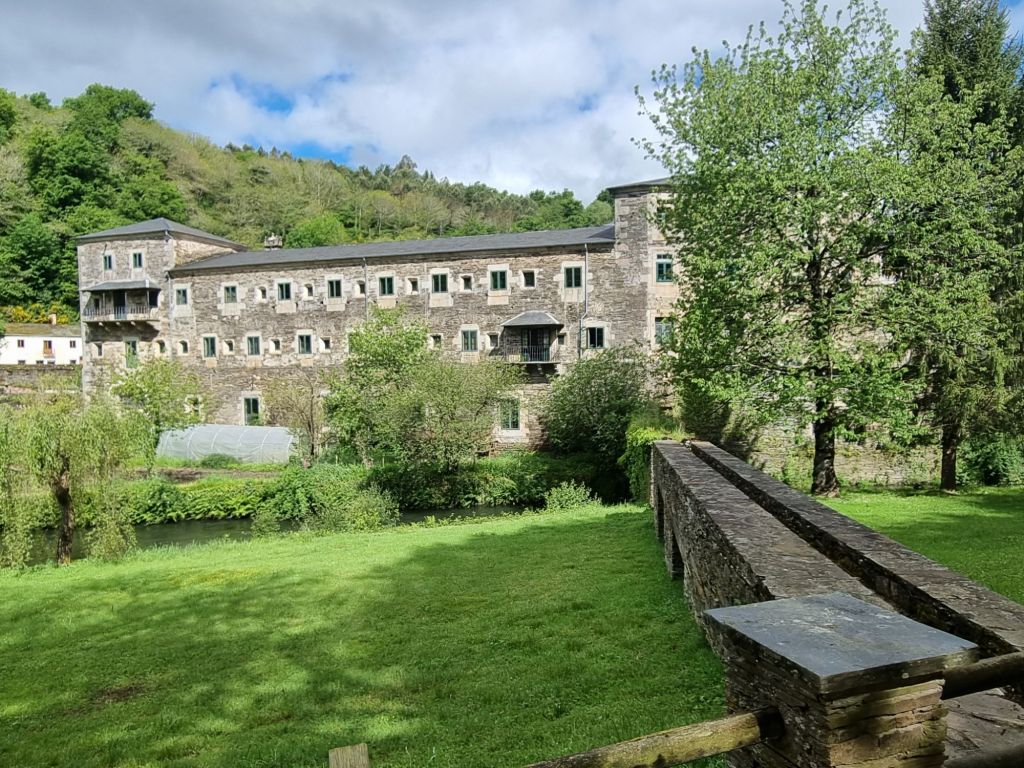
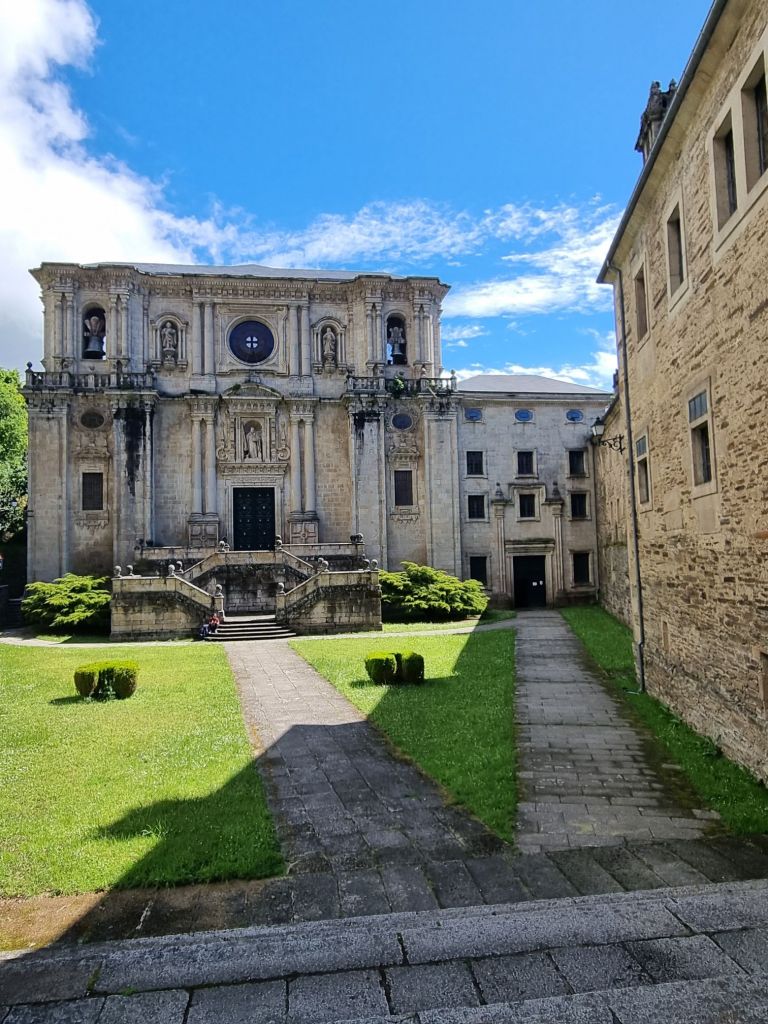
Our first stop was at the Benedictine monastery of San Xiao at Samos. At one time there were 500 monks living here.
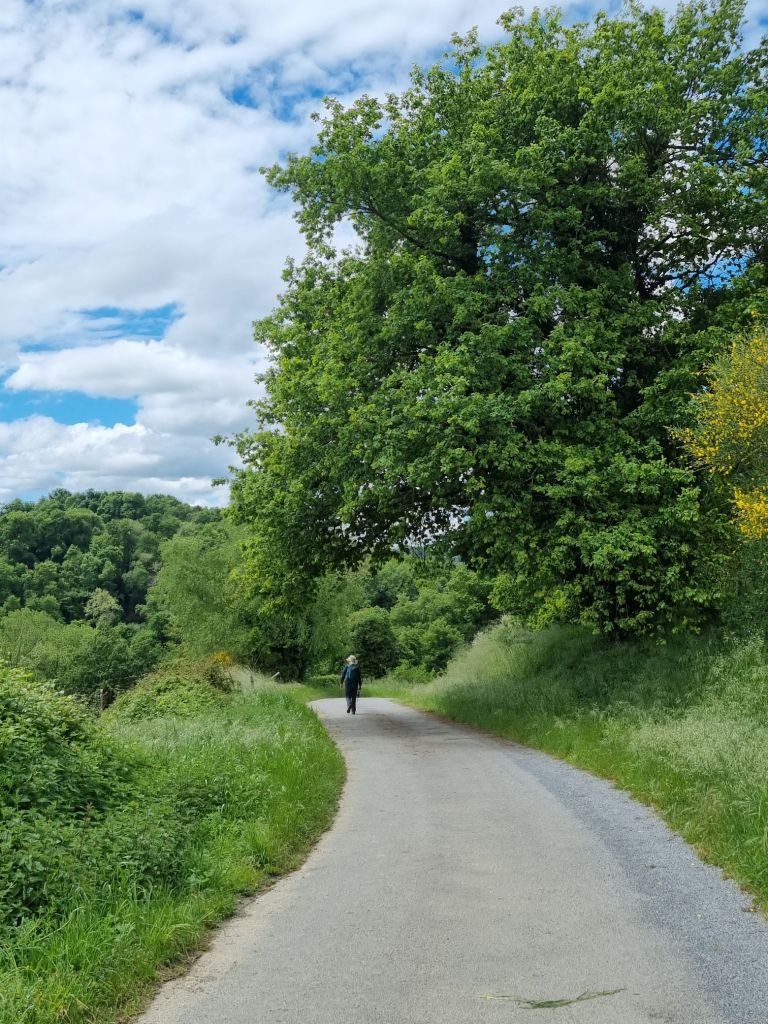
After Samos, the path took us through very quiet tracks and roads. We didn’t see one vehicle on the roads in this middle section.
It was a long day but we were pleased to arrive in Sarria in good form with a rest day ahead.
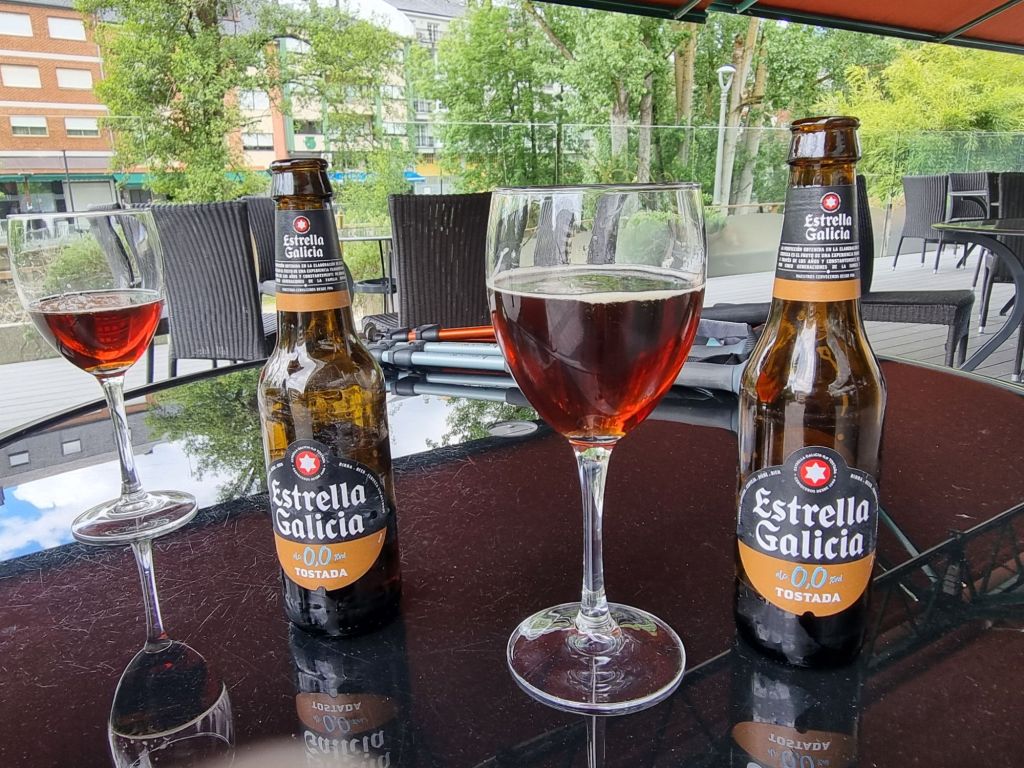
Estrella Galicia in Galicia
In this evening’s hotel restaurant there were several large groups presumably all getting ready for the 100 km walk to Santiago. It will be interesting to see how the feel of the pilgrimage changes with the influx of many new people.
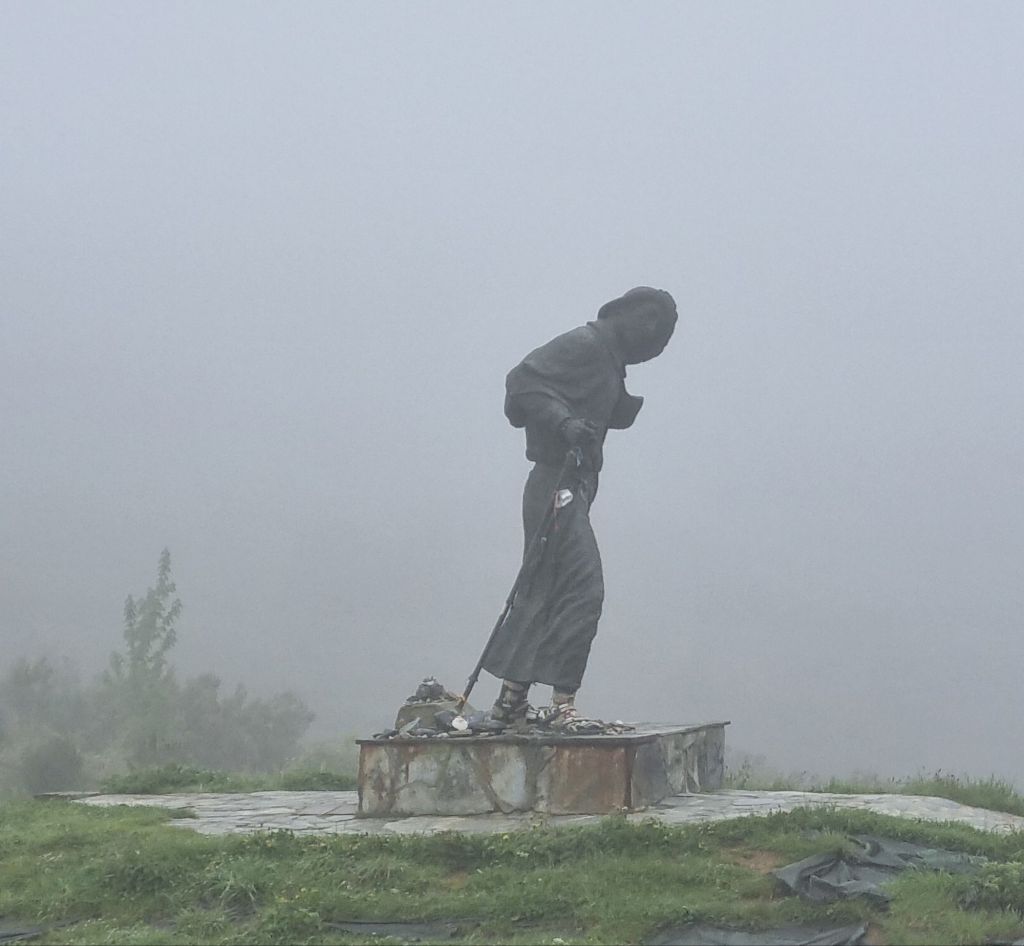
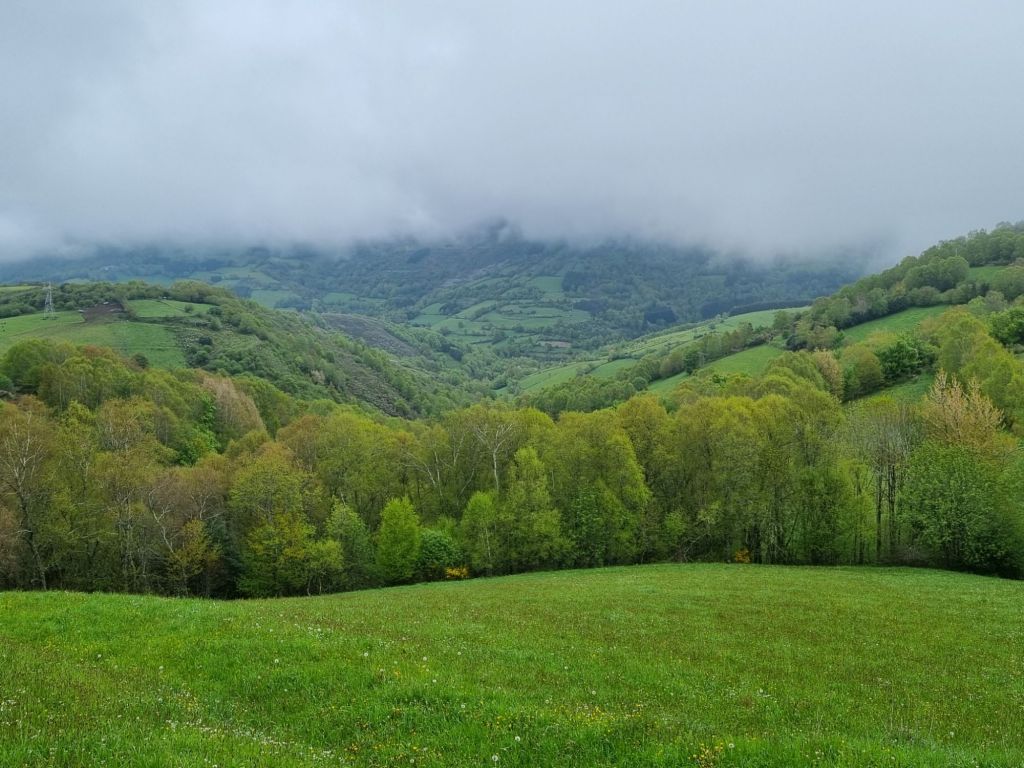
Over night the fog had descended. I had hoped to see the Milky Way the previous evening, which is reputed to be spectacular at this height, but it was not to be as there was complete cloud cover.
It was about 5° as we set off in the damp air. There was no wind but that did little to offset the knowledge of warm, sunny days at home.
How we felt
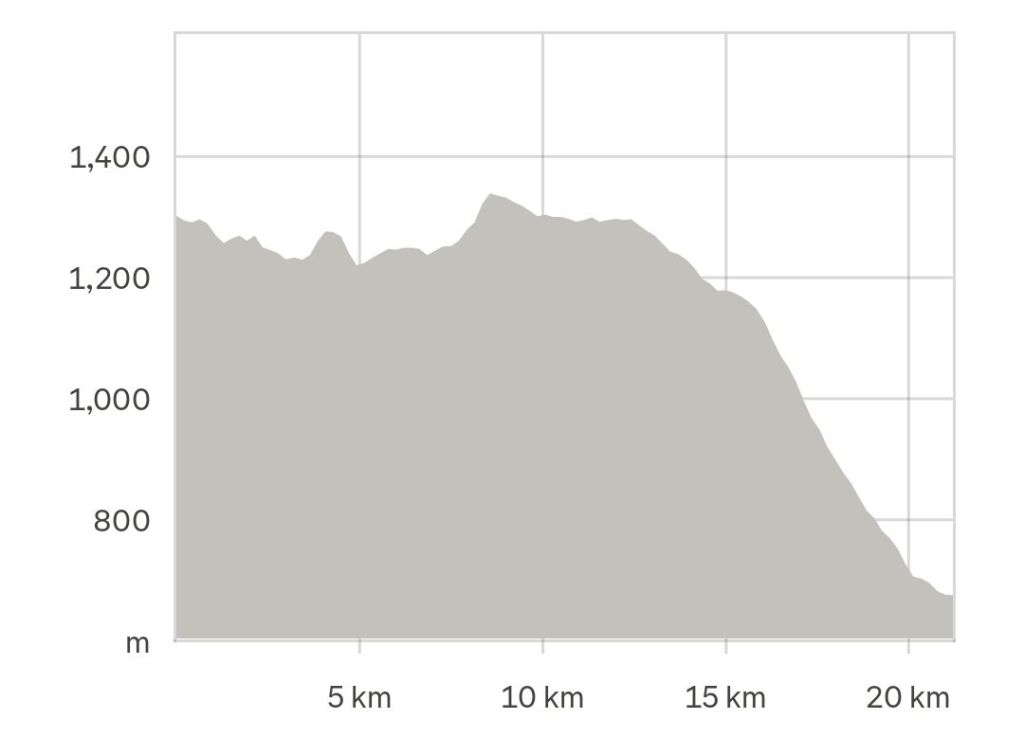
We were descending from the high point of this year’s Camino so we expected an easier day. Although it was pleasant underfoot and we were generally going down, there was suddenly a nasty kicker where we had to climb back above our start position.
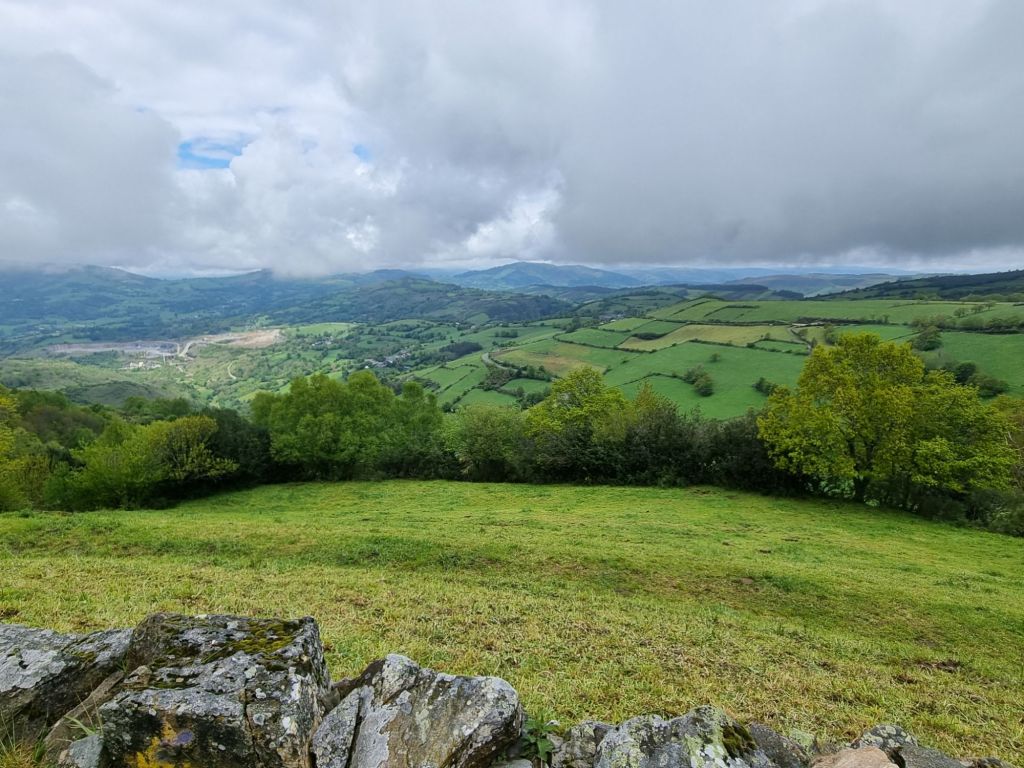
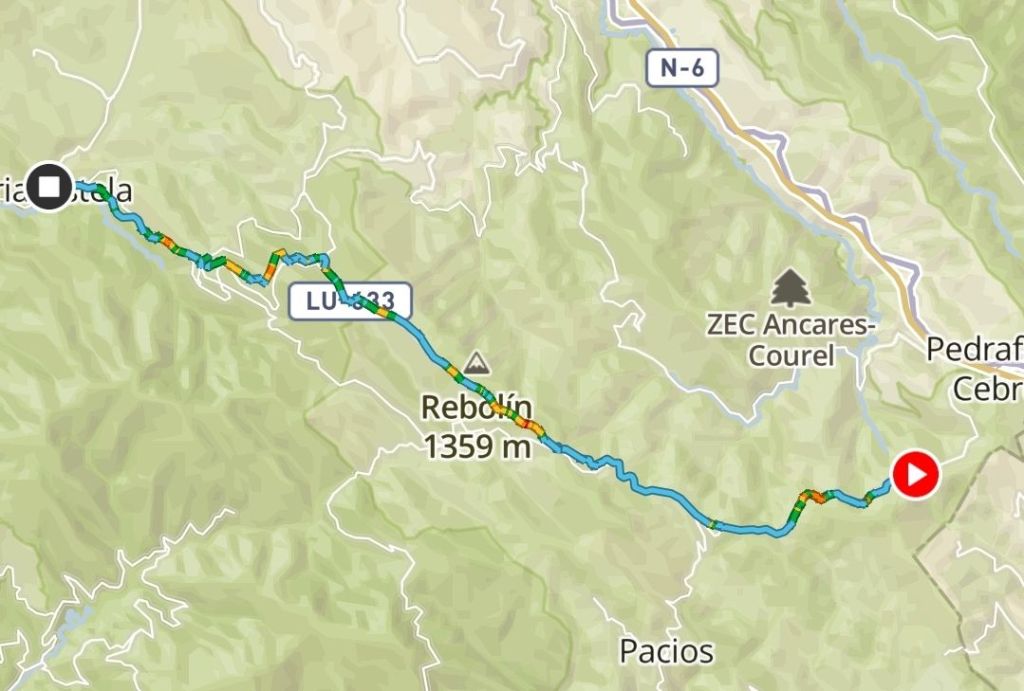
Fortunately there was a café at the top of the climb to fortify ourselves and to regain our equanimity. It was pleasant walking after that with super views across hills and valleys.
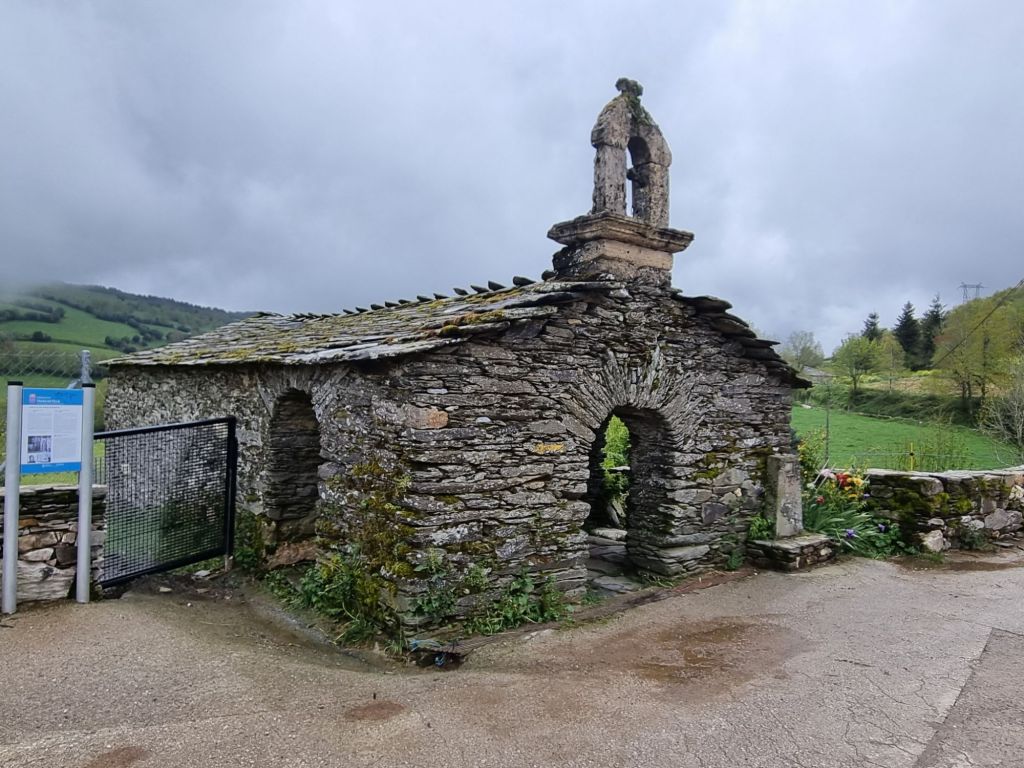
Each small farming community had its own chapel. Some were tiny.
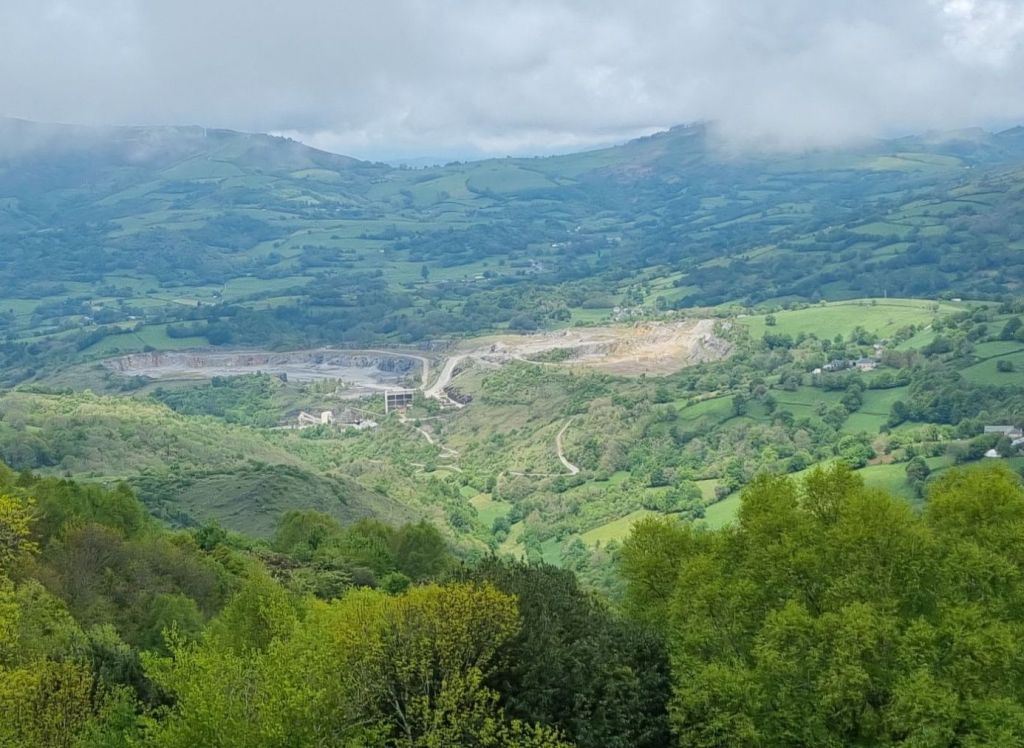
We passed a quarry down below us. Apparently this is a long standing limestone site. In the years of the Camino heydays, pilgrims were required to take lumps of limestone to Santiago for the building of the cathedral. Fortunately that is no longer an expectation.
And so on to Triacastela.
We haven’t seen the three castles but it is a nice village built largely to serve the pilgrims. It was a balmy 15° as we arrived. We are looking forward to warmer days as we descend further to our rest day at Sarria.
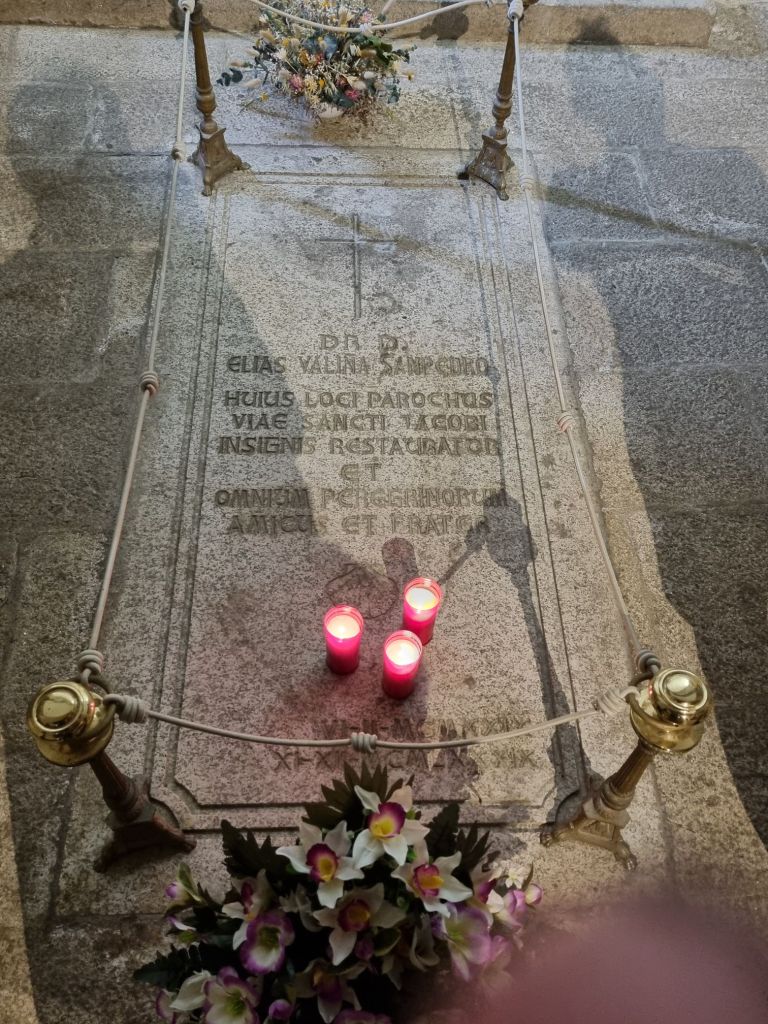
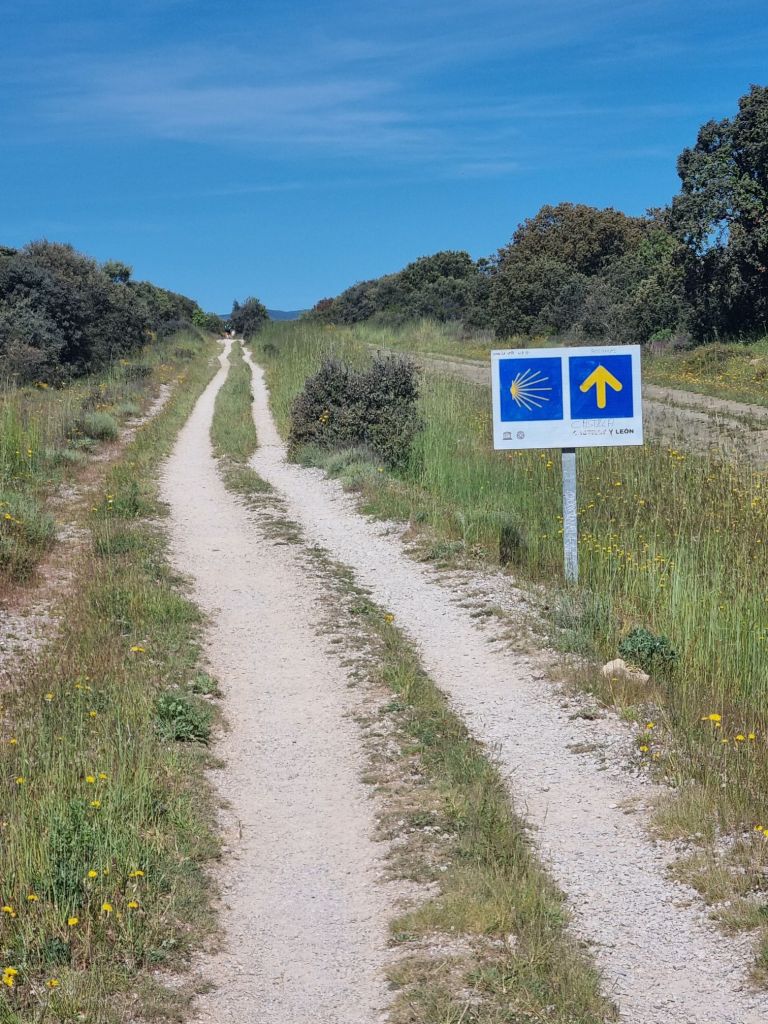
Our journey third day took us to the heart of the re-energised Camino. Dom Elias Valiña Sampedro was born in nearby Sarria and appointed priest for the small, impoverished village of O Cebreiro in 1959. The Camino de Santiago had largely fallen away. Valiña wrote at large about the Camino and redefined the route. In particular, he introduced the yellow arrow, la flecha amarilla, which is widely used all along the route to indicate the path to take. Valiña’s grave is in the church here.
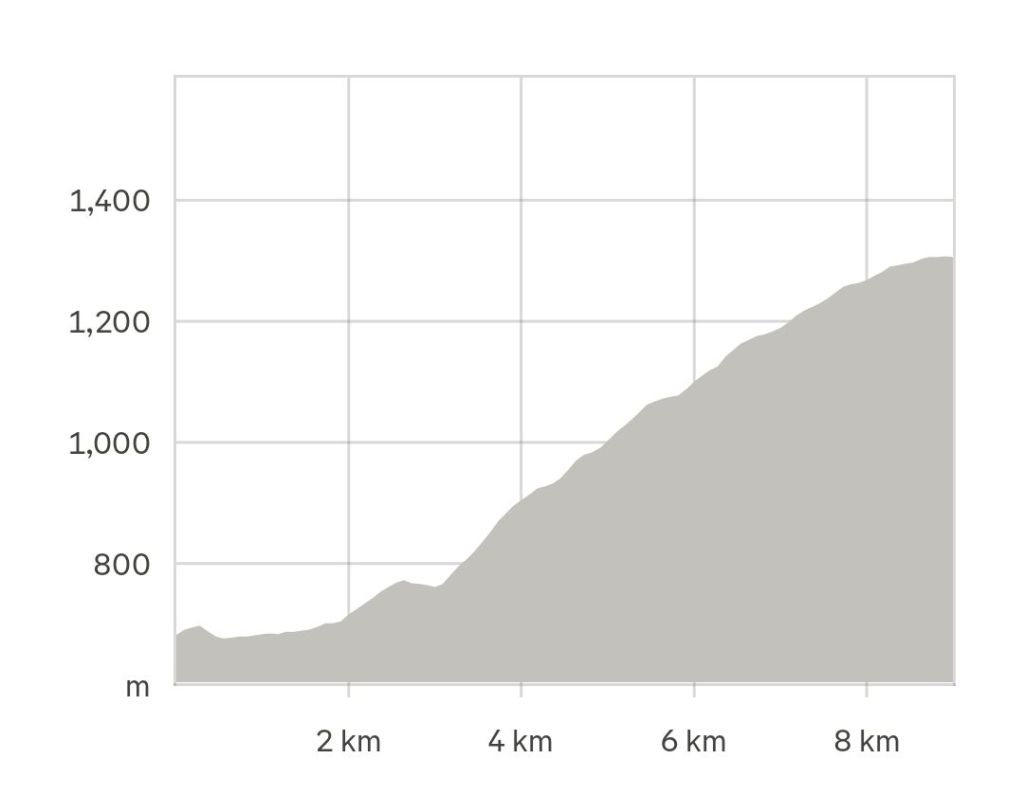
As it is 600 metres of ascent from Las Herrerías to O Cebreiro, we decided in our planning to have a shorter walk of 9 km.
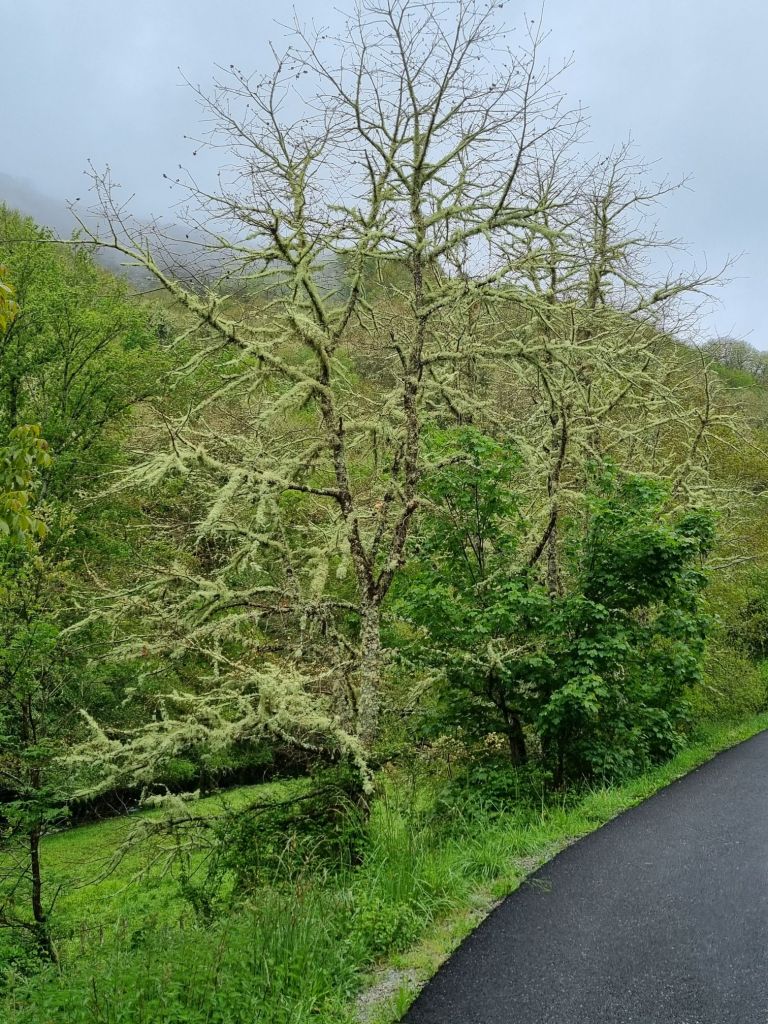
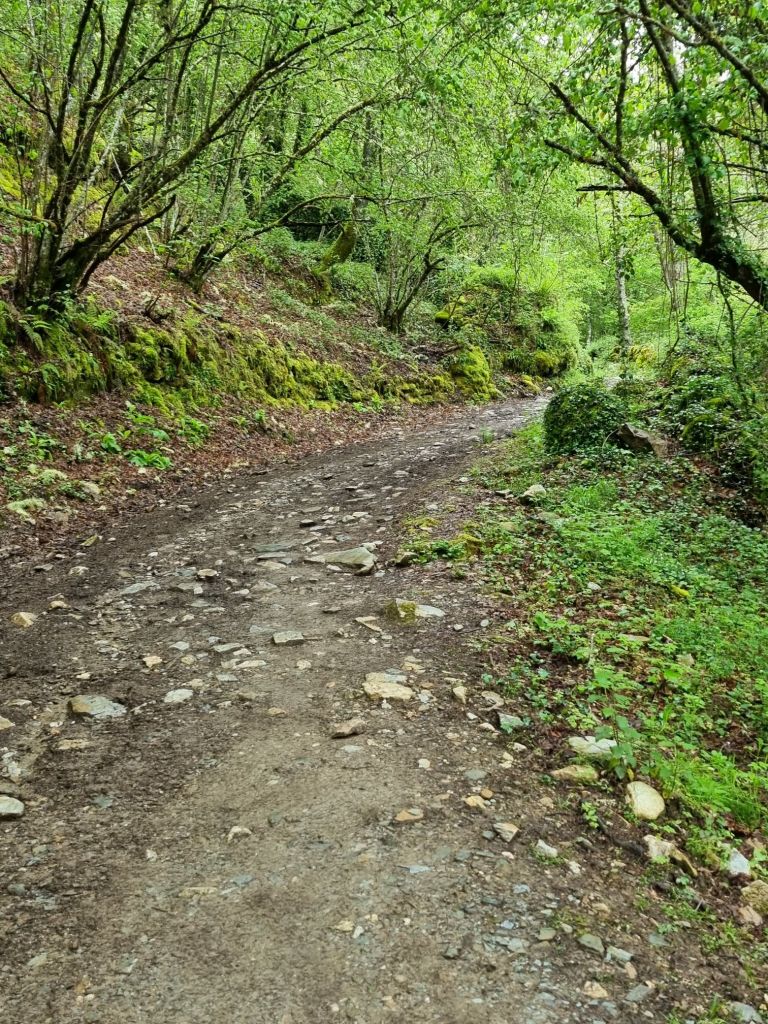
The path followed the road initially but became a delightful track through the trees. As we were at 1,000 metres, the height of Yr Wyddfa or Scafell Pike, spring is only just coming to many of the trees which are covered in lichen.
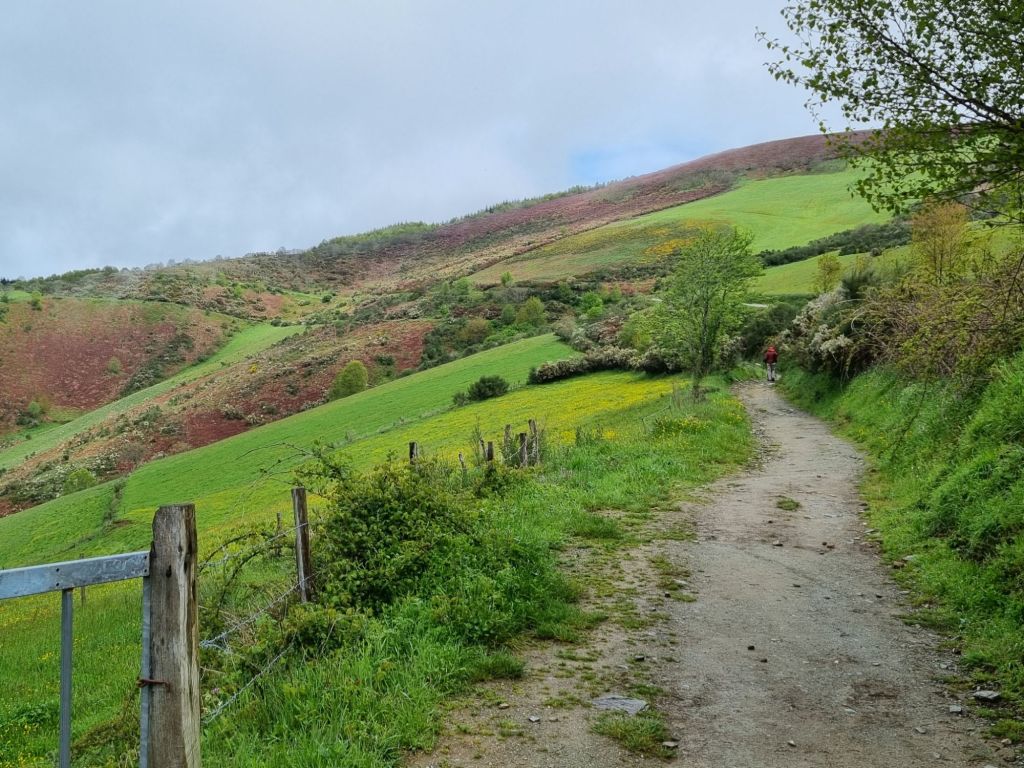
As we reached 1,100 m, the trees thinned out and the landscape became similar to hill walking in the UK.
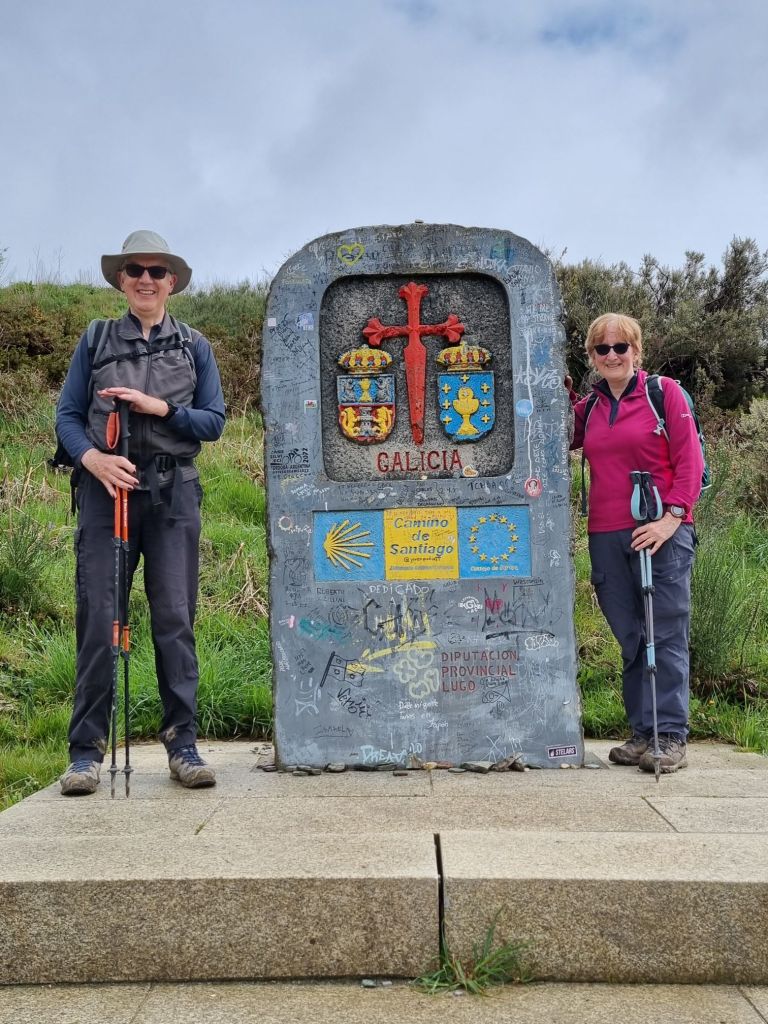
Soon after we reached the boundary between León & Castile and Galicia. This northwest area of Spain has its own clear identity with a separate language, Galego, which is closer to Portuguese than Spanish / Castillian. A Spanish tutor living in Madrid with relatives by marriage in Galicia said she could read Galego but not understand it when spoken. We’ve seen several road signs where a capital J has been spray painted with a replacement X.
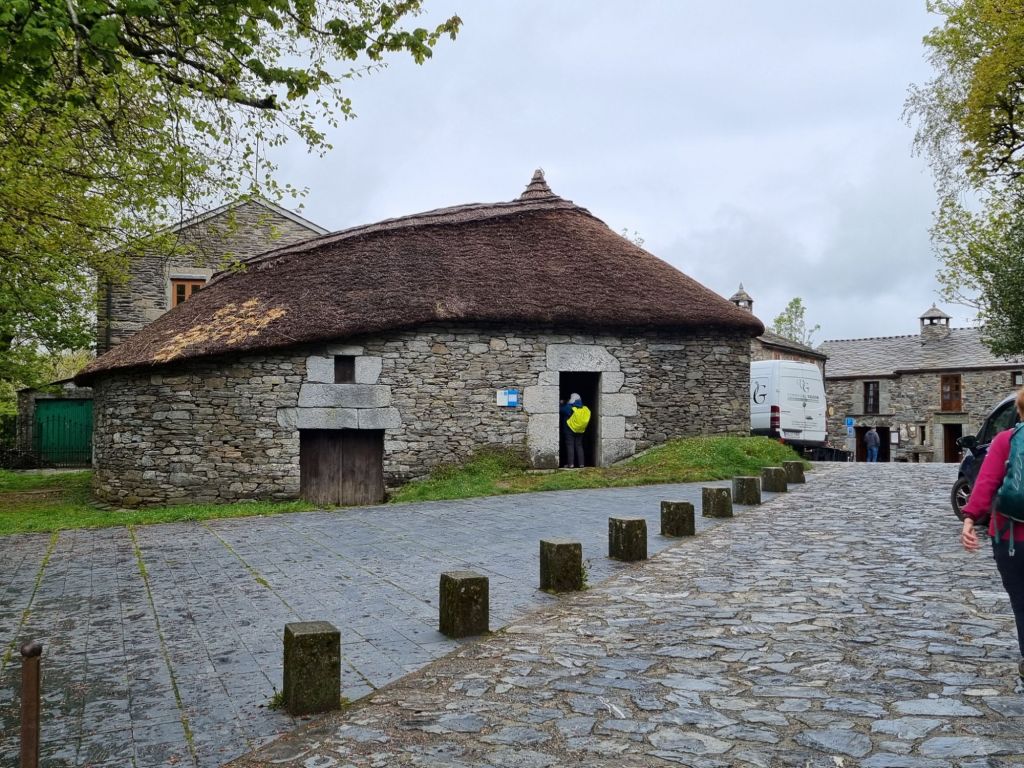
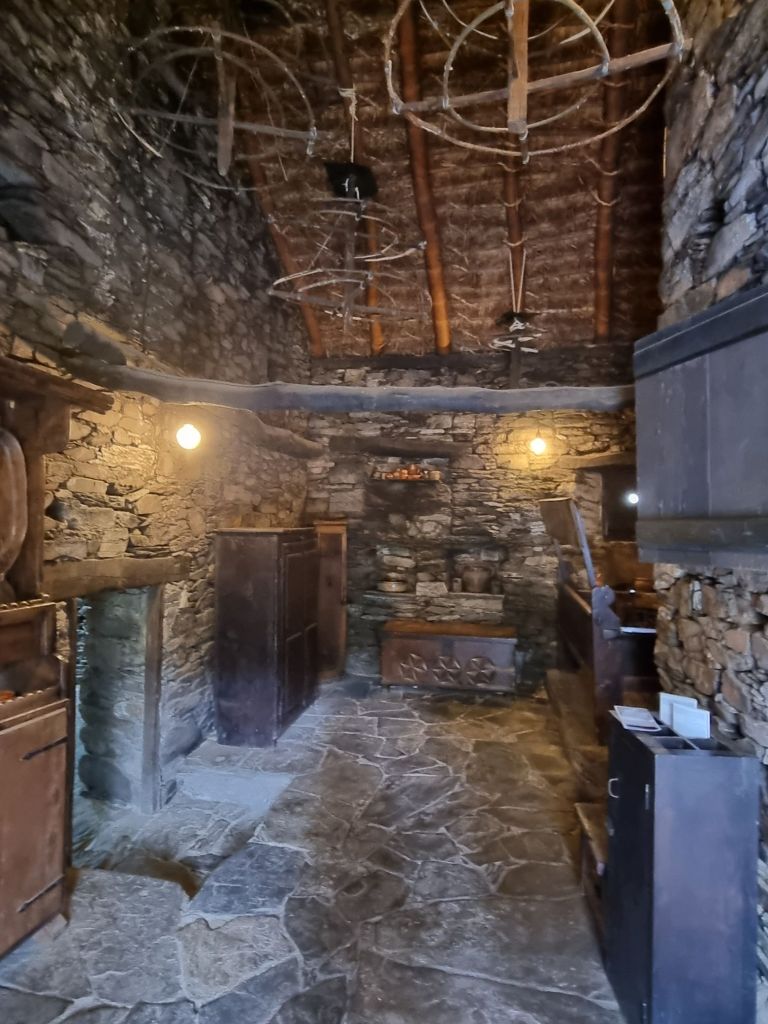
We were met at our arrival in O Cebreiro at 1,300 metres with the sound of bagpipes. The first building was a Celtic roundhouse of which there are a few in the village. Although attractive it is a sign of the difficult living conditions in this area and altitude that more modern buildings were not built.. It was cold all day and with a sharp wind. I hesitate to think what it’s like in winter.
There are fewer pilgrims than in the earlier stages. This is largely due to our starting 600 km on and there are not many people who went over Pyrenees in April. We have though had conversations with fellow pilgrims from South Korea, Australia, Canada, the US as well as fellow Brits.
There are more people here who are completing shorter sections of the Camino. Undoubtedly we will find many more pilgrims after Sarria who are completing the 100 km to Santiago.
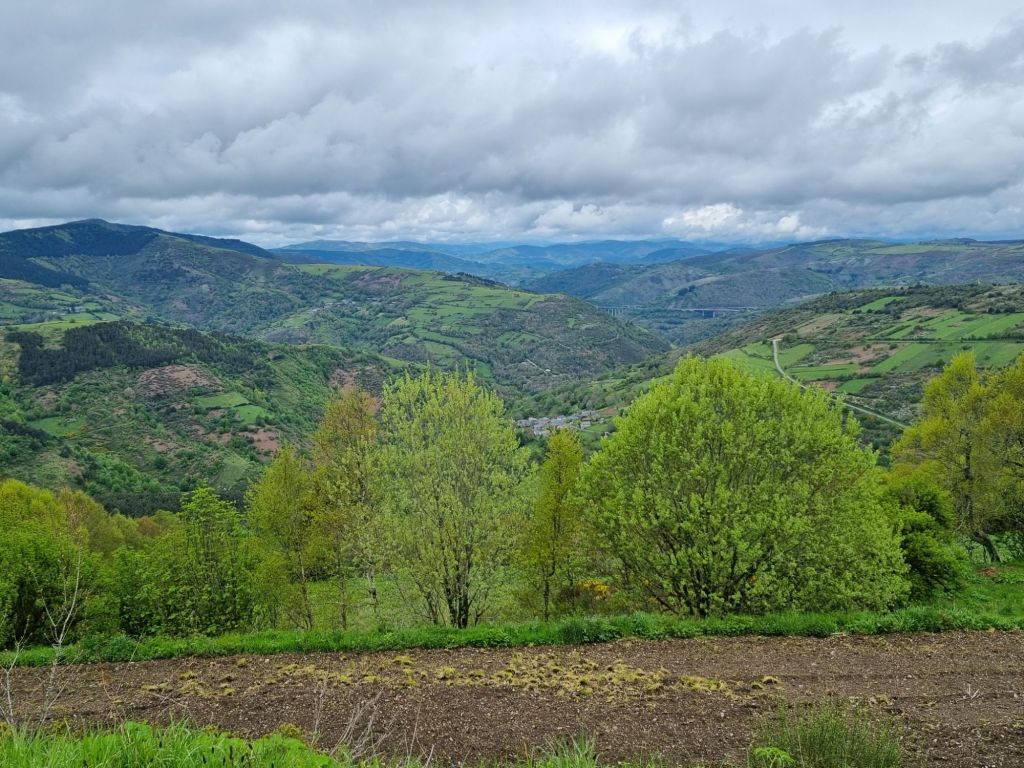
The views from 1,350 metres were stupendous. This is the same height as Ben Nevis but most definitely not sub-arctic. Latitude makes an enormous difference.
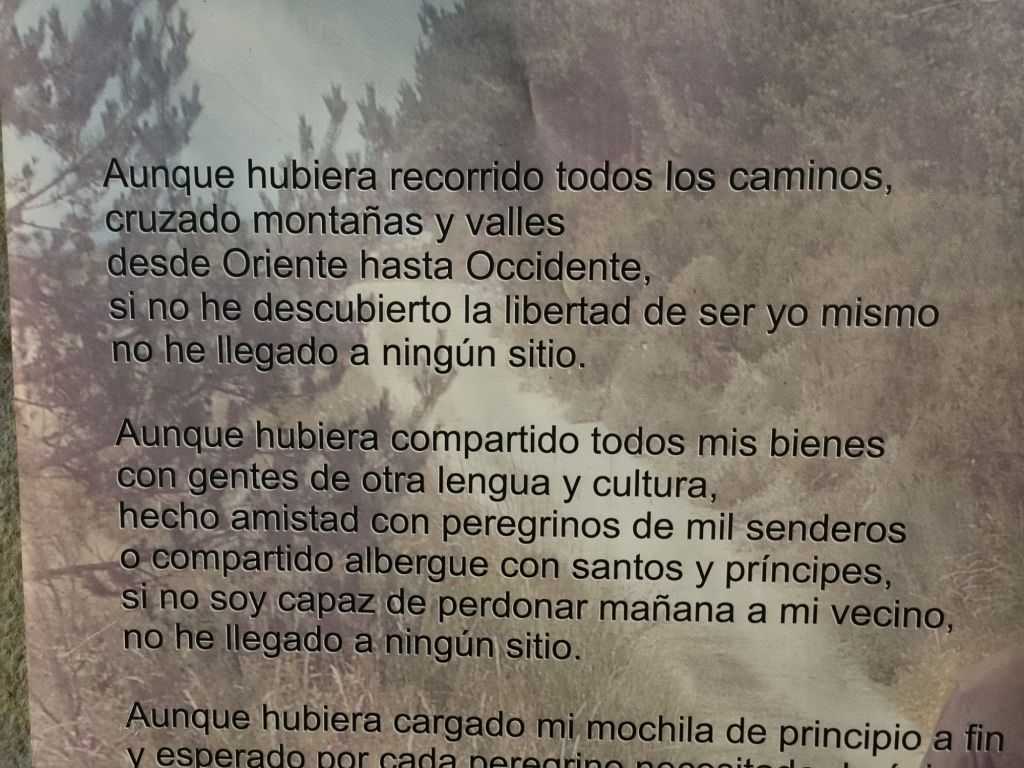
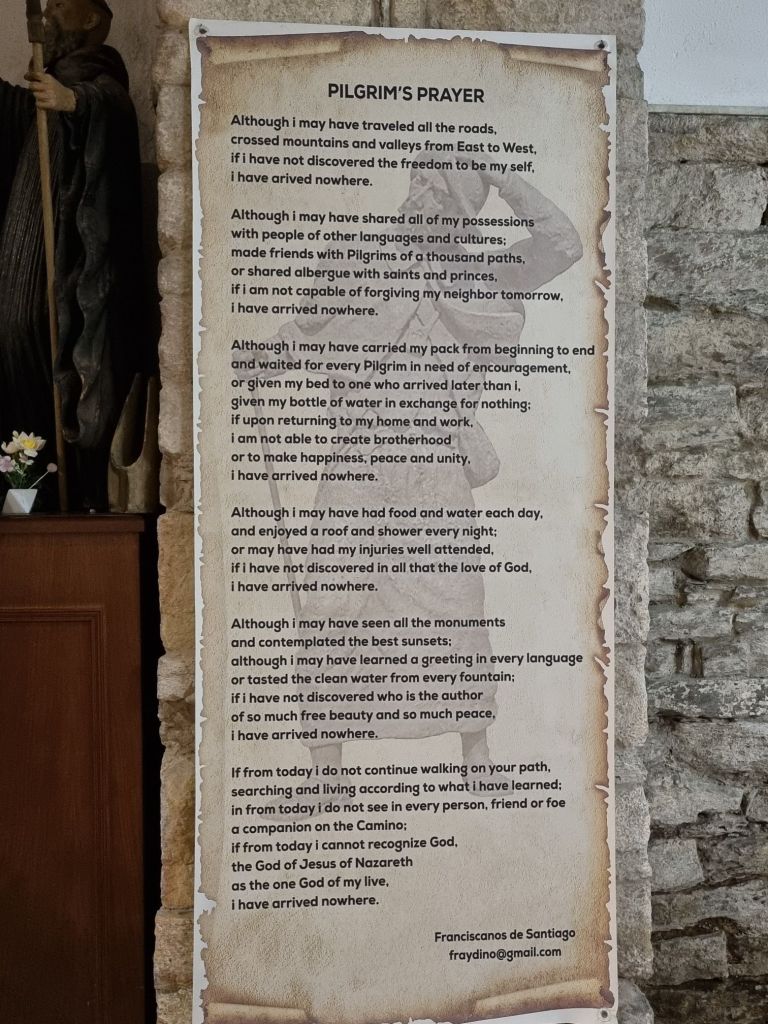
I was struck by the pilgrims’ prayer in the church. In particular this phrase spoke to me Si no he descubierto la libertad de ser yo mismo, no he llegado a ningún sitio.
In the evening there was a pilgrims’ mass in the church. After the service the pilgrims gathered round the front of the church for a blessing. The priest asked which languages people spoke. Mostly European languages were mentioned but also Vietnamese and South Korean. The priest rifled through a large book file and asked individuals to read out the blessing in their own language. It was a nice touch.
The priest finished with a few brief words on Ultreia which is a Latin word meaning to go further, onward or beyond. He pointed to the west down the aisle of the church. It was a moving symbolic moment.
Ultreia, vamos!
(I’m posting this a day later as the Internet connection was very slow at such a remote place.)
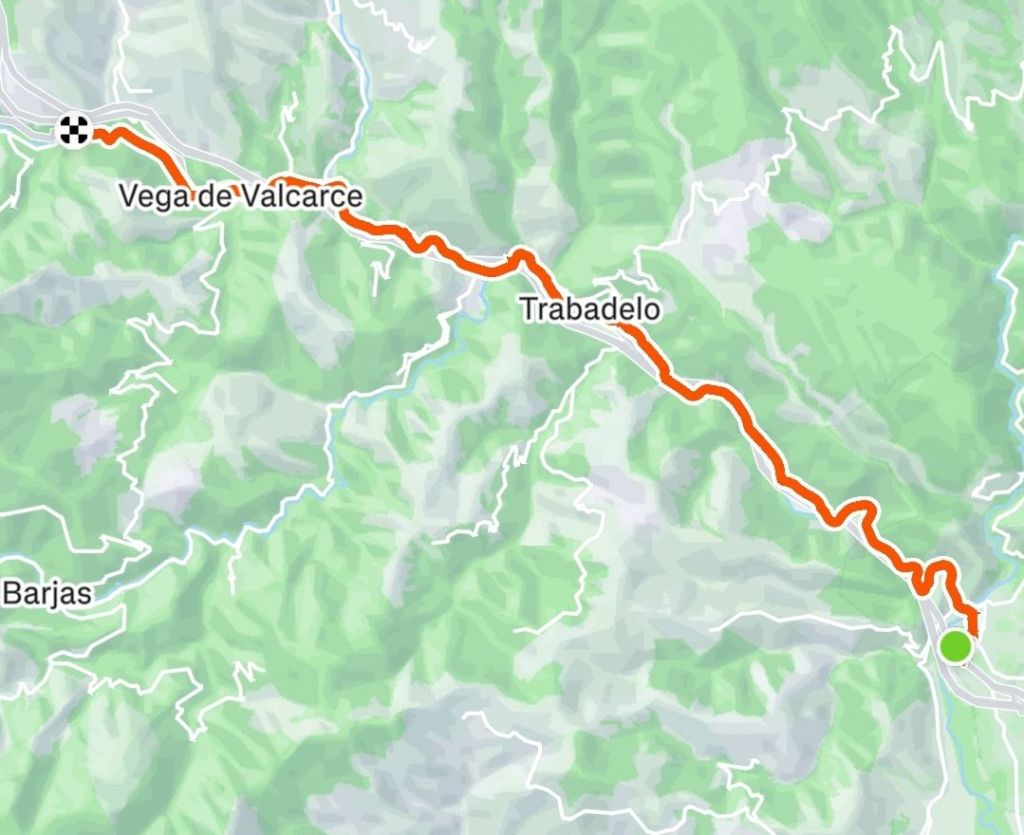
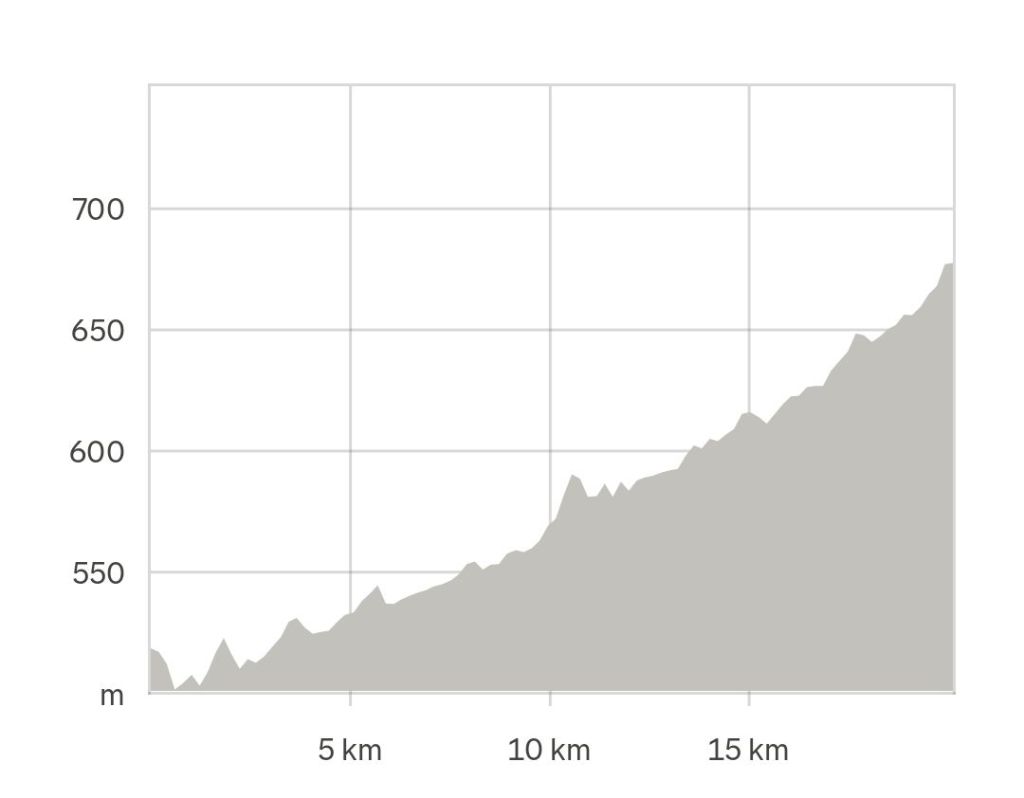
Our 21 km route today was a steady uphill climb through wooded hills. We followed a river up the valley.
Our walking was much more enjoyable today than yesterday. We now feel settled into the venture. In the last two years we have travelled down to Spain more slowly by train or by boat. A day to settle down after the flight would probably have been more sensible. There’s definitely something to be said for slowing down rather than rushing to squeeze in every moment. But
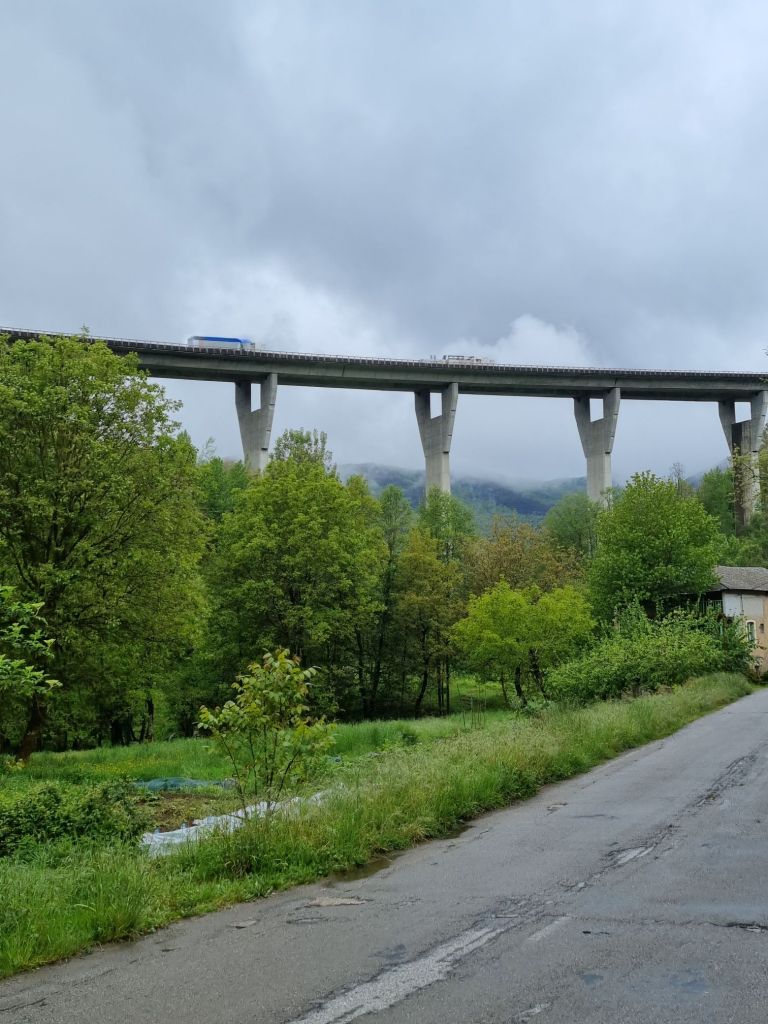
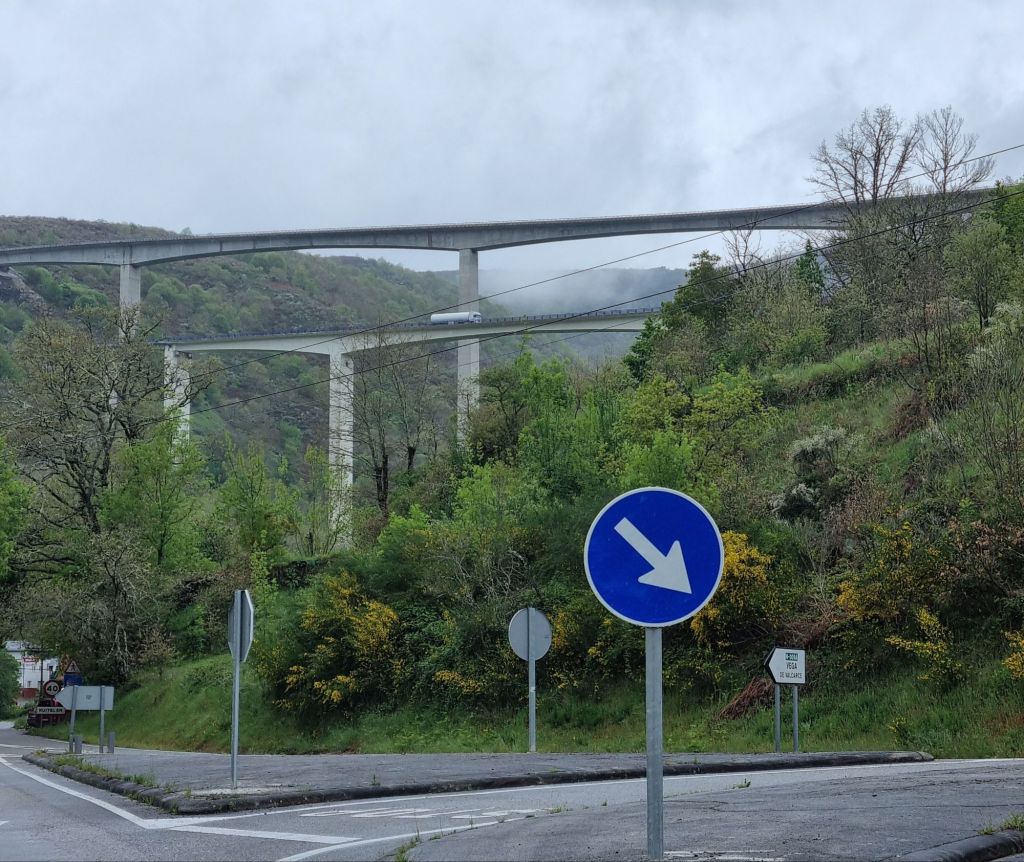
This valley is the main route from Madrid through to the Atlantic coast at A Coruña. We walked most of the way along what would have been the main road but is now quiet thanks to the autoroute which was above our heads. This highway is an impressive feat of civil engineering. We travelled up the route last year on our way by bus from Ponferrada to Santiago via A Coruña.
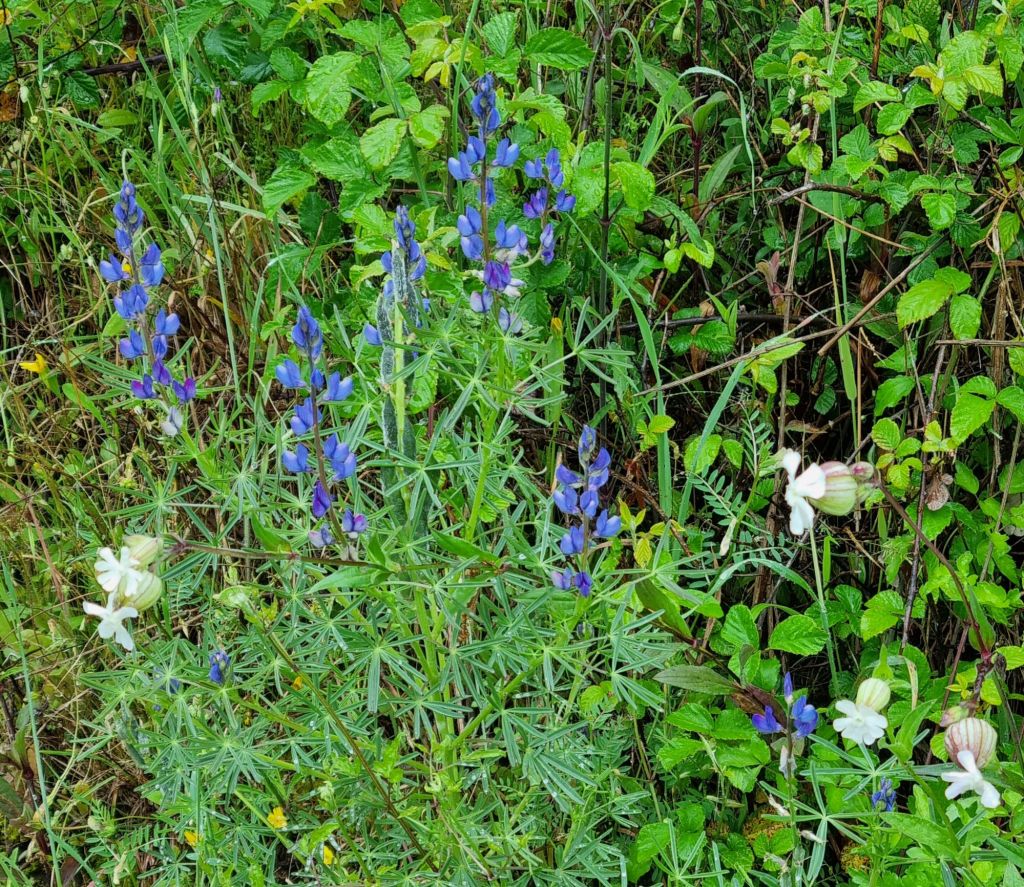
It rained little today and the road traffic noise was slight. We enjoyed the scenery of the hills and the flowers at the roadside.
We had hoped to have coffee at our mid-point village of Trabadelo but everything was closed. Marching on we came to the autoroute services which seemed remarkably incongrous in the hills. But two coffees and two pastries cost €5.80 so we were happy enough.
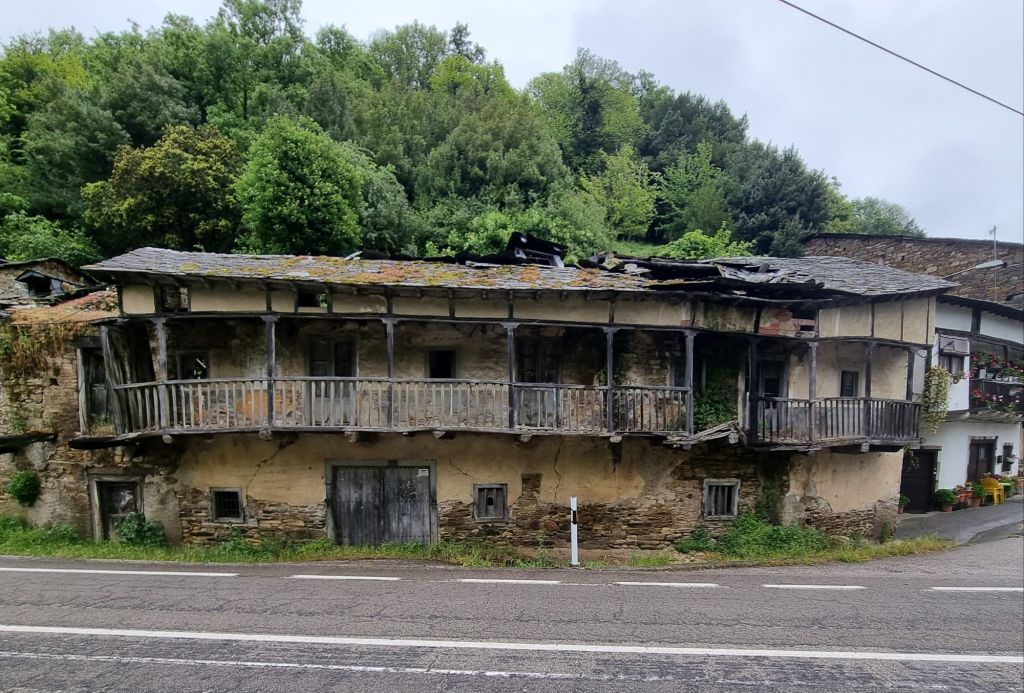
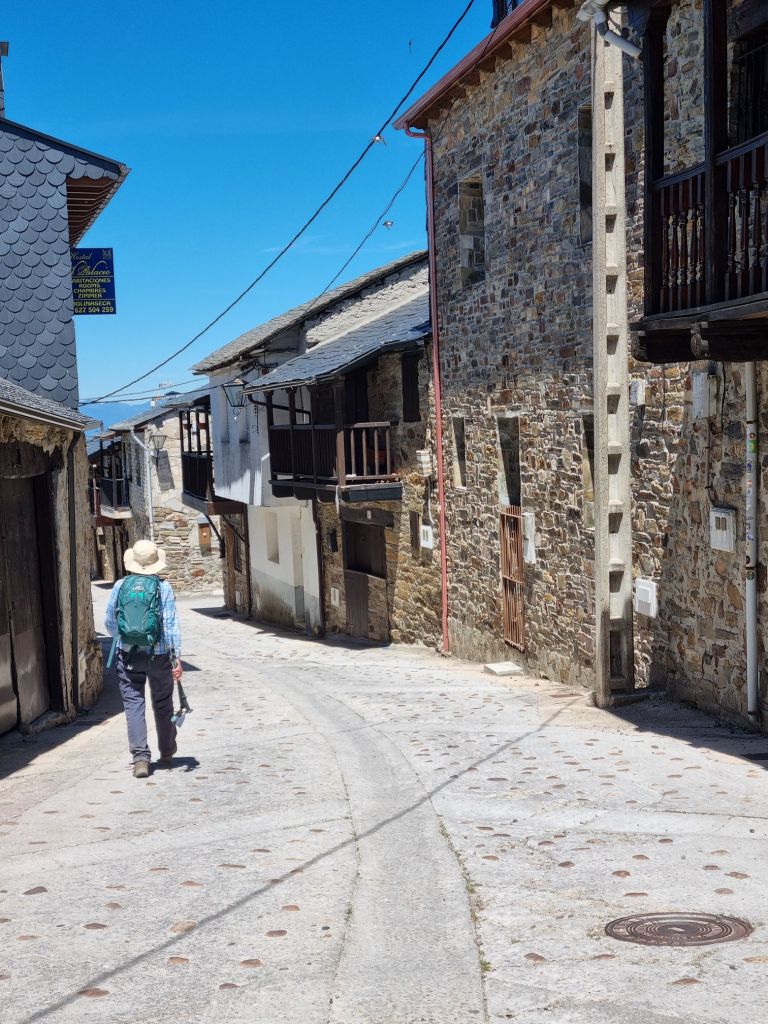
There is very little evidence of farming in the villages we walked though today. Increasingly common are dilapidated two storey dwellings with a balcony. Presumably the ground floor was for livestock with the family living above.
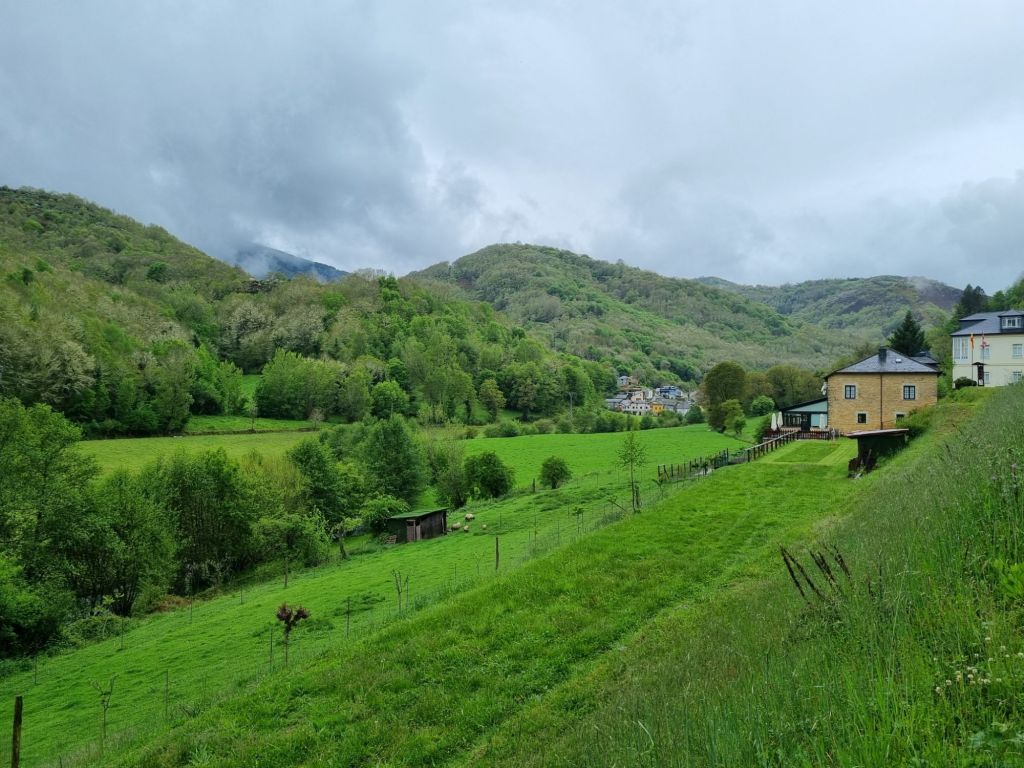
Our stop for the evening is a very pleasant setting with verdant pastures and woodlands.
Tomorrow our walk is only 8 km but involves 600 m of ascent going up to the top of the hills we can now admire.
It was good to be back on the road again but we both found it surprisingly tiring. At the beginning of April we walked four similar days to today’s effort along the South Downs Way which seemed much easier. Hopefully we will get our legs back in order over the next few days. Otherwise it’s going to be a long trek to Cabo Fisterra.
Ponferrada was very sleepy as we set off this morning at about 9 o’clock. We had had a delightful pizza meal last evening with a delicious bottle of Ribero del Duero red wine. Only in Spain can you get pizza with jamón Ibérico topping and local vino tinto but it worked surprisingly well.ll Perhaps this was a contributor to our hard start. It was not exactly the food of champions.
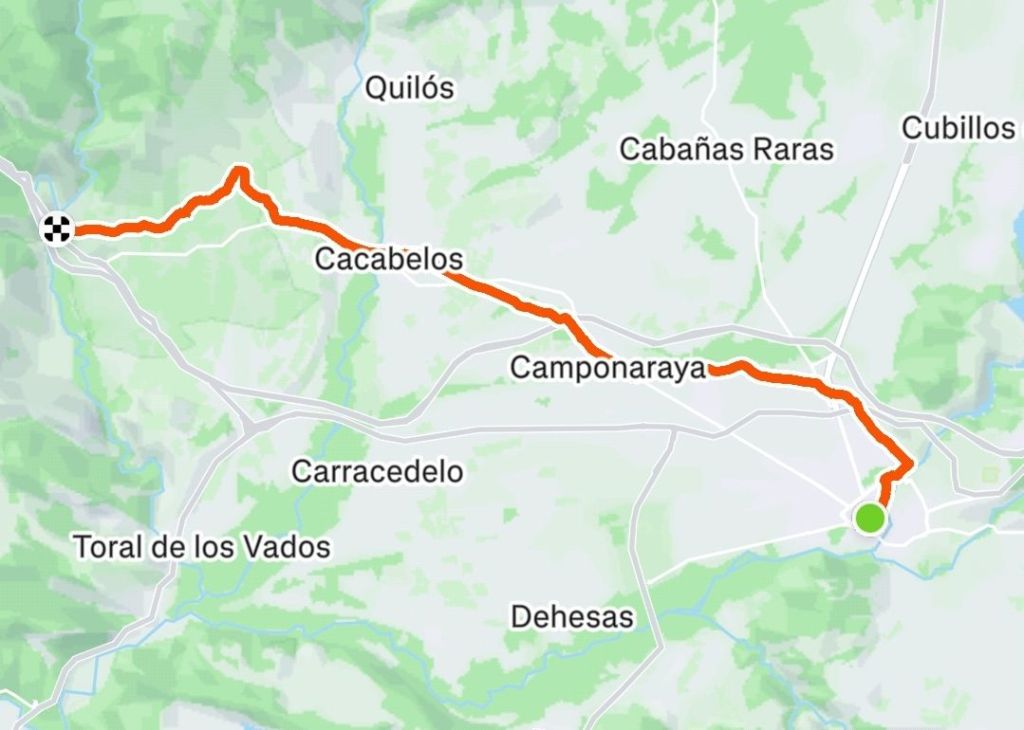
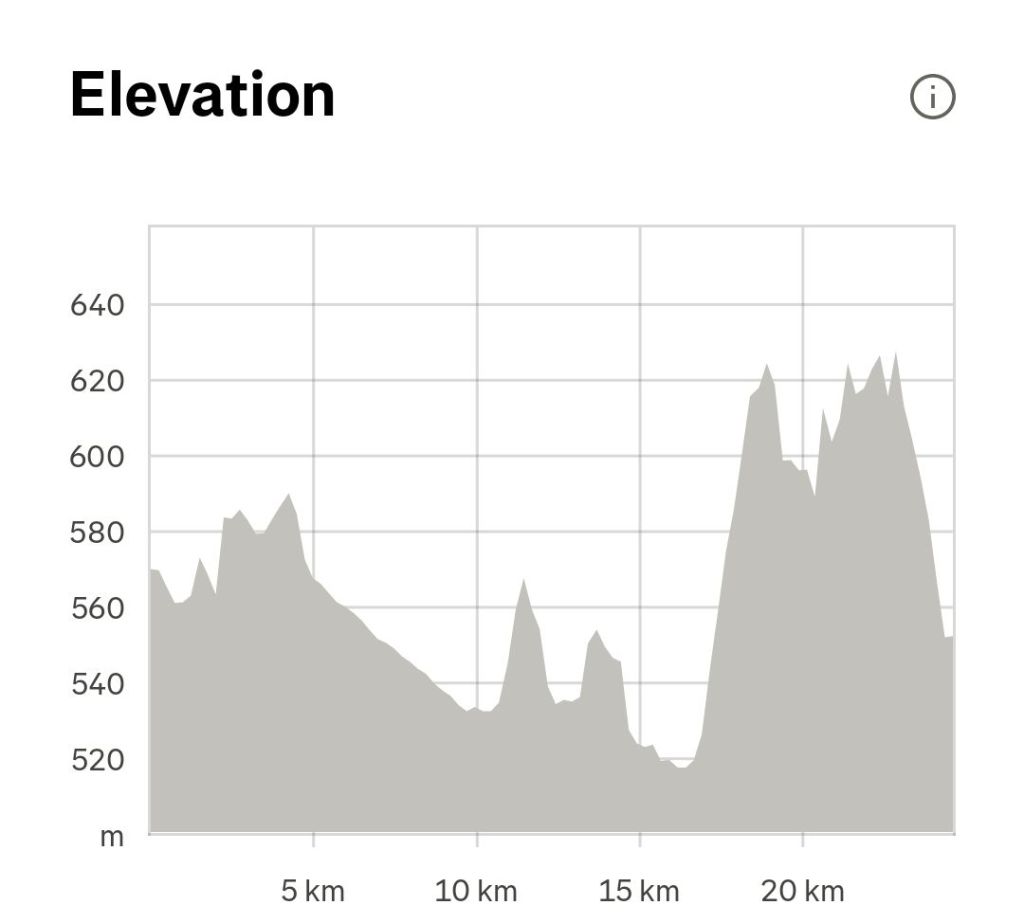
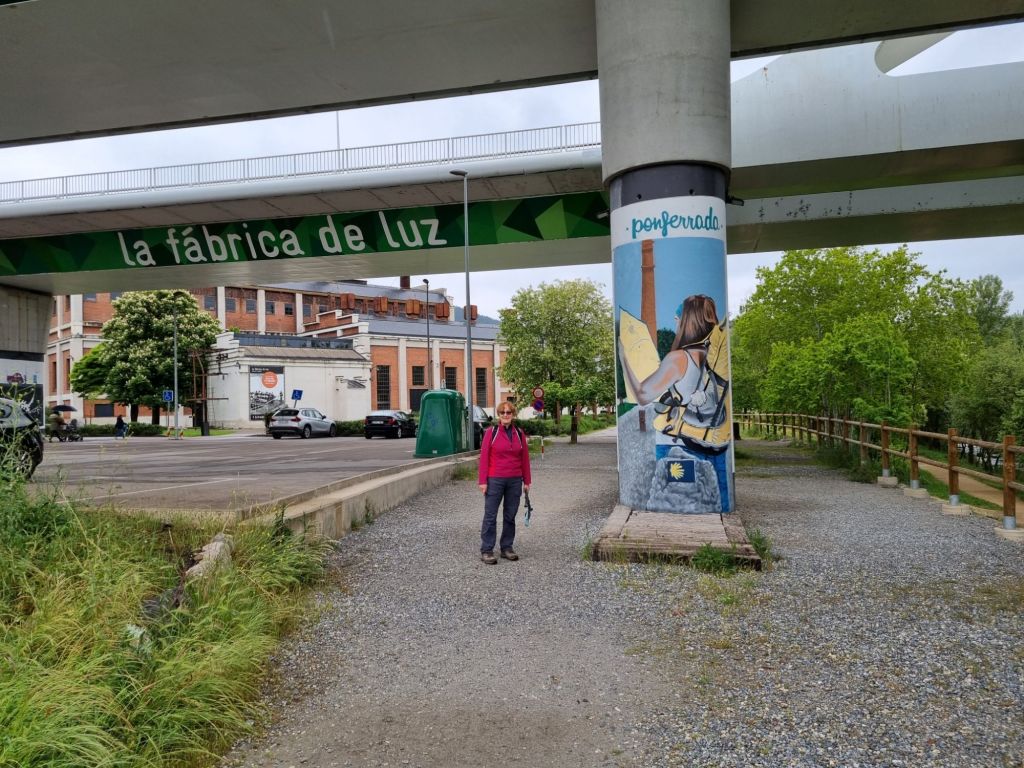
We walked 24.6 km with an ascent of 302 m. The first part was through the outskirts of Ponferrada with lots of sports grounds and smallholdings. The museum of energy would have been fun to visit.
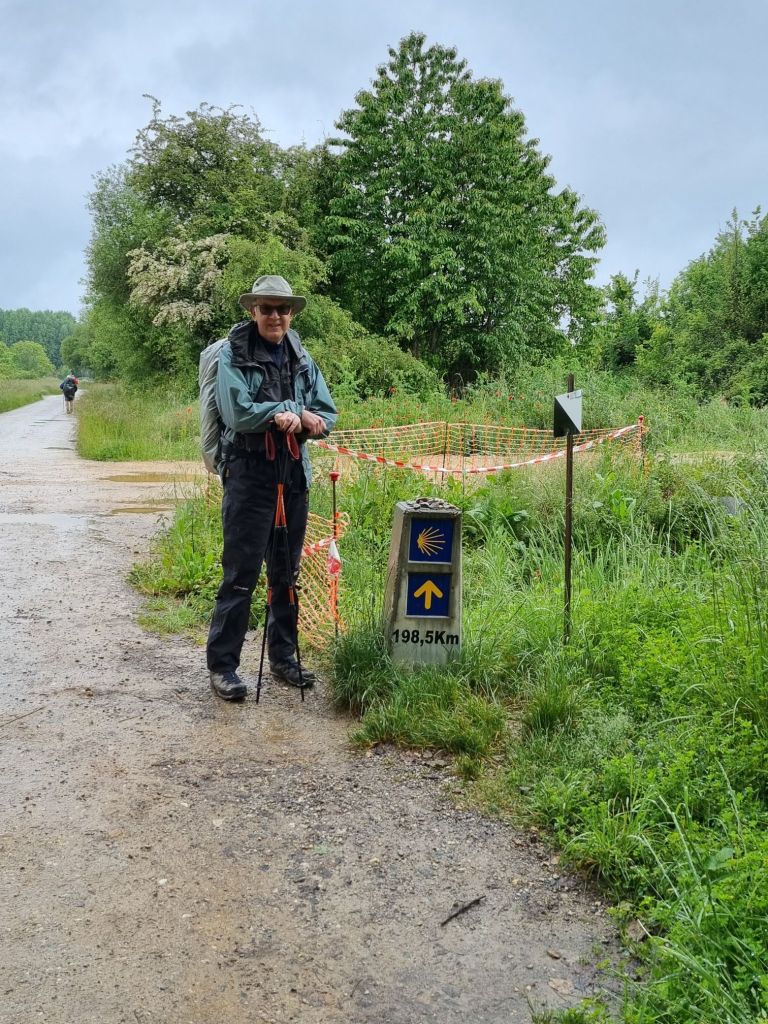
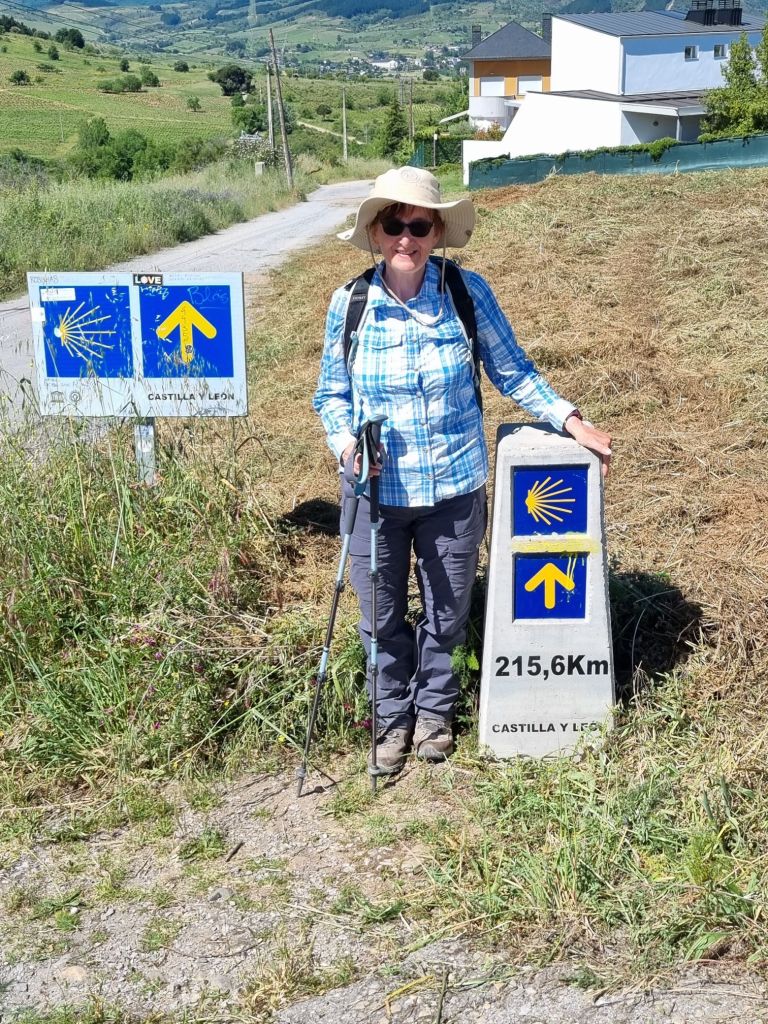
Less than 200 km to go to Santiago
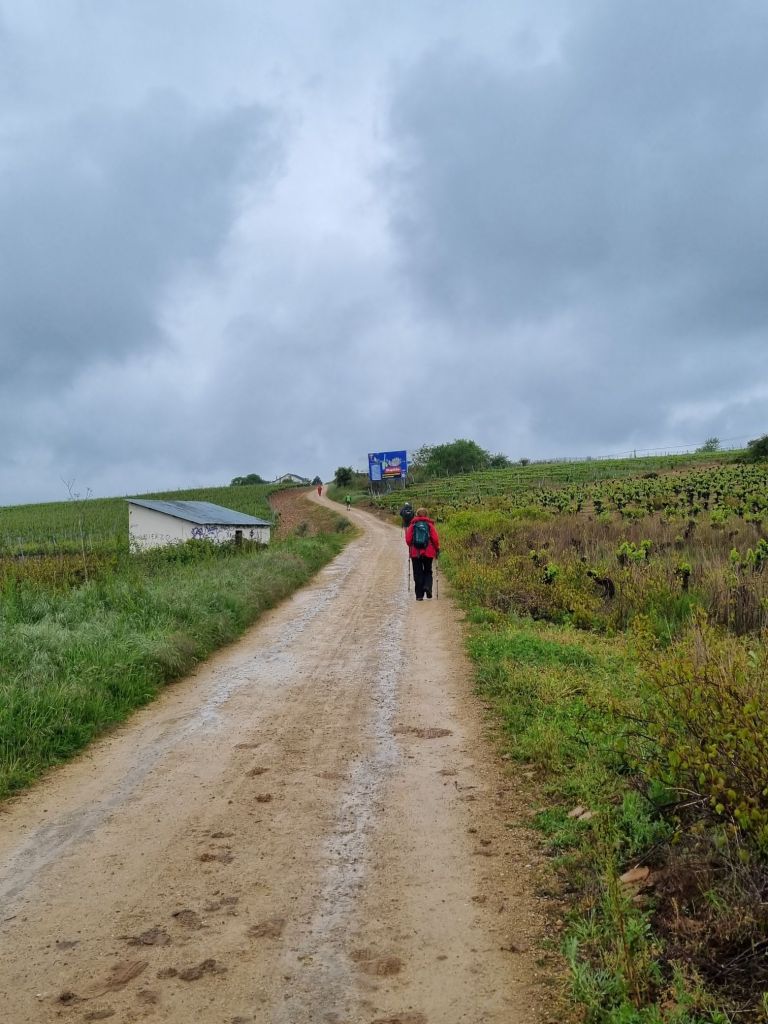
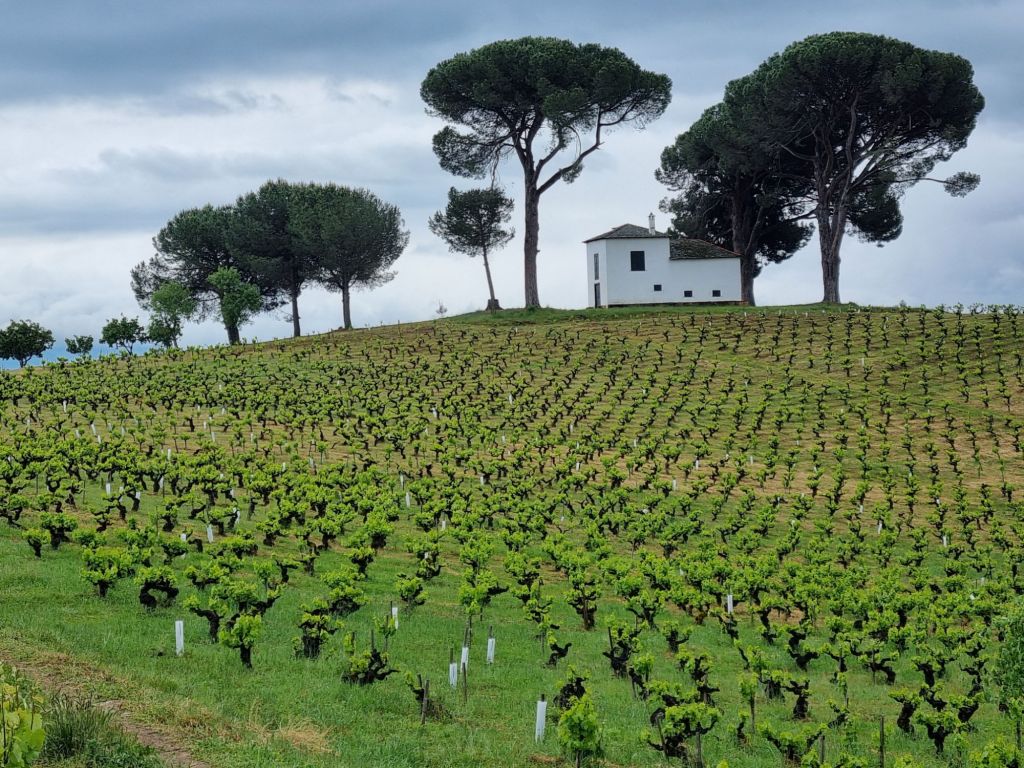
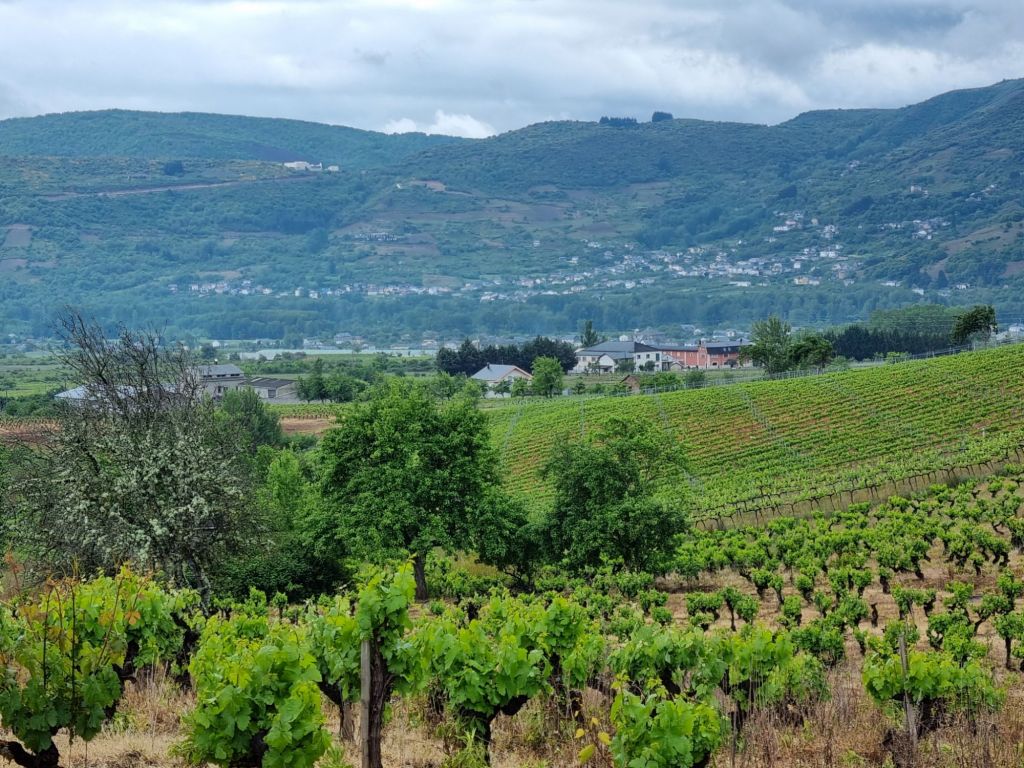
We walked through many vineyards some in superb condition others rather weedy.
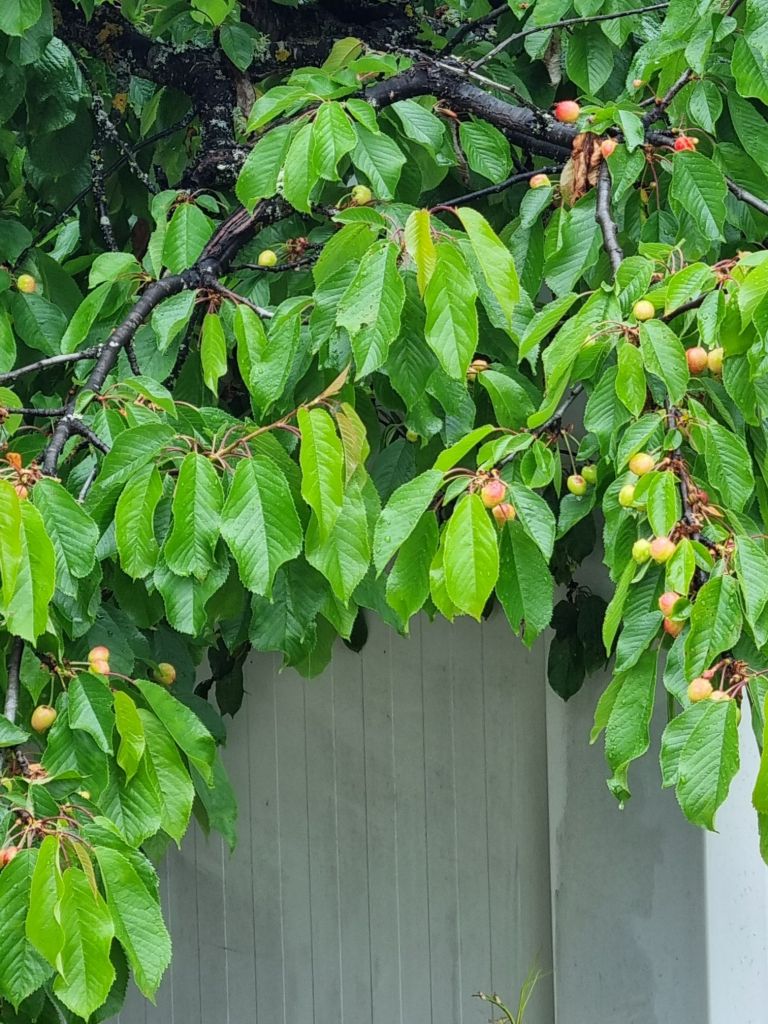
There were several small fruit orchards with cherries and pears coming on. It’s a shame we’re a couple of weeks time early for the cherries which are just starting to ripen.
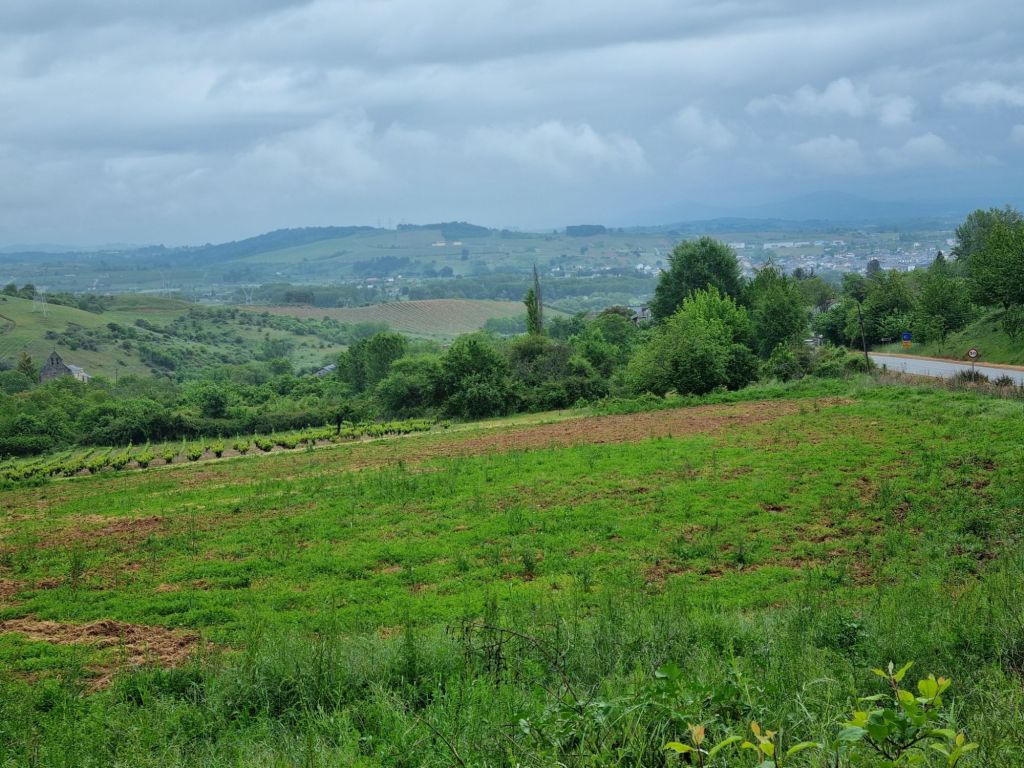
Reminiscent of TuscanyComing towards Villafranca
The countryside is luscious and green but then we were trudging along in the rain for half the day. I could do with some of this rain on my garden back home. It’s been about 11° most of the day which is on the cool side but does make the waterproofs much more comfortable.
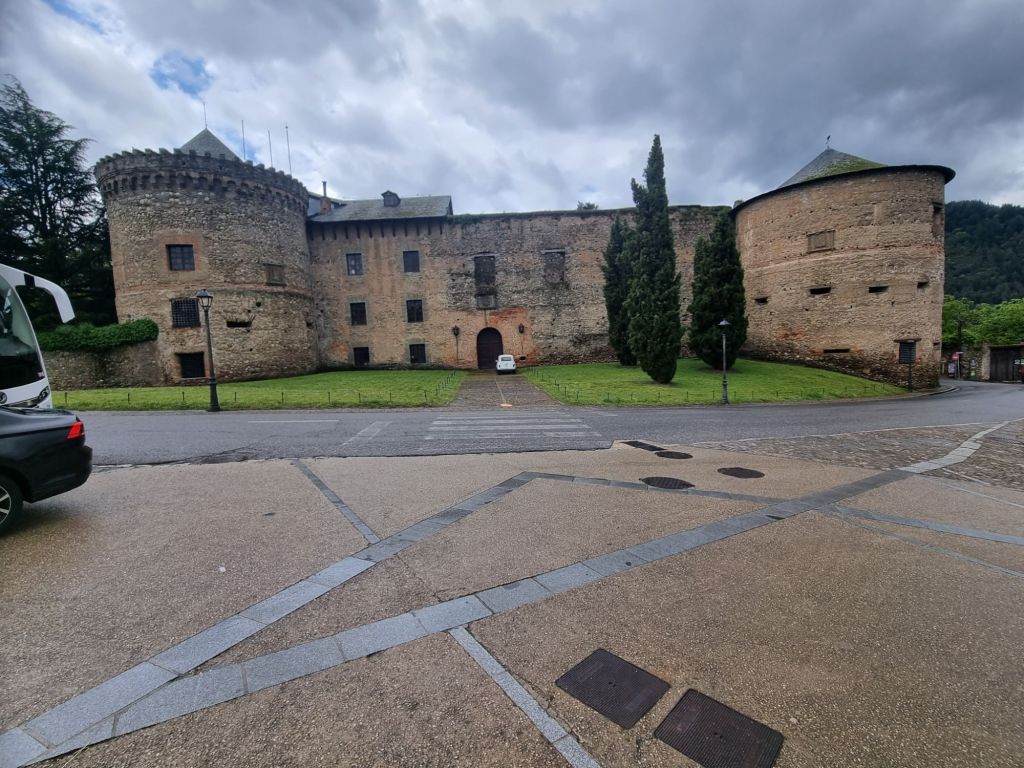
A fabulous castle with later machine gun slits
I’ve been learning Spanish for the last two years. It’s great to be able to read most of the signs and the like. I’m enjoying being able to order in a café but the response is often in English. Oh well, but many do seem to appreciate the effort.
We’ve been walking in the gentle foothills today. Tomorrow the road starts to ascend and then on our third day we will have a steep 600 m climb in one go and then we will be into Galicia.
We’ve arrived back for the third and last stage of our Camino across northern Spain.
Our preference would have been to take the train but that was all rather convoluted and complicated. So today we flew to Santiago de Compastela (both agreeing the train is more pleasant) and had arranged for a car to take us the two hour drive to Ponferrada where we finished last year.
Despite hardly any rain for months in Surrey, there was a steady drizzle as we were driven along fabulous new autoroutes. The country is very hilly, up to 1,000 metres, and what took two hours by car will now take ten days to return to Santiago.
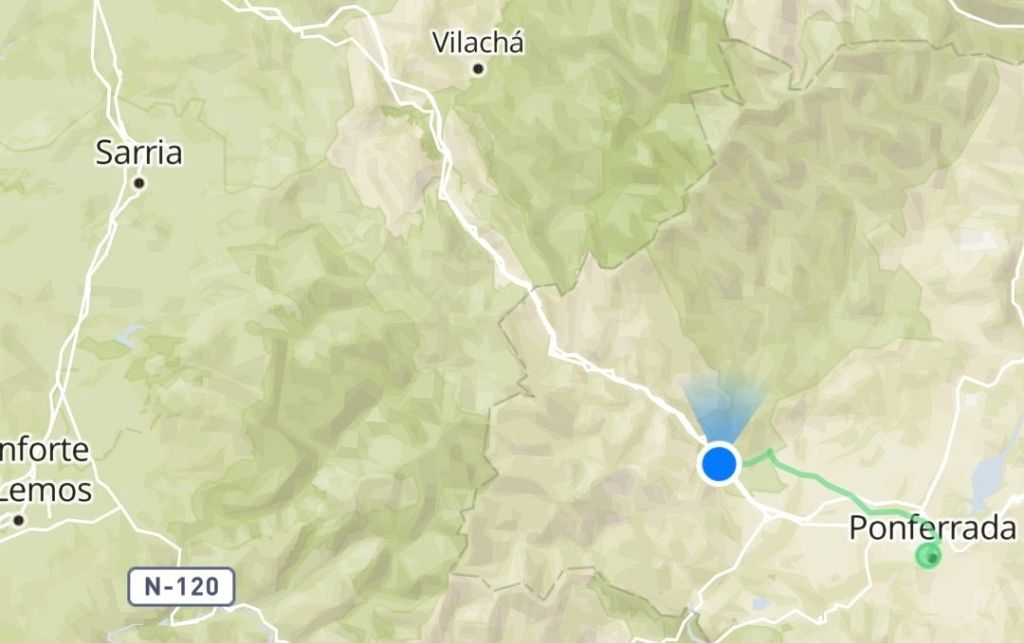
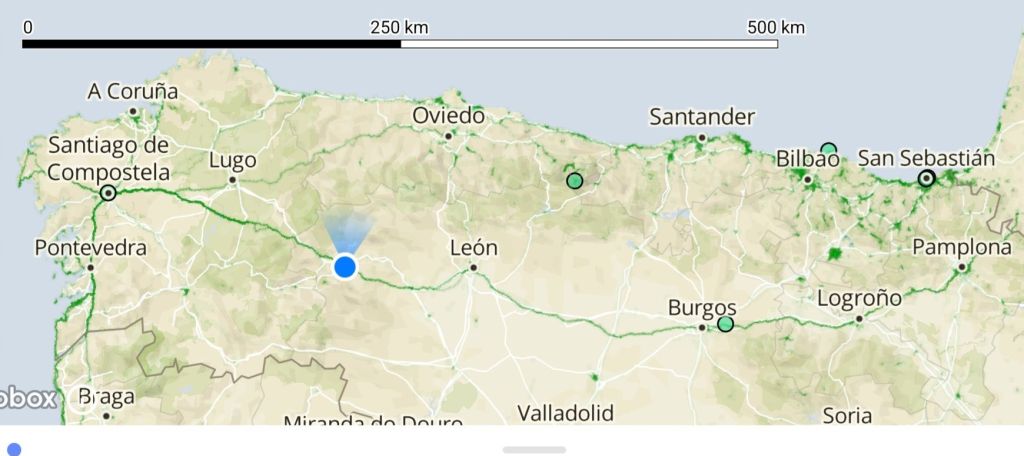
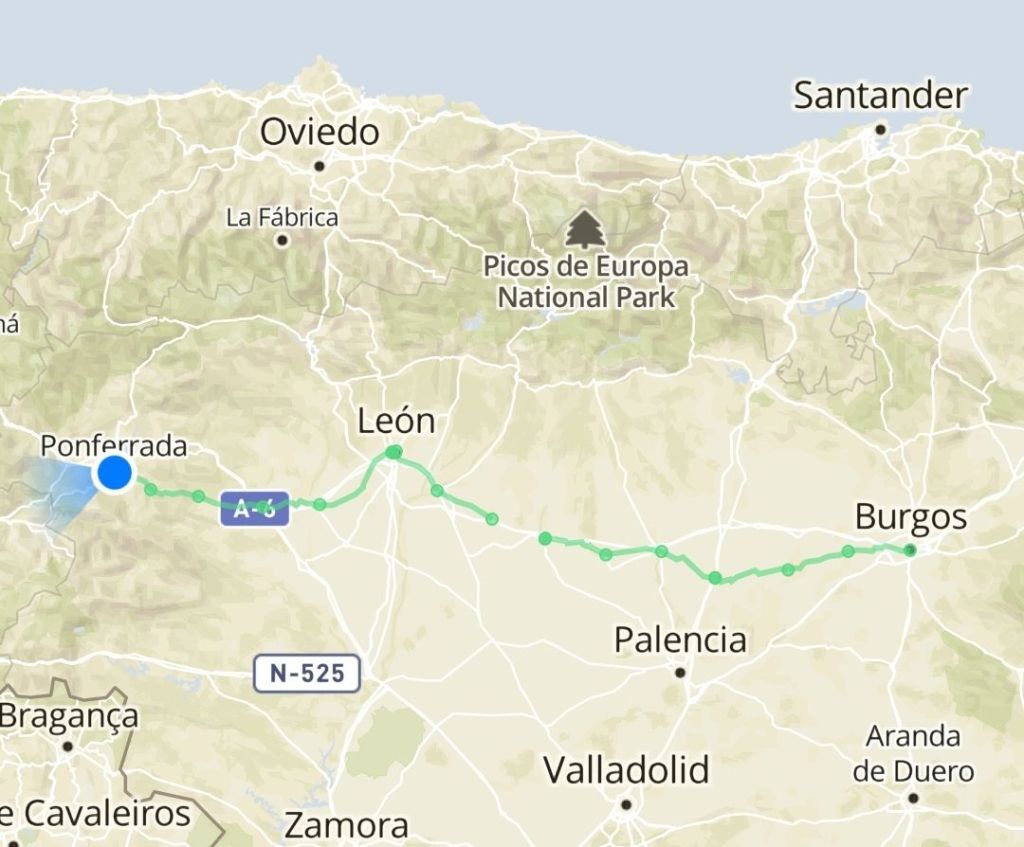
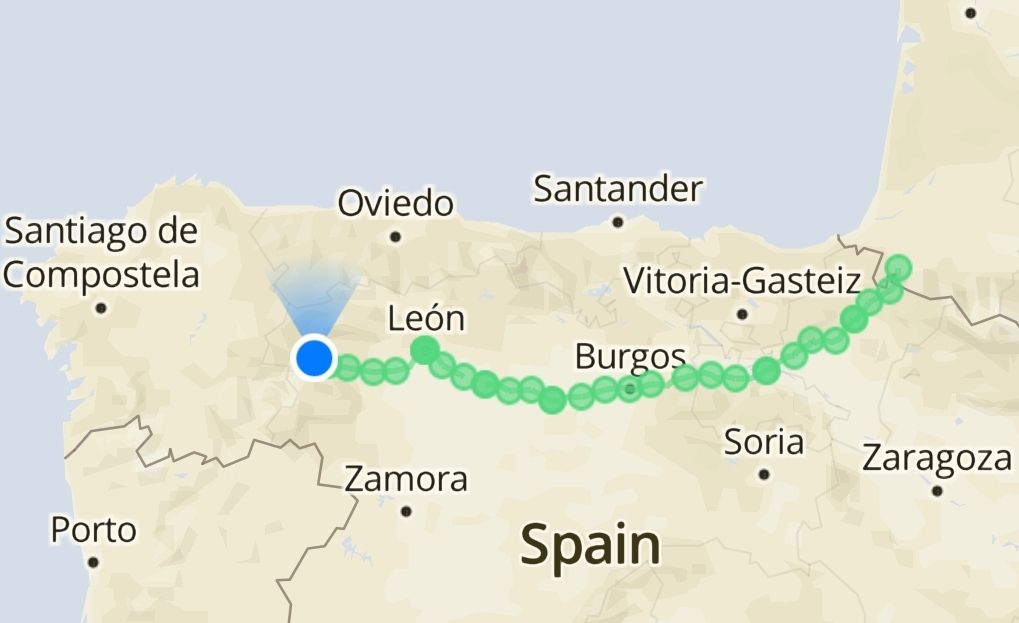
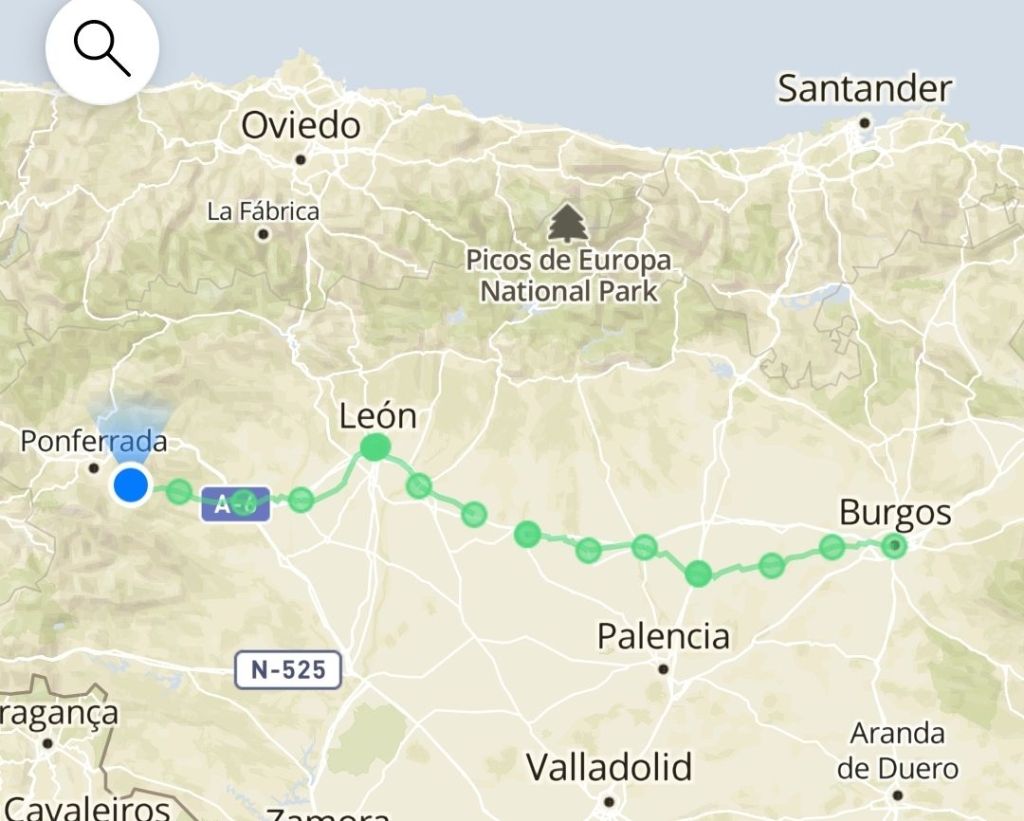
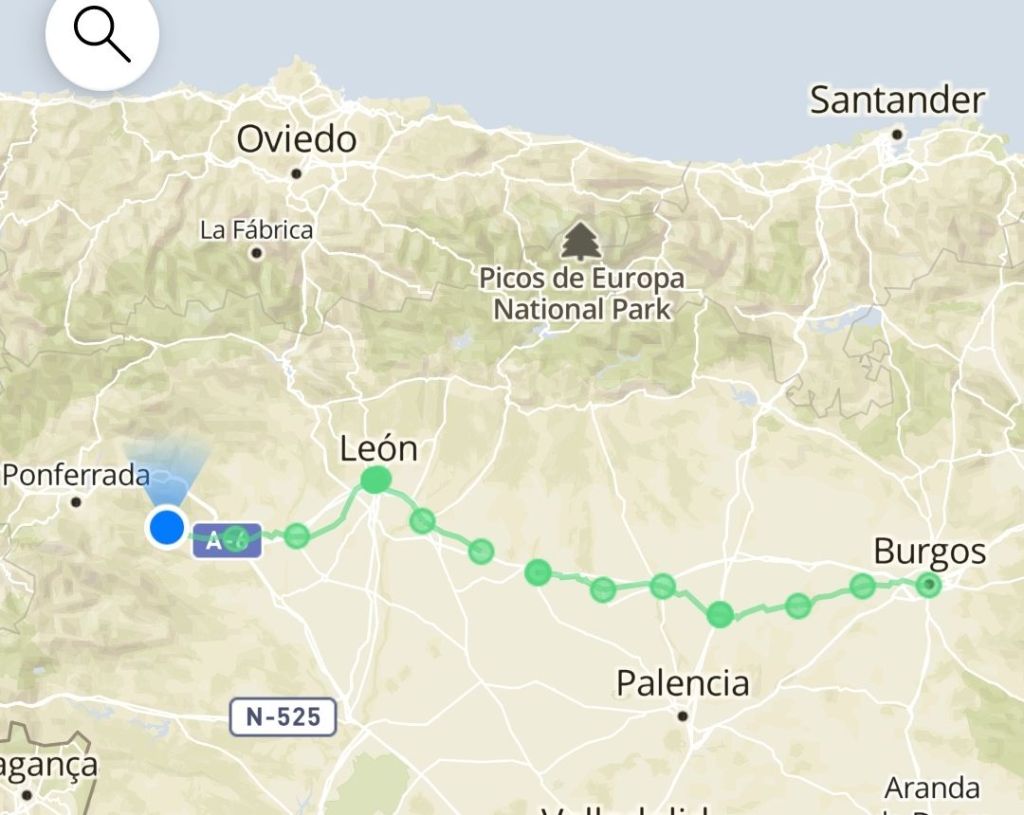
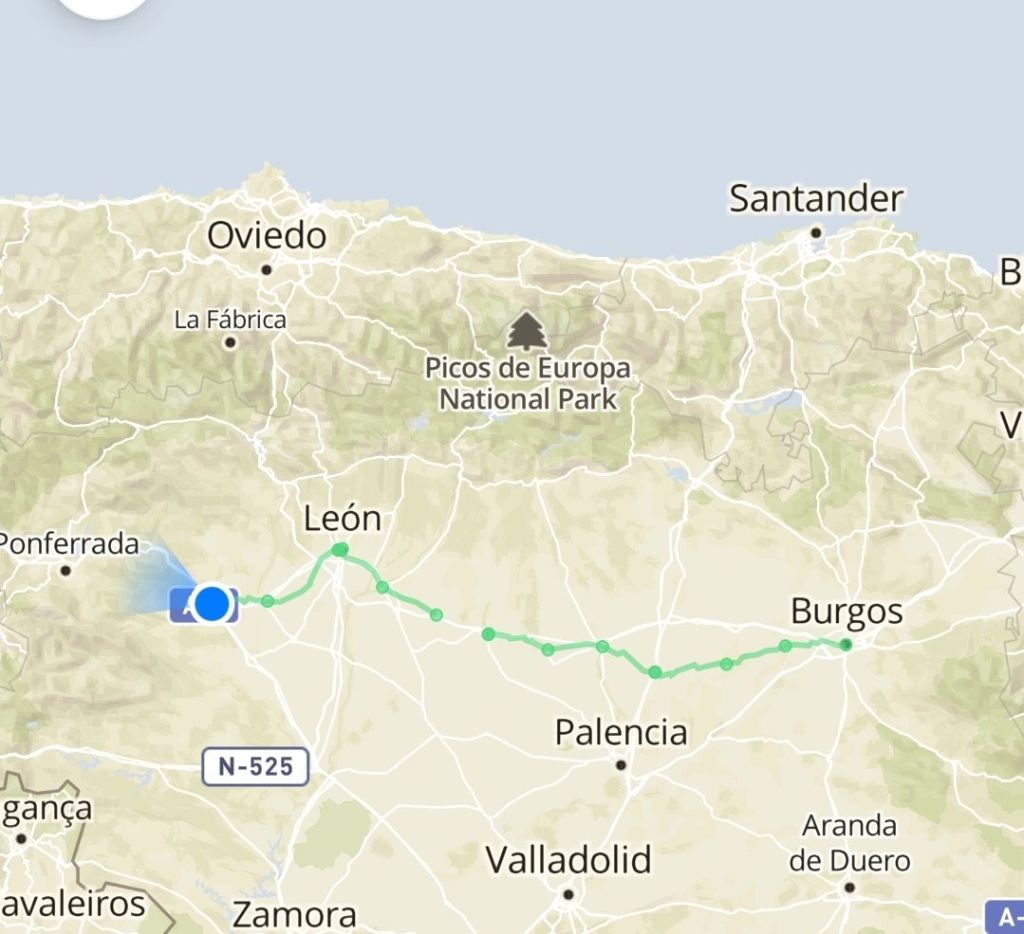
In 2023 we walked from the Spanish – French border to Burgos. Last year our journey was from Burgos to Ponferrada shown by the dot on the map. This year we will walk 200 km to Santiago de Compostela and then a further 100 km to Cabo Fisterra or Cape Finisterre, the most westerly point in Spain. Rest days are planned for Sarria just south of Lugo and Santiago.
It is 10° in Ponferrada this evening and damp. Nonetheless we are looking forward to being out on the road tomorrow. We’ve had busy weeks so it will be beneficial to have the road ahead of us and nothing else to arrange or consider.
I read today that Compostela is thought to mean the field of stars. One of the signs of the Camino is the Milky Way in the heavens. We carry on westwards following the Way.
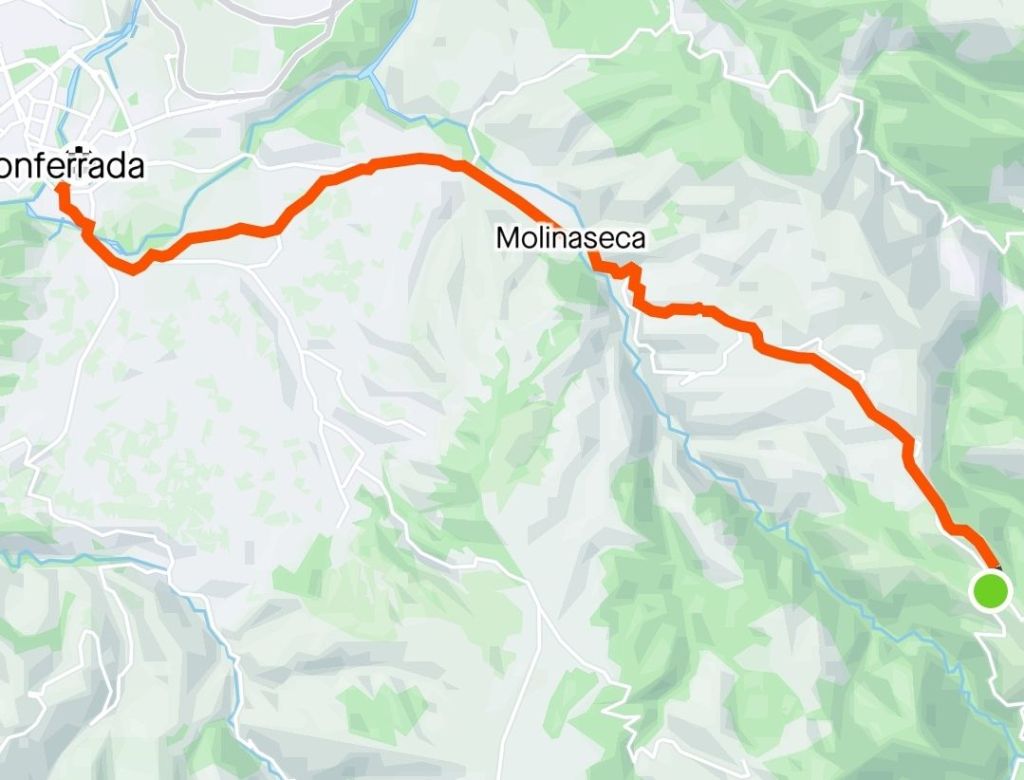
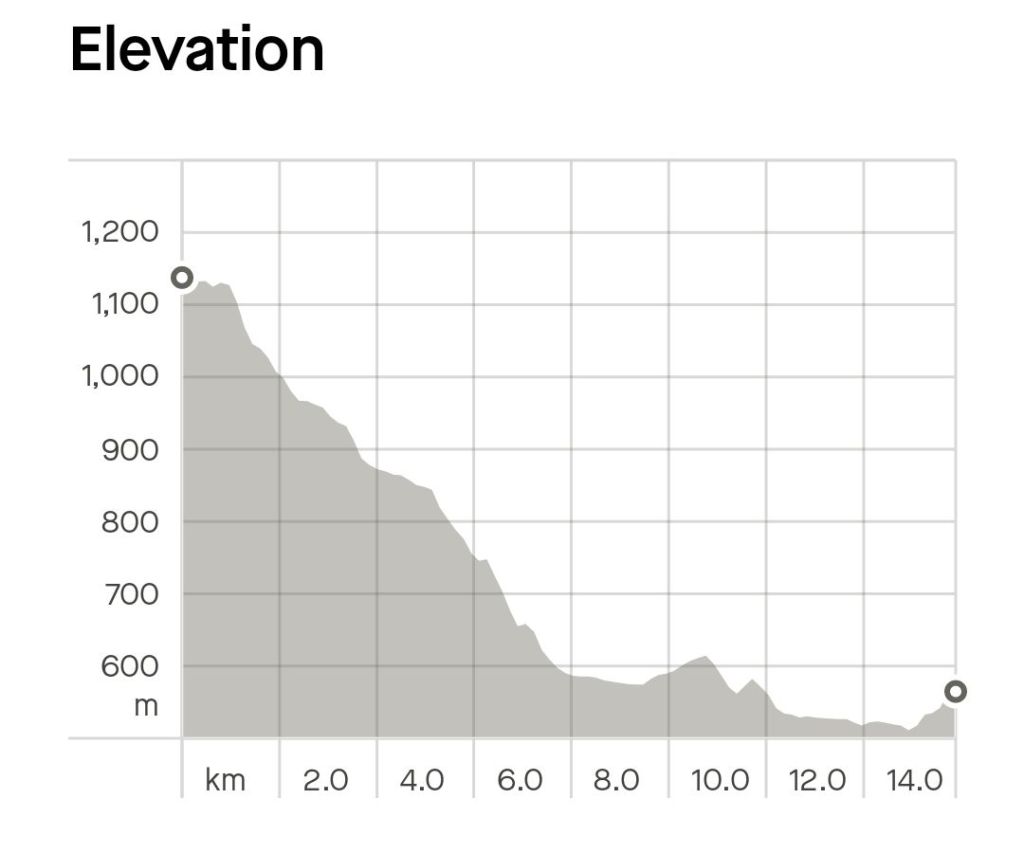
The path today was 16 km mostly downhill. We haven’t been below 600 metres for more than two weeks.
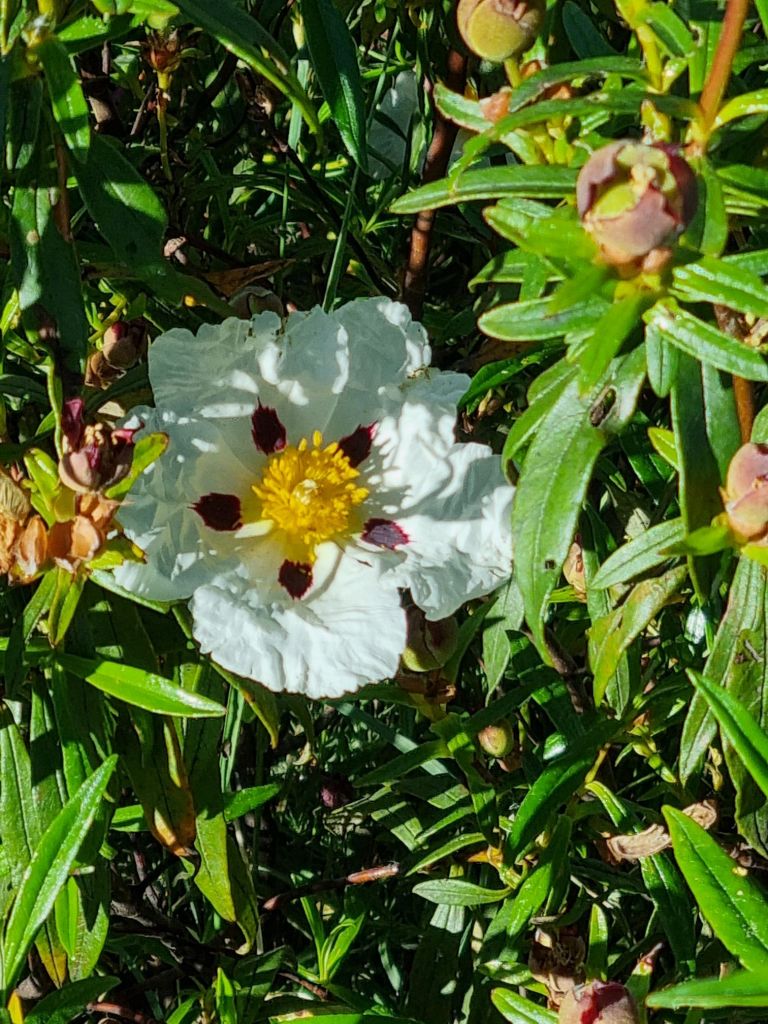
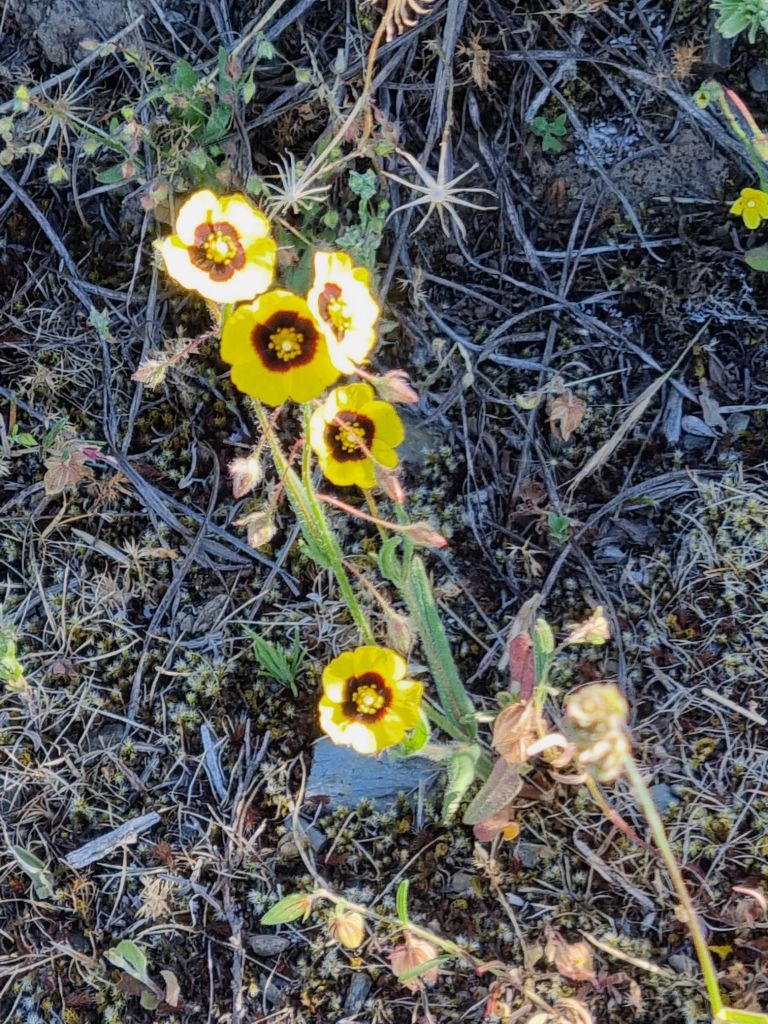
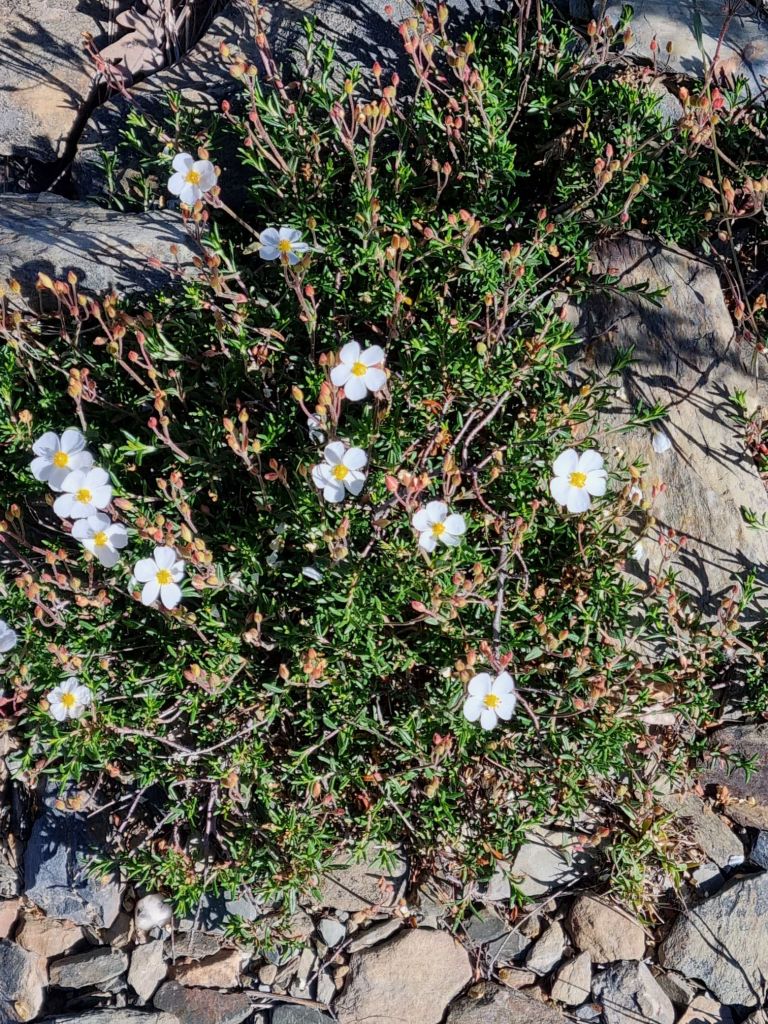
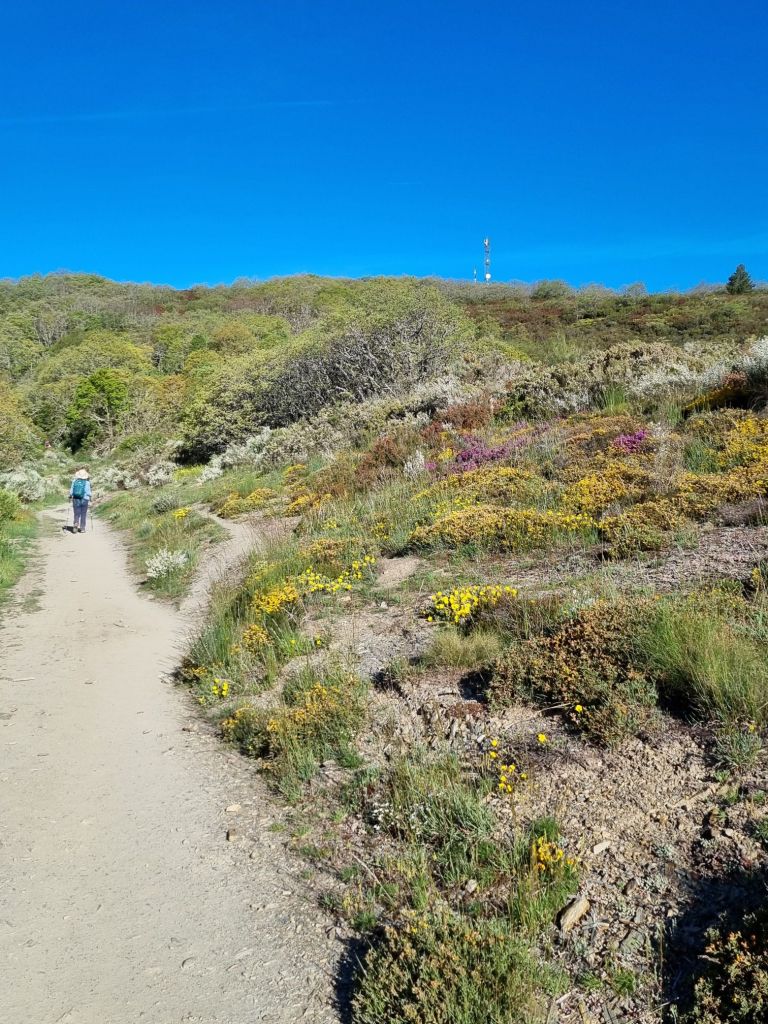
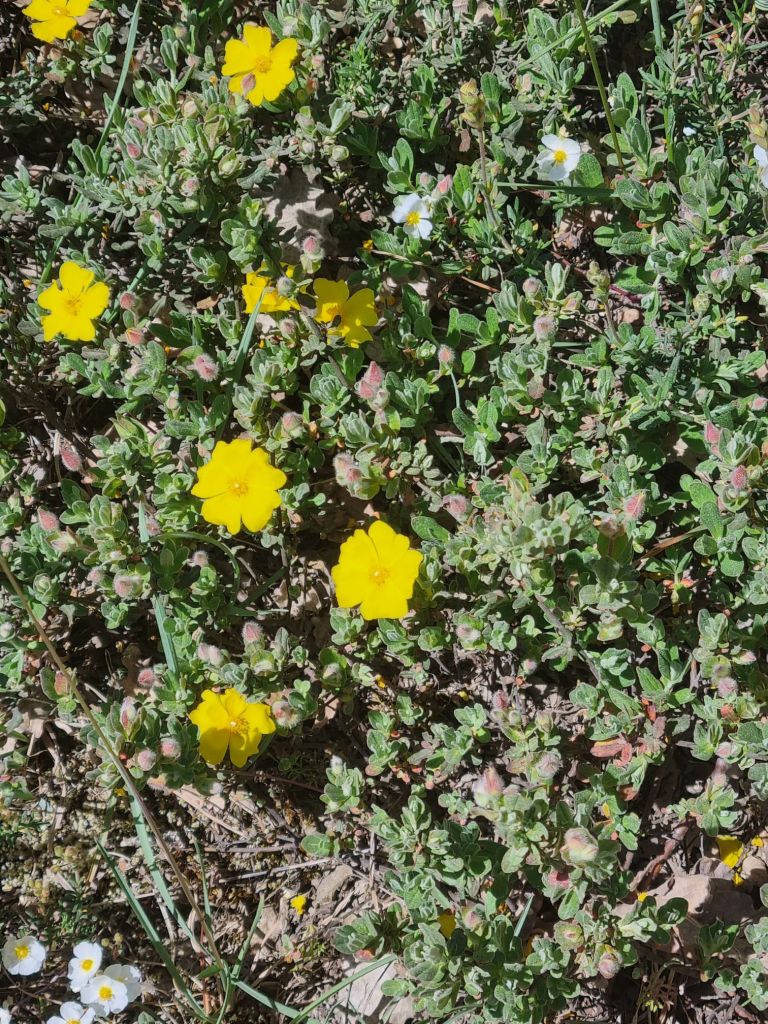
We had to pick our way down steadily as it was rather steep and rocky at times. Fortunately we had no slips. The flowers were magnificent. Cistus was just coming out and what I take to be primula auricula was flowering in abundance.
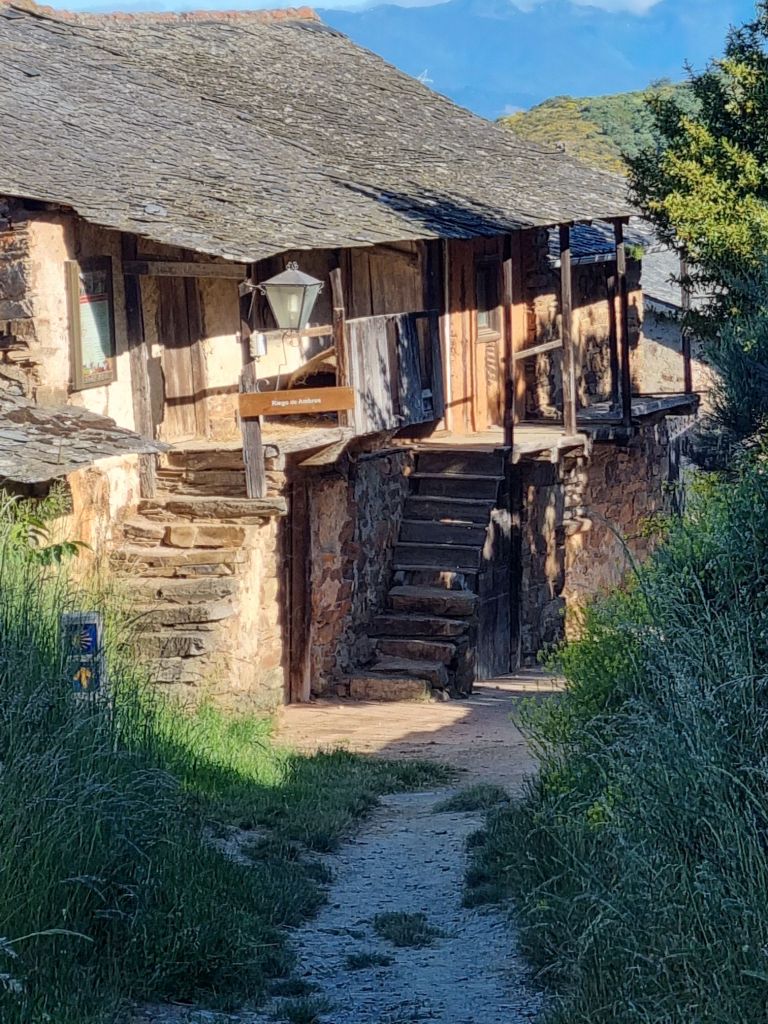
The mountain village of Riego de Ambros was attractive. These dwellings were clearly intended for people upstairs and animals underneath.
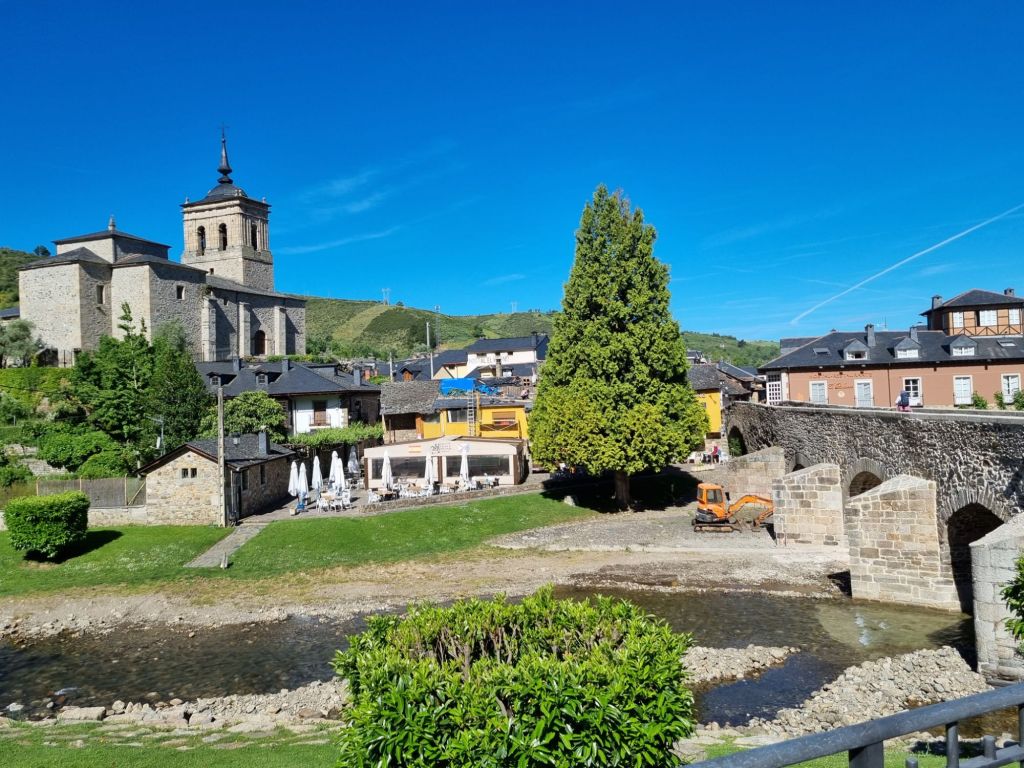
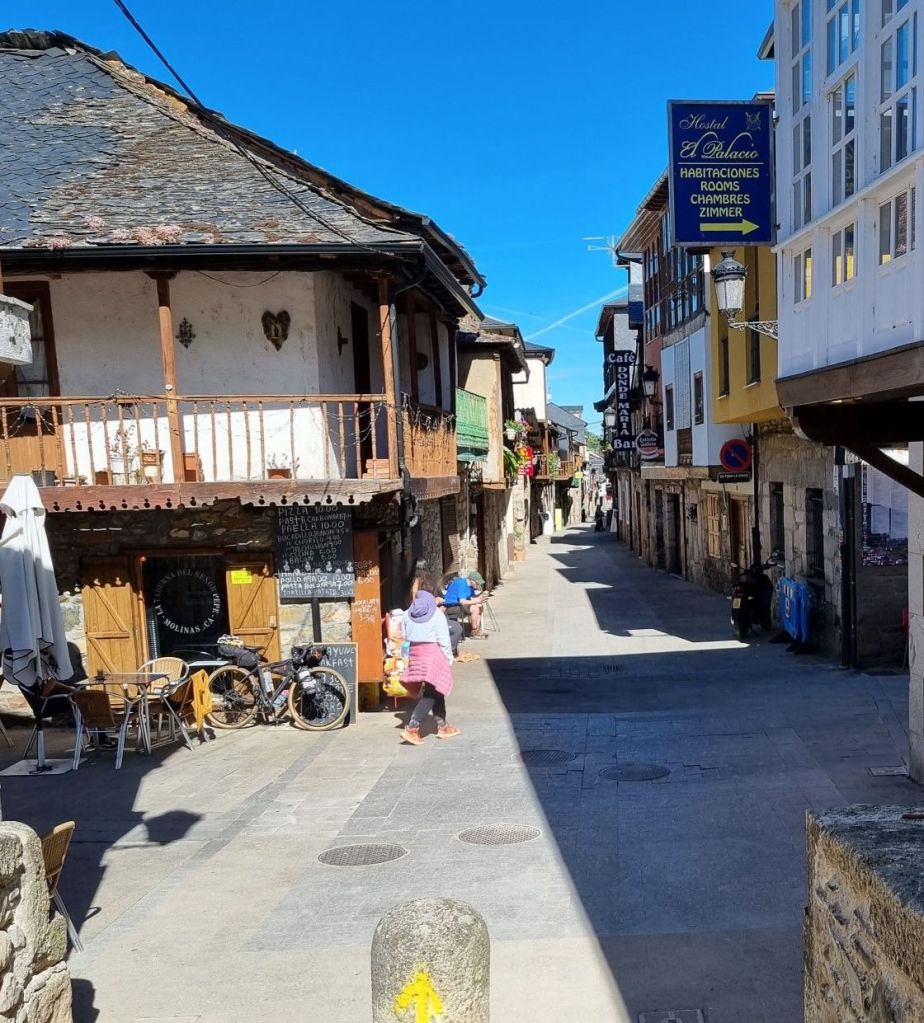
Our midway stop was Molinaseca where the bridge over the river was built on Roman foundations.
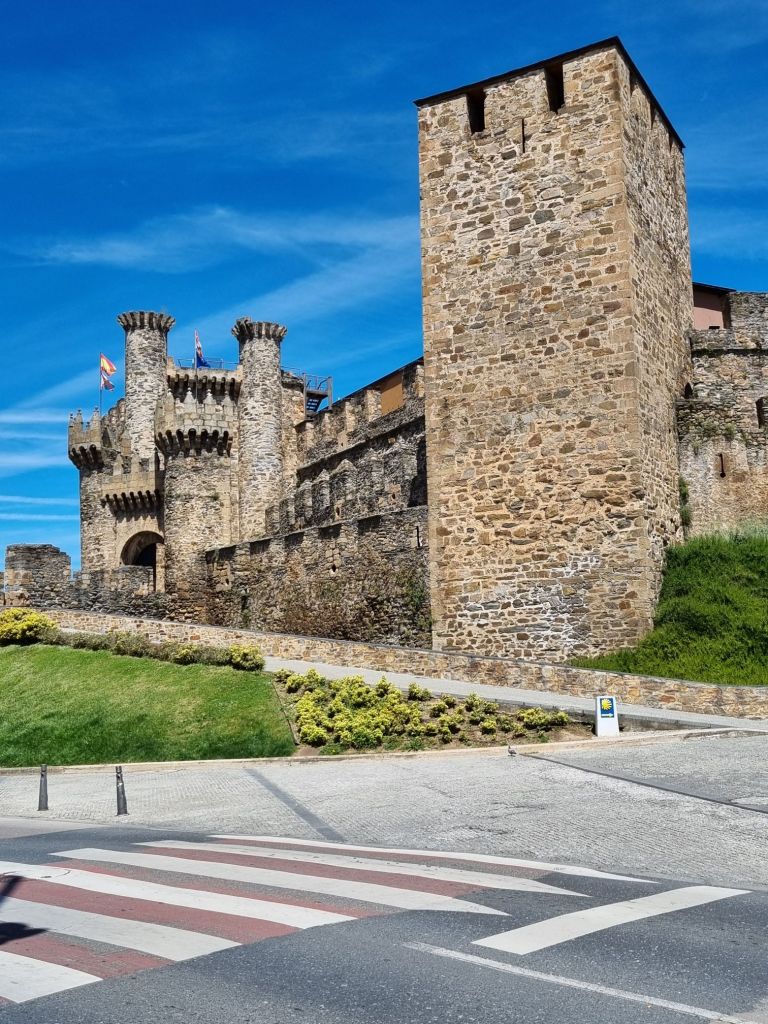
The last half of the walk was a trudge along roads into Ponferrada. I had expected an industrial town so it was a pleasure to see a grand castle originally built by the Knights Templar to guard the way for pilgrims.
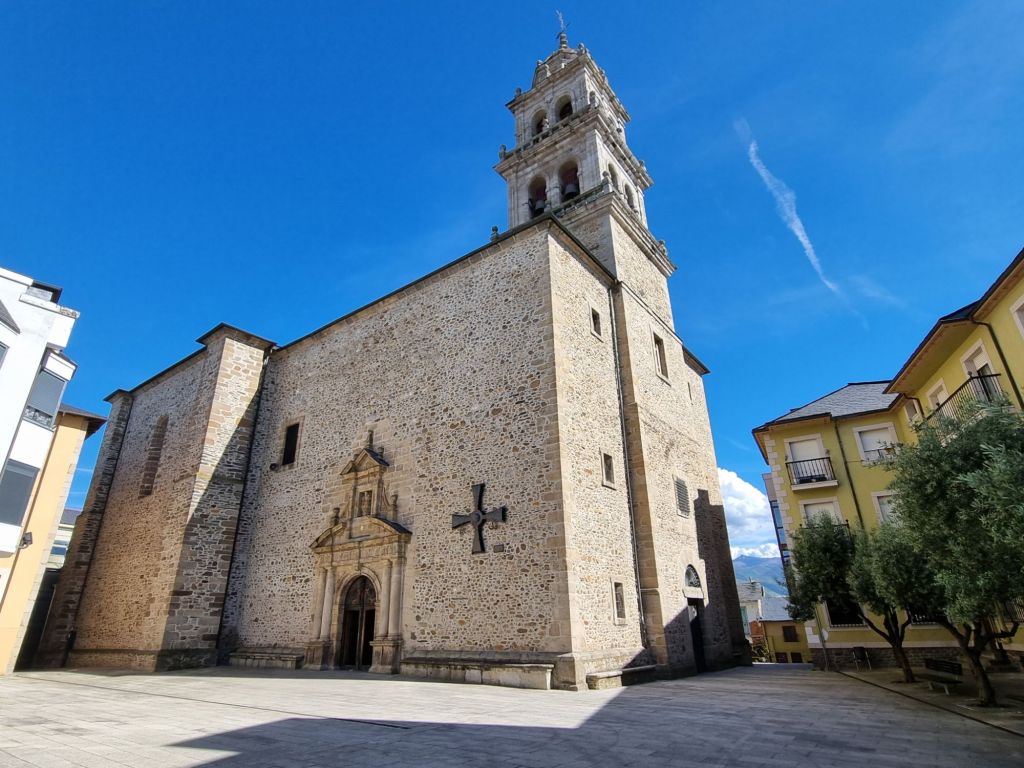
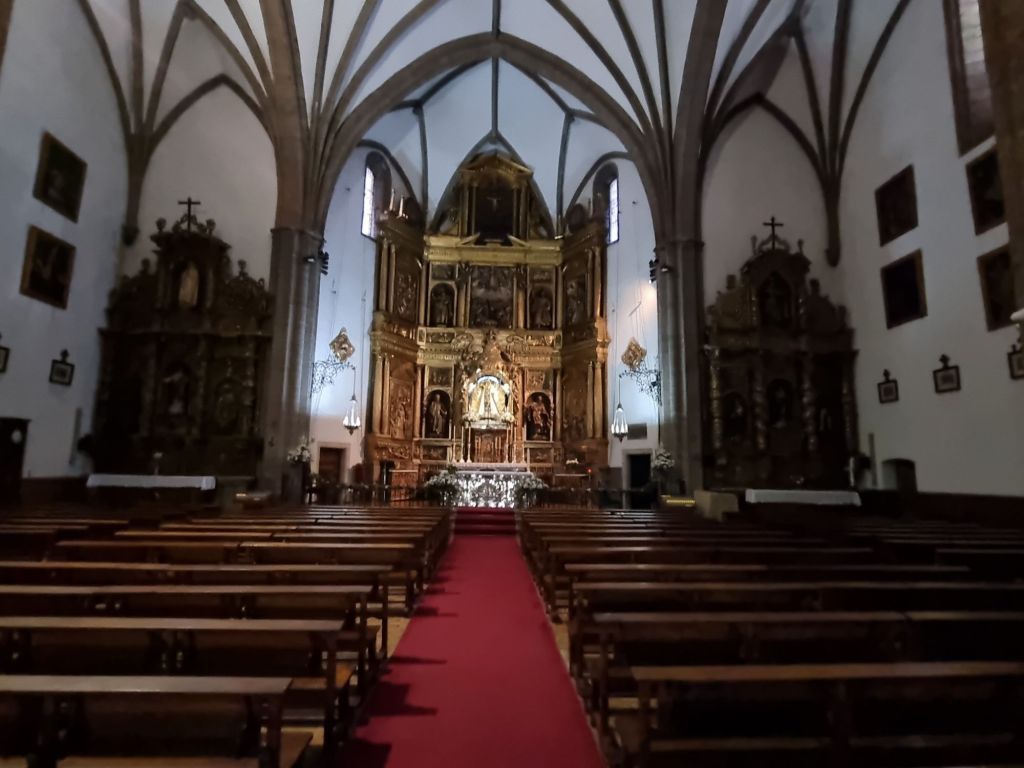
Basilica in Ponferrada
We had an exploratory walk to find the bus station. All of a sudden the temperature has shot up. Although not super hot at 27° with the strength of the sun it was definitely preferable to walk on the shady side of the street.
Tomorrow we catch the bus to Santiago de Compostela and fly back to the UK in the evening.
Our second year of Camino was planned to cover the 300 km from Burgos to Ponferrada which we have achieved.
With 2023’s section we’ve now walked 600 km from St Jean Pied de Port in France. That leaves just over 200 km to Santiago de Compostela in 2025. We plan then to walk on to Finisterre on the Atlantic coast which will be a further 100 km.
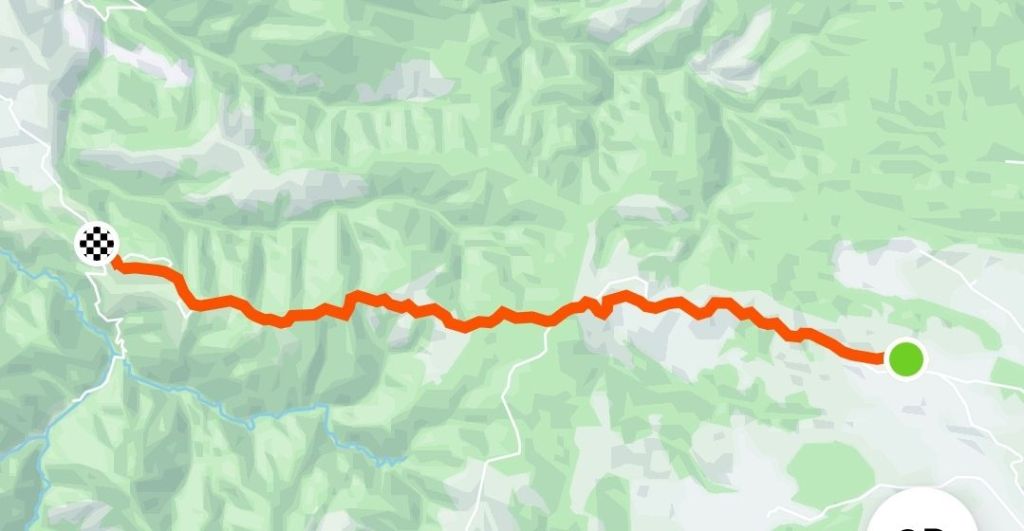
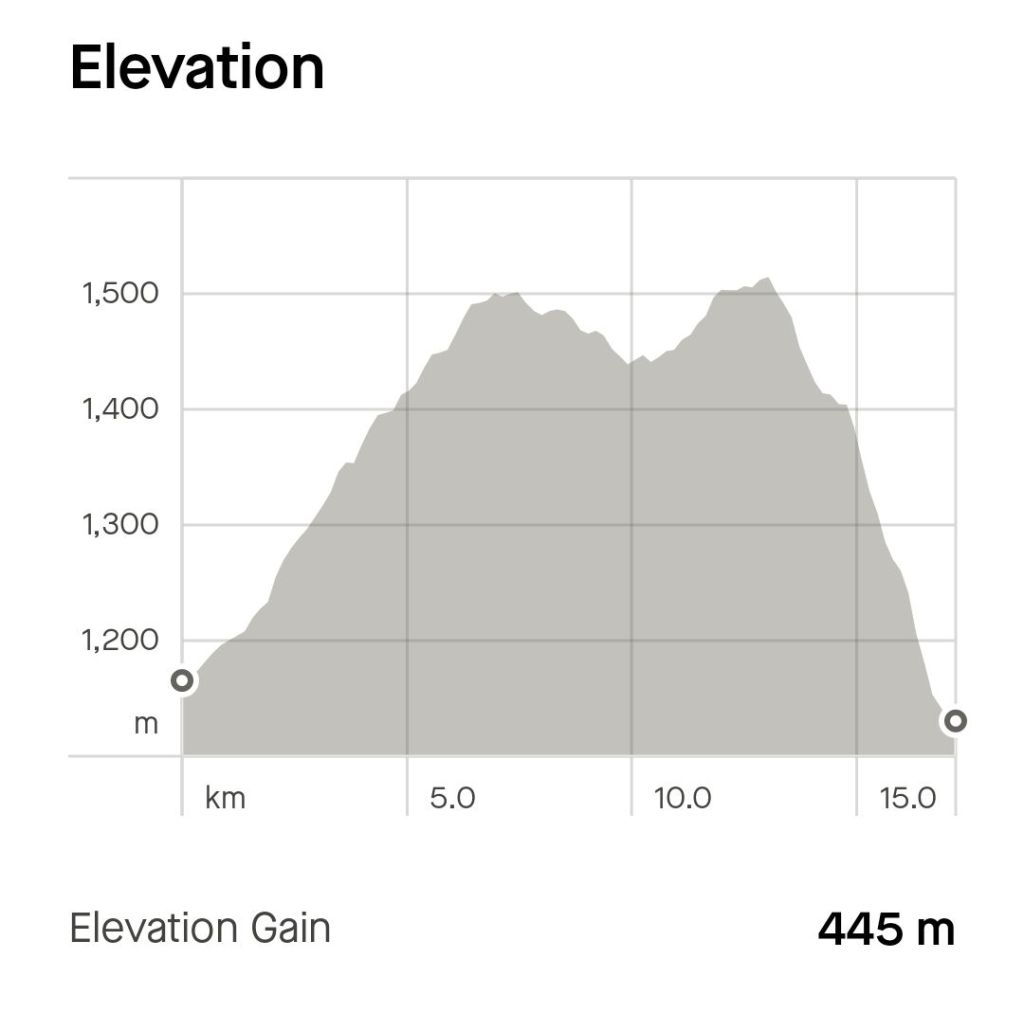
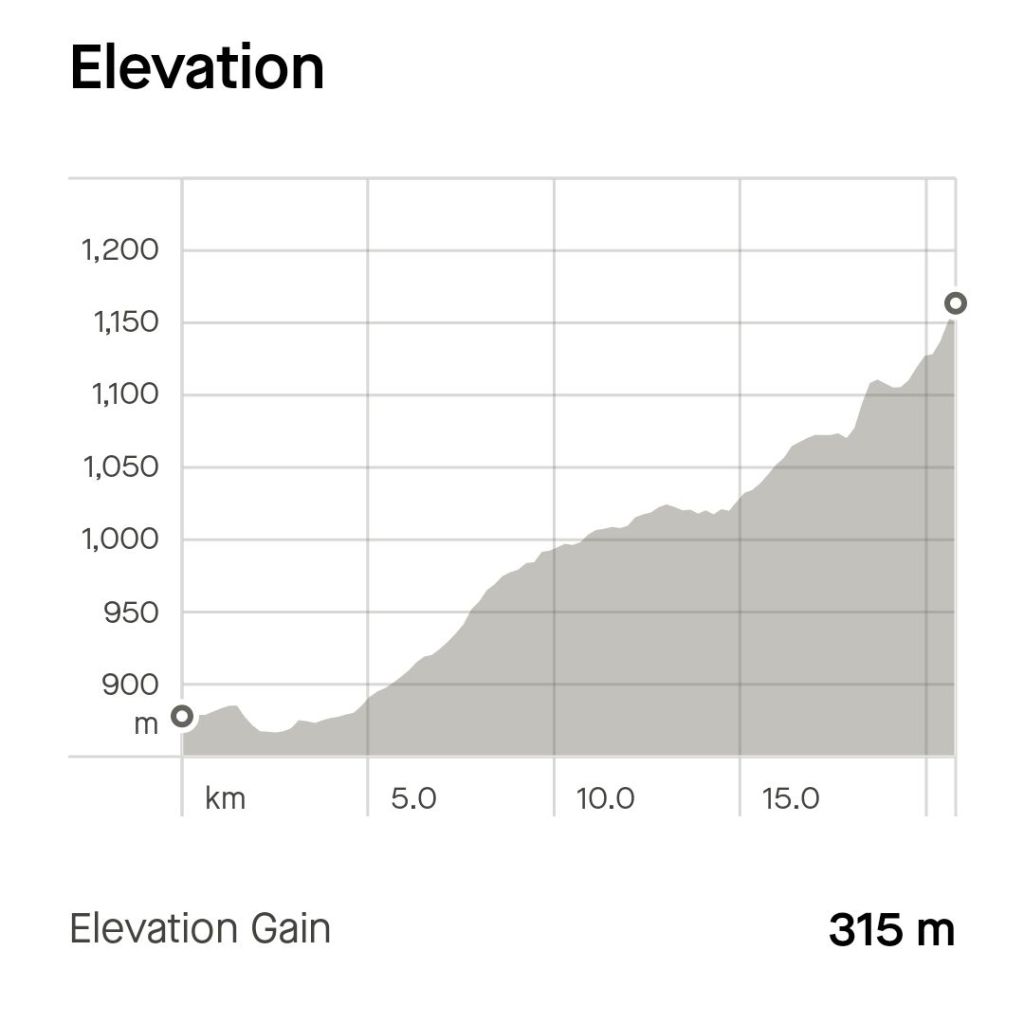
Today we went over the highest point of the Camino Francés. It was a steady climb up and rather steeper coming down. The 17 km was dominated by the 445 metres of ascent and descent leaving us at much the same altitude as last evening.
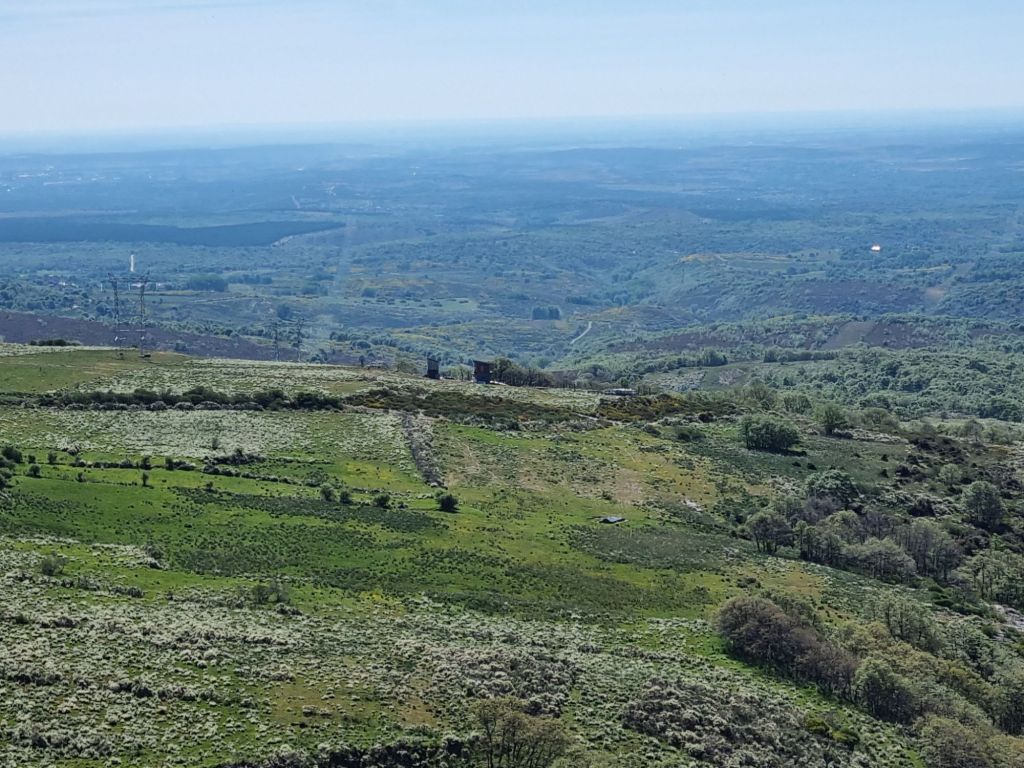
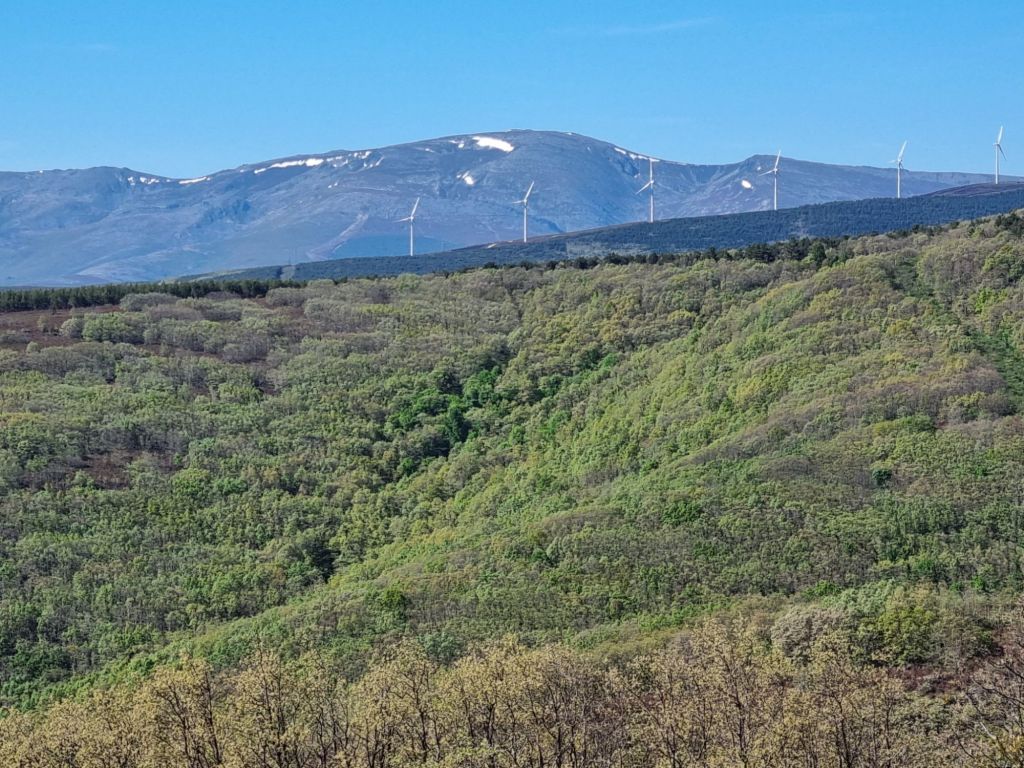
It was good to be in the mountains again with wide views. The plain of the Meseta looked a long way down. Although a warm day with bright sunshine it was good to see the snow some 500 metres higher on the mountains.
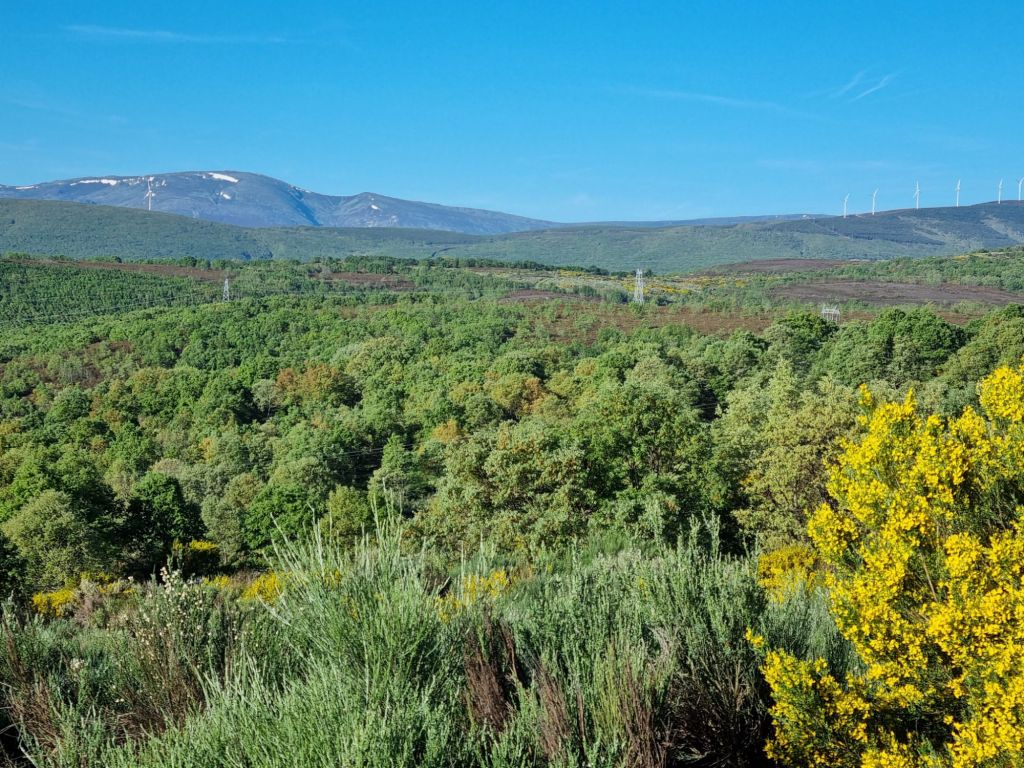
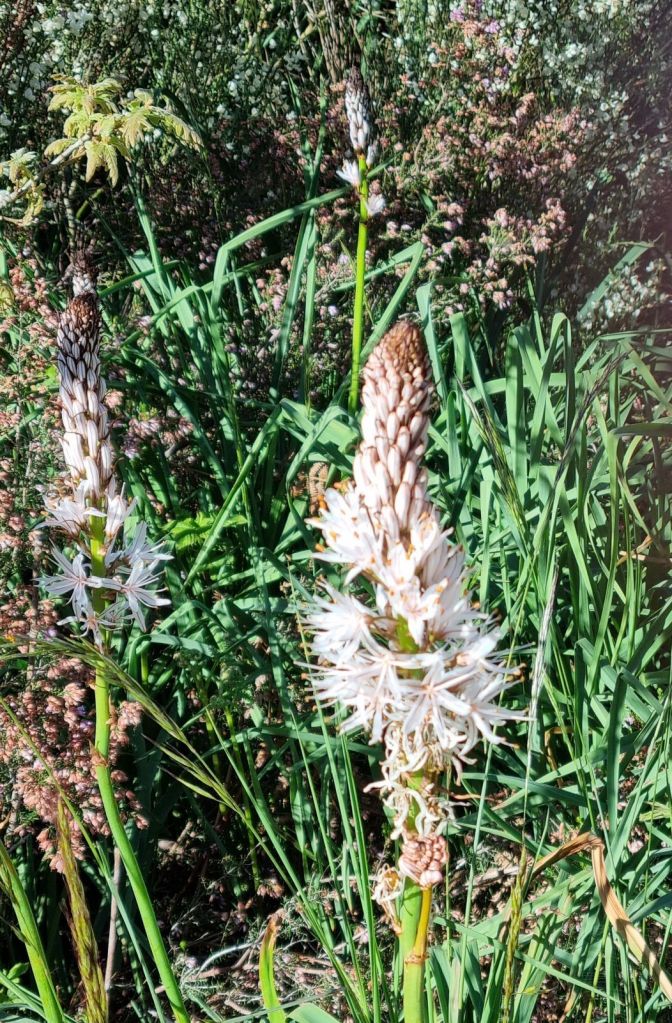
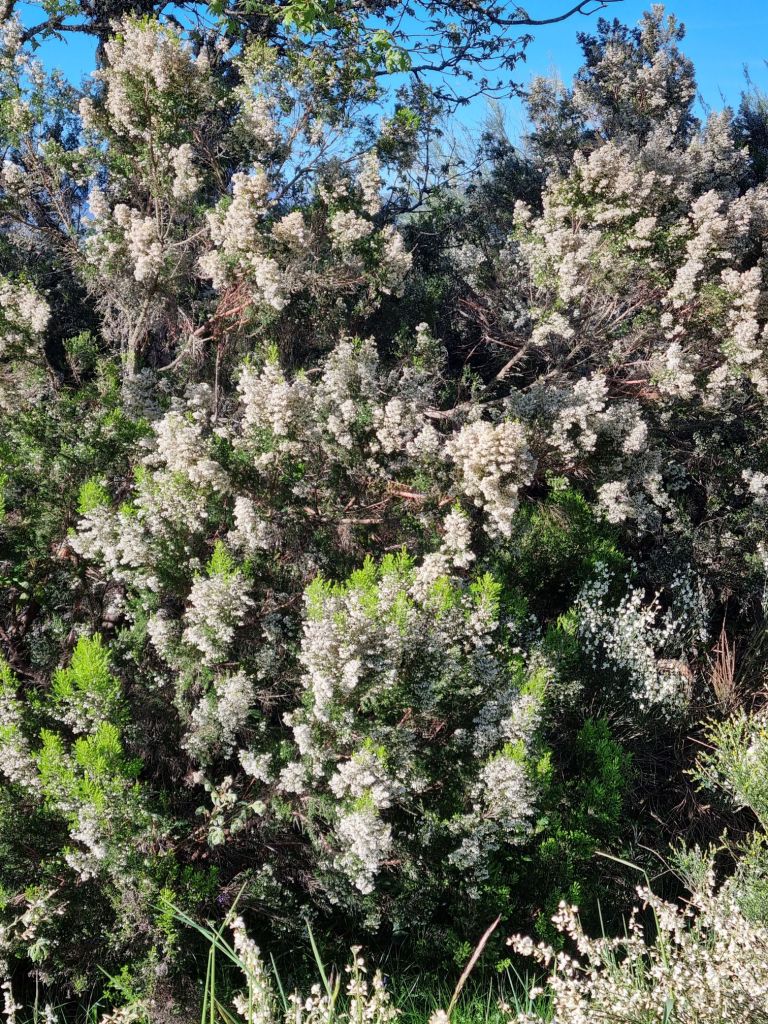
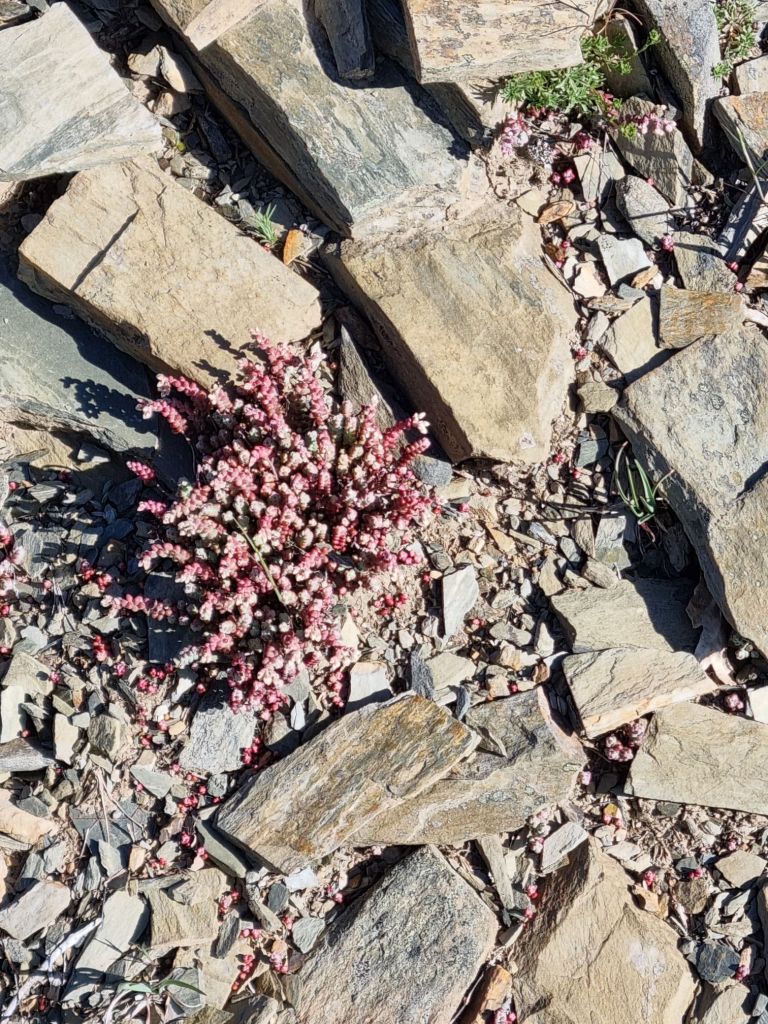
It’s always fun to see the vegetation change with elevation. Today the asphodels and Spanish broom were gradually replaced with saxifrage and heathers. We even saw bracken.
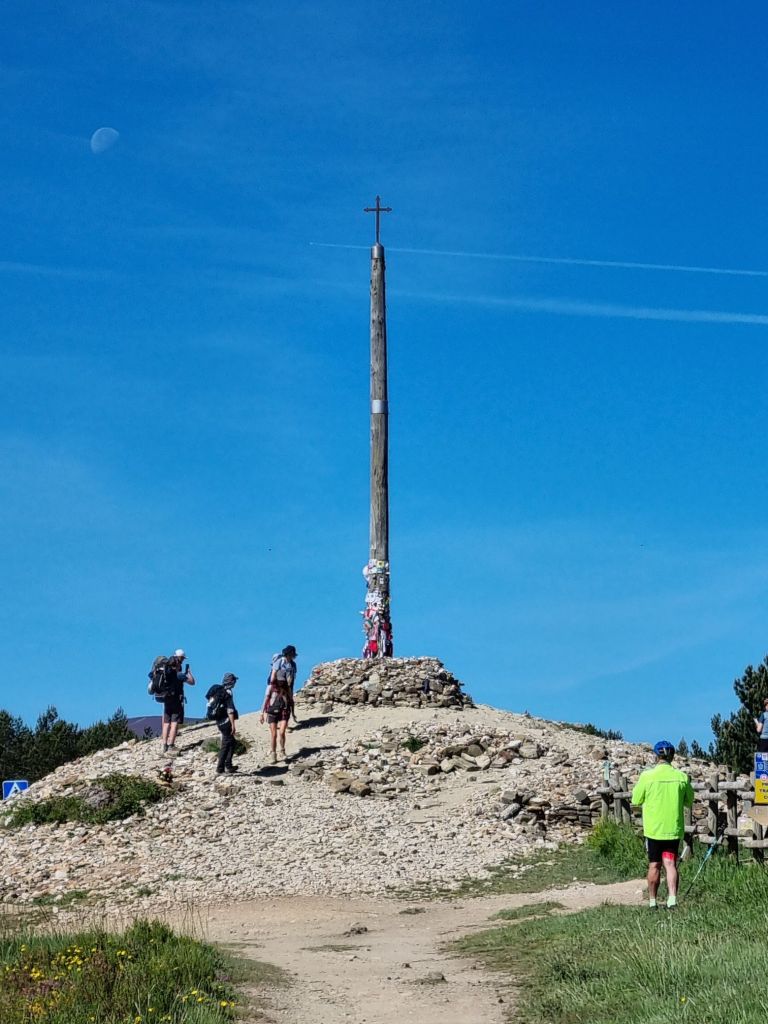
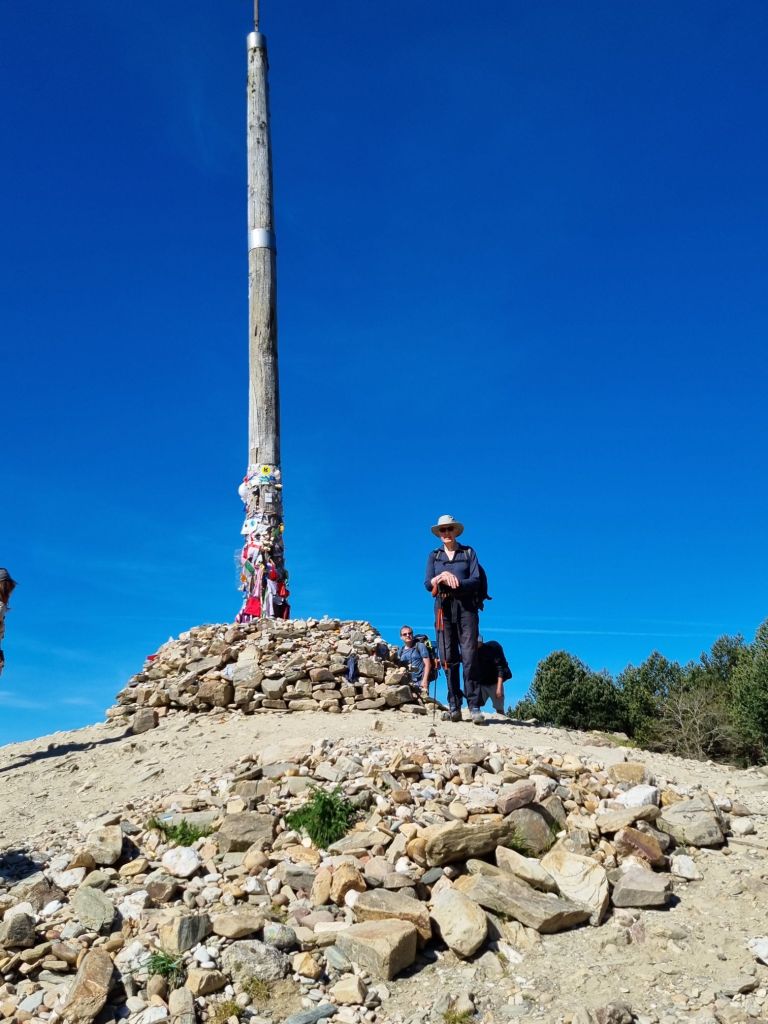
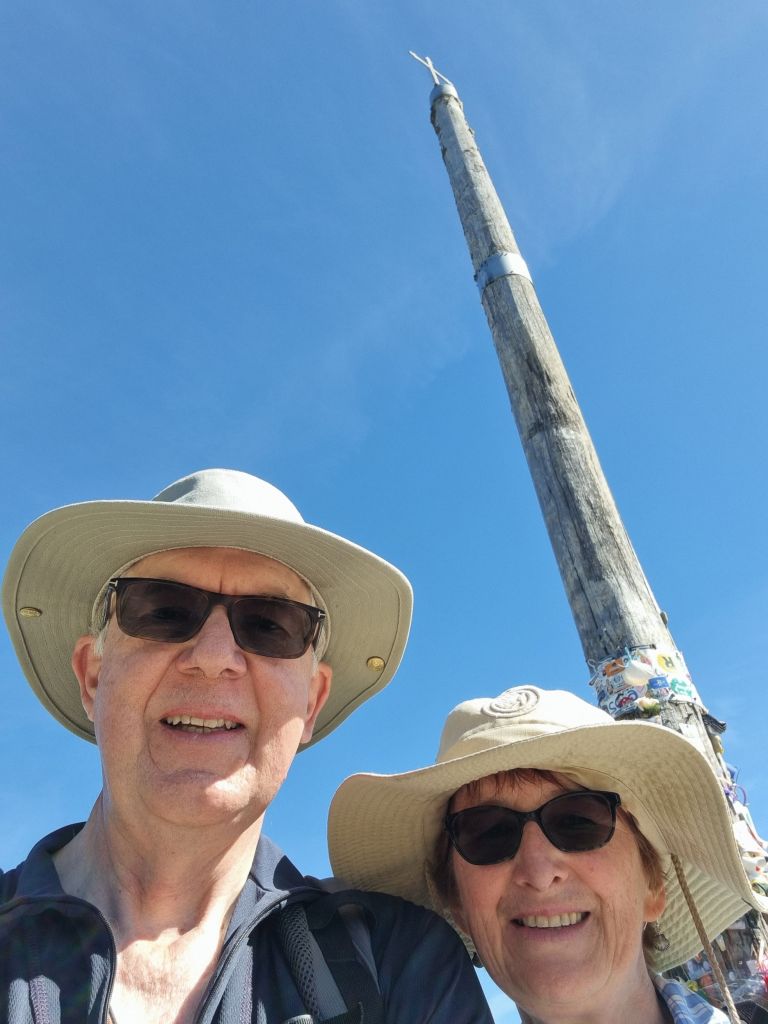
After 7 km of walking we came to the Cruz de Ferro or Iron Cross which is one of the key symbols of the Way of Saint James.
This was a moving spot, beautiful but poignant. We took a moment to remember recently departed friends and family – Sue, Lisa, Fiona, Janet, Monica, Maurice and John.
We had a good walk across the top enjoying the mountain vistas.
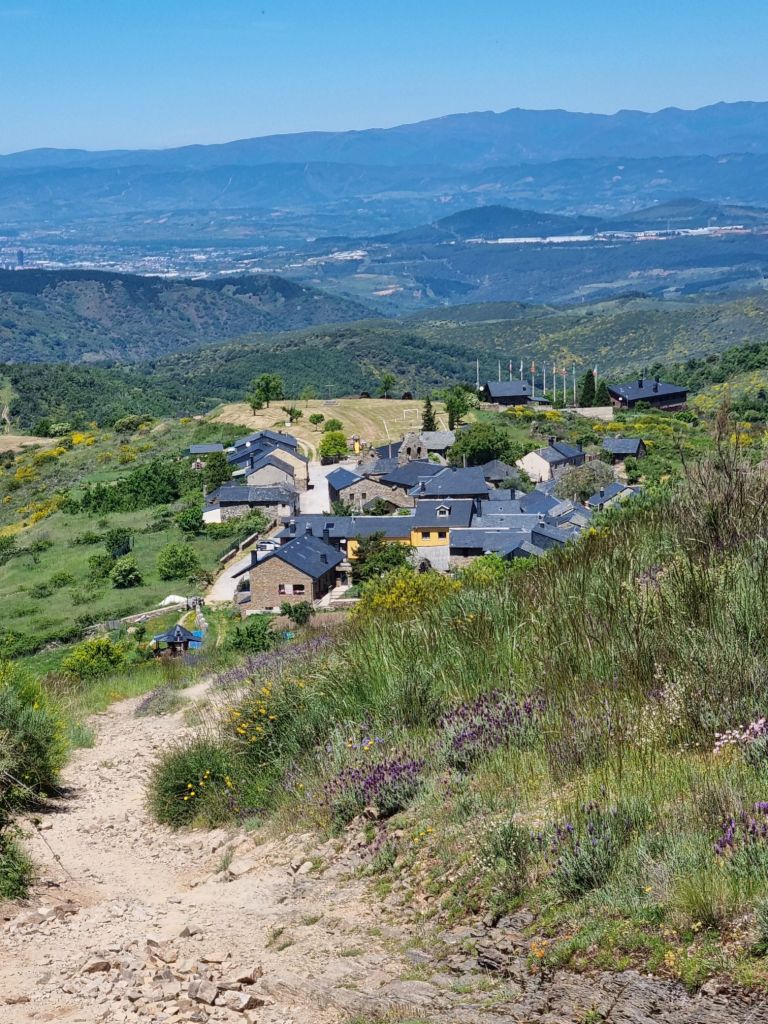
The village of Acebo came into view which is clearly benefiting from the Camino with renovated properties. Our hostal rural for the evening is a new property with stunning views of the mountains all around and the valley below. We’re staying where there is the row of flags.
We descend tomorrow into Ponferrada for the end of our 2024 Camino. For the first time in more than two weeks we will be below 800 metres.
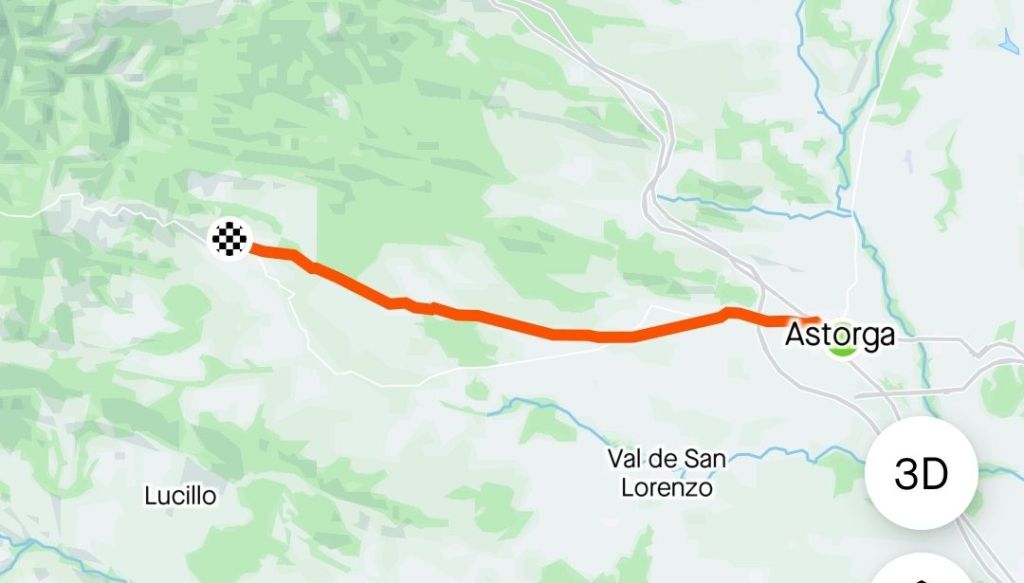
Today we started our walk up over the highest point on the Camino.
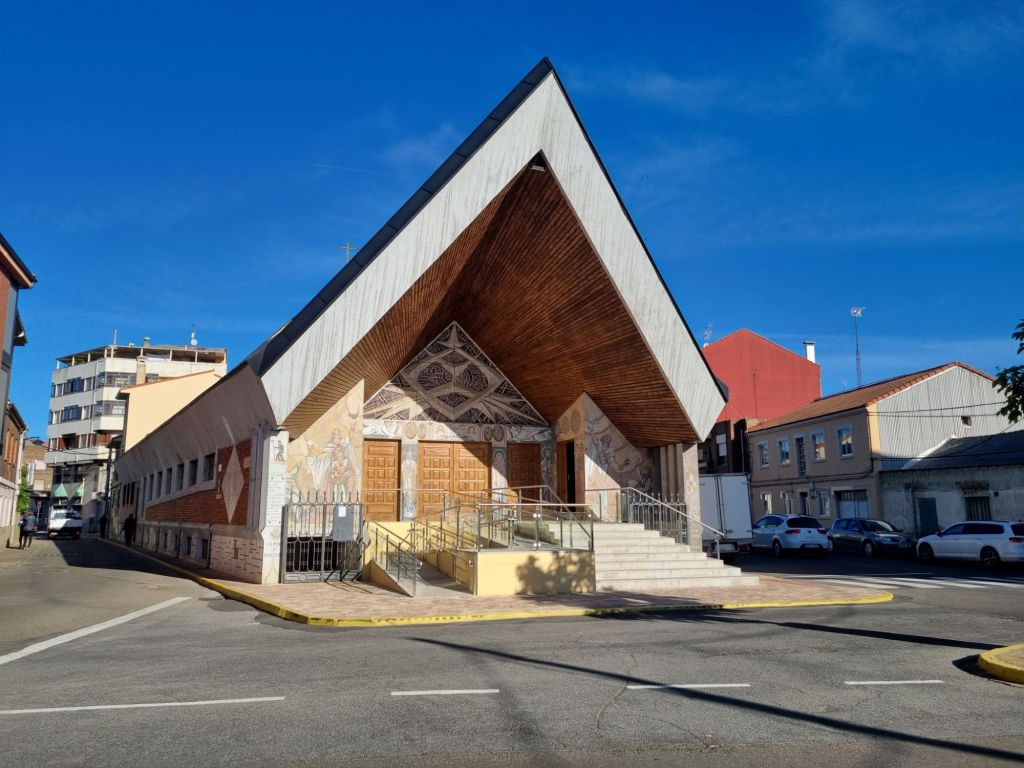
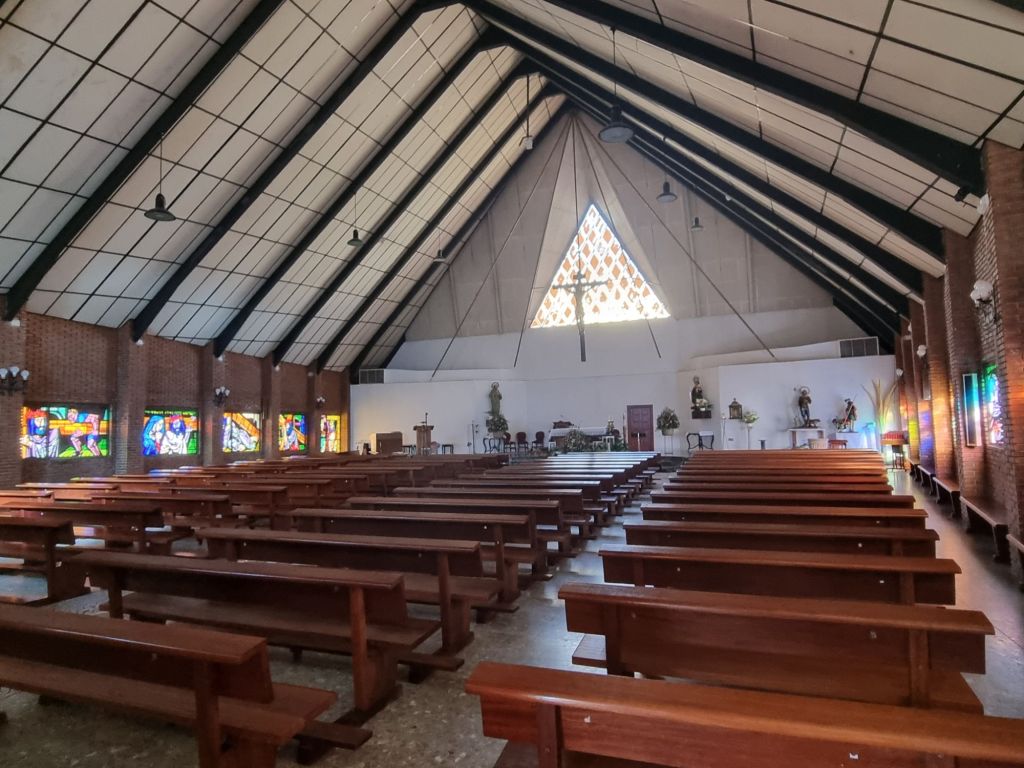
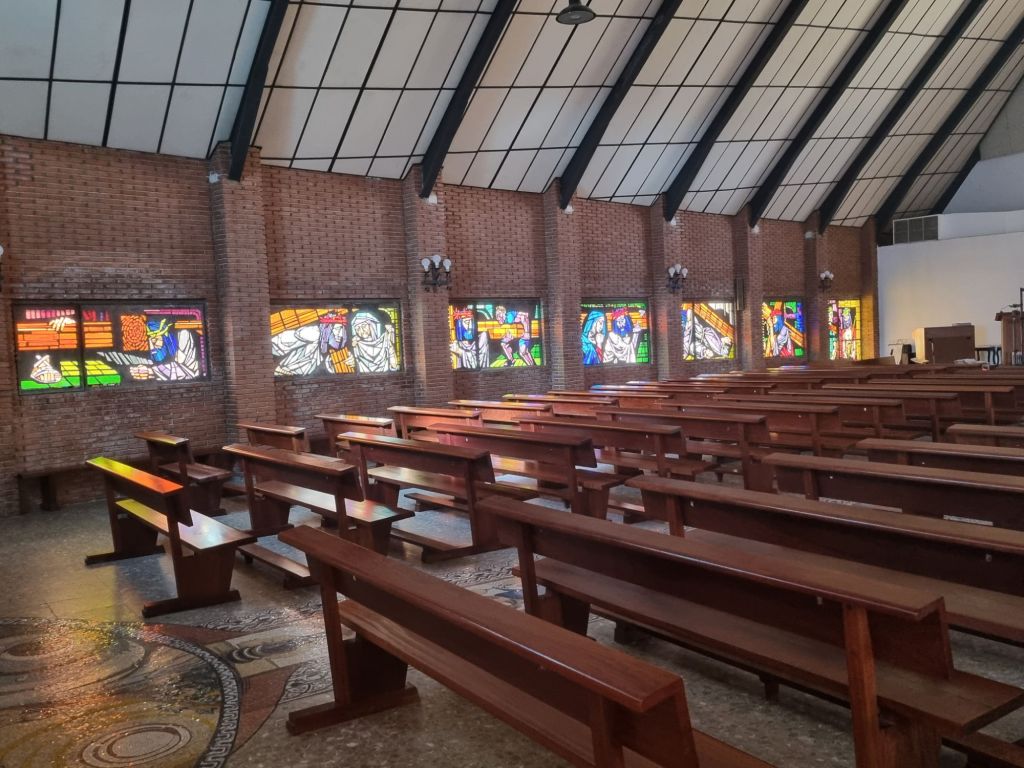
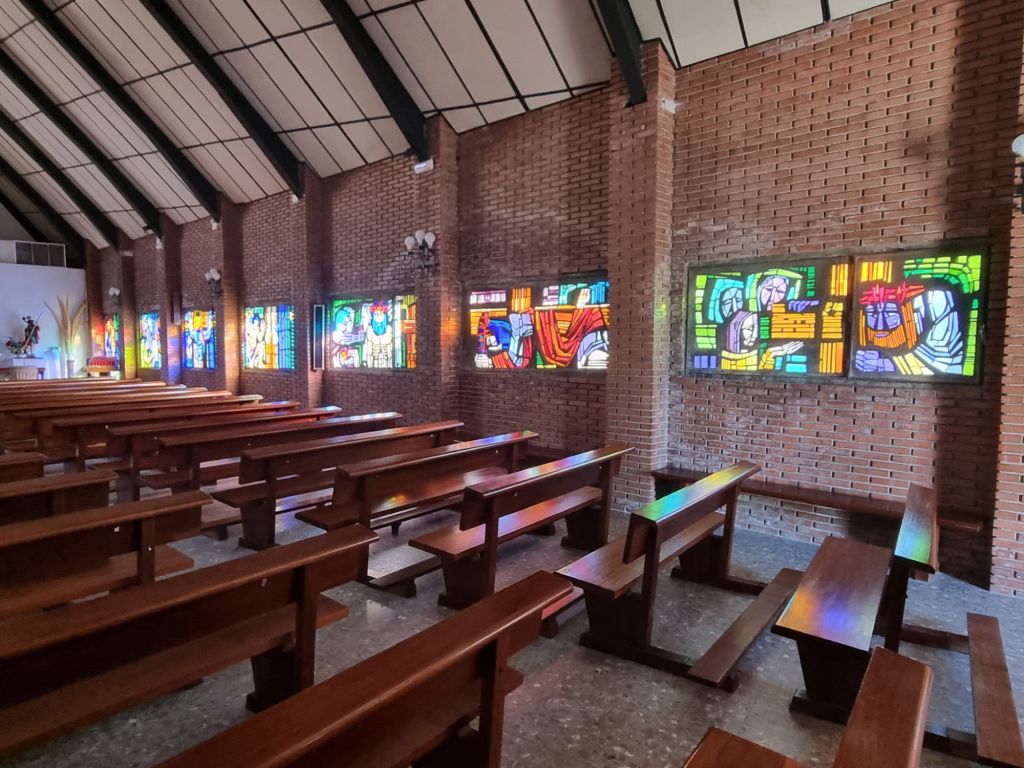
On our way out of Astorga we passed an interesting modern church which was attractive both inside and out.
Effective stations of the cross in strained glass
The path was mostly a moderate gradient with only one or two steep sections. We went through a couple of pleasant mountain villages.
Mountains in the distance are just over 2,000 metres
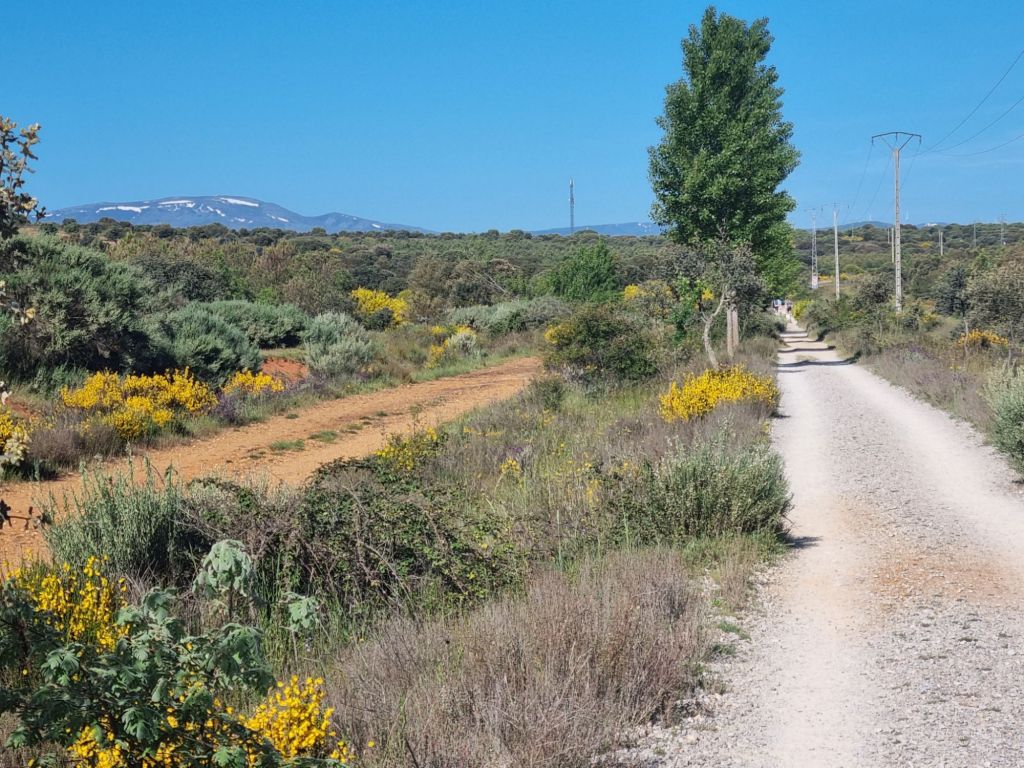
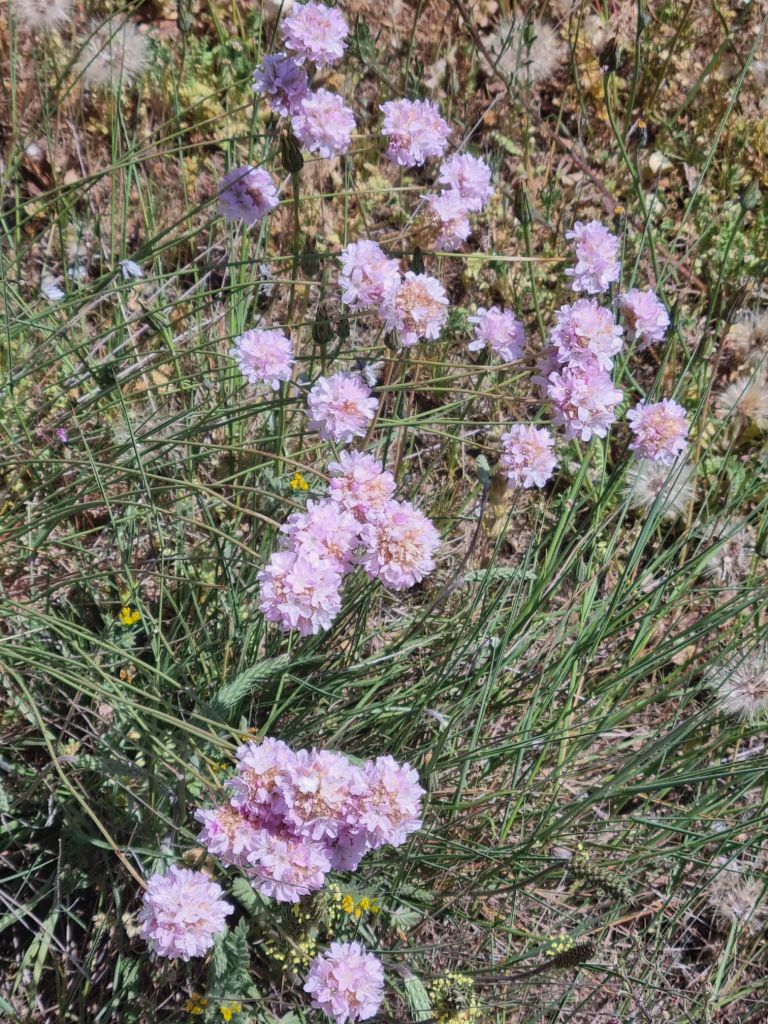
As we went higher the flowers started to change. The potentillas were a brilliant yellow and it was good to see armeria or thrift. There were plenty of asphodels too.
The sun was bright today and there wasn’t much wind. Although not too hot in the air temperature we walked very steadily to ensure we didn’t get too tired or hot. It’s curious walking to heart rate up hills. The slightest gradient changes the rate very quickly. Despite the seemingly slow walking we made good progress to Rabanal. A large beer and a slice of cake was most welcome.
There is a charming old church in the village which has been restored by Benedictine monks. They offer silent retreats in their monastery which would be an interesting experience.
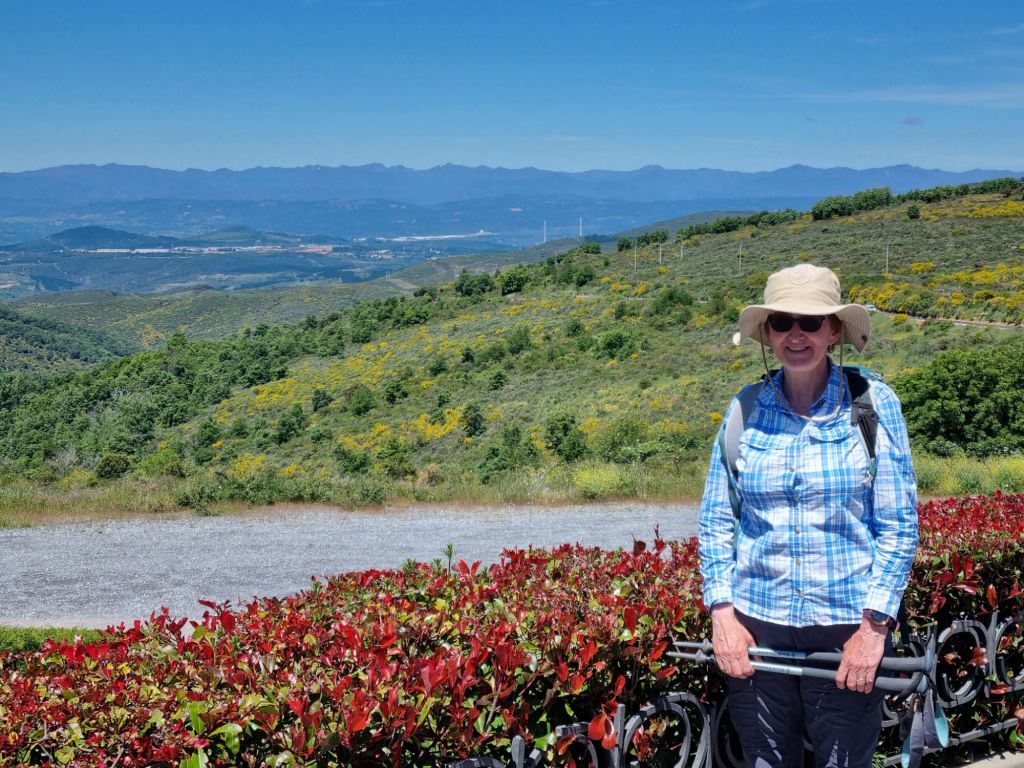
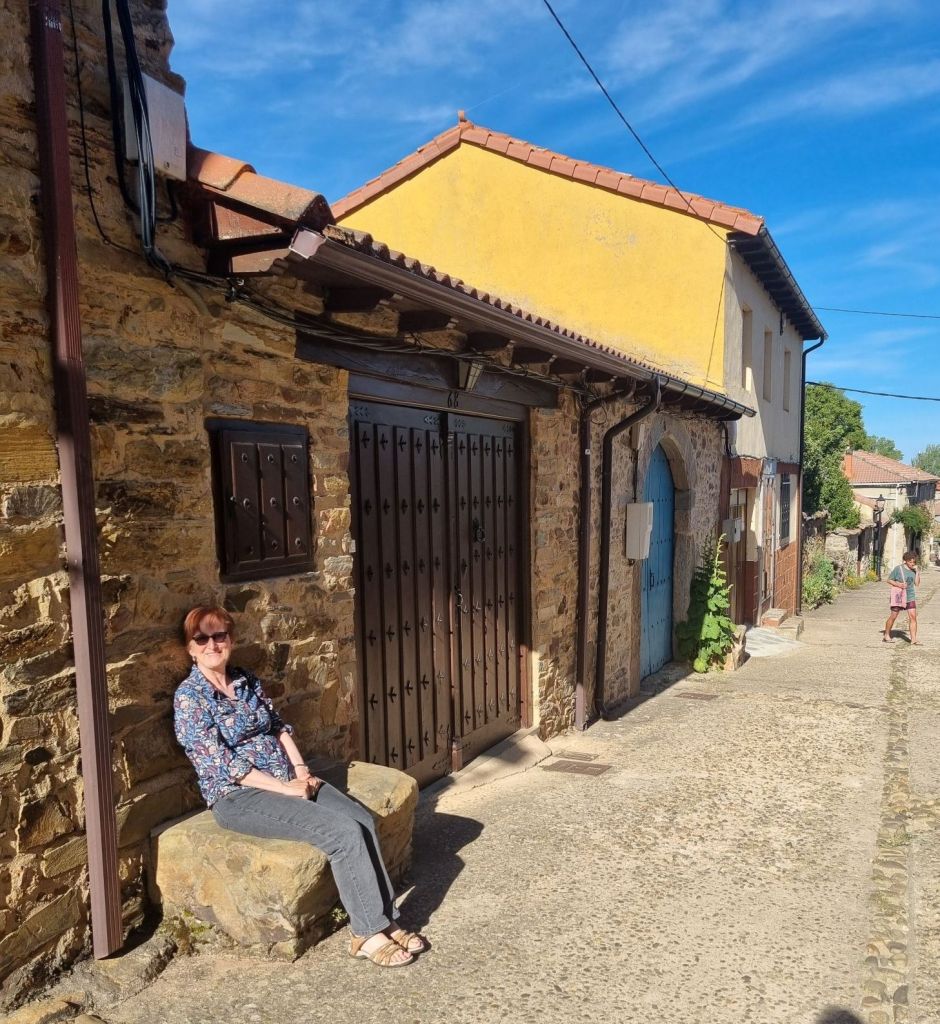
Beryl sat on a large stone by the church on the main road through the village. We imagined how many people have sat here over the centuries.
Ponferrada is now just a day and a half’s walk away. Just 500 metres of ascent tomorrow.
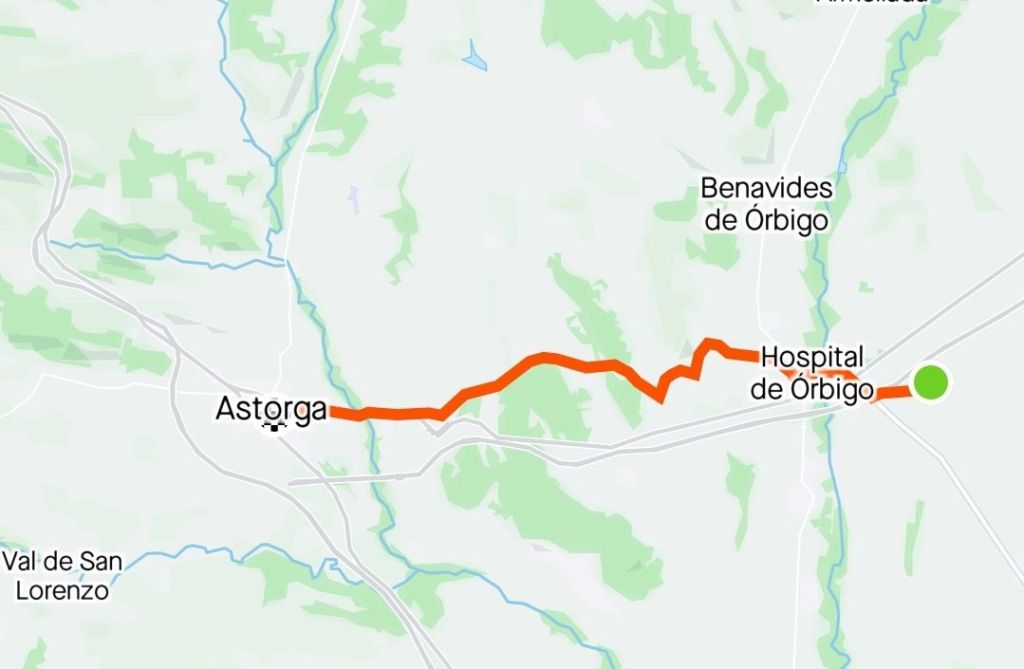
It was an easier day today after yesterday’s epic walk. We started out over more flat fields accompanied by the sound of frogs in the irrigation ditches getting all excited about each other. It’s that time of year.
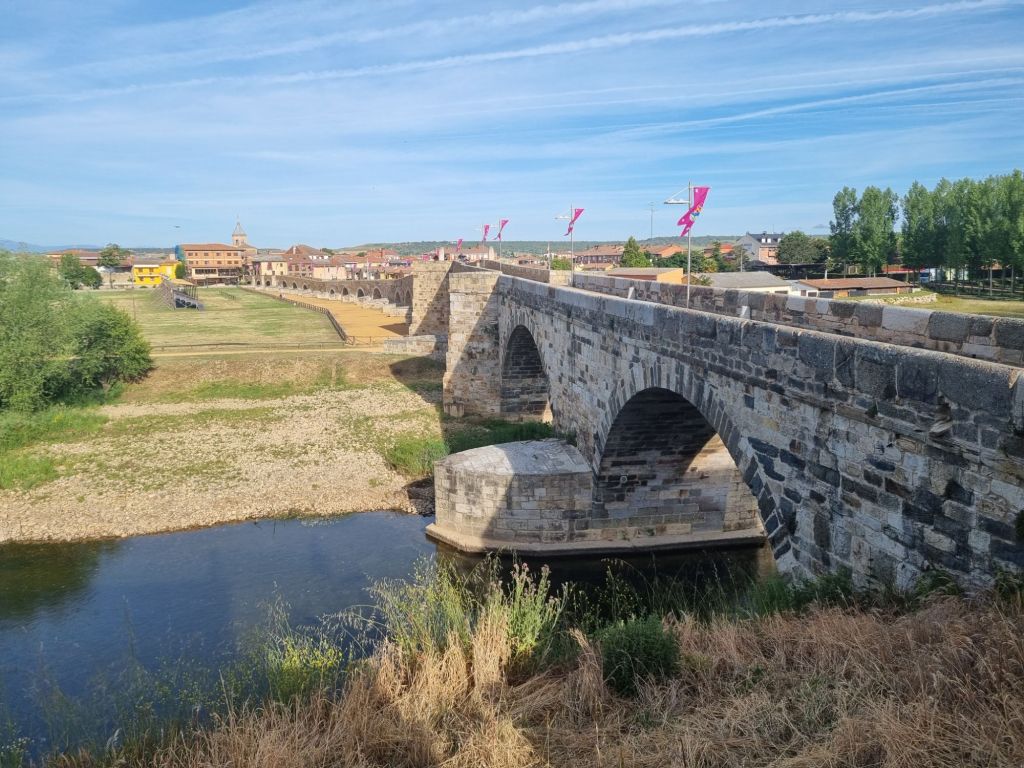
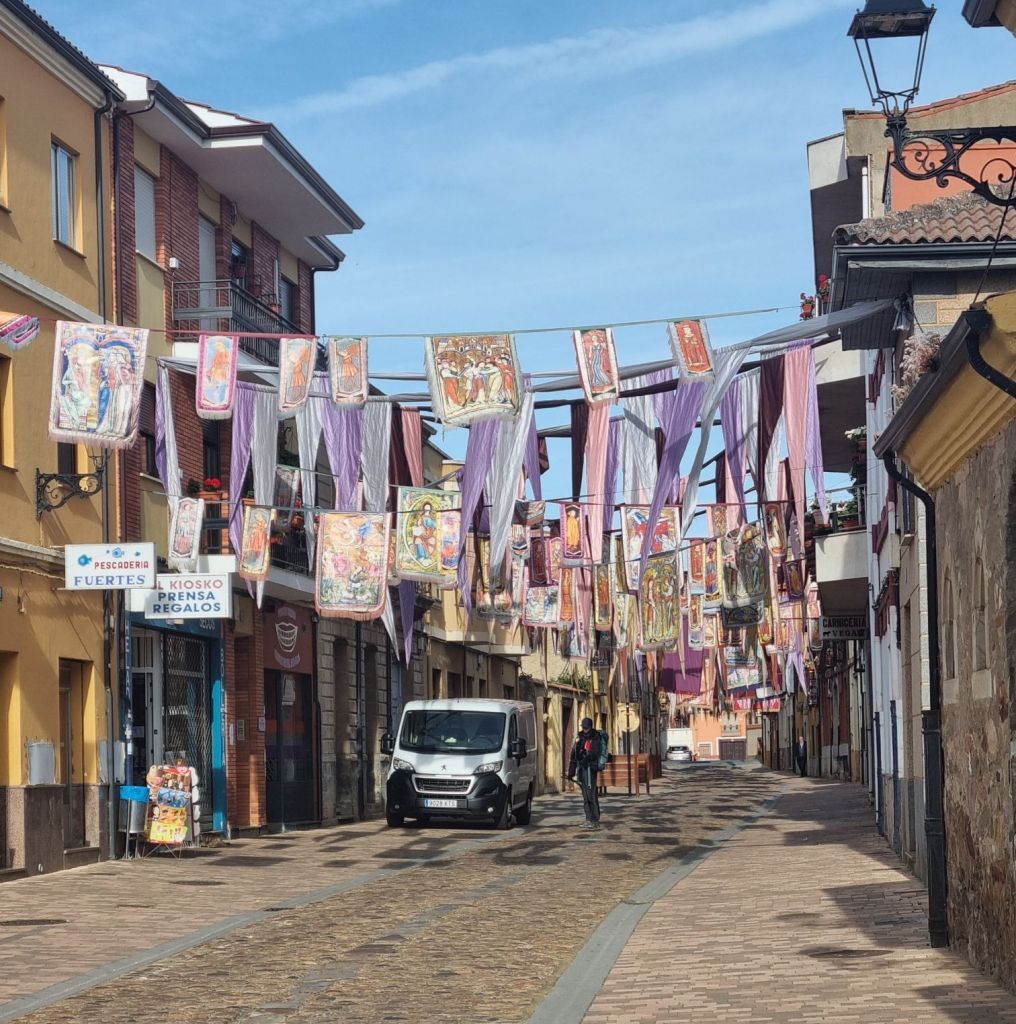
The Puente de Órbigo was an impressive old bridge built upon Roman piers. In previous centuries this river crossing had been important for both pilgrimage routes and transhumance paths taking animals to fresh pasture. The main street in the town across the river was decorated with scarves depicting many saints to accompany us on our way.
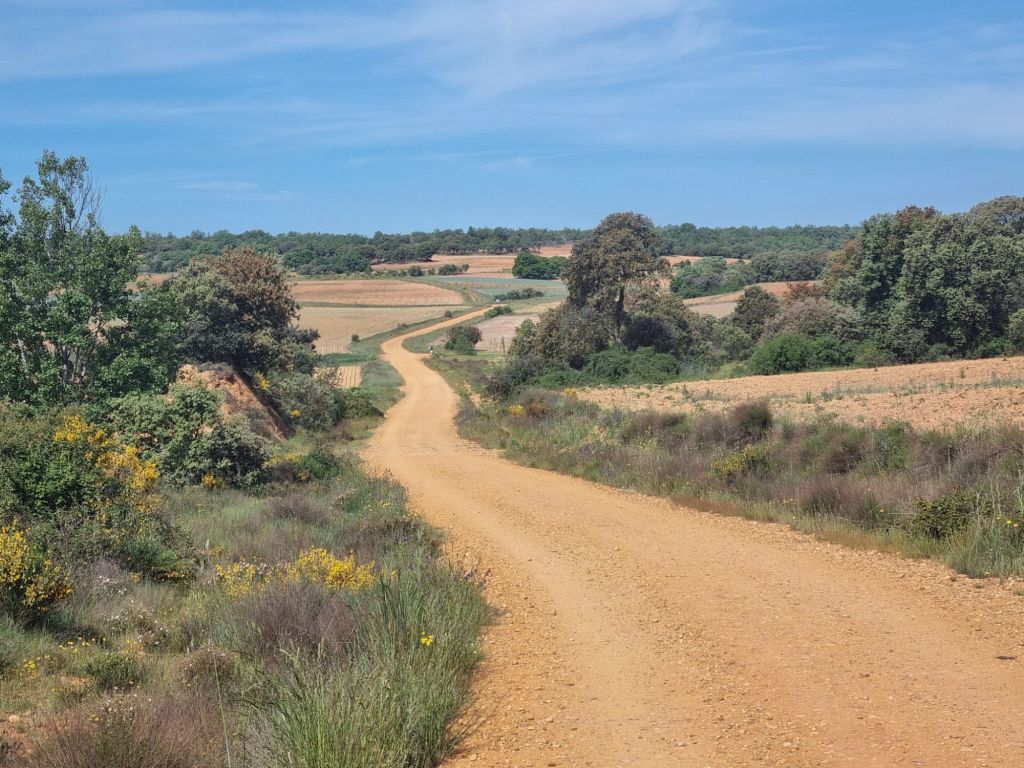
After yesterday’s flat straight roads it was a pleasure to be on more varied terrain. The way goes much better with new vistas around each corner.
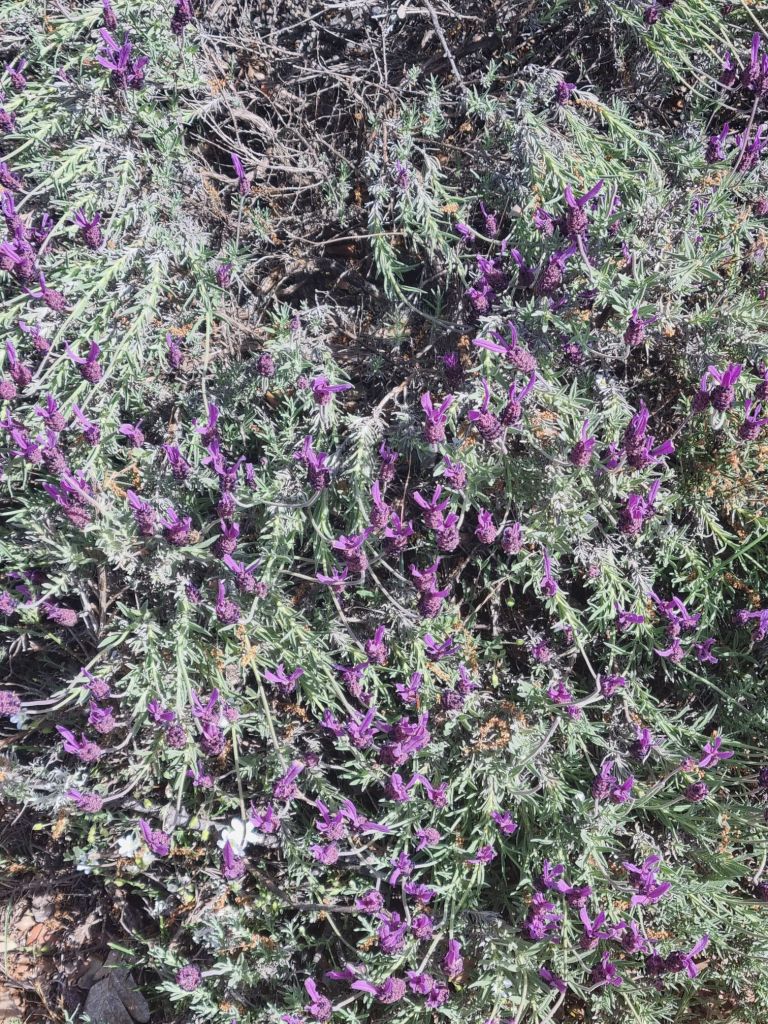
Our flower of the day growing wild along the roadside was a gorgeous flowering of lavender.
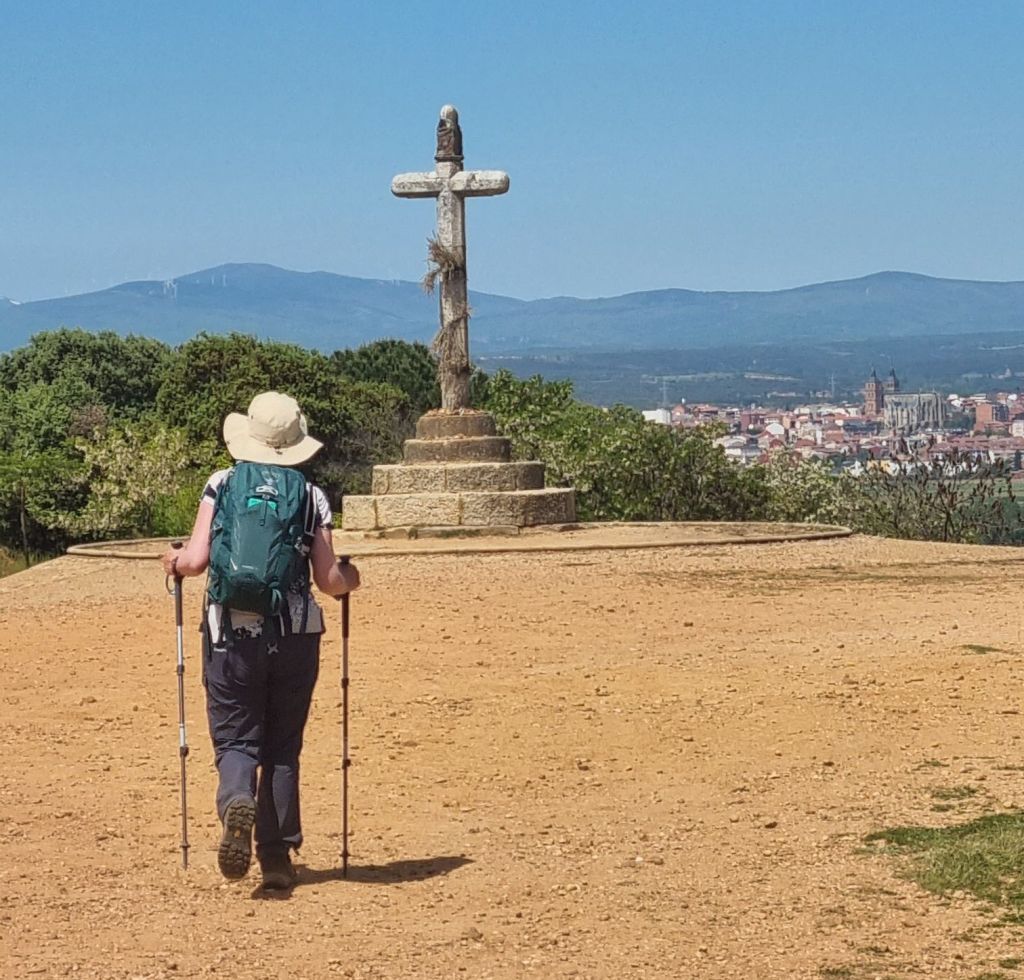
Eventually we had a view over the valley to the cathedral at Astorga and the mountains beyond.
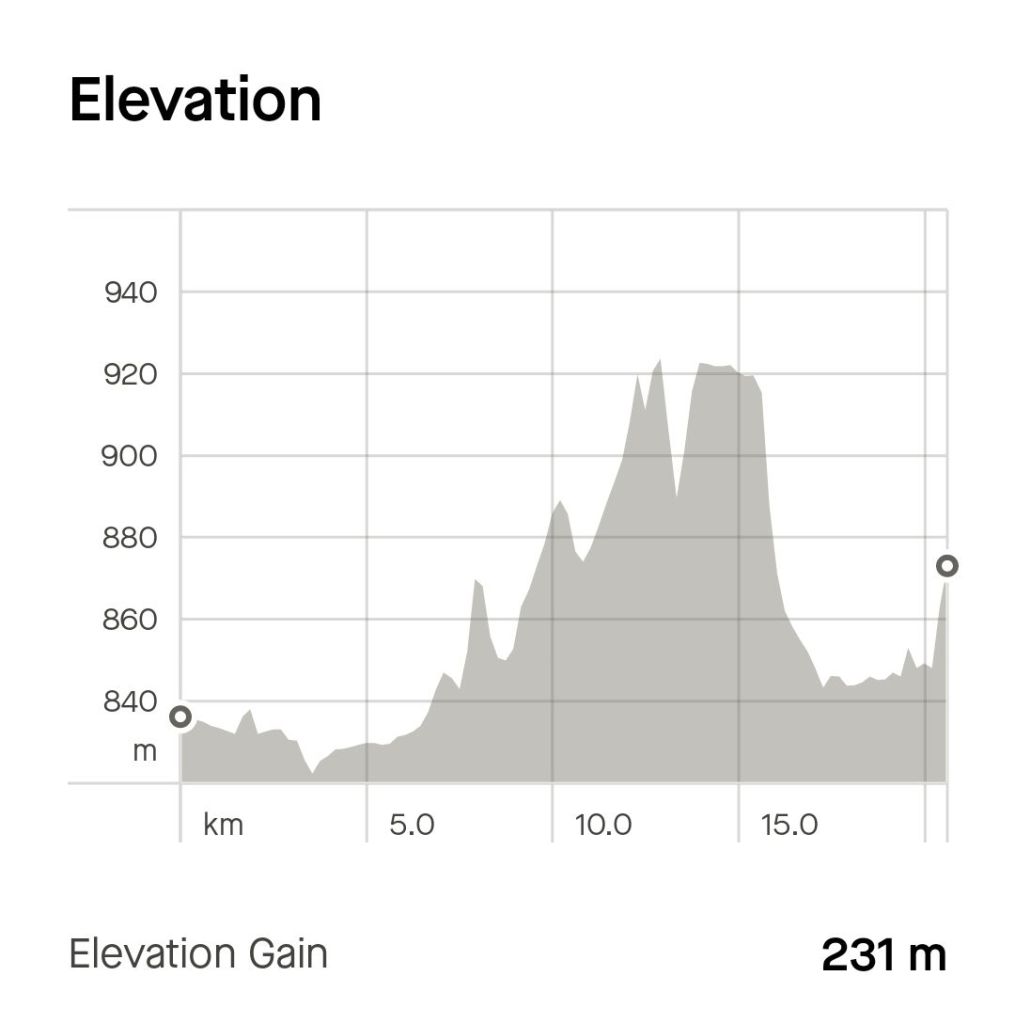
Our route today was straightforward with a few lumps en route to prepare us for the heights to come.
Afternoon explore
The Romans built the first town here which they called Asturias Augusta which has become shortened to Astorga.
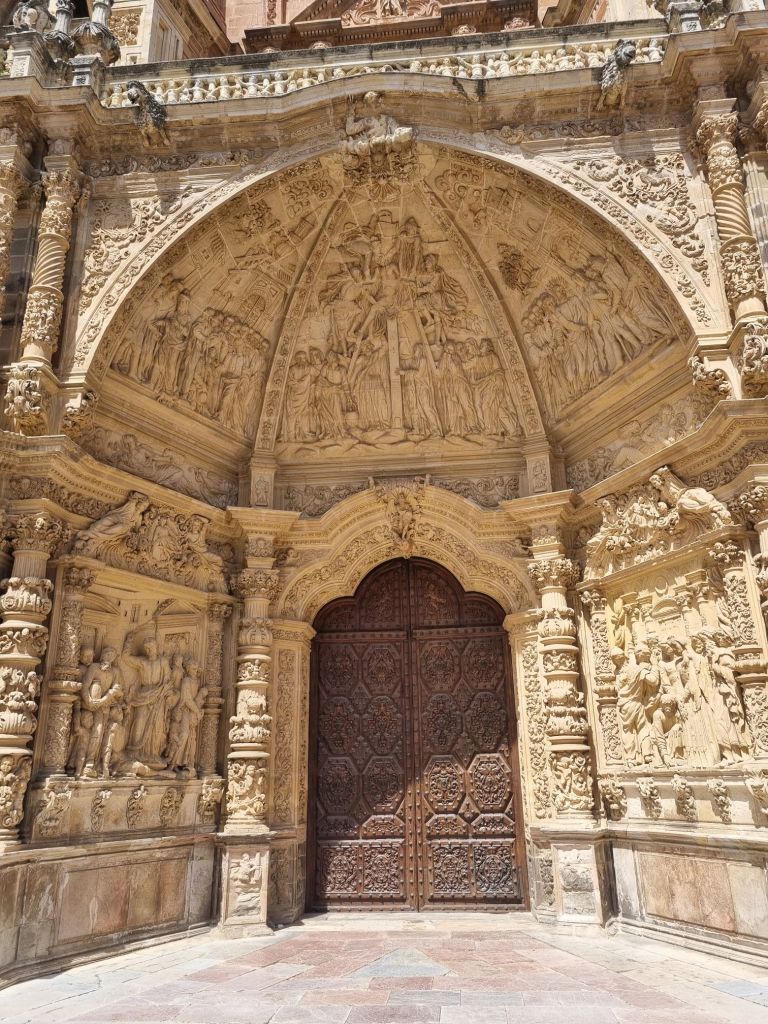
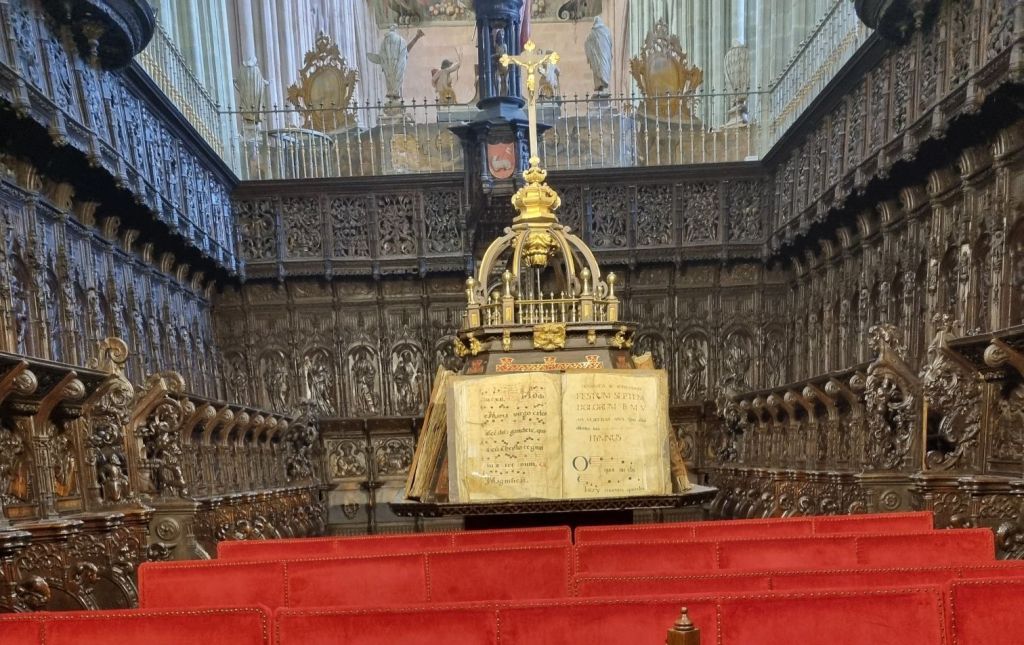
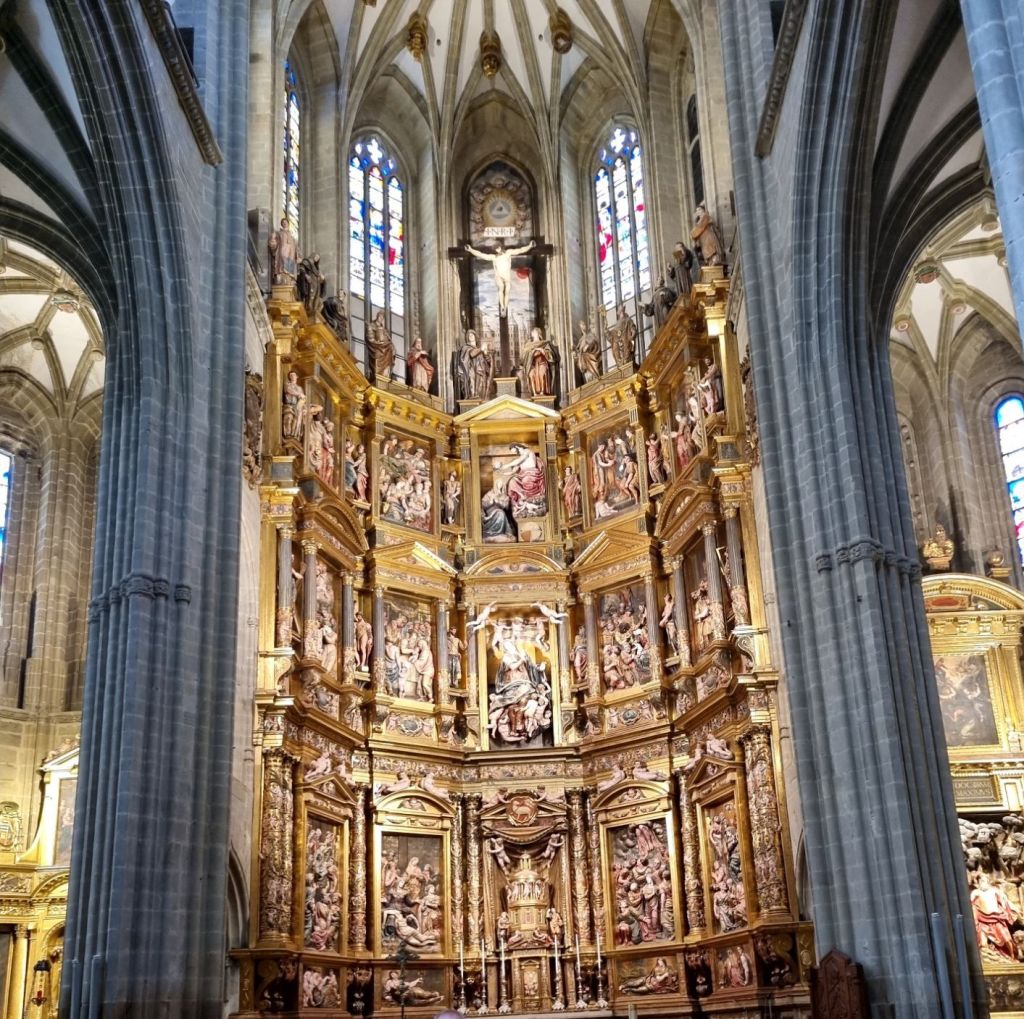
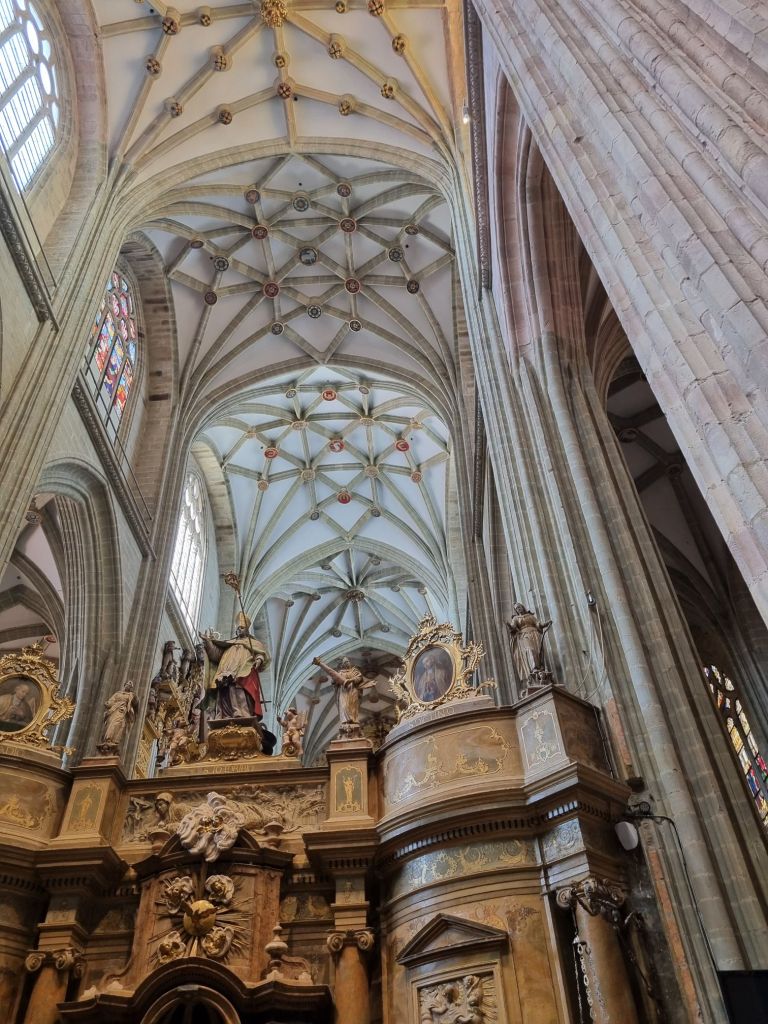
We visited the cathedral which had a fabulous high nave and many chapels all the way around. There was rather too much bling for us non-conformists. I was though interested to see again the choir in the middle of the church. The narrative explained that the cathedral worship is based primarily on the sung music rather than eucharist or liturgy. No mention of scripture or the sermon!
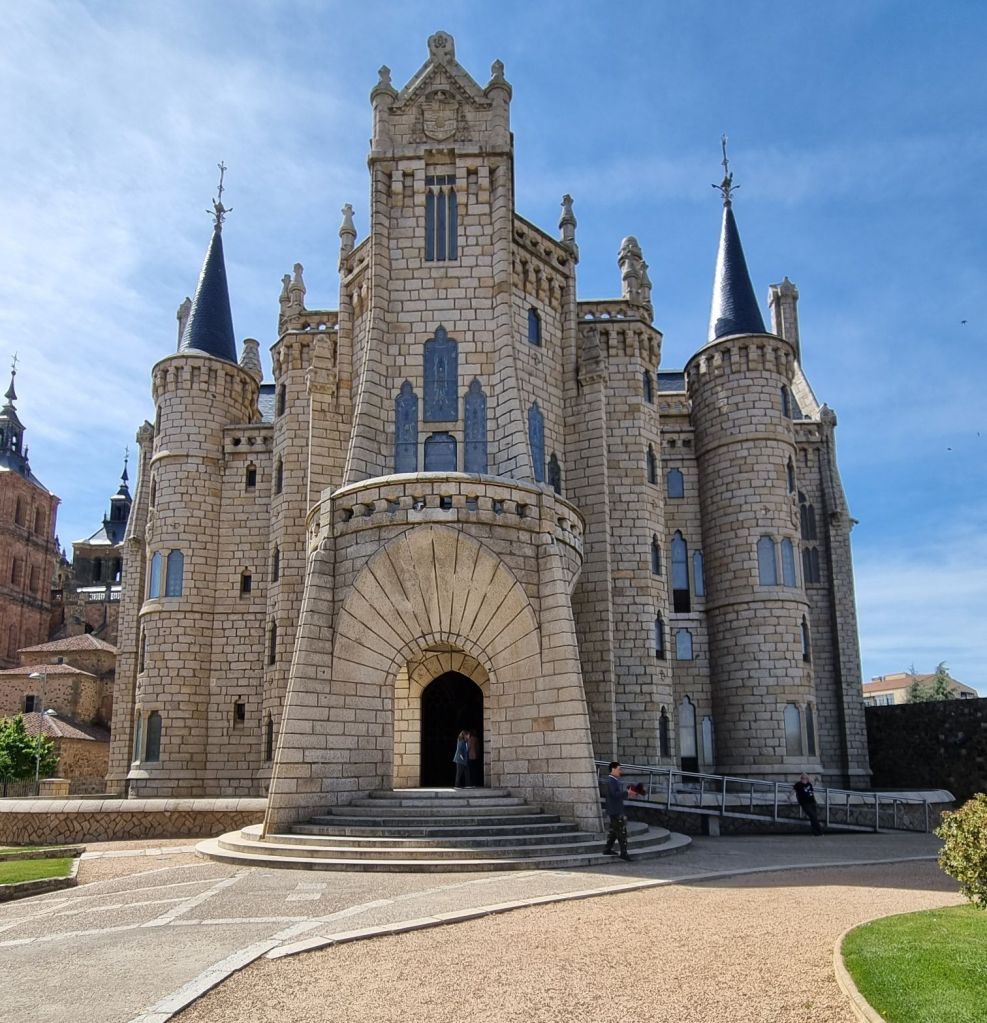
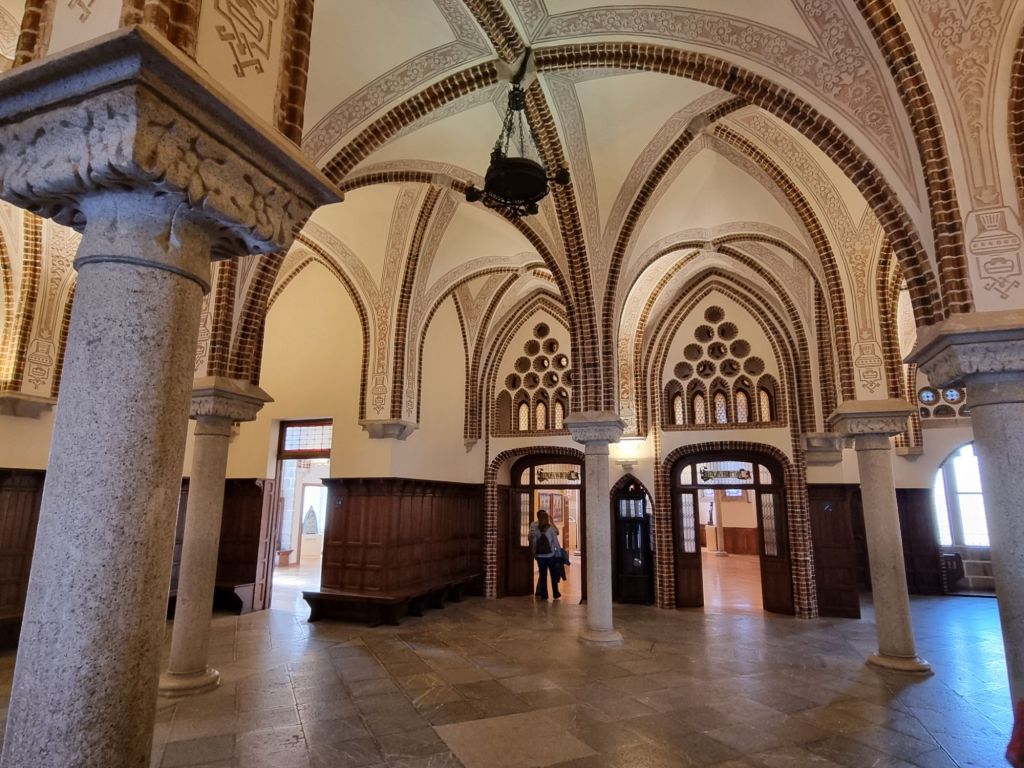
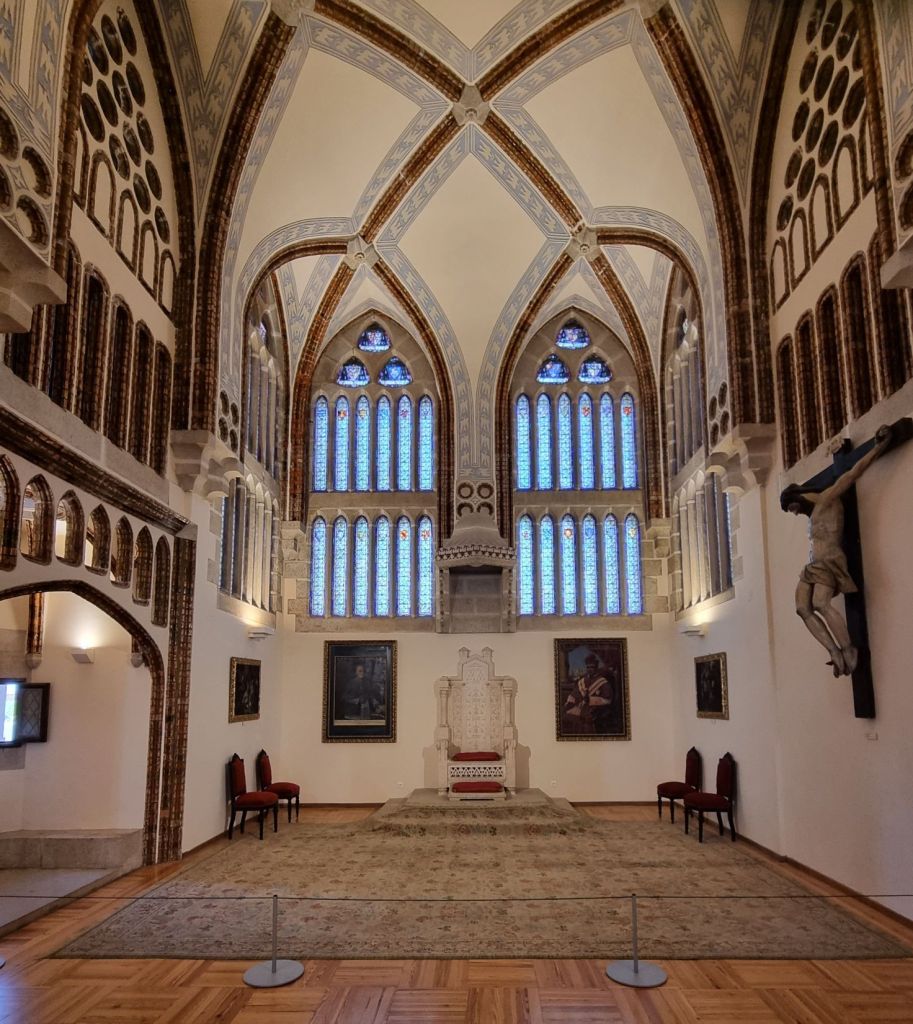
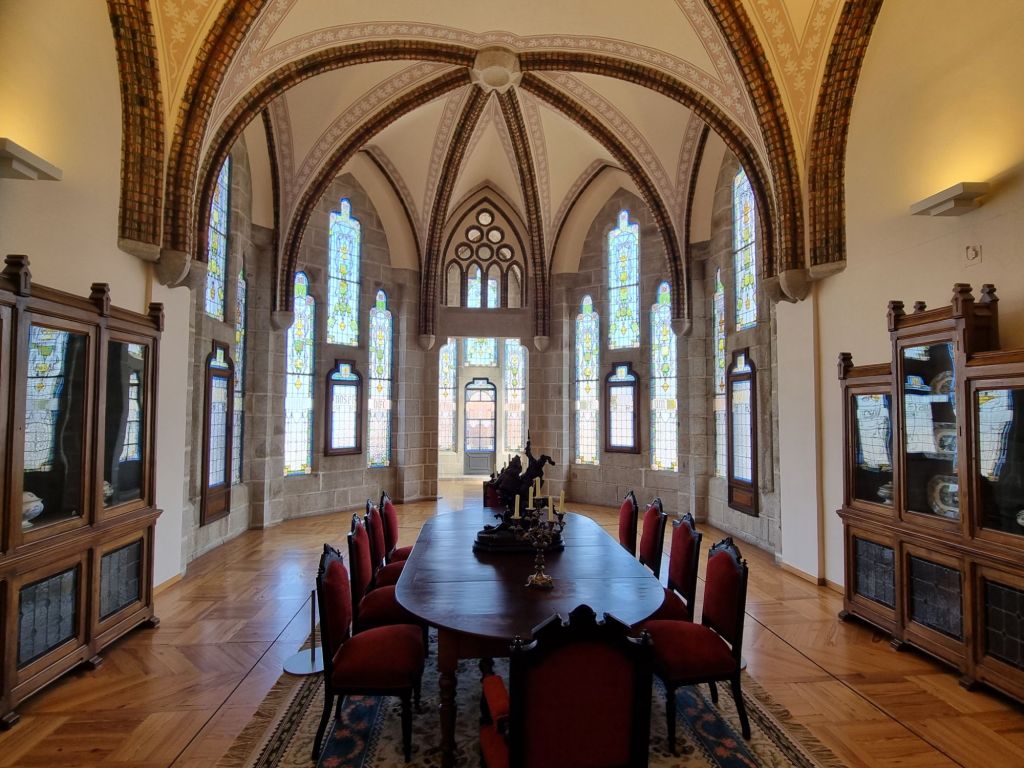
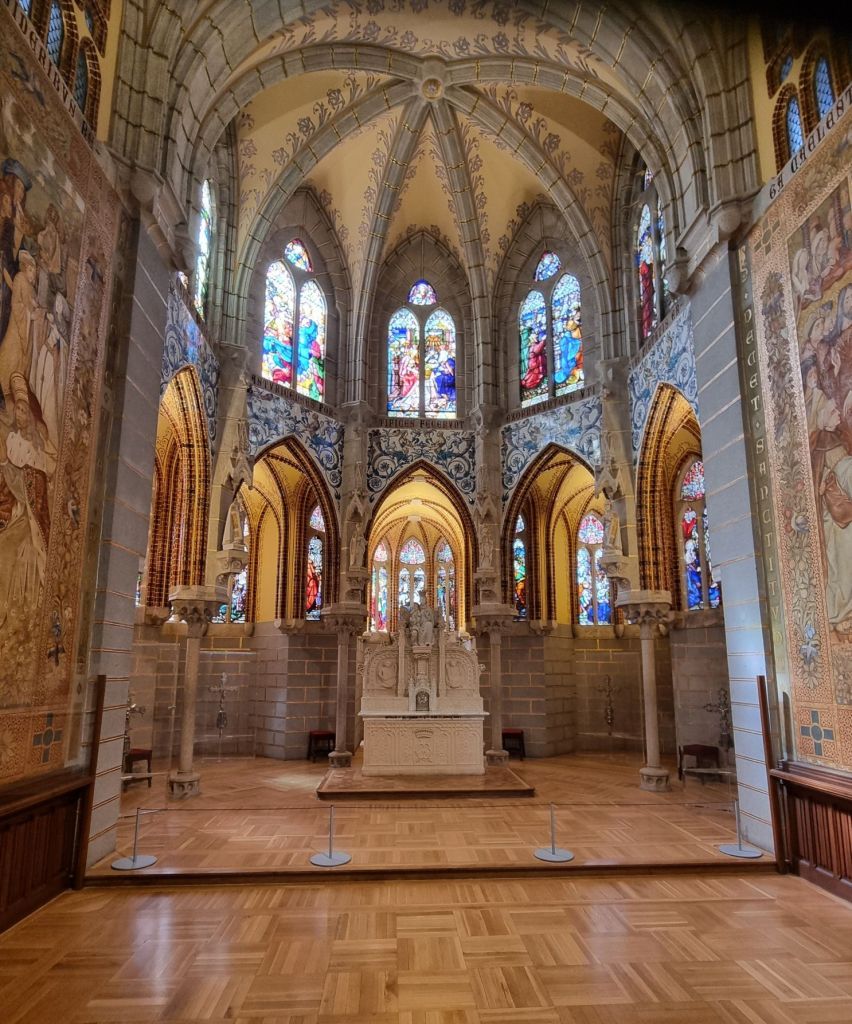
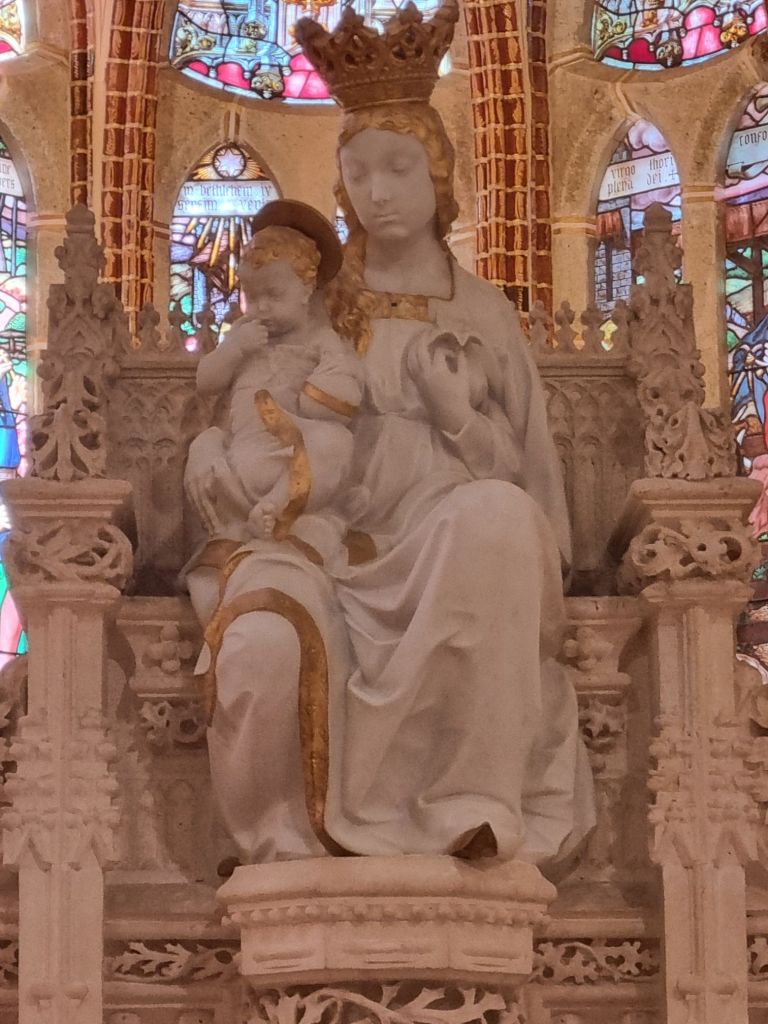
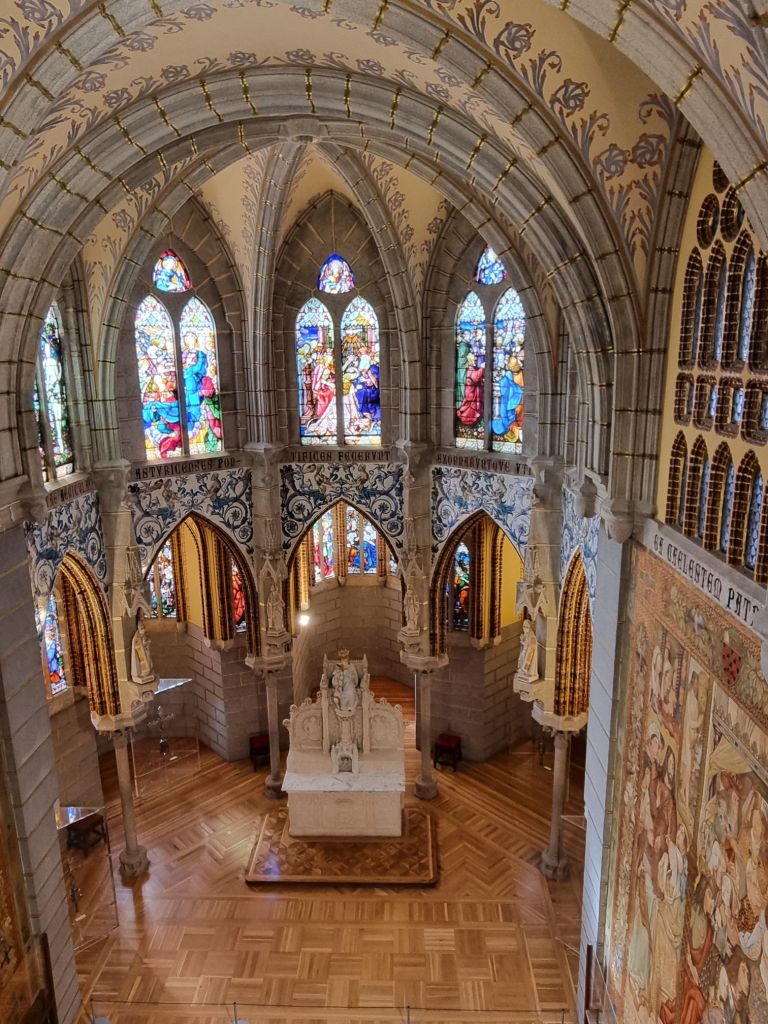
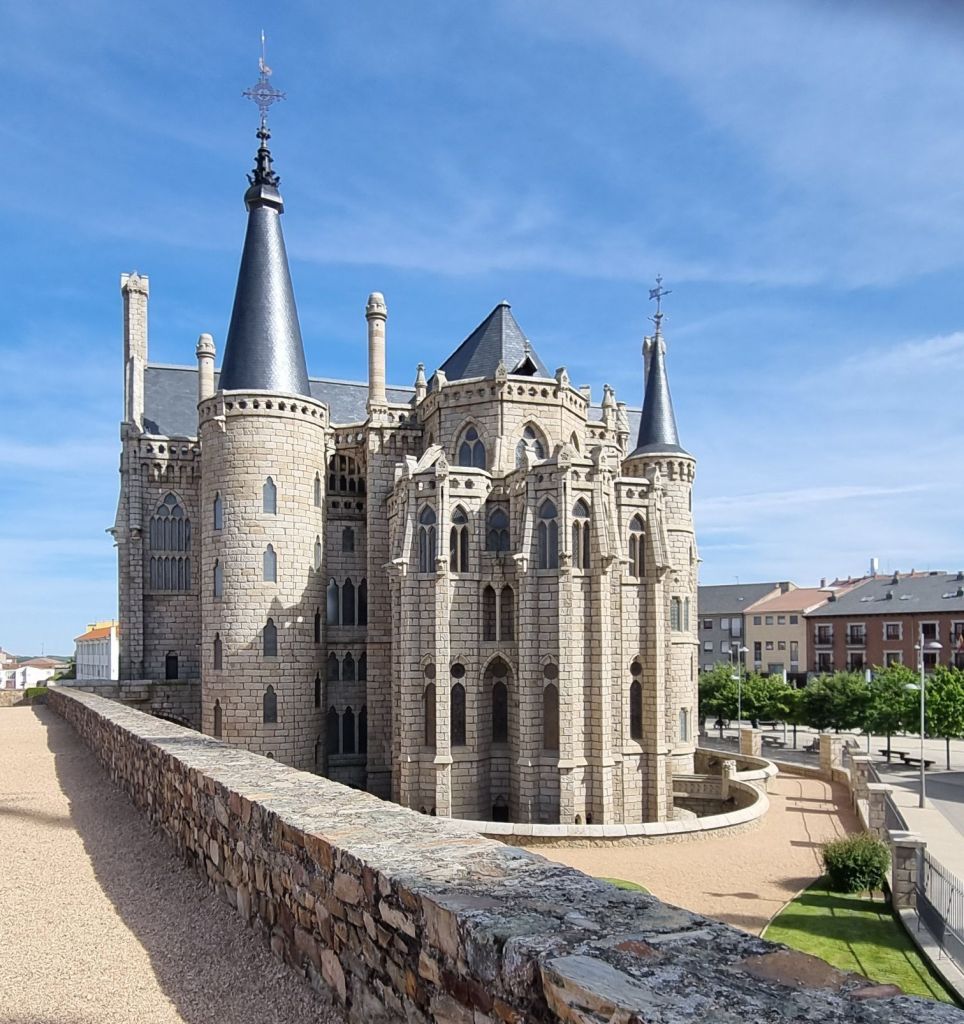
Next door to the cathedral was a fantasticly beautiful building designed by Antoni Gaudí at the end of the 19th century to be the bishop’s palace. None of the bishops have stayed there and it is now a museum. We’re not so sure about bishops with grand, no money spared, palaces but it is a stunningly memorable building.
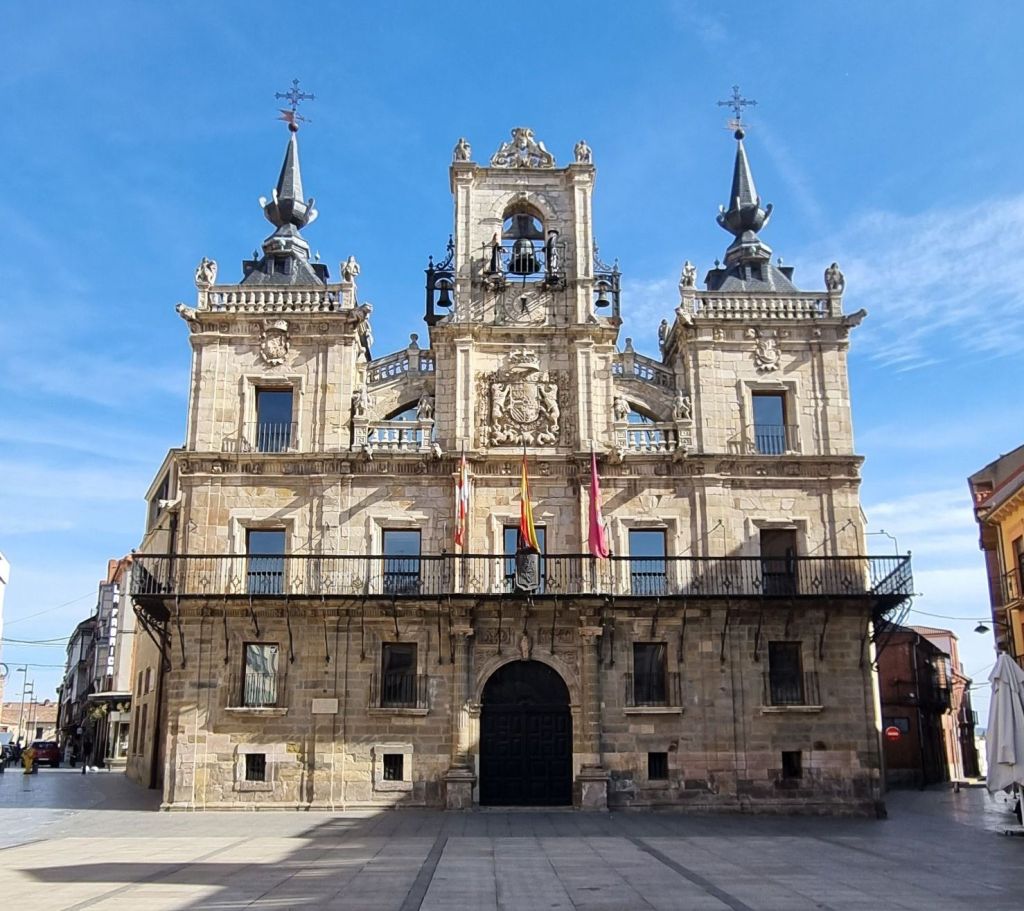
Even the Ayuntamiento or city council building was impressive. All in all Astorga is a great place to visit.
 Julian and Beryl's camino